

Material Cost Breakdown
Raw material, primarily polypropylene (PP), represents 60-70% of total cost per unit and is the single largest cost driver. Material cost per unit equals part weight multiplied by PP price per kilogram plus a waste factor of 1-3%. Current food-grade PP pricing ranges from $1,100-$1,500 per metric ton depending on grade and region. For a 5-gram yogurt cup, material cost is approximately $0.006-$0.008 per unit. A 30-gram food container costs $0.036-$0.045 in material. Sauce cups at 3-4 grams cost only $0.004-$0.005 each. Wall thickness directly impacts material usage: reducing wall thickness from 0.5mm to 0.4mm on a yogurt cup can reduce part weight by 15-20%, saving $0.001-$0.002 per unit. At volumes of 10 million units per month, this translates to $10,000-$20,000 in monthly savings. HWAMDA SPV5 machines with injection speeds of 450-517mm/s enable thinner walls with complete cavity fill, maximizing material efficiency.
Key Specs
- •Raw material, primarily polypropylene (PP), represents 60-70% of total cost per unit and is the single largest cost driver.
- •Material cost per unit equals part weight multiplied by PP price per kilogram plus a waste factor of 1-3%.
- •Wall thickness directly impacts material usage: reducing wall thickness from 0.5mm to 0.4mm on a yogurt cup can reduce part weight by 15-20%, saving $0.001-$0.002 per unit.
HWAMDA factory — quality manufacturing since 2003
Machine Depreciation per Unit
Machine investment is amortized over its productive lifetime, typically 10-15 years for a well-maintained injection molding machine. Calculate depreciation per unit by dividing total machine cost by lifetime production volume. An HWAMDA SPV5 380T machine priced at approximately $80,000-$120,000, running 12-cavity molds at 4-second cycles, produces roughly 7,776,000 cups per month at 90% OEE. Over 10 years, that is approximately 933 million cups, yielding machine depreciation of $0.0001-$0.00013 per cup. For a 480T food container machine with 6-cavity mold at 6-second cycles, monthly output is approximately 2,592,000 containers. Machine depreciation per container over 10 years is $0.0004-$0.0006. Machine depreciation is typically the smallest cost component, representing less than 1% of total unit cost, which means investing in a higher-quality machine with better uptime almost always pays for itself through operational savings.
Mold Cost Amortization
Mold investment varies significantly based on cavity count and complexity. A 12-cavity yogurt cup mold costs approximately $40,000-$70,000, while an 8-cavity food container mold ranges from $50,000-$90,000. Higher cavitation molds cost more upfront but reduce per-unit mold cost. Mold lifetime for thin-wall applications in hardened P20 or H13 steel is typically 3-5 million shots. For a 12-cavity yogurt cup mold running at 4-second cycles, each shot produces 12 cups. At 5 million shot lifetime, the mold produces 60 million cups, yielding mold amortization of $0.0007-$0.0012 per cup. A 32-cavity sauce cup mold at $60,000-$100,000 produces 160 million cups over its lifetime, reducing per-unit mold cost to $0.0004-$0.0006. When evaluating mold investment, calculate per-unit amortization across the mold's full rated lifetime. HWAMDA's mold design team optimizes cavity layouts and cooling channels to maximize mold longevity.
Key Specs
- •For a 12-cavity yogurt cup mold running at 4-second cycles, each shot produces 12 cups.
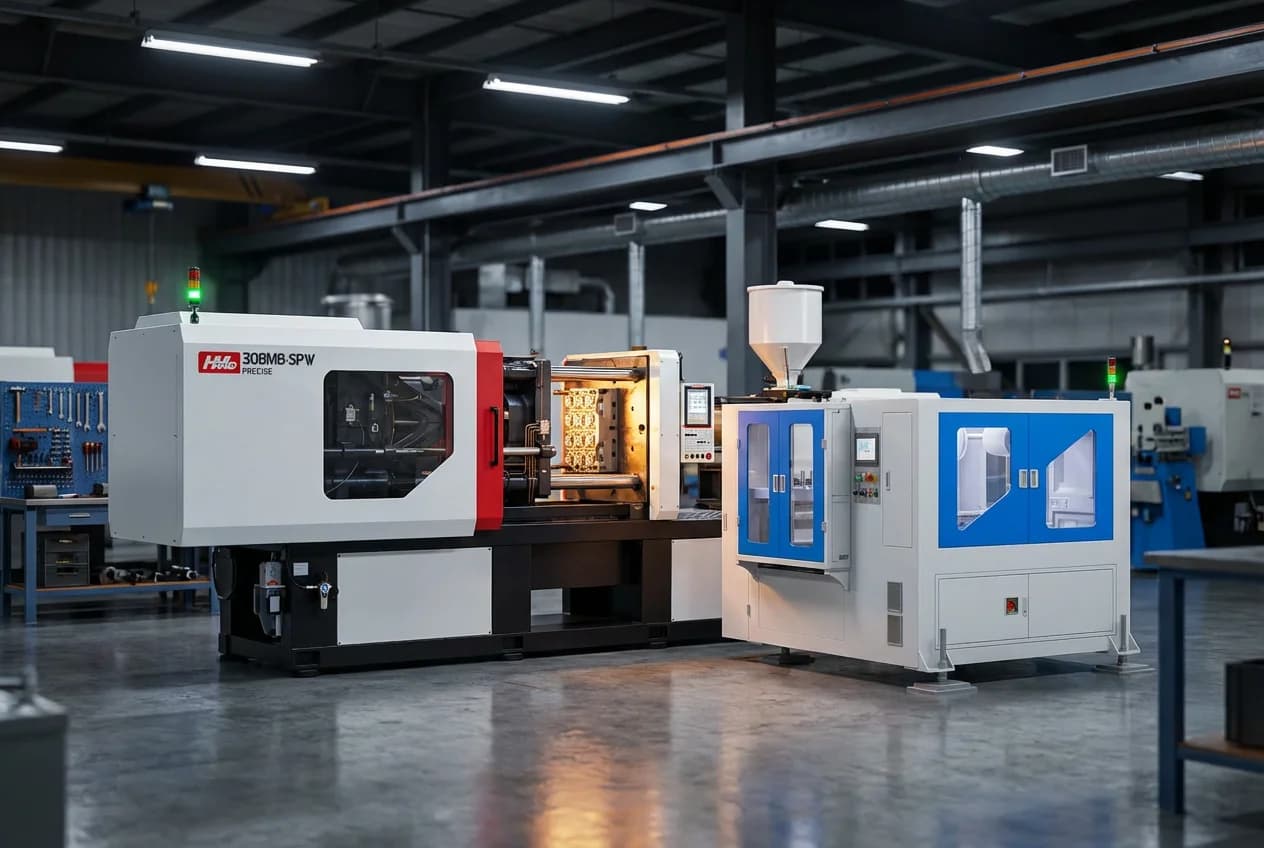
SPV5 machines on the production floor
Need Expert Advice?
Talk to our engineers about your specific production requirements. Free consultation.
Labor and Energy per Unit
Labor costs depend on your location and level of automation. A typical thin-wall production line requires 1-2 operators per shift. In emerging markets with labor costs of $300-$600 per month, labor cost per unit on a yogurt cup line producing 5.5 million cups monthly is approximately $0.0001-$0.0002. Energy consumption is the second-largest variable cost after material. HWAMDA SPV5 machines with servo-hydraulic systems consume approximately 15-25 kWh per hour depending on tonnage. At $0.08-$0.15 per kWh, energy cost per yogurt cup (12-cavity, 4-second cycle) is approximately $0.0002-$0.0004. For food containers on a 480T machine consuming 20-30 kWh, energy cost per container is approximately $0.001-$0.002. Combined labor and energy typically account for 3-8% of total unit cost. HWAMDA's servo pump technology reduces energy consumption by 40-60% compared to conventional fixed-pump machines, delivering measurable per-unit savings.
Packaging and Logistics
Post-production costs including stacking, counting, bagging, cartoning, and palletizing add $0.002-$0.008 per unit depending on automation level. Manual stacking and counting increases labor costs and reduces throughput. Automated stacking systems integrated into the production line reduce this cost by 30-50% while improving accuracy. For IML products like margarine containers, the finished product exits the mold already decorated, eliminating separate labeling operations that typically cost $0.01-$0.03 per unit in post-mold decoration. Logistics costs vary by distance. Domestic distribution typically adds $0.001-$0.003 per unit. Export shipping in 40-foot containers holding 200,000-500,000 thin-wall cups adds $0.003-$0.008 per unit for intercontinental shipment. Nesting and stacking efficiency directly impacts container utilization. HWAMDA designs mold cavities with optimized stacking features to maximize shipping density and reduce per-unit freight costs.
Key Specs
- •Automated stacking systems integrated into the production line reduce this cost by 30-50% while improving accuracy.
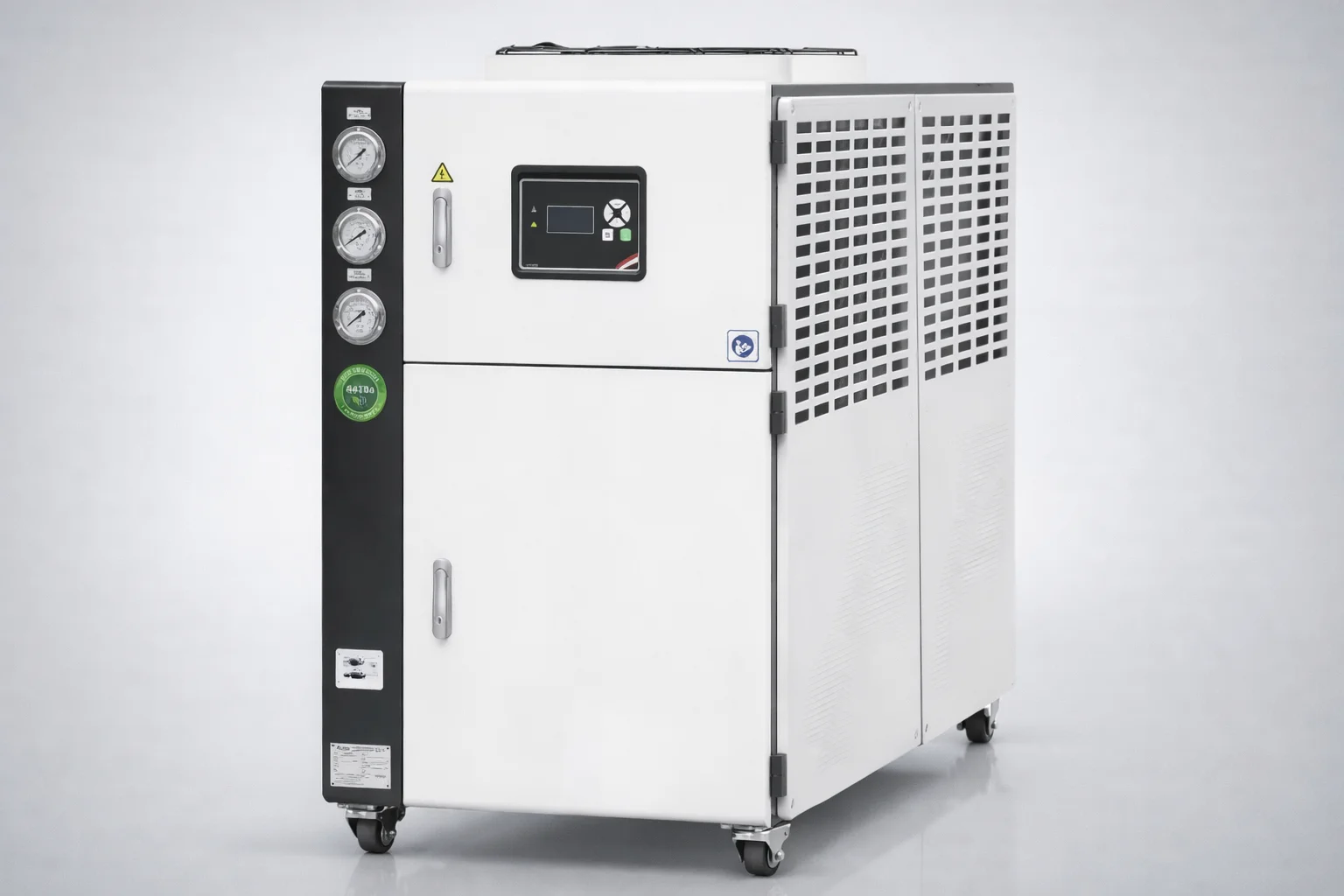
Industrial cooling system for injection molding
Profit Margin Benchmarks
Market selling prices for thin-wall packaging vary by region and product. Yogurt cups (200ml) sell at $25-$55 per 1,000 units FOB, while food containers (500-1000ml) range from $60-$120 per 1,000 units. Sauce cups command $15-$30 per 1,000 units, and IML margarine containers reach $80-$150 per 1,000 units due to their premium finish. With total production costs typically ranging from $0.008-$0.012 per yogurt cup and $0.040-$0.065 per food container, gross margins of 40-60% are achievable at scale. The key to maximizing margin is high OEE above 85%, ensuring fixed costs are spread across maximum volume. HWAMDA SPV5 machines consistently achieve 90%+ OEE in established production environments, supporting industry-leading unit economics. Run profitability sensitivity analyses on PP price, exchange rates, and utilization rates to stress-test your business model before committing to investment.
Frequently Asked Questions
Total production cost for a 200ml PP yogurt cup ranges from $0.008-$0.012 per unit, with material (PP resin at 5-6 grams per cup) accounting for 60-70% of the total. Machine depreciation, mold amortization, energy, and labor collectively add $0.002-$0.004. Production on an HWAMDA SPV5 380T with 12-cavity mold at 4-second cycles yields approximately 5.5 million cups per month, achieving economies of scale that keep per-unit costs at the lower end of this range.
Related Guides
Ready to Start Your Project?
Get a free consultation and quotation for your thin-wall packaging production line.
Join 500+ manufacturers in 60+ countries who trust HWAMDA.
Get Free Quote