

Company Background and Track Record
Start your evaluation by verifying the supplier's manufacturing history, production volume, and market presence. Established thin-wall injection molding machine manufacturers should have a minimum 10-year track record with verifiable installations across multiple countries. Request the total number of machines delivered, geographic distribution of customers, and year-over-year growth figures. Check if the supplier manufactures core components in-house, including hydraulic systems, platens, and control systems, or assembles from third-party components. In-house manufacturing indicates deeper technical capability and better quality control. HWAMDA operates its own foundry and machining center, producing platens and critical components internally. Verify business registration, export licenses, and financial stability through credit reports or bank references. Membership in industry associations such as Euromap or China Plastics Machinery Industry Association indicates legitimate market participation.
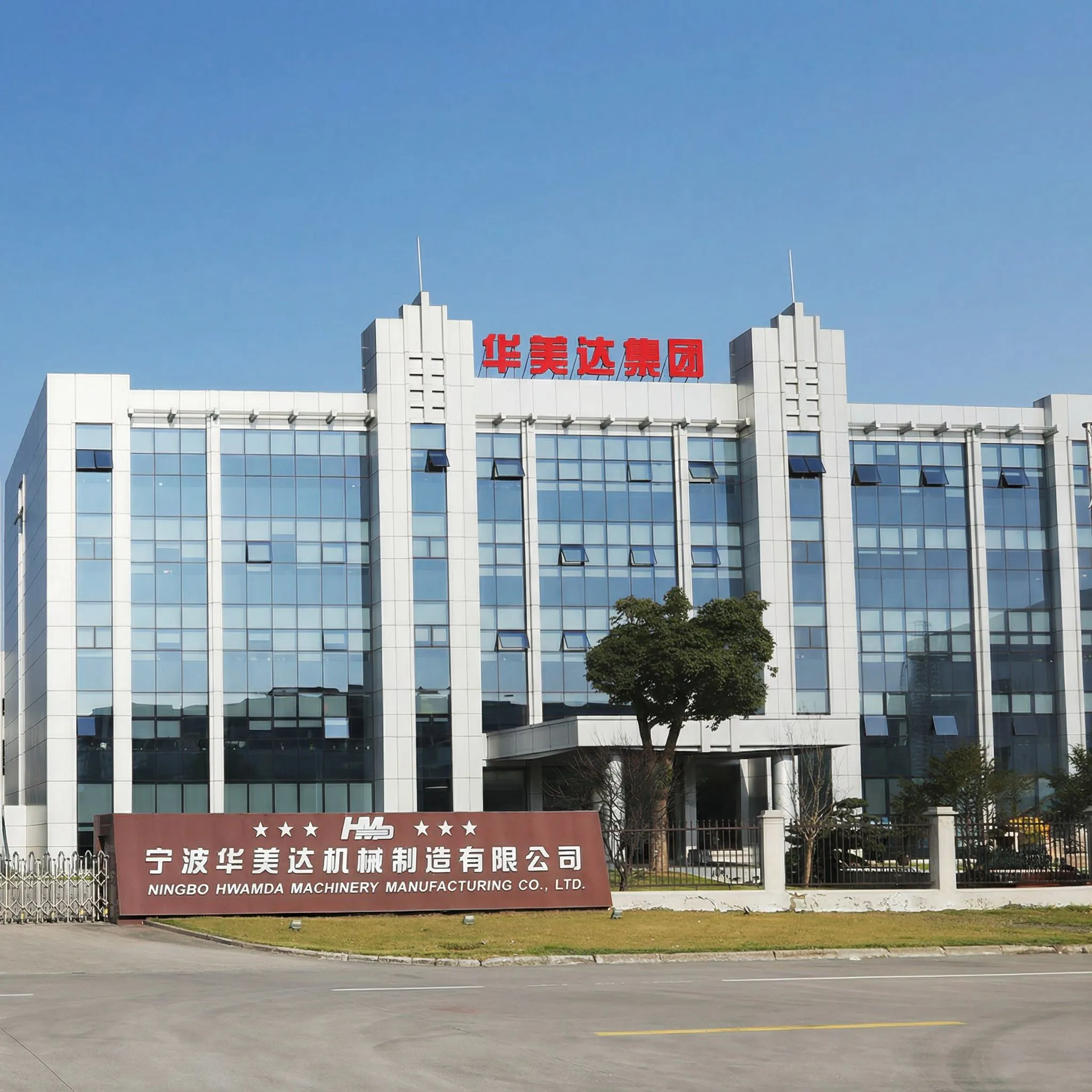
HWAMDA factory — quality manufacturing since 2003
Technical Capability Assessment
For thin-wall packaging applications, evaluate the supplier's specific expertise in high-speed molding. Key technical benchmarks include maximum injection speed (minimum 400mm/s for thin-wall, 500mm/s+ preferred), dry cycle time (under 2 seconds for machines up to 400T), and injection pressure (minimum 160 MPa). The HWAMDA SPV5 series delivers injection speeds of 450-517mm/s, meeting the demands of fast-cycle thin-wall production. Assess the supplier's mold compatibility range, asking for specific examples of multi-cavity thin-wall molds they have matched to their machines. Request cycle time verification data from actual production runs, not just theoretical specifications. A capable supplier should demonstrate proven performance with 8-16 cavity yogurt cup molds at 3.5-4.5 second cycles, or 4-8 cavity food container molds at 5-7 second cycles. Ask about R&D investment, new model development frequency, and energy efficiency improvements.
Quality Management Systems
Verify the supplier holds ISO 9001:2015 certification at minimum, and request a copy of the certificate for validation. Beyond certification, evaluate actual quality control processes during factory visits. Inspect incoming material testing procedures for steel, hydraulic components, and electrical parts. Check dimensional inspection equipment, including coordinate measuring machines (CMM) for platen flatness verification and laser alignment tools for tie bar parallelism. Ask about their testing protocol before shipment. HWAMDA performs full dry-cycle testing, injection parameter verification, and 48-hour continuous running tests on every machine before shipping. CE marking compliance is mandatory for European markets and demonstrates adherence to machinery safety directives. For food packaging applications, the machine's hydraulic system should offer food-grade hydraulic oil options to prevent contamination risk. Document all certifications, test reports, and quality records for side-by-side comparison across suppliers.
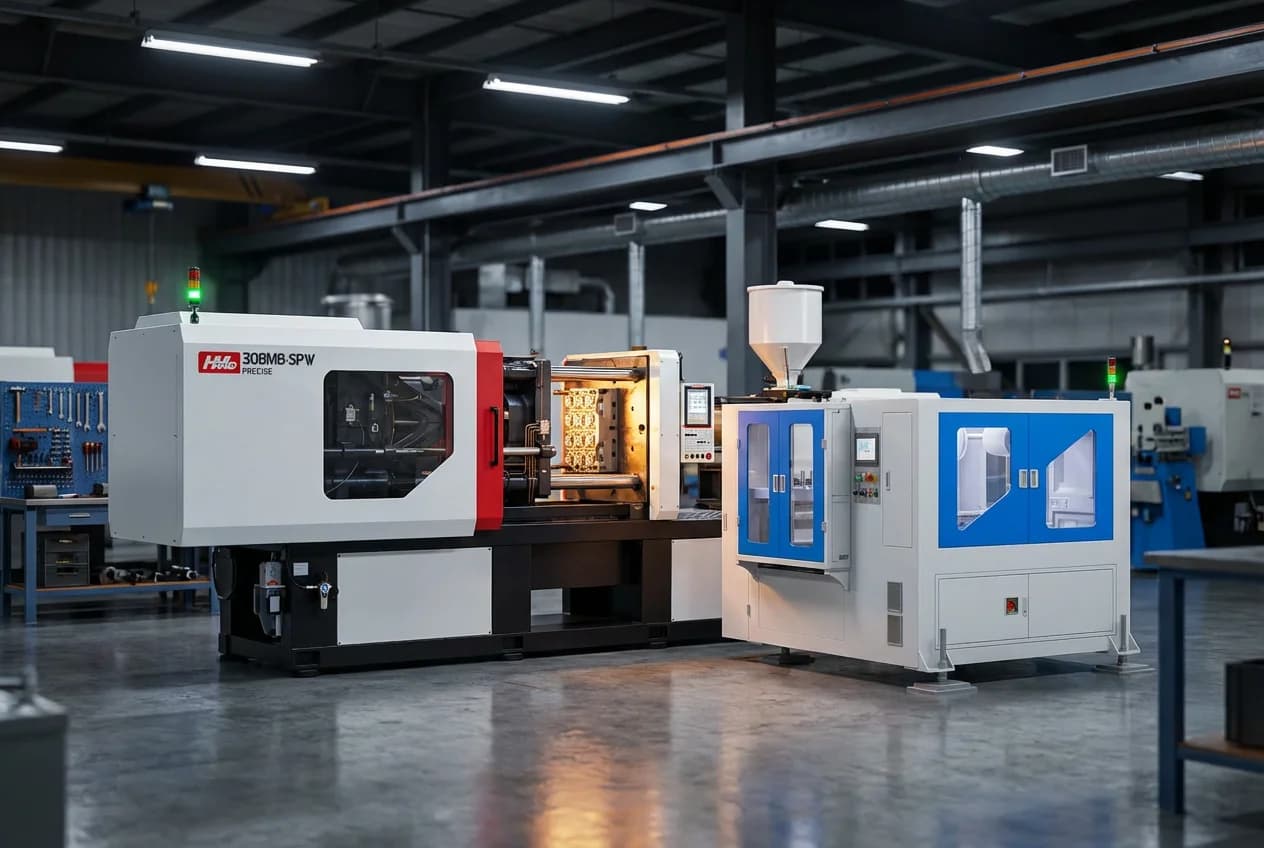
SPV5 machines on the production floor
Need Expert Advice?
Talk to our engineers about your specific production requirements. Free consultation.
After-Sales Service Network
After-sales service capability often determines long-term satisfaction more than initial machine performance. Evaluate the supplier's service infrastructure by examining their number of service engineers, geographic coverage, and guaranteed response times. Remote diagnostic support should be available within 4 hours during business hours, while on-site service deployment should occur within 48-72 hours for critical issues. Verify spare parts availability and delivery times for critical components such as hydraulic pumps, servo drives, and barrel assemblies. A well-prepared supplier maintains regional spare parts warehouses or guarantees air freight delivery within 5-7 days for urgent parts. HWAMDA maintains spare parts inventory for all SPV5 series components and offers online remote diagnostic support through the machine's PLC interface. Check if the supplier provides ongoing technical training, software updates, and process optimization support beyond the initial warranty period.
Reference Customer Visits
Request a minimum of three reference customers operating the same or similar machine model you are evaluating. Prioritize references in your geographic region or producing similar products. During reference visits or calls, ask about machine uptime (target 95%+ availability), actual versus specified cycle times, maintenance frequency, and quality of after-sales support received. Inquire about recurring issues, resolution speed, and whether the supplier honored all warranty commitments. Ask references about total cost of ownership over 3-5 years, including spare parts expenses and unplanned downtime costs. HWAMDA encourages prospective customers to visit existing installations across Turkey, Southeast Asia, the Middle East, and other regions where SPV5 machines are in active production. Pay attention to whether reference customers purchased repeat orders, as this is the strongest indicator of genuine satisfaction with both machine performance and supplier relationship.
Key Specs
- •During reference visits or calls, ask about machine uptime (target 95%+ availability), actual versus specified cycle times, maintenance frequency, and quality of after-sales support received.
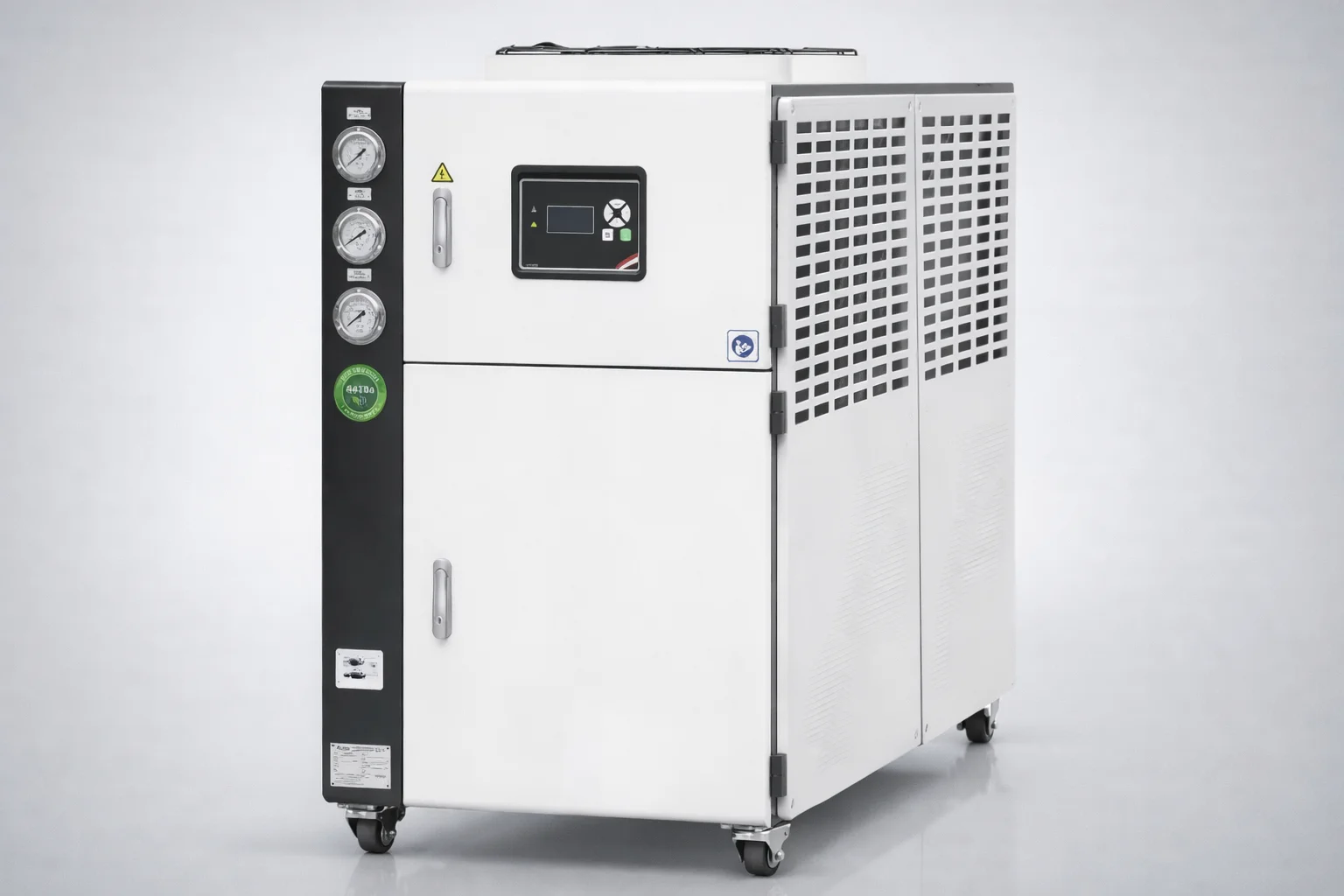
Industrial cooling system for injection molding
Contract Terms and Warranty
Review commercial terms carefully before finalizing your supplier selection. Standard warranty for thin-wall injection molding machines should cover 12-18 months from commissioning or 18-24 months from shipment date. HWAMDA provides comprehensive warranty covering all mechanical, hydraulic, and electrical components with free replacement of defective parts. Negotiate performance guarantees tied to specific metrics including cycle time, energy consumption per shot, and machine availability percentage. Include penalty clauses for late delivery and provisions for factory acceptance testing (FAT) and site acceptance testing (SAT). Payment terms typically follow a milestone structure: 30% deposit, 60% before shipment after factory inspection, and 10% after successful commissioning. Letter of credit (LC) payment through major banks provides security for both parties. Ensure the contract specifies training scope, commissioning duration, and documentation deliverables including operation manuals and electrical schematics.
Frequently Asked Questions
After-sales service capability and proven track record with reference customers are the most critical factors for long-term success. A machine is a 15-20 year investment, and responsive technical support directly impacts your uptime and profitability. Verify reference customers have achieved specified cycle times in actual production, and confirm the supplier can deliver spare parts and on-site service to your location within guaranteed timeframes. HWAMDA provides 48-72 hour on-site response for critical issues globally.
Related Guides
Ready to Start Your Project?
Get a free consultation and quotation for your thin-wall packaging production line.
Join 500+ manufacturers in 60+ countries who trust HWAMDA.
Get Free Quote