

Transparency and Visual Appeal
PET is the industry standard for transparent beverage cups, with light transmittance exceeding 90% that rivals glass clarity. This crystal-clear appearance makes PET ideal for milk tea, juice, smoothie, and iced coffee cups where consumers expect to see the beverage inside. PET maintains its clarity across wall thicknesses from 0.3mm to 1.0mm without the milky haze that affects PP. Standard PP (homopolymer) has a naturally translucent appearance due to its semi-crystalline structure. Clarified PP grades using nucleating agents like Millad NX 8000 can achieve haze values below 15%, approaching PET-like clarity but still falling short for premium applications. Random copolymer PP offers better transparency than homopolymer. For markets where beverage visibility is a primary purchasing driver, PET remains the preferred choice. However, many dairy and hot-fill applications where opacity is acceptable or desired favor PP. For manufacturers, the material choice should align with the primary beverage type—clarity-critical cold drinks favor PET, while versatile hot-and-cold menus favor PP's broader temperature range.
Key Specs
- •PET is the industry standard for transparent beverage cups, with light transmittance exceeding 90% that rivals glass clarity.
- •PET maintains its clarity across wall thicknesses from 0.3mm to 1.0mm without the milky haze that affects PP.
- •Clarified PP grades using nucleating agents like Millad NX 8000 can achieve haze values below 15%, approaching PET-like clarity but still falling short for premium applications.
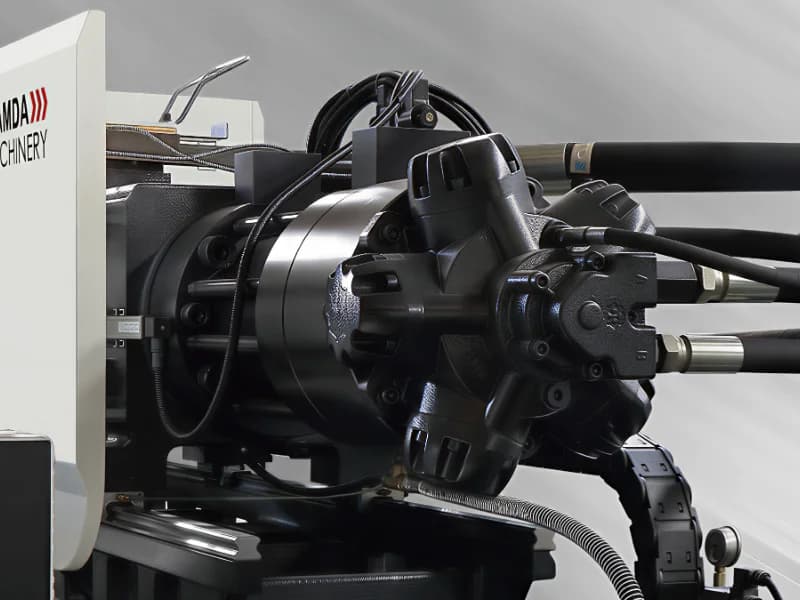
High-speed injection unit with linear guides
Temperature Resistance
PP outperforms PET in heat resistance with a heat deflection temperature of 100-110°C compared to PET's 70-80°C (amorphous). This makes PP the only viable option for hot-fill beverages, microwave-safe cups, and applications where containers may be exposed to temperatures above 70°C during filling or transportation. PET beverage cups are limited to cold and ambient temperature applications. At temperatures above 65-70°C, amorphous PET begins to soften and deform, making it unsuitable for hot tea, soup, or any warm-fill process. Crystallized PET (CPET) can handle higher temperatures but requires different processing and loses transparency. For the growing milk tea market, PP cups handle both hot and iced versions, while PET cups serve only cold drinks. HWAMDA SPV5 450T machines produce PP milk tea cups in 8-12 cavity molds with 5-7 second cycles. For chains serving both hot and iced versions, PP's dual-temperature capability eliminates the need for two cup materials, simplifying inventory and reducing packaging waste.
Processing Speed and Cycle Times
PP thin-wall cup production on HWAMDA SPV5 machines achieves cycle times of 5-7 seconds for standard beverage cups using 8-12 cavity molds on 450T machines. PP's well-established processing parameters and wide processing window make it forgiving for operators. Injection speeds of 200-400 mm/s at melt temperatures of 230-260°C deliver consistent fill patterns. PET injection molding for thin-wall cups requires careful moisture control—PET resin must be dried to below 50 ppm moisture to prevent hydrolysis and maintain clarity. Processing temperatures of 270-290°C are higher than PP, and PET's narrower processing window demands tighter parameter control. Cycle times for PET cups are generally comparable to PP at 5-8 seconds but require additional drying equipment and more experienced operators. PET's higher processing temperature also increases energy consumption by approximately 10-15% compared to PP cup production. HWAMDA recommends dedicating separate SPV5 machines to each material rather than switching, as parameter differences and drying requirements make frequent changeover impractical.
Key Specs
- •PP thin-wall cup production on HWAMDA SPV5 machines achieves cycle times of 5-7 seconds for standard beverage cups using 8-12 cavity molds on 450T machines.
- •Injection speeds of 200-400 mm/s at melt temperatures of 230-260°C deliver consistent fill patterns.
- •Processing temperatures of 270-290°C are higher than PP, and PET's narrower processing window demands tighter parameter control.
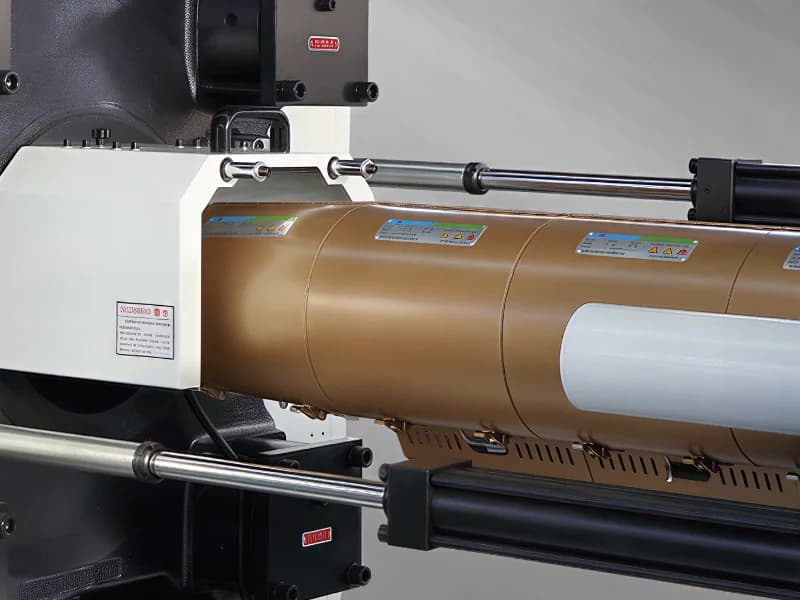
Servo-hydraulic drive system with energy recovery
Need Expert Advice?
Talk to our engineers about your specific production requirements. Free consultation.
Cost Per Unit Comparison
PP resin for beverage cups costs approximately $1,100-1,400/ton, with material cost per cup (500ml, 0.5mm wall) ranging from $0.015-0.022. PP molds are well-proven and competitively priced, with 8-cavity PP cup molds starting from $35,000-50,000 from quality Chinese suppliers. Total production cost per PP cup including material, machine depreciation, energy, and labor runs $0.025-0.040. PET resin typically costs $1,000-1,300/ton, similar to PP on a weight basis. However, PET's higher density (1.38 g/cm³ vs PP's 0.90 g/cm³) means significantly more material by weight for the same cup volume, increasing per-unit material cost by 30-40%. PET cups also require drying equipment ($15,000-30,000 additional investment) and consume more energy. Total cost per PET cup typically runs $0.030-0.050, making PP 15-25% cheaper overall for equivalent cup sizes. When comparing total costs, factor in the capital cost of auxiliary drying equipment required exclusively for PET, adding ongoing maintenance and energy costs not applicable to PP. For production planning purposes, the higher PET density also means heavier containers that require stronger packaging and higher freight costs per unit shipped.
Market Acceptance by Region
In Southeast Asia, the milk tea and juice market heavily favors PET cups for cold beverages due to their premium transparent appearance. Markets in Thailand, Vietnam, Philippines, and Indonesia show strong PET cup demand with growth rates of 8-12% annually. PP cups are gaining share for hot beverages and microwaveable applications in these markets. In the Middle East and Africa, PP cups dominate due to high ambient temperatures during transportation and storage that can cause PET cups to deform. The dairy sector in these regions exclusively uses PP cups for yogurt and buttermilk. In the CIS region (Russia, Kazakhstan, Central Asia), PP is overwhelmingly preferred for both dairy cups and food service applications due to cost sensitivity and established recycling infrastructure. European markets increasingly favor PP for its superior recyclability under circular economy regulations. Understanding regional material preferences before investing is critical—HWAMDA provides market intelligence on material trends from its extensive global customer network.
Key Specs
- •Markets in Thailand, Vietnam, Philippines, and Indonesia show strong PET cup demand with growth rates of 8-12% annually.
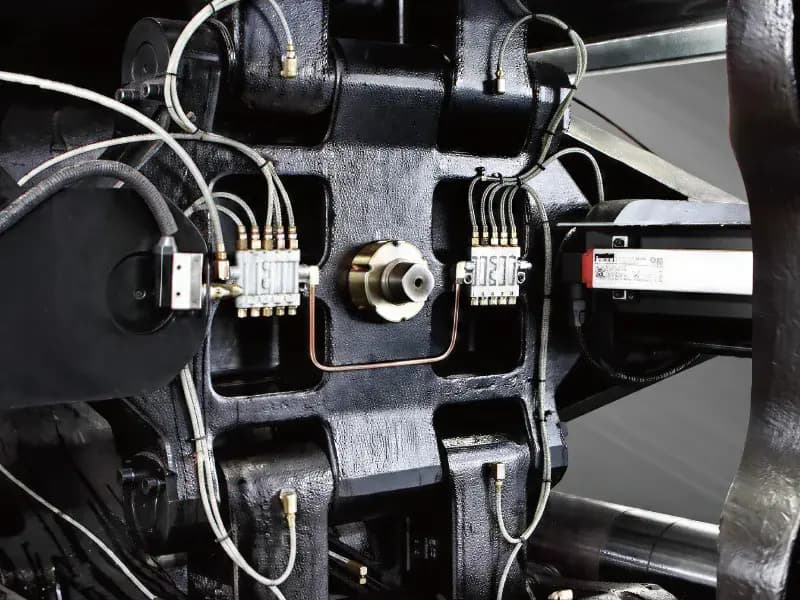
Toggle clamping unit — high rigidity for thin-wall molding
When to Choose PP vs PET
Choose PP when producing hot-fill beverage cups, dairy cups, microwave-safe containers, or when serving markets with high ambient temperatures. PP is the right material when cost optimization is the priority, when IML decoration is planned (PP is the standard substrate for IML), and when sustainability claims matter to your customers. HWAMDA provides complete PP cup production lines with SPV5 450T machines, 8-12 cavity molds, and optional SWITEK IML automation. Choose PET when crystal clarity is non-negotiable—for cold milk tea cups, juice cups, and premium iced coffee cups where beverage visibility drives consumer purchase decisions. PET is preferred in markets where transparent packaging is the established standard and consumers associate clarity with quality. However, new factories should consider that PP with nucleating agents is closing the clarity gap, and the global trend favors PP for recyclability. HWAMDA machines handle both PP and PET processing with adjustable parameters. HWAMDA provides material-specific machine configurations and processing support for both PP and PET, helping customers optimize production for their chosen material.
Frequently Asked Questions
Standard PP cannot match PET clarity, but clarified PP grades are closing the gap significantly. Using nucleating agents like Millad NX 8000, random copolymer PP can achieve haze values below 15% compared to PET's near-zero haze. For many beverage applications, clarified PP provides acceptable transparency while offering heat resistance and recyclability advantages. However, for premium cold beverage cups where crystal clarity is the primary selling point, PET still holds an edge that justifies its higher production cost. Market acceptance varies regionally. Southeast Asian consumers prioritize clarity, while Middle Eastern markets accept PP's slight haze for heat resistance benefits.
Related Guides
Ready to Start Your Project?
Get a free consultation and quotation for your thin-wall packaging production line.
Join 500+ manufacturers in 60+ countries who trust HWAMDA.
Get Free Quote