

Market Research and Product Selection
Before investing in machinery, conduct thorough market research to identify which packaging products have the strongest demand in your target region. Yogurt cups, food containers, sauce cups, and disposable tableware each require different machine tonnages and mold configurations. Analyze local dairy consumption patterns, food service industry growth, and import volumes of plastic packaging to identify gaps. For example, markets with high yogurt consumption like Turkey and the Middle East favor 200-250ml cup production on 380-400T machines with 8-16 cavity molds. Southeast Asian markets with growing food delivery sectors need food containers produced on 480-530T machines. Consider starting with a single high-demand product and expanding later. HWAMDA recommends beginning with the product that offers the shortest payback period, typically yogurt cups or sauce cups due to their high cavitation counts and fast 3-4.5 second cycle times, which maximize output per machine hour.
Key Specs
- •For example, markets with high yogurt consumption like Turkey and the Middle East favor 200-250ml cup production on 380-400T machines with 8-16 cavity molds.
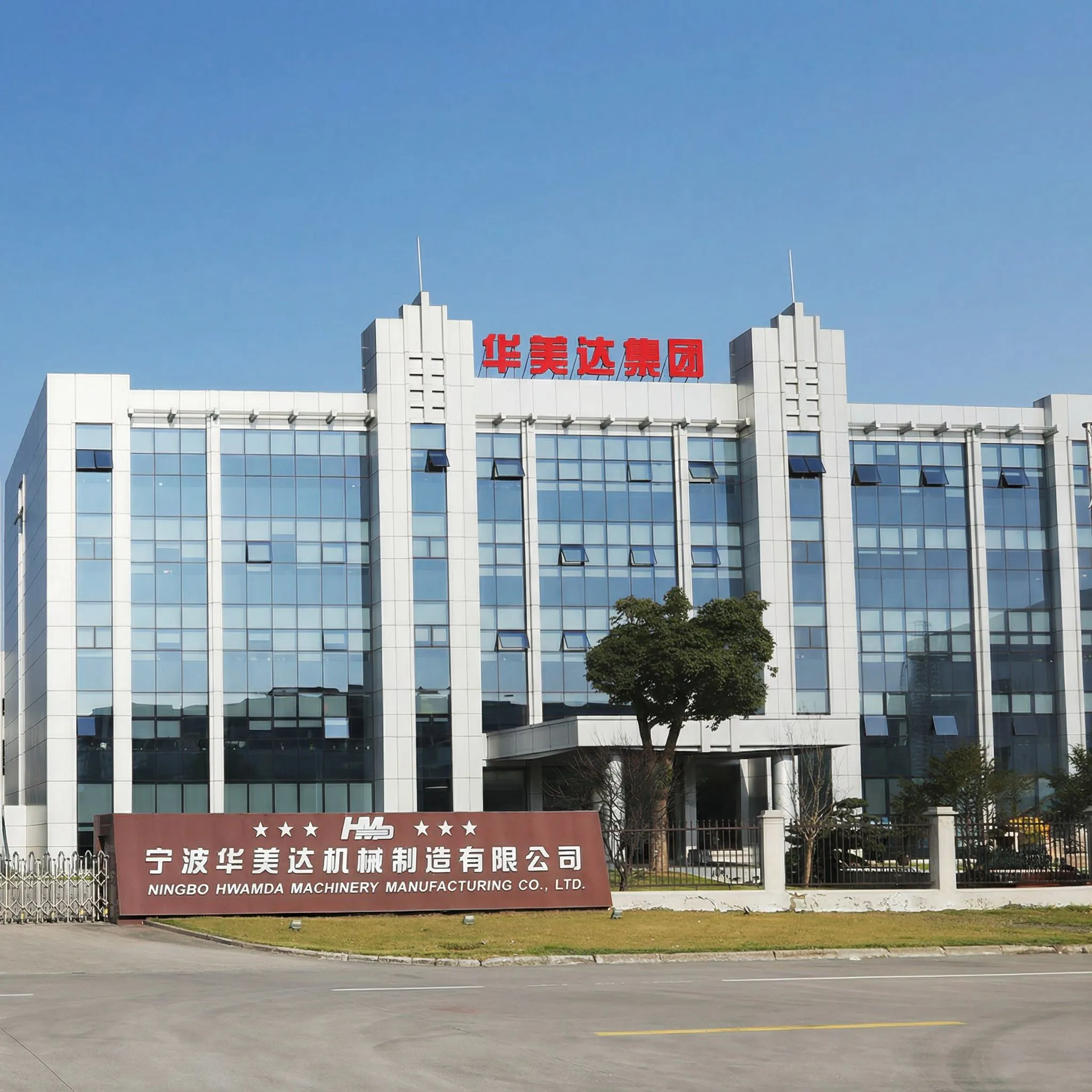
HWAMDA factory — quality manufacturing since 2003
Equipment Procurement Strategy
Your core equipment investment includes an injection molding machine, mold, auxiliary equipment, and optionally an IML automation system. For a startup factory, the HWAMDA SPV5 series offers machines from 270T to 600T covering all thin-wall applications. A typical first-line investment starts with one SPV5 machine matched to your target product. For yogurt cups, specify an HMD 380M8-SPV with 12-cavity mold delivering 3.5-4.5 second cycles. For food containers, an HMD 480M8-SPV with 6-cavity mold achieving 5-7 second cycles is standard. Auxiliary equipment includes a chiller, material dryer, auto-loader, and conveyor system. Budget approximately $150,000-$350,000 for the complete first production line depending on application and cavitation. HWAMDA's turnkey approach bundles machine, mold, robot, and auxiliaries with guaranteed cycle time performance, eliminating integration risk that arises when sourcing components from multiple suppliers.
Factory Setup and Licensing
Factory layout planning directly impacts production efficiency. Allocate minimum 500 square meters for a single production line including raw material storage, production floor, quality inspection area, and finished goods warehouse. The production floor needs 3-phase industrial power (minimum 100 kVA per line), compressed air at 0.6-0.8 MPa, and cooling water circulation. Floor loading capacity must support machines weighing 15-25 tons. For food-contact packaging, obtain relevant certifications before production begins. Most markets require ISO 9001 quality management as a baseline. Food-specific certifications include ISO 22000, BRC Packaging, or FDA registration depending on your export markets. Building permits, environmental clearances for plastic processing, and fire safety certifications are standard requirements. HWAMDA provides factory layout drawings and utility specification documents to streamline facility preparation.
Key Specs
- •The production floor needs 3-phase industrial power (minimum 100 kVA per line), compressed air at 0.6-0.8 MPa, and cooling water circulation.
- •Floor loading capacity must support machines weighing 15-25 tons.
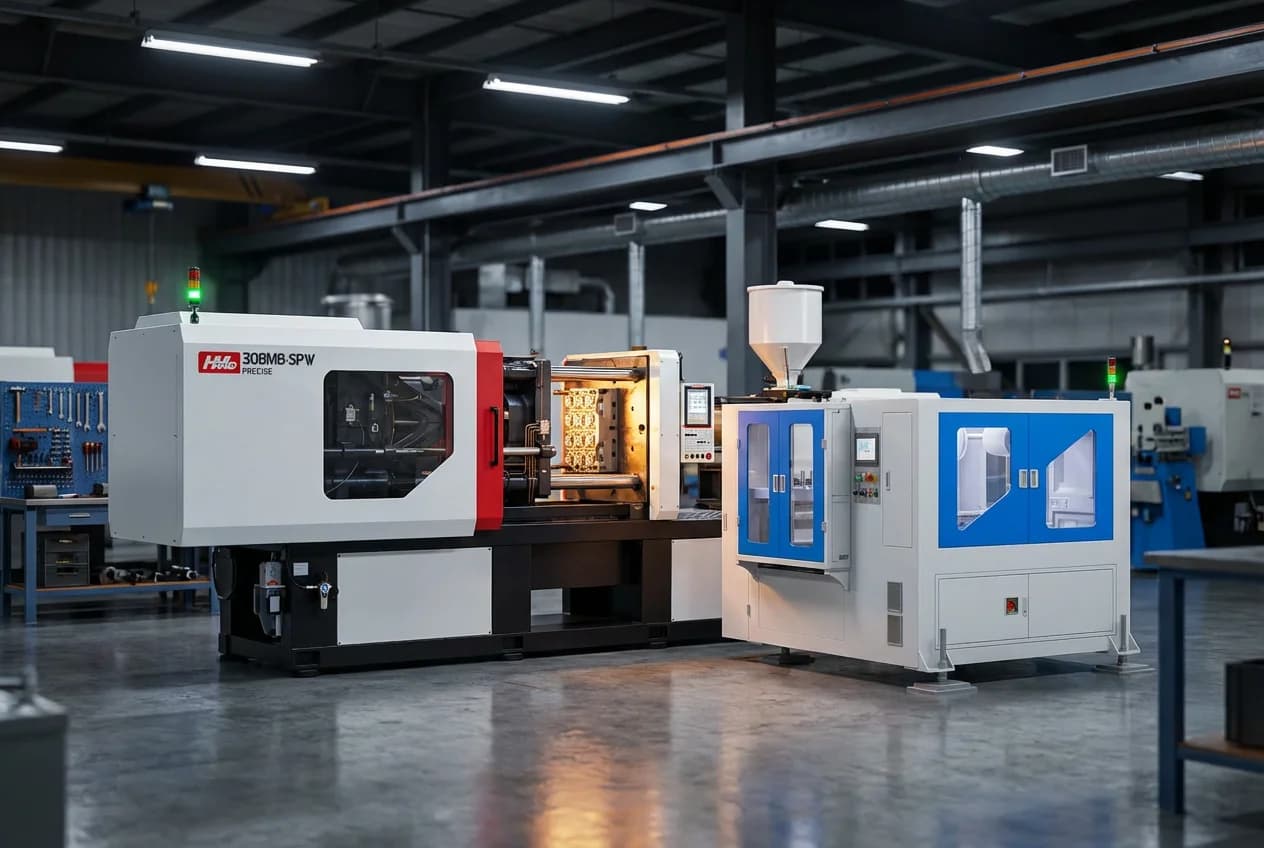
SPV5 machines on the production floor
Need Expert Advice?
Talk to our engineers about your specific production requirements. Free consultation.
Raw Material Sourcing
Polypropylene (PP) is the primary resin for thin-wall food packaging, accounting for 60-70% of your per-unit production cost. Source food-grade PP homopolymer with melt flow index (MFI) of 40-60 g/10min for optimal thin-wall flow characteristics. Major PP suppliers include SABIC, LyondellBasell, Borealis, and regional producers like IRPC (Thailand) and Lotte Chemical (South Korea). For a single production line running 24 hours, plan for approximately 3-5 tons of PP consumption per day depending on product weight and cavitation. Negotiate quarterly or annual supply contracts to lock in pricing, as PP prices fluctuate with crude oil markets. Maintain a minimum 2-week raw material buffer stock. If producing IML containers, source BOPP labels from specialized printers with costs ranging $20-70 per thousand depending on volume. HWAMDA can recommend verified material suppliers in your region.
Hiring and Training
A single thin-wall production line typically requires 3-4 operators per shift covering machine operation, quality inspection, and material handling. For a 24/7 operation with three shifts, plan for 10-12 production staff plus a mold technician shared across 2-4 lines and a maintenance technician. Machine operators need training on SPV5 control systems, process parameter adjustment, and basic troubleshooting. Quality inspectors must understand dimensional tolerances (wall thickness uniformity within +/-0.05mm), visual defect identification, and food safety hygiene protocols. HWAMDA includes comprehensive operator training as part of turnkey installations, covering 2-3 weeks of on-site training during commissioning. Training covers machine startup and shutdown procedures, mold changeover, parameter optimization for different PP grades, and preventive maintenance routines. Experienced operators from general injection molding can transition to thin-wall production with focused training on the higher injection speeds and shorter cycle times.
Key Specs
- •Quality inspectors must understand dimensional tolerances (wall thickness uniformity within +/-0.05mm), visual defect identification, and food safety hygiene protocols.
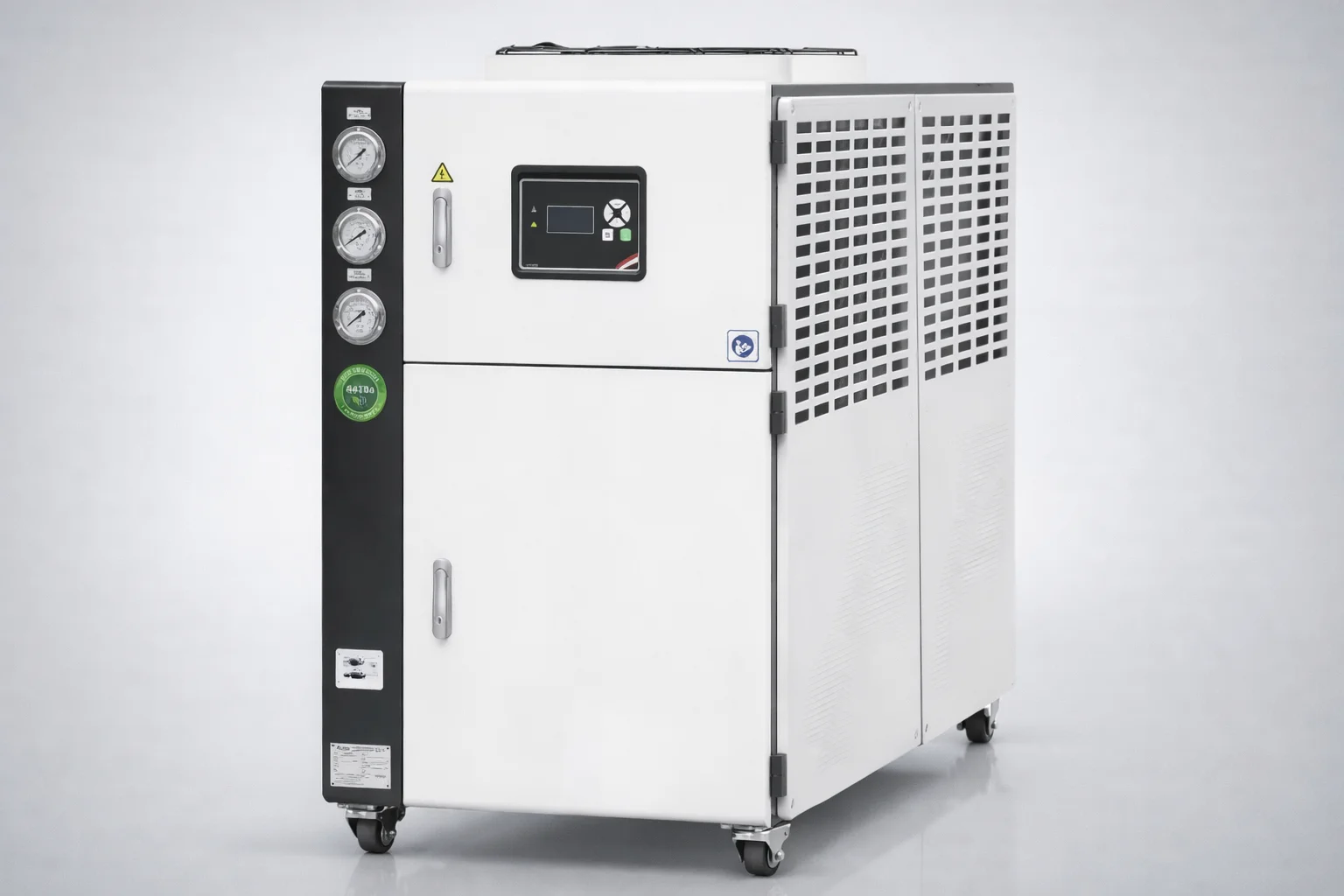
Industrial cooling system for injection molding
Scaling from Startup to Full Production
Plan your startup phase in stages. Phase 1 (months 1-3) focuses on single-line commissioning, operator training, and achieving stable cycle times at target cavitation. Phase 2 (months 4-6) ramps to full 24/7 production and establishes quality consistency with reject rates below 1%. Phase 3 (months 7-12) optimizes for maximum efficiency and begins planning the second production line. Key metrics to track include OEE (target 85%+), cycle time consistency, reject rate, and material yield. A well-run single yogurt cup line with 12-cavity mold at 4-second cycles produces approximately 7,700 cups per hour or 5.5 million cups per month. When monthly sales consistently exceed 80% of single-line capacity, begin planning expansion. Adding a second identical line doubles output with minimal incremental overhead. HWAMDA supports phased expansion with standardized machine configurations that simplify spare parts inventory and operator cross-training.
Frequently Asked Questions
A single production line startup typically requires $150,000-$350,000 for the injection molding machine, mold, and auxiliary equipment, depending on product type and cavitation. Add $50,000-$100,000 for facility preparation, raw material stock, and certifications. Yogurt cup and sauce cup lines are at the lower end due to smaller machine tonnages (270-400T), while food container and yogurt pail lines using 480-600T machines cost more. HWAMDA offers flexible payment terms including LC and milestone-based payments.
Related Guides
Ready to Start Your Project?
Get a free consultation and quotation for your thin-wall packaging production line.
Join 500+ manufacturers in 60+ countries who trust HWAMDA.
Get Free Quote