

Total Investment Breakdown
A thin-wall packaging factory requires investment across several categories. Primary equipment costs range from $90,000 for a single 270T tableware line to $350,000+ for a 600T yogurt pail system with IML automation. Most viable factory operations require 2-4 machines to achieve economies of scale, putting total equipment investment at $300,000-$1,200,000. Mold costs add $30,000-$120,000 per product type depending on cavitation count and steel specification. Auxiliary equipment including chillers, material loaders, dryers, conveyors, and compressors typically adds 15-25% to machine costs. Factory facility requirements include 500-2,000 square meters of production space with 4-meter minimum ceiling height, 3-phase power supply of 200-500 kVA, and industrial water supply. Facility costs vary dramatically by country, from $3-8 per square meter monthly in Southeast Asia to $15-30 in Europe. Working capital for initial raw material inventory, typically 30-60 days of PP resin stock, requires $50,000-$200,000 depending on production scale. HWAMDA provides comprehensive project financial models with sensitivity analysis for key variables including resin price fluctuations, capacity utilization scenarios, and currency exchange rate movements. These models help buyers present bankable investment proposals to financing institutions. Equipment residual value after 10 years of operation typically retains 25-35% of original purchase price, providing additional investment security.
Key Specs
- •Auxiliary equipment including chillers, material loaders, dryers, conveyors, and compressors typically adds 15-25% to machine costs.
- •Equipment residual value after 10 years of operation typically retains 25-35% of original purchase price, providing additional investment security.
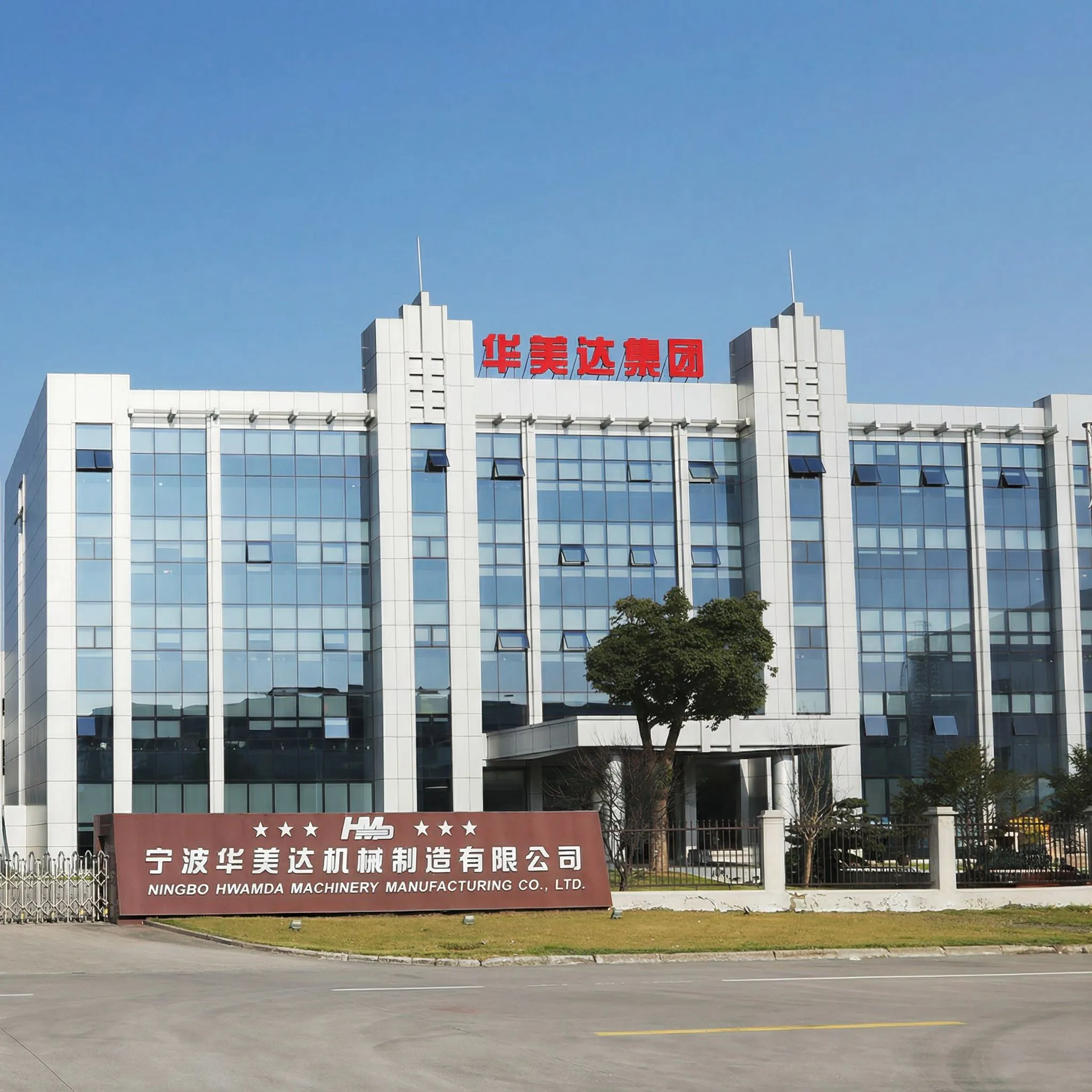
HWAMDA factory — quality manufacturing since 2003
Revenue Projection by Product Type
Revenue potential varies significantly by product type and market. Yogurt cups at 12 cavities, 4.5 second cycle: approximately 62 million cups annually per machine at $0.035-0.045 wholesale generating $2.2-2.8 million revenue. Food containers at 6 cavities, 6 second cycle: approximately 19.8 million units annually at $0.06-0.10 wholesale generating $1.2-2.0 million revenue per machine. Sauce cups at 24 cavities, 3.5 second cycle: approximately 165 million units annually at $0.008-0.015 generating $1.3-2.5 million revenue. Margarine IML tubs at 8 cavities, 5.5 second cycle: approximately 34.6 million units at $0.045-0.085 generating $1.6-2.9 million revenue. Disposable tableware at 48 cavities, 4.5 second cycle: approximately 253 million pieces at $0.004-0.008 generating $1.0-2.0 million revenue. These projections assume 22 hours daily operation at 82-90% OEE across 300 production days annually. Multi-machine operations multiply revenue proportionally while sharing overhead costs. HWAMDA provides customers with detailed spreadsheet-based financial planning tools that model project economics under various operating scenarios.
Operating Cost Structure
Operating costs in thin-wall packaging production follow a consistent pattern across markets. Raw material (PP resin) represents the largest cost component at 55-70% of total production cost, making resin price fluctuations the primary profitability variable. Energy costs account for 8-15% of production cost, varying significantly by country from $0.04/kWh in the Gulf to $0.20+/kWh in Europe. Direct labor costs range from 5-20% depending on wage levels and automation degree, with 6-12 operators required per shift for a 2-4 machine factory. Mold maintenance and machine servicing consume 3-5% of production costs when following recommended preventive maintenance schedules. Packaging, warehousing, and logistics add 5-10%. Factory overhead including rent, insurance, and administrative staff accounts for 5-12%. IML labels, where applicable, add $0.025-0.075 per unit depending on label complexity and size. Understanding this cost structure enables operators to identify the highest-impact optimization opportunities for their specific market conditions.
Key Specs
- •Raw material (PP resin) represents the largest cost component at 55-70% of total production cost, making resin price fluctuations the primary profitability variable.
- •Energy costs account for 8-15% of production cost, varying significantly by country from $0.04/kWh in the Gulf to $0.20+/kWh in Europe.
- •Direct labor costs range from 5-20% depending on wage levels and automation degree, with 6-12 operators required per shift for a 2-4 machine factory.
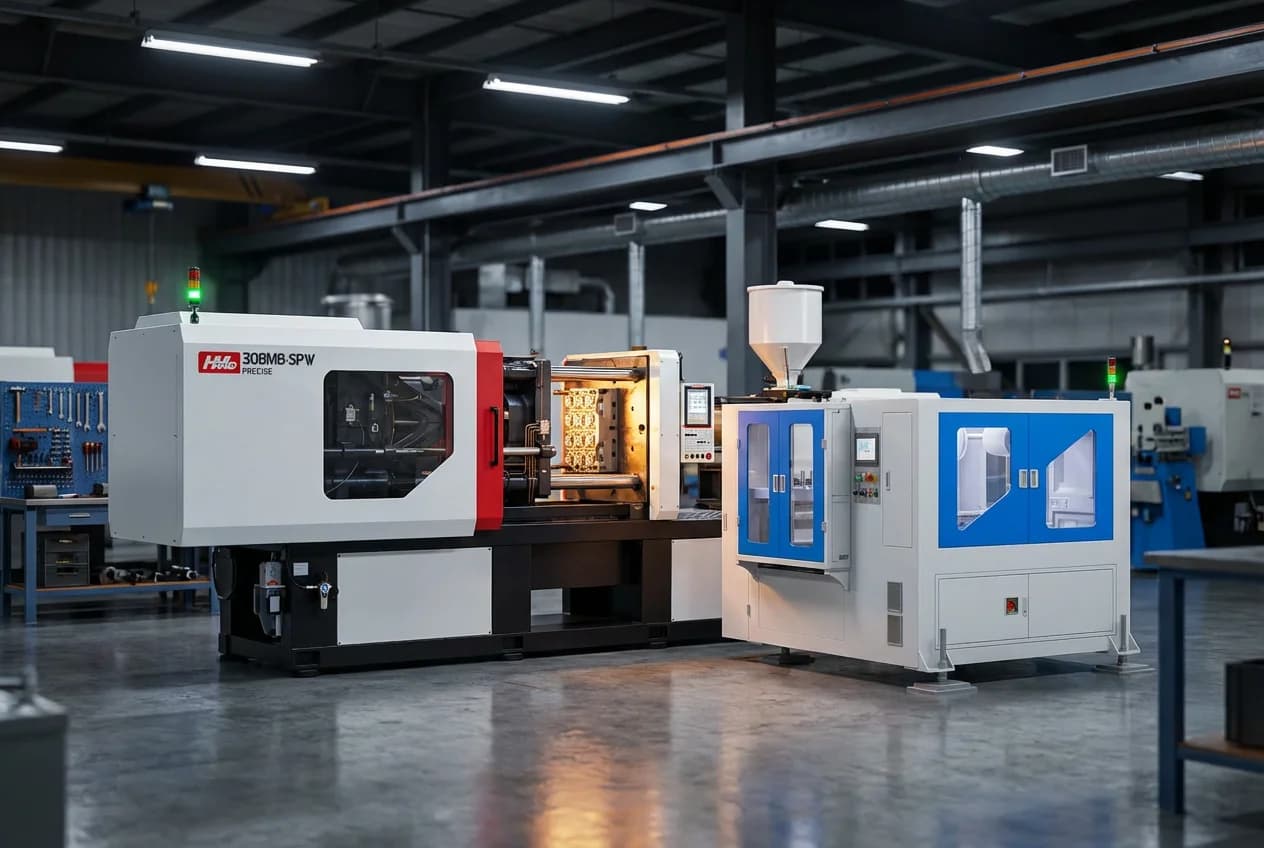
SPV5 machines on the production floor
Need Expert Advice?
Talk to our engineers about your specific production requirements. Free consultation.
Break-Even Timeline Calculation
Break-even timeline depends on three primary variables: capital investment, production volume ramp-up speed, and gross margin per unit. A single-machine operation with $150,000 total investment producing margarine containers at $0.030 gross margin per unit breaks even at 5 million units, achievable in approximately 2 months of full production. A multi-machine tableware factory with $500,000 investment at $0.003 per-piece margin breaks even at 167 million pieces, approximately 5-6 months with 2 machines running. The critical assumption is ramp-up speed: most HWAMDA installations reach 80% capacity within 30 days of commissioning and 95% within 60 days. Customer acquisition timeline is typically the binding constraint, not production capability. HWAMDA recommends securing purchase commitments covering at least 50% of planned capacity before equipment purchase. For new market entrants, starting with one machine and adding capacity as customer base grows reduces risk while maintaining fast break-even on initial investment.
Sensitivity Analysis: Key Variables
Project profitability is most sensitive to three variables that deserve careful analysis. PP resin price fluctuations of plus or minus $100 per ton change production costs by $0.0003-0.004 per unit depending on part weight, translating to 5-15% margin impact. A $200/ton resin price increase on yogurt cups reduces annual profit by approximately $100,000-$170,000 per machine. Capacity utilization below 70% significantly extends payback period; at 50% utilization, break-even doubles. OEE degradation from 85% to 75% reduces annual output by approximately 12%, directly impacting revenue and fixed cost absorption. Currency exchange rate movements affect both equipment investment and ongoing resin procurement costs for import-dependent manufacturers. HWAMDA recommends stress-testing project economics at resin price plus 15%, capacity utilization minus 20%, and local currency depreciation of 10% to verify project viability under adverse conditions before committing capital. These tools incorporate actual production data from existing HWAMDA installations worldwide, providing realistic benchmarks rather than theoretical projections. Customers can input their specific cost parameters to generate customized ROI analyses for their investment presentations.
Key Specs
- •PP resin price fluctuations of plus or minus $100 per ton change production costs by $0.0003-0.004 per unit depending on part weight, translating to 5-15% margin impact.
- •Capacity utilization below 70% significantly extends payback period; at 50% utilization, break-even doubles.
- •OEE degradation from 85% to 75% reduces annual output by approximately 12%, directly impacting revenue and fixed cost absorption.
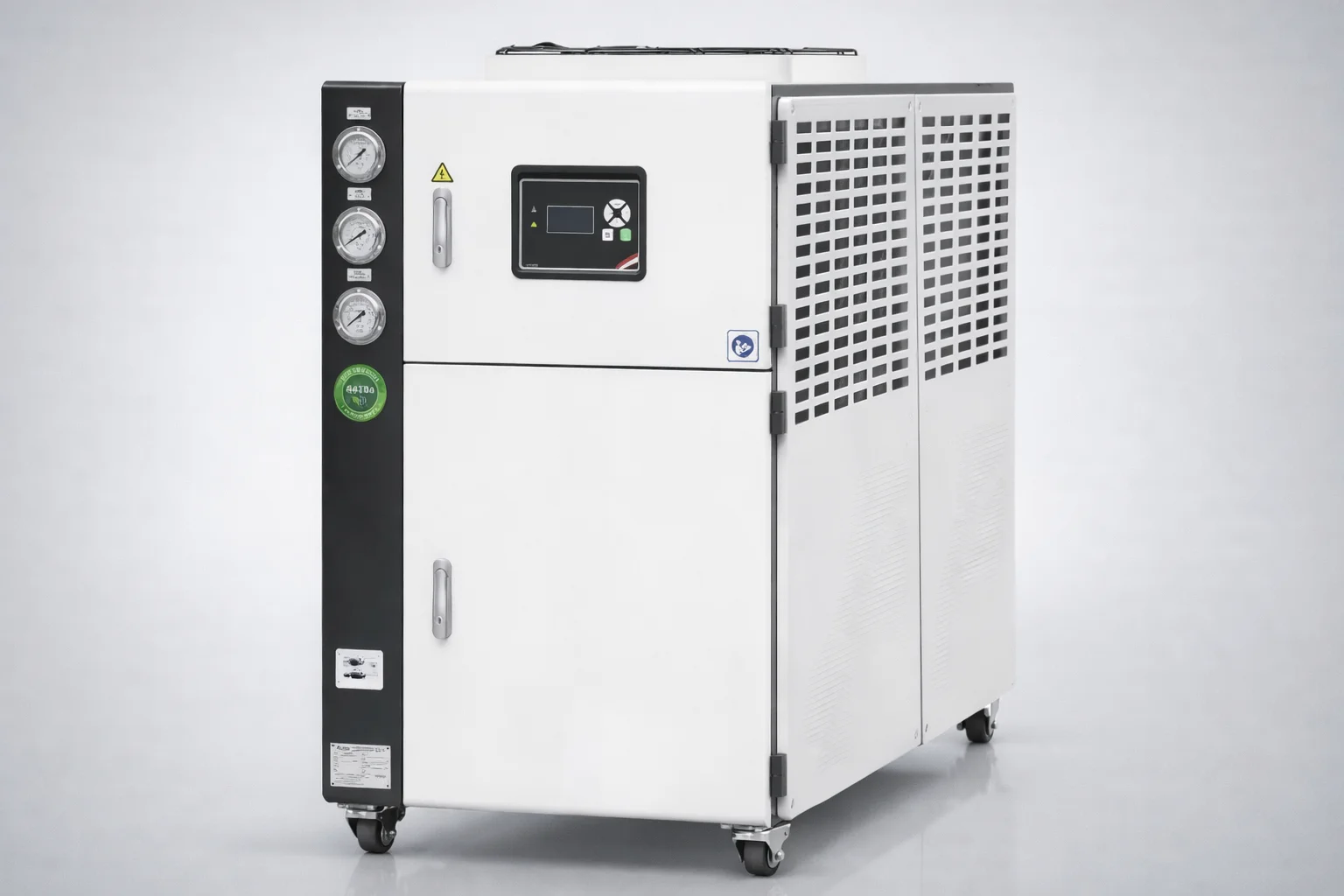
Industrial cooling system for injection molding
Financing Options
Thin-wall packaging factory investments can be financed through several channels depending on market and investor profile. Equipment supplier financing through HWAMDA includes standard 30/40/30 payment terms that reduce upfront capital requirements. Bank equipment loans in most markets cover 60-80% of machinery value at 5-12% annual interest rates. Export credit agencies in China including SINOSURE provide buyer credit insurance that enables favorable financing terms for HWAMDA equipment purchases. Development finance institutions including IFC, AfDB, and ADB provide project financing for qualifying food packaging manufacturing investments in developing markets. Government incentive programs vary by country: BNDES in Brazil, SIDF in Saudi Arabia, KOSGEB in Turkey, and PLI schemes in India all provide subsidized financing or investment grants for manufacturing equipment. Leasing arrangements through local financial institutions offer an alternative to outright purchase, with monthly payments aligned to production revenue. HWAMDA's commercial team assists buyers in identifying and structuring the most advantageous financing approach for their specific market and investment profile.
Frequently Asked Questions
The minimum viable investment is approximately $120,000-$180,000 for a single-machine operation producing tableware or sauce cups, including the 270T machine, mold, auxiliaries, and initial raw material inventory. A more robust two-machine startup targeting food containers or yogurt cups requires $350,000-$600,000. HWAMDA recommends starting with one machine and scaling based on confirmed customer orders. HWAMDA provides detailed project financial models customized for each customer's specific market conditions, helping buyers present compelling investment cases to banks and financing institutions. Equipment package pricing offers 8-12% savings versus purchasing components individually.
Related Guides
Ready to Start Your Project?
Get a free consultation and quotation for your thin-wall packaging production line.
Join 500+ manufacturers in 60+ countries who trust HWAMDA.
Get Free Quote