

Define Your Production Requirements
Before evaluating any machine supplier, clearly document your target product specifications including container type, dimensions, wall thickness, material grade, cavitation count, and required cycle time. Thin-wall packaging typically means wall-to-flow-path ratios below 1:100, requiring injection speeds above 200 mm/s and clamping forces from 270-600 tons depending on projected area. Calculate your annual volume requirements and work backward to determine how many cavities and machines you need. For yogurt cups, typical configurations are 380-400T with 8/12/16 cavities at 3.5-4.5 second cycles. Food containers require 480-530T with 4/6/8 cavities at 5-7 seconds. Sauce cups use 270-280T with 16/24/32 cavities at 3-4 seconds. Document your IML requirements including label format, placement accuracy, and robot type. Specify auxiliary equipment needs including chiller capacity, material handling, and quality inspection systems that must integrate with the molding machine.
Key Specs
- •Thin-wall packaging typically means wall-to-flow-path ratios below 1:100, requiring injection speeds above 200 mm/s and clamping forces from 270-600 tons depending on projected area.
- •For yogurt cups, typical configurations are 380-400T with 8/12/16 cavities at 3.5-4.5 second cycles.
- •Food containers require 480-530T with 4/6/8 cavities at 5-7 seconds.
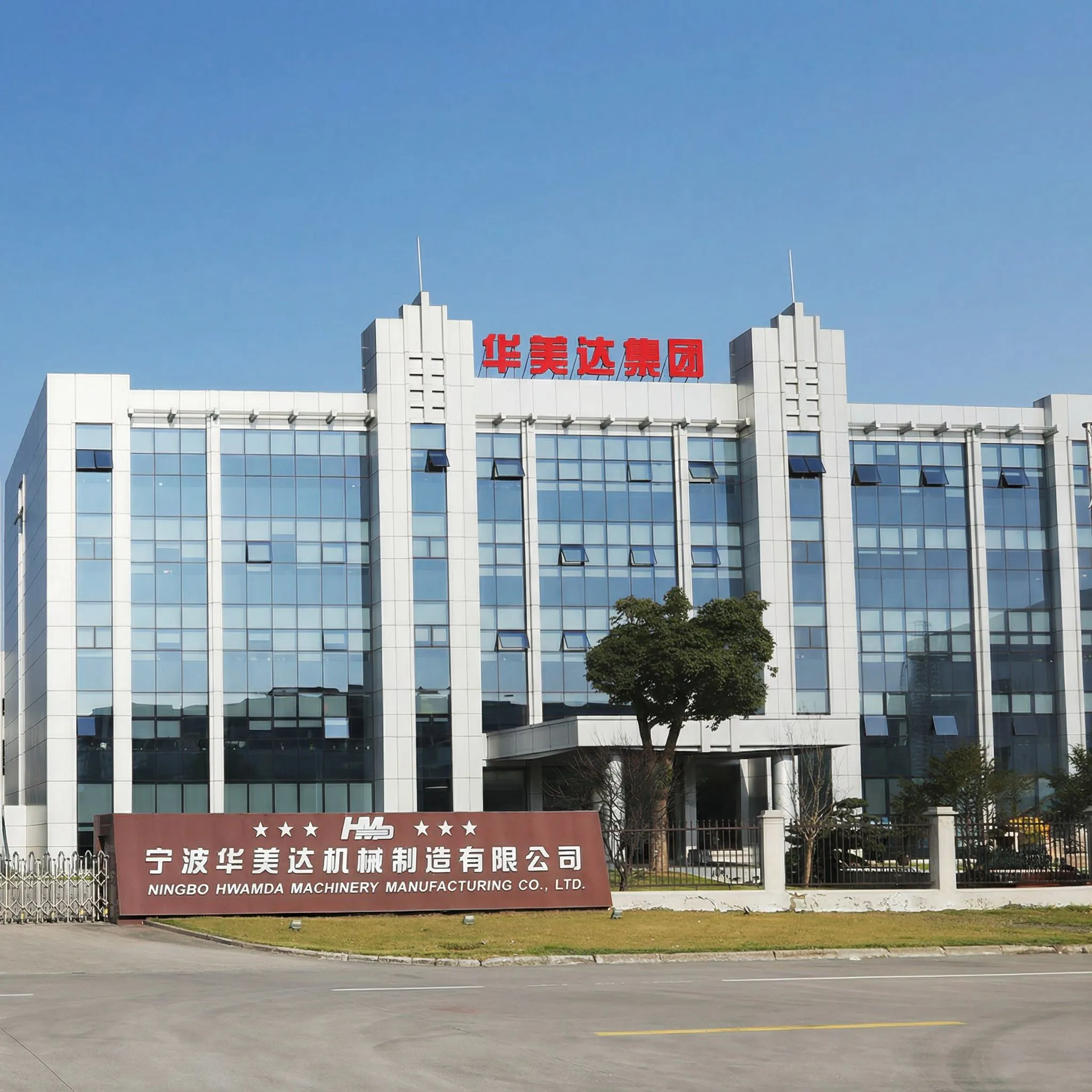
HWAMDA factory — quality manufacturing since 2003
Machine Specifications Checklist
Evaluate injection molding machines against these critical specifications for thin-wall production. Clamping force must exceed the projected area multiplied by cavity pressure (typically 400-600 bar for thin-wall PP). Injection speed should exceed 300 mm/s for wall thicknesses below 0.6 mm. Screw diameter should match shot size requirements with L/D ratio of 22-25:1 for PP processing. Verify platen dimensions accommodate your mold footprint with clearance for IML robot access. Assess the servo-hydraulic system's energy efficiency rating in kWh per kg of processed material, with modern systems achieving 0.32-0.45 kWh/kg. Check platen parallelism specification, which should be within 0.03 mm for thin-wall molds. Confirm the controller system supports recipe storage, SPC monitoring, and Euromap 67/77 robot interface. Verify electrical configuration matches your factory power supply and assess the machine's ambient temperature rating for your operating environment.
Mold Specifications Checklist
Thin-wall mold evaluation requires attention to several critical factors. Hot runner system quality directly affects cycle time, reject rates, and maintenance costs, with valve-gate systems essential for cavitation above 4. Verify mold steel specification matches your required cycle life: NAK80 or 2738HH for 2-3 million cycles, S136 or S136 ESR for 5+ million cycles. Cooling channel design should achieve uniform mold surface temperature within 2 degrees Celsius across all cavities, with conformal cooling in critical zones. Assess cavity-to-cavity weight consistency, which should be within 2% for food packaging applications. For IML molds, verify label placement accuracy specification (0.2-0.3 mm is standard) and confirm compatibility with your chosen robot system. Check the mold's quick-change capability for switching between product sizes. Request sample parts from each cavity for dimensional verification before final mold acceptance. Verify that the mold supplier provides comprehensive maintenance documentation and spare parts availability.
Key Specs
- •Assess cavity-to-cavity weight consistency, which should be within 2% for food packaging applications.
- •For IML molds, verify label placement accuracy specification (0.2-0.3 mm is standard) and confirm compatibility with your chosen robot system.
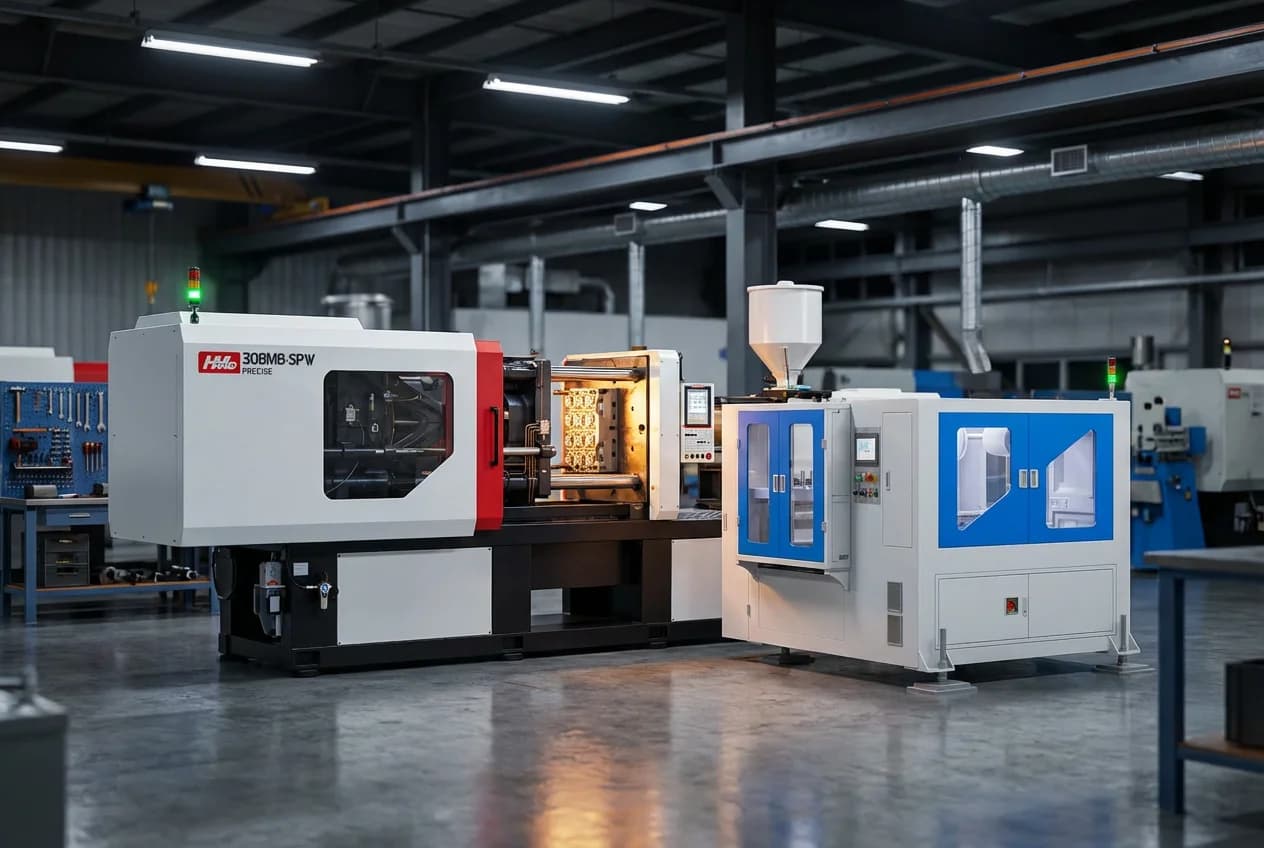
SPV5 machines on the production floor
Need Expert Advice?
Talk to our engineers about your specific production requirements. Free consultation.
Supplier Evaluation Framework
Evaluate thin-wall machine suppliers across five dimensions. Technical capability: review the supplier's track record in your specific product category with reference customer contacts. Manufacturing quality: request factory visit or virtual tour to inspect machining quality, assembly procedures, and testing protocols. After-sales support: verify spare parts availability timeline, remote diagnostic capability, and regional service partner network. Financial stability: assess the supplier's longevity, production volume, and warranty terms. Total cost of ownership: compare not just purchase price but installation costs, energy consumption over 10 years, expected maintenance expenses, and spare parts pricing. Chinese manufacturers like HWAMDA typically offer 40-50% capital cost savings versus European suppliers for equivalent performance specifications. However, evaluate each supplier's specific track record in your product category rather than making assumptions based on origin. Request running production demonstrations with your specific container type during factory evaluation visits.
Price Negotiation and Payment Terms
Thin-wall injection molding machine pricing varies significantly based on tonnage, specifications, and supplier origin. Chinese-manufactured 270T machines range from $60,000-$95,000, while 600T machines range from $150,000-$250,000. European equivalents typically cost 1.8-2.5 times more. Mold pricing depends on cavitation and steel grade, ranging from $30,000 for 4-cavity molds to $120,000+ for 48-cavity configurations with premium steel. Negotiate payment terms carefully: standard structures include 30% advance, 40% before shipment after factory acceptance, and 30% after installation commissioning. Letter of credit at sight provides security for both parties. Negotiate spare parts pricing and availability as part of the initial purchase contract rather than after installation. Include warranty terms of minimum 12 months covering major components, with extended warranty options for servo systems and controllers. Request itemized quotations that separate machine, mold, robot, auxiliaries, and installation costs.
Key Specs
- •Negotiate payment terms carefully: standard structures include 30% advance, 40% before shipment after factory acceptance, and 30% after installation commissioning.
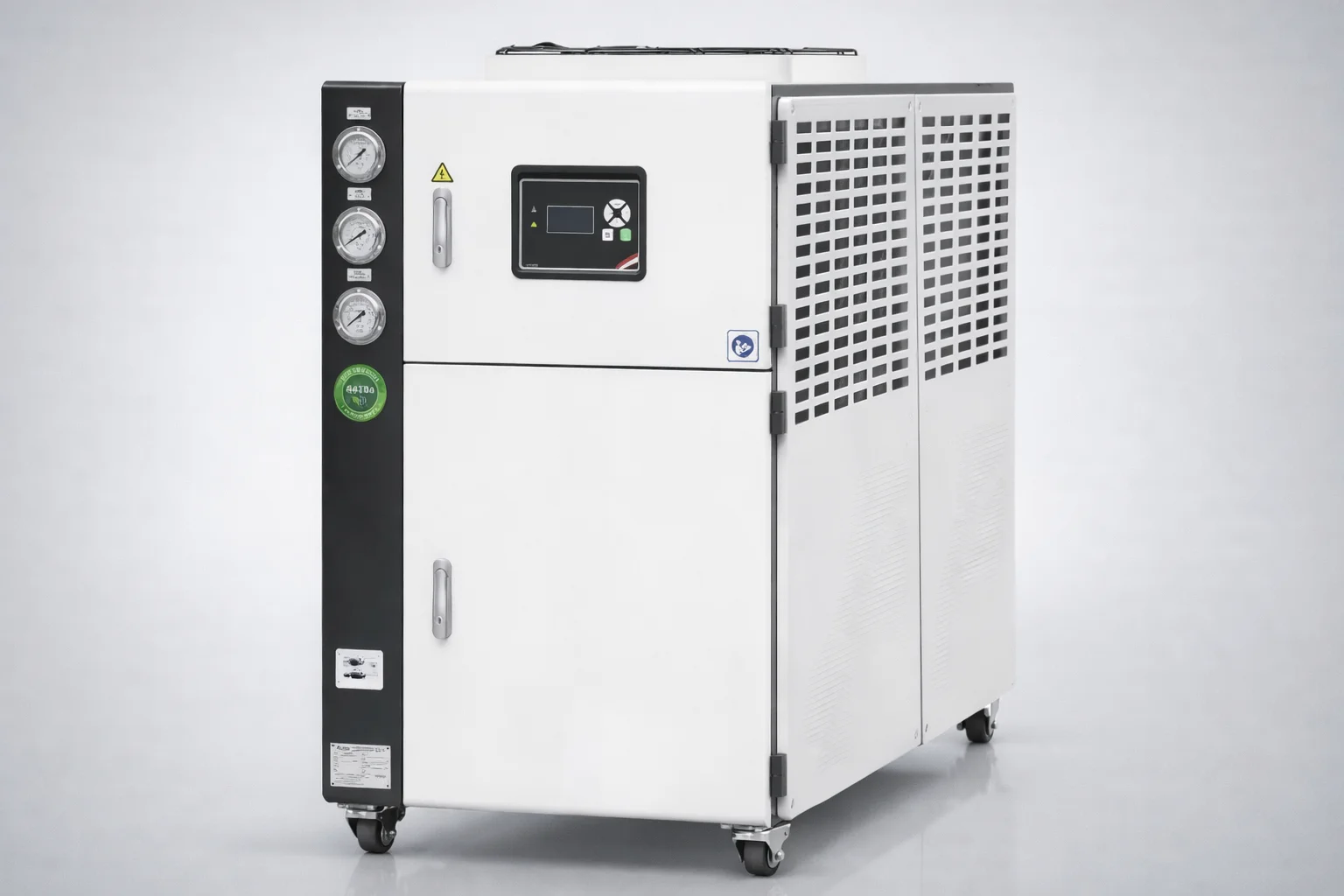
Industrial cooling system for injection molding
After-Sales Service Expectations
Establish clear after-sales service expectations before purchase commitment. Minimum requirements include 24-hour remote diagnostic response time, spare parts shipment within 48 hours for critical components, and on-site engineer availability within 5-7 business days for issues not resolvable remotely. Verify the supplier maintains spare parts inventory for all common wear items including barrel heaters, thermocouples, hydraulic seals, screw tips, and controller components. Request the supplier's recommended preventive maintenance schedule with estimated annual maintenance costs. Confirm that the supplier provides comprehensive training including machine operation, process optimization, mold maintenance, and troubleshooting procedures. Evaluate the supplier's IoT and remote monitoring capabilities that enable proactive maintenance and rapid issue resolution. HWAMDA provides all customers with remote diagnostic connectivity through the KEBA controller, maintaining 24-hour technical support availability across time zones. HWAMDA's technical sales team provides detailed consultation during the specification process, helping buyers avoid common pitfalls such as undersized clamping force, inadequate injection speed, or incompatible auxiliary equipment configurations. This pre-purchase engineering support ensures the final equipment configuration delivers optimal production results from day one of commissioning.
Frequently Asked Questions
Clamping force requirements depend on total projected area multiplied by cavity pressure. For yogurt cups, 380-400 tons serves 8/12/16 cavities. Food containers need 480-530 tons for 4/6/8 cavities. Sauce cups require 270-280 tons for 16/24/32 cavities. HWAMDA engineers can calculate precise requirements based on your specific container geometry and material selection. HWAMDA's quality management system and documentation packages are designed to support customers' regulatory compliance requirements across all major international food packaging standards and certification frameworks.
Related Guides
Ready to Start Your Project?
Get a free consultation and quotation for your thin-wall packaging production line.
Join 500+ manufacturers in 60+ countries who trust HWAMDA.
Get Free Quote