

Definition and Industry Standards
Thin-wall injection molding is formally defined by a wall-thickness-to-flow-length ratio rather than an absolute thickness value. The industry standard considers any part with a flow-length-to-wall-thickness ratio exceeding 100:1 as thin-wall. For food packaging, typical wall thicknesses range from 0.4mm to 0.7mm. A standard 150ml yogurt cup with 0.5mm walls and a 100mm flow length has a ratio of 200:1—firmly in the thin-wall category. The technical challenge increases exponentially as wall thickness decreases. At 0.5mm wall thickness, the melt front freezes within 0.1-0.3 seconds of contacting the cold mold surface, requiring injection speeds of 300-500 mm/s to complete cavity filling before freeze-off. This is 3-5 times faster than standard injection molding. Industry standards for thin-wall packaging also specify weight consistency within ±2%, dimensional accuracy within ±0.1mm, and visual quality suitable for food contact applications. Industry associations including SPE and Euromap have published technical guidelines specific to thin-wall molding that cover machine specifications, mold requirements, and quality testing procedures.
Key Specs
- •For food packaging, typical wall thicknesses range from 0.4mm to 0.7mm.
- •A standard 150ml yogurt cup with 0.5mm walls and a 100mm flow length has a ratio of 200:1—firmly in the thin-wall category.
- •At 0.5mm wall thickness, the melt front freezes within 0.1-0.3 seconds of contacting the cold mold surface, requiring injection speeds of 300-500 mm/s to complete cavity filling before freeze-off.
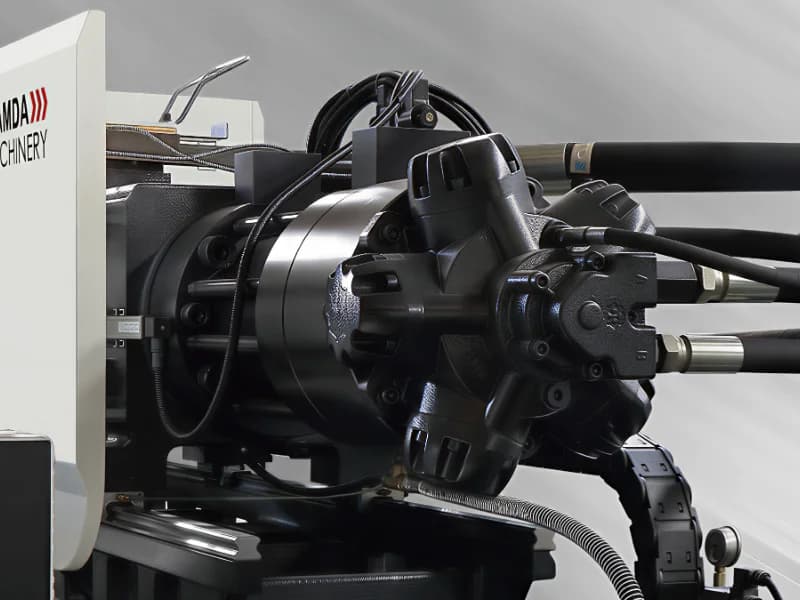
High-speed injection unit with linear guides
How Thin-Wall Differs from Standard Injection Molding
Standard injection molding operates at injection speeds of 50-150 mm/s with cycle times of 15-60 seconds for parts with wall thicknesses of 1.5-4.0mm. Thin-wall molding operates in an entirely different regime: injection speeds of 200-500 mm/s, injection pressures of 150-250 MPa (versus 80-150 MPa for standard), and cycle times of 3-8 seconds. These extreme parameters demand machines purpose-built for the application. The mold technology differs fundamentally as well. Thin-wall molds use beryllium copper or high-conductivity alloy inserts for rapid cooling, conformal cooling channels for uniform temperature control, and valve gate hot runners for precise gate control. Ejection systems must handle thin, flexible parts without deformation. Standard molds for thick-wall parts use simpler steel configurations, conventional cooling channels, and slower ejection—none of which are suitable for thin-wall production. The fundamental difference extends to mold cost—thin-wall molds with precision cooling, premium steel, and valve gate hot runners cost 2-3 times more than standard molds for equivalent cavity counts.
Key Applications in Food Packaging
Yogurt cups represent the largest single application for thin-wall injection molding, with global production exceeding 50 billion units annually. HWAMDA produces complete yogurt cup lines using SPV5 380-400T machines with 8-16 cavity molds achieving 3.5-4.5 second cycles. Wall thickness is typically 0.45-0.55mm using food-grade PP. Food storage containers (500ml-1000ml) are the second major application, produced on HWAMDA SPV5 480-530T machines with 4-8 cavity molds at 5-7 second cycles. Sauce cups (30ml-120ml) use SPV5 270-280T machines with 16-32 cavity molds at 3-4 second cycles. Disposable tableware including plates, bowls, and cutlery uses SPV5 270-280T machines with 16-48 cavity molds at 4-6 second cycles. IML-decorated margarine and butter containers on SPV5 380T with 4-8 cavity molds at 5-7 seconds round out the major product categories. Each product category is optimized for specific HWAMDA SPV5 machine models, ensuring the right clamping force, injection speed, and shot capacity for the target container type and cavity count.
Key Specs
- •HWAMDA produces complete yogurt cup lines using SPV5 380-400T machines with 8-16 cavity molds achieving 3.5-4.5 second cycles.
- •Wall thickness is typically 0.45-0.55mm using food-grade PP.
- •Food storage containers (500ml-1000ml) are the second major application, produced on HWAMDA SPV5 480-530T machines with 4-8 cavity molds at 5-7 second cycles.
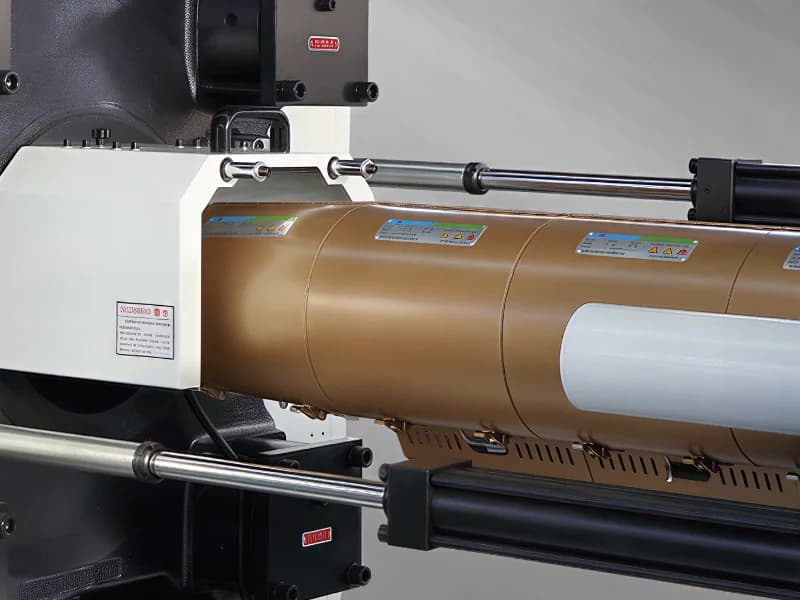
Servo-hydraulic drive system with energy recovery
Need Expert Advice?
Talk to our engineers about your specific production requirements. Free consultation.
Equipment Requirements
The injection molding machine must deliver high injection speed (300-500 mm/s), high injection pressure (200+ MPa), fast clamping (dry cycle under 2 seconds), and precise accumulator control. The HWAMDA SPV5 series (270T-600T) is specifically engineered for these requirements, with accumulator-assisted injection, servo-hydraulic power, and toggle clamping optimized for high-speed packaging. Molds for thin-wall production require premium steel (S136, H13), precision CNC machining within ±0.01mm tolerance, multi-circuit cooling systems with beryllium copper inserts, valve gate hot runner systems from Yudo, Husky, or Mold-Masters, and air-assisted ejection for thin parts. Auxiliary equipment includes process chillers for consistent mold temperature, material dryers for moisture-sensitive resins, robotic part removal or IML systems (SWITEK), and conveyors with stacking stations for downstream handling. The complete production system must be designed as an integrated unit—machine, mold, cooling, and automation all work together to achieve the extreme speeds demanded by thin-wall packaging. HWAMDA provides detailed auxiliary equipment specifications and sourcing guidance as part of the project planning service, ensuring all production line components work together seamlessly.
Market Size and Growth Trends
The global thin-wall packaging market is valued at approximately $45-55 billion annually, growing at 5-7% per year driven by urbanization, convenience food consumption, and the shift from glass and metal to plastic packaging. The fastest-growing regions are Southeast Asia (8-12% annual growth), Africa (7-10%), the Middle East (6-9%), and South America (5-8%). These emerging markets are where new factory investments generate the highest returns. Key growth drivers include the expansion of organized dairy industries requiring standardized packaging, growth of food delivery and takeaway services demanding high volumes of disposable containers, rising middle-class consumer spending on branded packaged foods, and government food safety regulations requiring hygienic packaging instead of loose food handling. The shift toward IML-decorated containers for brand differentiation is adding value to the segment and improving margins for manufacturers with decoration capability. The market opportunity is particularly strong in countries transitioning from informal food distribution to modern packaged food retail, where government food safety mandates accelerate adoption.
Key Specs
- •The global thin-wall packaging market is valued at approximately $45-55 billion annually, growing at 5-7% per year driven by urbanization, convenience food consumption, and the shift from glass and metal to plastic packaging.
- •The fastest-growing regions are Southeast Asia (8-12% annual growth), Africa (7-10%), the Middle East (6-9%), and South America (5-8%).
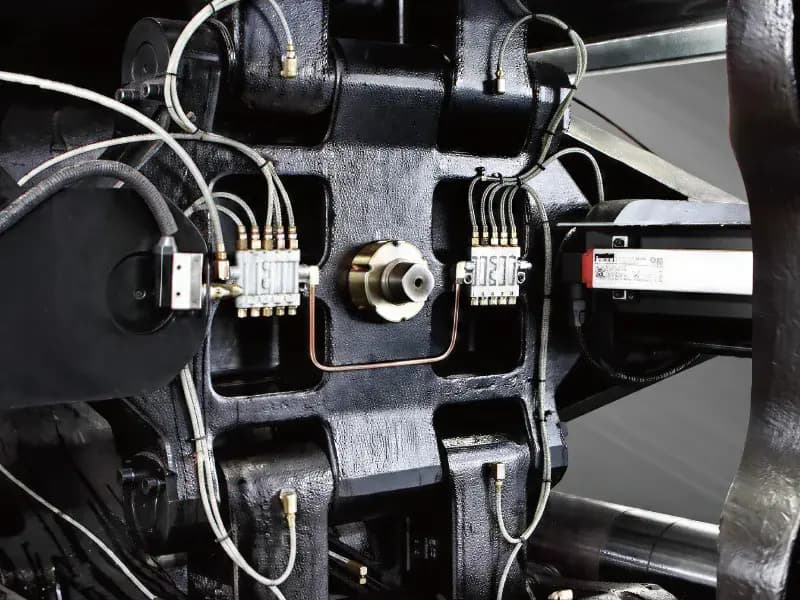
Toggle clamping unit — high rigidity for thin-wall molding
Getting Started with Thin-Wall Production
For manufacturers entering the thin-wall packaging market, HWAMDA provides a structured approach. Begin with market assessment—identify 2-3 high-demand products in your target market (yogurt cups and food containers are the most common entry products). HWAMDA's sales engineering team helps select the right machine model, cavity count, and mold configuration based on your target volumes and products. A typical startup package includes 1-2 HWAMDA SPV5 machines matched to your product range, production molds with complete DFM review and mold trials, auxiliary equipment specifications and sourcing assistance, operator training during commissioning (5-7 days on-site), and ongoing technical support via remote communication. Total investment for a 2-machine startup ranges $250,000-400,000 with first production typically 4-6 months from order. HWAMDA has supported successful factory startups across Southeast Asia, the Middle East, Africa, and Central Asia. HWAMDA has supported successful factory startups across Southeast Asia, the Middle East, Africa, and Central Asia, providing proven production solutions adapted to local market conditions.
Frequently Asked Questions
Thin-wall injection molding is defined by a flow-length-to-wall-thickness ratio exceeding 100:1, which typically corresponds to wall thicknesses between 0.3mm and 0.8mm for food packaging applications. Standard yogurt cups use 0.45-0.55mm walls, food containers use 0.5-0.7mm walls, and sauce cups use 0.4-0.5mm walls. The defining characteristic is not just the wall thickness itself but the combination of thin walls and long flow paths that require specialized high-speed injection equipment. The defining characteristic is the combination of thin walls and long flow paths requiring specialized high-speed equipment not available in standard machines.
Related Guides
Ready to Start Your Project?
Get a free consultation and quotation for your thin-wall packaging production line.
Join 500+ manufacturers in 60+ countries who trust HWAMDA.
Get Free Quote