

Why Hot Runners Are Essential for Thin-Wall Molding
In thin-wall injection molding, the molten plastic must fill cavities with wall thicknesses of 0.30 to 1.0 mm before the melt freezes, typically within 0.1 to 0.5 seconds of injection start. Cold runner systems create material waste, add cycle time due to runner solidification and removal, and introduce inconsistent filling due to the runner temperature gradient. Hot runner systems eliminate these problems by maintaining the melt at processing temperature of 220 to 260 degrees Celsius throughout the runner manifold and nozzle tips. This ensures that the full injection pressure and speed reach every cavity gate simultaneously. In multi-cavity molds with 8, 16, or 32 cavities, the hot runner must deliver flow balance within plus or minus 5 percent across all cavities to maintain consistent wall thickness and part weight. For thin-wall food packaging, valve gate hot runners are the standard because they provide clean gate vestige, prevent drool, and allow precise sequential or simultaneous cavity filling.
Key Specs
- •In thin-wall injection molding, the molten plastic must fill cavities with wall thicknesses of 0.30 to 1.0 mm before the melt freezes, typically within 0.1 to 0.5 seconds of injection start.
- •In multi-cavity molds with 8, 16, or 32 cavities, the hot runner must deliver flow balance within plus or minus 5 percent across all cavities to maintain consistent wall thickness and part weight.
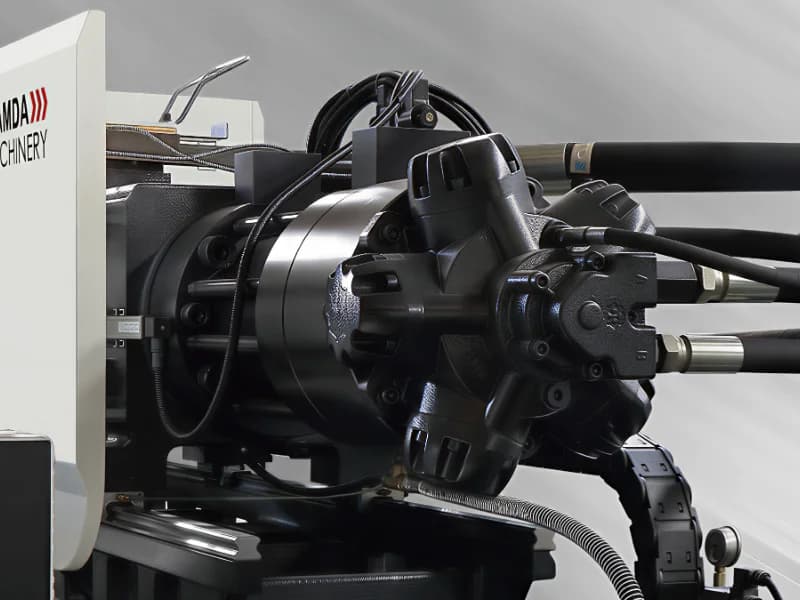
High-speed injection unit with linear guides
Valve Gate vs Thermal Gate Selection
Valve gate systems use a mechanically actuated pin, driven by pneumatic or hydraulic cylinders, to open and close the gate orifice. This provides a clean gate vestige with virtually no gate mark on the container, precise control over melt flow start and stop timing, and the ability to implement sequential valve gating in large molds. Thermal gate systems (also called hot tip) rely on temperature control of the nozzle tip to manage the melt freeze-off at the gate. Thermal gates are simpler, less expensive, and require less maintenance, but they can produce stringing or drooling with some materials and offer less precise flow control. For thin-wall food packaging, valve gates are the preferred choice because the high injection speeds of 300 to 500 mm/s demand rapid gate opening and closing to prevent pressure loss. Additionally, the gate vestige requirement for food containers is strict, as any nub or string can interfere with lid sealing or label placement in IML applications.
Top Hot Runner Suppliers Compared
Husky (Canada) leads the thin-wall packaging hot runner market with its Ultra Helix valve gate system and Altanium temperature controllers, offering the highest precision but also the highest cost. HRSflow (Italy) offers the MULTIflow HRS system specifically designed for low shot weights in thin-wall packaging, with competitive pricing and strong European service. Mold-Masters (Canada) provides the Summit Series with TempMaster controller, offering a balance of performance and cost that is popular in mid-volume applications. Otto Maenner (Germany) specializes in cylindrical hot runner nozzles ideal for tight-pitch, high-cavity molds. Guenther (Germany) offers the BlueFlow series with excellent temperature uniformity. For HWAMDA molds, the hot runner supplier is selected based on cavity count, application requirements, and customer budget. An 8-drop valve gate system from a Chinese domestic supplier costs approximately 8,000 to 15,000 dollars, while equivalent Husky or Mold-Masters systems range from 20,000 to 50,000 dollars. The hot runner brand can be selected independently from the mold manufacturer, giving customers flexibility in their supply chain strategy.
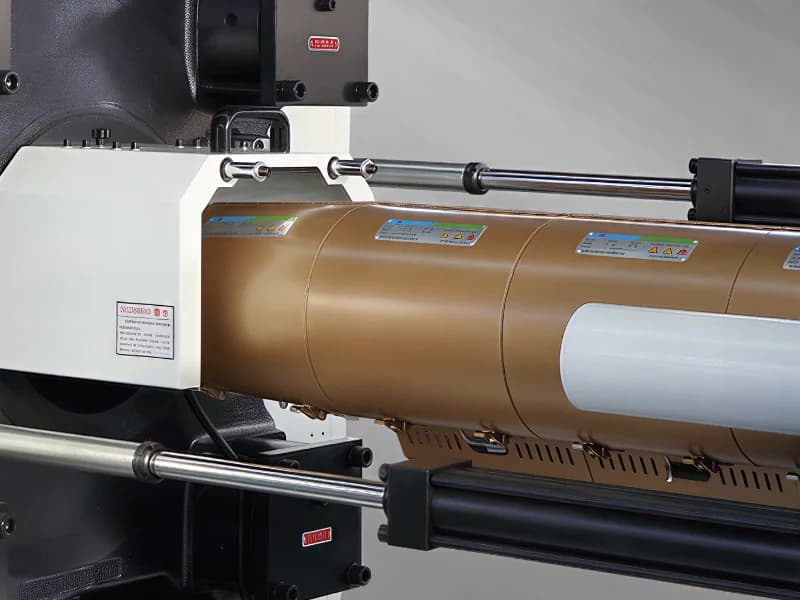
Servo-hydraulic drive system with energy recovery
Need Expert Advice?
Talk to our engineers about your specific production requirements. Free consultation.
Temperature Control and Pressure Drop
Hot runner temperature control precision directly affects part quality in thin-wall molding. Temperature variation across nozzle tips should be held within plus or minus 2 degrees Celsius to ensure consistent flow to all cavities. Modern controllers like the Husky Altanium and HRSflow TempMaster achieve plus or minus 0.1 degree Celsius control resolution with PID algorithms that adapt to changing thermal loads during the cycle. Pressure drop through the hot runner system is a critical design parameter for thin-wall molds where the available injection pressure must be maximized. A well-designed hot runner for thin-wall packaging limits manifold pressure drop to 50 to 150 bar, preserving the 1,500 to 2,400 bar injection pressure for the critical final fill through the gate and into the thin cavity. Runner diameter, manifold geometry, and nozzle bore sizing must be optimized through mold flow simulation to minimize pressure loss while maintaining melt quality. Regular monitoring of pressure drop trends helps identify developing blockages before they affect production quality.
Maintenance Schedule and Troubleshooting
Valve gate hot runner systems require more maintenance than thermal gates due to their mechanical complexity. A standard preventive maintenance schedule includes daily inspection of nozzle tips and gate seal surfaces for wear, weekly verification of temperature controller readings against thermocouple outputs, monthly lubrication and inspection of valve pin seals and pneumatic cylinders, and quarterly full disassembly and cleaning of manifold and nozzle assemblies. Common problems include gate drool caused by worn valve pin seals or incorrect nozzle tip temperature, unbalanced filling due to blocked runner channels or failed heater zones, and slow valve pin actuation from worn pneumatic seals. Each of these issues can cause visible defects on thin-wall containers or weight variation exceeding specification. Spare parts inventory should include valve pins, nozzle tips, heater cartridges, thermocouples, and pneumatic seals. HWAMDA recommends maintaining a minimum of 2 complete spare nozzle assemblies per mold. Keeping detailed maintenance records helps predict component replacement timing and optimize spare parts inventory levels.
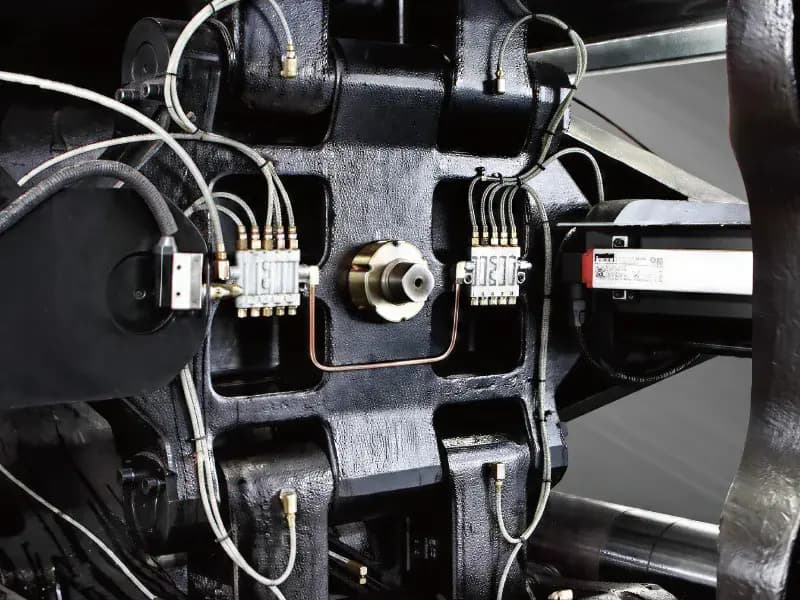
Toggle clamping unit — high rigidity for thin-wall molding
Cost Analysis by Cavity Count
Hot runner system cost scales roughly linearly with the number of drops (nozzle tips and gates) in the system, making it a predictable component of mold investment planning. For Chinese-sourced valve gate systems specified on HWAMDA molds, typical pricing is: 4-drop system at 5,000 to 10,000 dollars, 8-drop at 8,000 to 18,000 dollars, 16-drop at 15,000 to 30,000 dollars, and 32-drop at 25,000 to 55,000 dollars. Equivalent European brand systems from Husky, HRSflow, or Mold-Masters cost approximately 2 to 3 times more but offer tighter temperature control precision and longer service intervals. The hot runner typically represents 15 to 30 percent of the total mold cost. For a 16-cavity yogurt cup mold priced at 80,000 to 150,000 dollars, the hot runner component ranges from 15,000 to 35,000 dollars. Customers with strict quality requirements for export to EU or US markets often specify Husky or HRSflow hot runners in HWAMDA molds, while those serving domestic or developing markets may choose Chinese-sourced systems for significant cost savings without compromising basic production capability.
Frequently Asked Questions
Valve gate is the recommended choice for thin-wall food packaging molds. The high injection speeds of 300 to 500 mm/s used in thin-wall molding require rapid, precise gate control that thermal gates cannot provide consistently. Valve gates produce a clean, flat gate vestige essential for lid sealing and IML label placement. They also prevent gate drool and stringing between cycles. While valve gates cost 30 to 50 percent more than thermal gates, the quality improvement and reduced scrap rate justify the investment for production volumes typical of food packaging.
Related Guides
Ready to Start Your Project?
Get a free consultation and quotation for your thin-wall packaging production line.
Join 500+ manufacturers in 60+ countries who trust HWAMDA.
Get Free Quote