What is IML and How Does It Work
In-Mold Labeling works by positioning a pre-printed polypropylene label on the cavity wall of an injection mold using electrostatic charging or vacuum suction. When molten PP is injected at 220 to 260 degrees Celsius and pressures up to 2,400 bar, the label fuses permanently with the container surface as the plastic solidifies around it. The result is a decoration that cannot peel, wrinkle, or separate from the container because it becomes an integral part of the wall structure. The label thickness typically ranges from 50 to 80 micrometers and adds negligible weight or wall thickness to the finished container. The IML cycle consists of four phases: label pickup from the magazine stack, label placement into the open mold cavity via robot arm, mold closure and injection, and finished part extraction. Advanced systems like the SWITEK SW8 complete this entire cycle in under 3 seconds, adding minimal overhead to the base injection molding cycle time.
Key Specs
- •When molten PP is injected at 220 to 260 degrees Celsius and pressures up to 2,400 bar, the label fuses permanently with the container surface as the plastic solidifies around it.
IML decorated containers with photographic quality labels
IML Machine Requirements and Integration
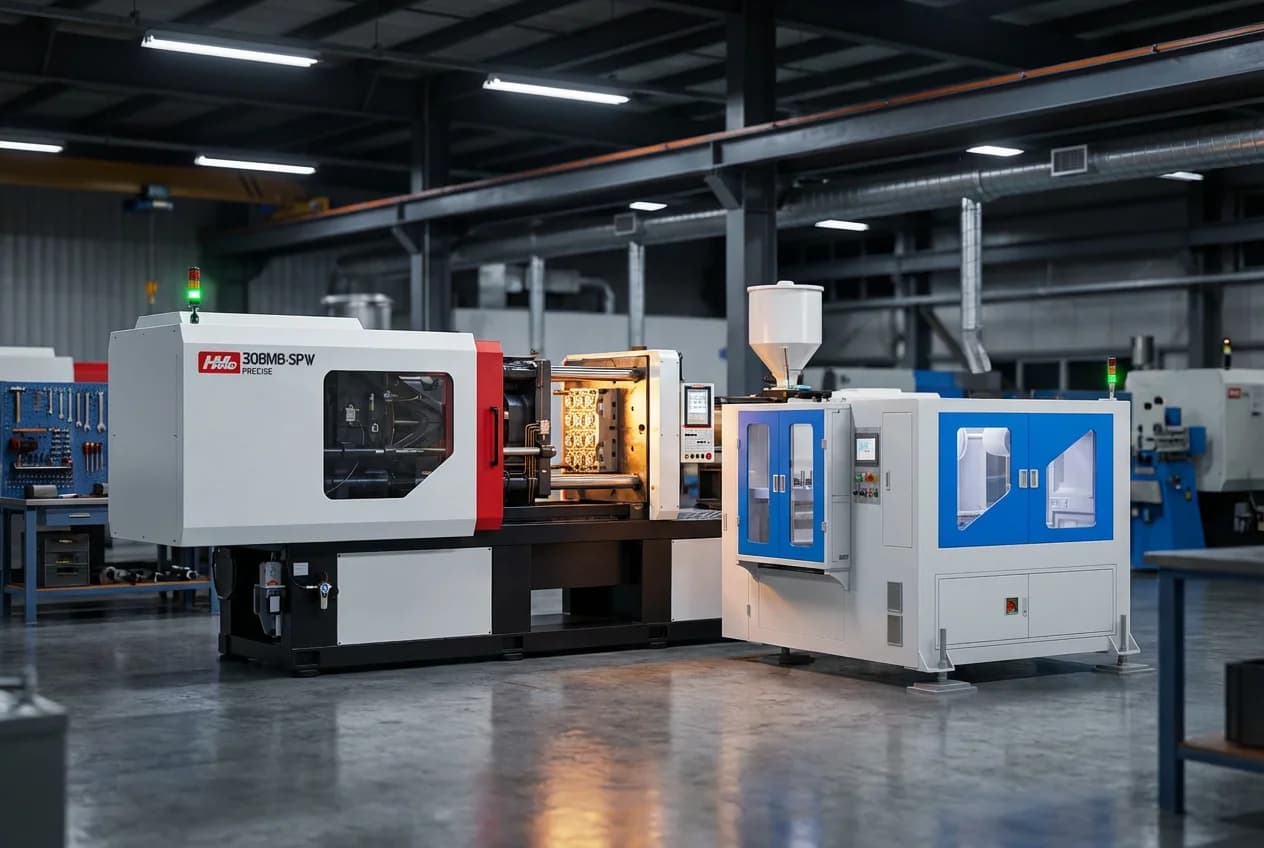
IML integration places specific demands on the injection molding machine beyond standard thin-wall requirements. The machine must provide sufficient mold-open dwell time for the IML robot to place labels and extract finished parts, typically 0.8 to 1.5 seconds depending on cavity count. The HMD SPV5 series machines accommodate this with their parallel movement hydraulic system that enables charging on the fly during mold-open time. Platen dimensions must accommodate the mold plus IML side-entry robot access space. The HMD 380M8-SPV with 1,030 by 1,000 mm platens suits 4 to 8 cavity IML molds for margarine containers, while the HMD 450M8-SPV with 1,080 by 1,060 mm platens accommodates 8 to 12 cavity IML molds for cups. Machine repeatability of plus or minus 0.5 percent in shot weight is essential for consistent label bonding. The INOVA controller interfaces with the SWITEK robot controller for synchronized cycle timing. The machine must also provide consistent shot weight repeatability to ensure reliable label bonding quality across extended production runs.
IML Label Materials and Print Quality
IML labels are precision-engineered components, not simple stickers. For food packaging, the standard substrate is biaxially-oriented polypropylene (BOPP) film, typically 50 to 70 micrometers thick, printed using offset or gravure methods with UV-resistant food-safe inks. The label must withstand the thermal shock of contact with 220 to 260 degree Celsius molten PP without curling, discoloring, or delaminating. Labels can be produced in flat or wrap-around configurations. Flat labels decorate the container bottom or a single face, while wrap-around labels provide 360-degree coverage for maximum brand visibility. Print resolution reaches up to 175 lines per inch, enabling photographic-quality imagery. A critical specification is the label's antistatic treatment and friction coefficient, which must allow clean separation from the magazine stack and reliable placement via electrostatic charging. Label costs range from 0.015 to 0.075 dollars per label depending on size and print complexity. Food-safe inks meeting FDA and EU food contact requirements are standard for all packaging applications.
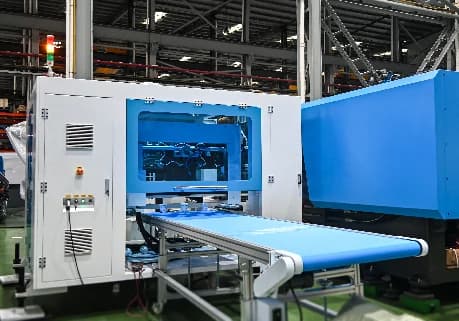
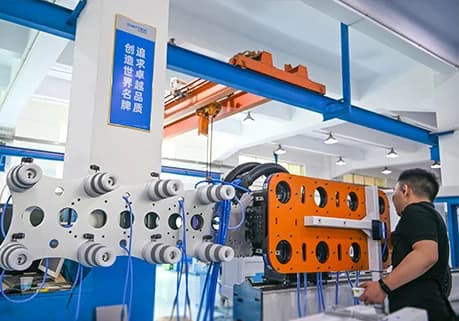
IML robot detail — pick-and-place label handling
Need Expert Advice?
Talk to our engineers about your specific production requirements. Free consultation.
IML vs Direct Printing vs Shrink Sleeve
Direct printing applies ink directly to the container surface using offset or screen printing, offering the lowest decoration cost at 0.005 to 0.015 dollars per unit but limited to 2 to 4 colors with moderate resolution. It requires a post-mold printing station and additional floor space. Shrink sleeve labeling wraps a heat-shrink PVC or PETG film around the container after molding, providing full-coverage 360-degree decoration at 0.02 to 0.05 dollars per unit but creating a multi-material package that complicates recycling. IML at 0.015 to 0.075 dollars per label delivers the highest print quality with unlimited colors, permanent bonding, and mono-material recyclability when using PP labels on PP containers. IML requires higher initial investment in automation but eliminates post-mold decoration labor and equipment. For production volumes exceeding 1 million units per year, IML typically delivers the lowest total decoration cost per unit when accounting for all labor and equipment. The mono-material recyclability advantage of IML is increasingly important as regulations tighten globally.
IML Automation: SWITEK Robots and Systems
HWAMDA partners with SWITEK to supply fully integrated IML automation systems for all thin-wall packaging applications. The SWITEK SW8 series is a 5-axis servo-driven side-entry robot system designed specifically for thin-wall packaging IML operations. The SW833 model suits machines from 150 to 450 tons with a crosswise stroke of 190 plus 190 mm, vertical stroke of 420 mm, traverse stroke of 2,100 mm, and a total dry cycle time of 6 seconds. Its take-out time is 1.2 to 1.5 seconds with an 8 kg payload capacity, and the unit weighs 1,280 kg. The SW850 model handles larger format containers and pails on machines up to 600 tons. Both models feature modular, lightweight construction optimized through finite element stress analysis for long-term running stability and consistent positioning accuracy. The flexible cassette magazine design supports rapid label SKU changeover between production runs without extended downtime. The verified defective rate is maintained below 0.2 percent across extended production campaigns.
Key Specs
- •The SW833 model suits machines from 150 to 450 tons with a crosswise stroke of 190 plus 190 mm, vertical stroke of 420 mm, traverse stroke of 2,100 mm, and a total dry cycle time of 6 seconds.
- •The SW850 model handles larger format containers and pails on machines up to 600 tons.
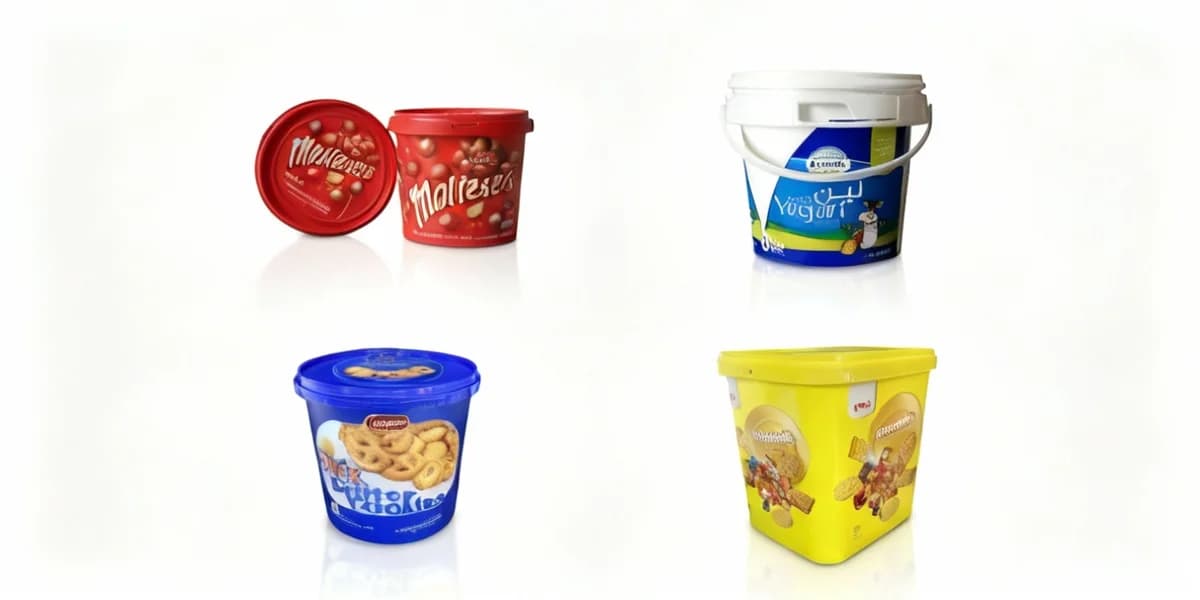
IML production output — consistent decoration quality
IML Cost Analysis and ROI
The incremental investment for IML capability on a HWAMDA production line consists of the SWITEK IML robot system at approximately 40,000 to 80,000 dollars, the IML-compatible mold premium of approximately 15,000 to 35,000 dollars versus a standard mold, and label inventory. Ongoing label costs of 0.015 to 0.075 dollars per unit are the largest variable expense. However, IML eliminates the need for separate post-mold printing or labeling equipment, which can cost 30,000 to 100,000 dollars for offset printing lines. IML-decorated containers command a market price premium of 40 to 100 percent over undecorated containers. For example, a 500-gram margarine container sells at 0.08 to 0.16 dollars with IML versus 0.04 to 0.08 dollars without decoration. At volumes of 3 million containers per month, the IML system generates an additional gross profit of 60,000 to 120,000 dollars monthly, achieving full ROI on the IML investment within 2 to 4 months of operation.
Frequently Asked Questions
IML typically adds 0.5 to 1.5 seconds to the base injection molding cycle, depending on cavity count and robot configuration. The SWITEK SW8 series completes its label placement and part extraction cycle in under 3 seconds total, with the label placement itself taking approximately 0.3 to 0.5 seconds. On a HWAMDA line producing yogurt cups at a 4-second base cycle, the IML version runs at approximately 4.5 to 5.5 seconds. The slight cycle time increase is offset by the elimination of post-mold decoration steps.
Related Guides
Ready to Start Your Project?
Get a free consultation and quotation for your thin-wall packaging production line.
Join 500+ manufacturers in 60+ countries who trust HWAMDA.
Get Free Quote