

IML Robot System Architecture and Components
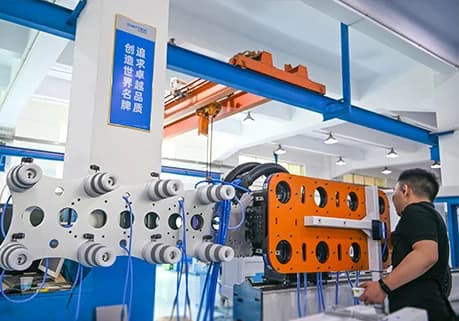
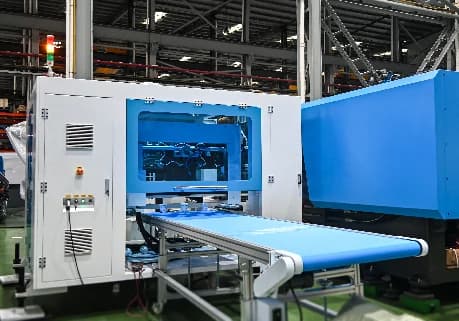
A complete IML system for HWAMDA SPV5 thin-wall production consists of four main subsystems: the side-entry robot arm, the label magazine and dispenser, the end-of-arm tooling (EOAT), and the control system interfacing with the INOVA controller. Side-entry robots are preferred for food packaging because they enter the mold from the side during the mold-open phase, achieving faster in-out times of 0.8-1.5 seconds compared to 1.5-3.0 seconds for top-entry systems. SWITEK robots commonly paired with SPV5 machines use servo-driven linear axes with repeatability of plus or minus 0.05mm. The label magazine stores 2,000-5,000 pre-printed PP labels per stack and uses electrostatic charging to singulate labels for pickup. The EOAT carries vacuum cups for label pickup and part removal simultaneously—one side picks labels from the magazine while the opposite side removes finished containers from the mold. For an 8-cavity yogurt cup mold, the EOAT has 8 label pickup positions and 8 part removal positions arranged in the cavity pitch pattern. The robot controller communicates with the INOVA controller via hardwired I/O signals (8-16 digital signals) and optional Euromap 67 interface for standardized robot-machine communication.
Key Specs
- •SWITEK robots commonly paired with SPV5 machines use servo-driven linear axes with repeatability of plus or minus 0.05mm.
IML decorated containers with photographic quality labels
Mechanical Installation and Alignment
Mount the IML robot base frame on the non-operator side of the SPV5 machine, aligned with the mold centerline. The robot mounting platform must be level within 0.1mm per meter and rigidly bolted to the floor with M20 anchor bolts rated for the dynamic loads generated during the 0.8-1.5 second in-out cycle. Position the label magazine within the robot's reach envelope, typically 800-1,200mm from the mold parting line. Align the EOAT to the mold cavity pattern by first establishing the mold center reference point using the machine tie bars. For the HMD 380M8-SPV with 650x640mm tie bar distance, the mold center is at 325mm from each pair of tie bars. Adjust the EOAT approach angle to be perfectly perpendicular to the mold face—angular deviation exceeding 0.5 degrees causes uneven label placement and potential label wrinkling. Set the mold-open distance to provide adequate clearance for the EOAT thickness plus 15-20mm safety margin. For typical IML tooling thickness of 80-120mm, the mold opening stroke should be set to 250-350mm. Verify that the robot arm does not contact the tie bars during entry by running slow-speed approach cycles and checking clearances at all four corners.
Teach Point Programming Sequence
Program the IML robot in six essential teach points executed in the following sequence. Point 1 (Home Position): the robot arm fully retracted outside the mold area, clear of the safety gate zone. Point 2 (Magazine Pickup): the EOAT positioned over the label magazine with vacuum cups aligned to the top label within plus or minus 0.2mm. Point 3 (Mold Entry): the EOAT carrying labels entering the mold space, clearing the tie bars by a minimum 10mm on each side. Point 4 (Label Placement): the EOAT pressing labels against the mold cavity surfaces with 2-5 Newtons of contact force per label for electrostatic adhesion. Point 5 (Part Removal): the EOAT shifting to align the part removal vacuum cups with the molded containers on the core side. Point 6 (Part Release): the EOAT moving to the discharge position over the conveyor or stacking system where vacuum releases the finished containers. Program approach and retract speeds independently—approach speeds of 500-800mm/s for the entry stroke and retract speeds of 800-1,200mm/s for the exit stroke minimize the in-mold time. Set acceleration and deceleration profiles to S-curve (not trapezoidal) to reduce vibration that can dislodge labels during placement.
Key Specs
- •Point 2 (Magazine Pickup): the EOAT positioned over the label magazine with vacuum cups aligned to the top label within plus or minus 0.2mm.
- •Point 3 (Mold Entry): the EOAT carrying labels entering the mold space, clearing the tie bars by a minimum 10mm on each side.
- •Program approach and retract speeds independently—approach speeds of 500-800mm/s for the entry stroke and retract speeds of 800-1,200mm/s for the exit stroke minimize the in-mold time.
IML robot detail — pick-and-place label handling
Need Expert Advice?
Talk to our engineers about your specific production requirements. Free consultation.
Signal Integration with INOVA Controller
The IML robot and INOVA controller exchange 8-12 critical handshake signals that must be properly configured for safe, synchronized operation. From the INOVA to the robot: Mold Open Complete signal confirms the mold has reached full open position and the ejector has cycled. Core Pull Complete signal (if applicable) confirms any side actions are retracted. Robot Entry Permitted is a safety-confirmed signal that the mold will not close while the robot is inside. From the robot to the INOVA: Robot at Home confirms the robot arm is fully retracted and clear of the mold area—this signal must be active before the INOVA will initiate mold closing. Label Placed confirms all labels are positioned in the cavities and the EOAT has retracted. Robot Alarm signals a fault condition that should halt the machine cycle. Configure all critical signals as NC (normally closed) type so that a wire break defaults to the safe state (machine stops). Set the INOVA mold close interlock to require both Robot at Home AND a minimum 200ms dwell time after receiving the signal, preventing false starts from signal bounce. Program the mold-open delay in the INOVA to 0.1-0.3 seconds before issuing the Robot Entry Permitted signal, allowing residual clamping pressure to fully release.
Label Handling and Quality Optimization
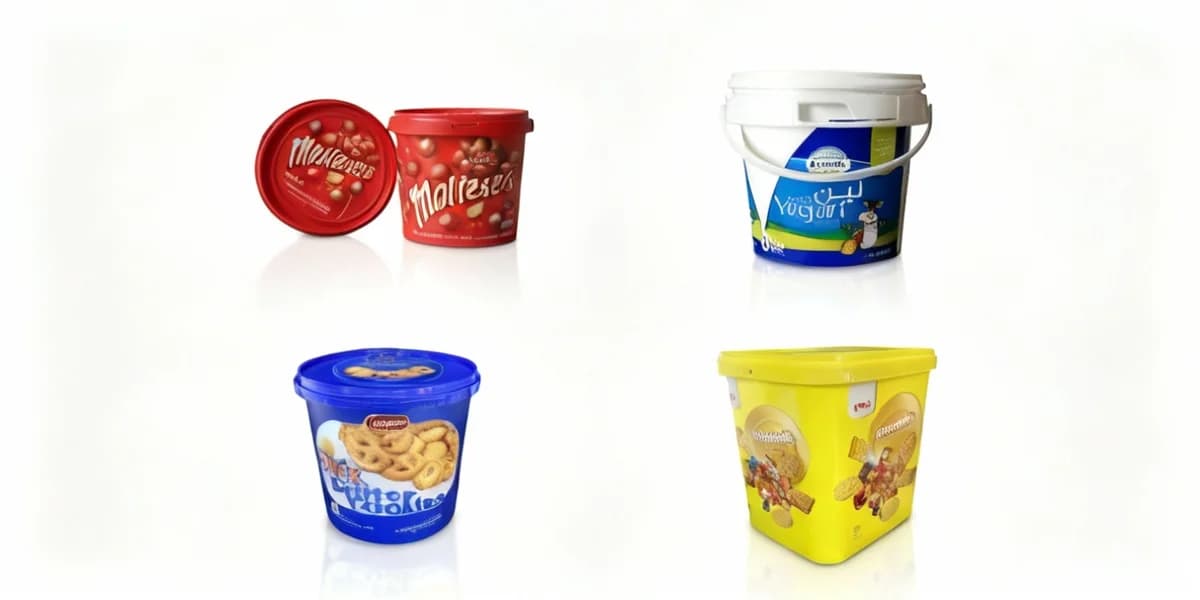
Label placement quality depends on precise control of electrostatic charging, vacuum pressure, and EOAT design. The electrostatic charger on the label magazine should generate 15-25kV at the label surface to provide sufficient adhesion to the mold cavity wall during the 0.3-0.5 second interval between label placement and plastic injection. Measure the static charge on each label after pickup using a field meter—readings below 10kV indicate charger maintenance is needed. Vacuum pressure for label pickup should be 60-80 kPa (negative) with individual vacuum circuits for each cavity position to detect missing labels. Configure the robot controller to halt the cycle if any vacuum sensor does not reach the threshold within 0.2 seconds of pickup initiation. Label thickness for PP IML labels is typically 50-80 micrometers; heavier labels (80+ micrometers) require higher electrostatic charge and longer placement dwell times of 0.2-0.3 seconds. Monitor label placement accuracy by inspecting the first 50 parts after every label magazine reload. Common label defects include wrinkles (caused by air entrapment during placement—increase vacuum or reduce approach speed), shift (misalignment exceeding 0.5mm—recalibrate teach points), and fold-over (label catches on cavity edge—adjust entry angle by 0.5-1.0 degree).
Key Specs
- •Common label defects include wrinkles (caused by air entrapment during placement—increase vacuum or reduce approach speed), shift (misalignment exceeding 0.5mm—recalibrate teach points), and fold-over (label catches on cavity edge—adjust entry angle by 0.5-1.0 degree).
IML production output — consistent decoration quality
Cycle Time Optimization and Troubleshooting
The IML robot cycle must complete within the mold-open window, which on SPV5 machines running thin-wall production is typically 1.5-2.5 seconds of the total 3.5-6 second cycle. The robot in-mold time (from entry to full retraction) should not exceed 1.2-1.8 seconds for a side-entry system on 4-8 cavity molds. To optimize cycle time, maximize the mold-open stroke speed on the INOVA controller to reduce the mold open/close phase, which saves 0.2-0.5 seconds per cycle. Implement parallel motion where the robot begins its entry approach while the mold is still opening the final 50-80mm—this requires precise position synchronization between the INOVA mold position encoder and the robot controller. Use the INOVA controller's cycle analysis screen to identify bottlenecks: if the Robot at Home signal consistently arrives 0.3+ seconds after mold close readiness, focus on optimizing robot retract speed and path. Common troubleshooting issues include intermittent label drop (check vacuum generator, clean vacuum cups, verify label magazine alignment), inconsistent cycle times (check servo drive parameters, clean linear guide rails, lubricate with ISO VG 32 oil every 500 hours), and robot alarm during mold close (verify signal cable integrity, check proximity switch gaps, and increase the Robot at Home detection window by 50ms in the INOVA settings).
Frequently Asked Questions
A complete IML system for HWAMDA SPV5 machines ranges from $25,000-60,000 depending on cavity count and complexity. A basic 4-cavity side-entry SWITEK system costs $25,000-35,000, an 8-cavity system runs $35,000-45,000, and a 16-cavity system with vision inspection costs $45,000-60,000. This includes the robot, label magazine, EOAT, control system, and installation. The label magazine, electrostatic charger, and end-of-arm tooling are typically customized for each mold configuration.
Related Guides
Ready to Start Your Project?
Get a free consultation and quotation for your thin-wall packaging production line.
Join 500+ manufacturers in 60+ countries who trust HWAMDA.
Get Free Quote