

INOVA Controller Diagnostics and Error Codes
The INOVA 10-inch LED controller on SPV5 machines stores the last 500 alarm events with timestamps, providing a diagnostic trail for intermittent faults. Access the alarm history through the Settings menu by pressing the alarm log icon. Common error categories include E1xx series (temperature faults), E2xx series (hydraulic pressure faults), E3xx series (position and speed faults), and E4xx series (safety circuit faults). For temperature errors, E101 indicates heater zone open circuit—measure heater resistance at the terminal block, which should read 8-25 ohms depending on the zone wattage (1.5-8kW per zone). E102 indicates thermocouple fault—check the J-type thermocouple wiring polarity and terminal integrity. For hydraulic errors, E201 indicates system pressure below setpoint—verify pump operation and relief valve setting at 17.5 MPa. E203 indicates accumulator charge failure—check the nitrogen pre-charge and solenoid valve function. When the controller screen freezes or displays garbled text, perform a power cycle by turning off the main disconnect, waiting 30 seconds, and restarting. If the issue persists, the controller backup battery (CR2032 lithium cell, 3-5 year life) may need replacement to preserve SRAM parameter storage.
Key Specs
- •For hydraulic errors, E201 indicates system pressure below setpoint—verify pump operation and relief valve setting at 17.5 MPa.
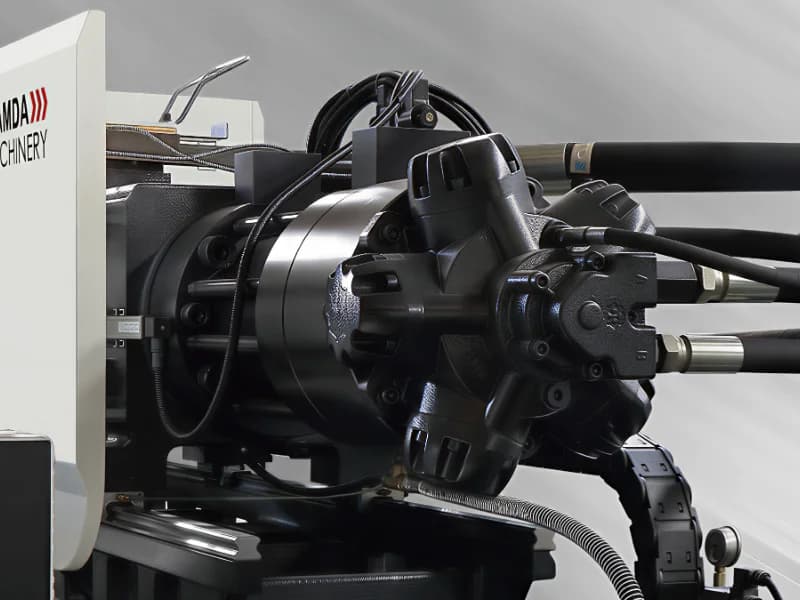
High-speed injection unit with linear guides
Servo Drive and Motor Fault Diagnosis
The SPV5 dual servo pump system uses variable frequency drives to control the hydraulic pump motors (37+37kW to 55+55kW). Common servo drive faults include overcurrent (OC) alarms triggered by bearing failure, motor winding shorts, or mechanical overload. When an OC alarm occurs, measure the motor insulation resistance with a 500V megger—readings below 1 megaohm indicate moisture ingress or winding degradation. Check the three-phase supply voltage balance at the drive input terminals; imbalance exceeding 3% between phases causes the drive to trip on overcurrent or overvoltage protection. Overvoltage (OV) faults typically result from excessive deceleration rates during braking phases—adjust the deceleration ramp time in the drive parameters from the default 0.5 seconds to 1.0-1.5 seconds. Undervoltage (UV) faults indicate power supply problems; verify the incoming supply voltage is within 380V plus or minus 10% for standard Chinese supply or 400-415V for export machines. Encoder feedback faults (PG errors) cause erratic pump speed control—inspect the encoder cable shield connection at both the motor and drive ends, and verify the encoder supply voltage of 5V plus or minus 0.25V at the encoder connector. Replace encoder cables every 3-5 years as a preventive measure.
Heater Band and Temperature Control Troubleshooting
The barrel heating system on SPV5 machines consists of 6-8 independently controlled zones with total power from 22.5kW (HMD 270M8-SPV) to 45kW (HMD 600M8-SPV). Each zone uses a solid-state relay (SSR) to switch the heater band circuit. When a zone fails to heat, first check the SSR output by measuring AC voltage across the heater terminals with the zone calling for heat—you should read 220V AC. If no voltage is present with the control signal active, the SSR has failed (most common heater circuit fault). SSR failure modes include open circuit (zone does not heat) and short circuit (zone heats continuously and overtemperatures). Replace SSRs preemptively every 3-4 years. Check heater band resistance: a 5kW heater on 220V should measure approximately 9.7 ohms; deviation exceeding 15% indicates internal element degradation. Thermocouple faults cause temperature oscillation or runaway. Verify thermocouple response by heating the tip with a heat gun and observing the controller reading—it should respond within 3 seconds and show smooth temperature increase. Loose thermocouple mounting causes 5-15°C reading errors due to poor thermal contact. For hot runner zone troubleshooting, verify that all hot runner heater resistance values are within the mold manufacturer's specification, typically 5-50 ohms per zone.
Key Specs
- •Check heater band resistance: a 5kW heater on 220V should measure approximately 9.7 ohms; deviation exceeding 15% indicates internal element degradation.
- •Loose thermocouple mounting causes 5-15°C reading errors due to poor thermal contact.
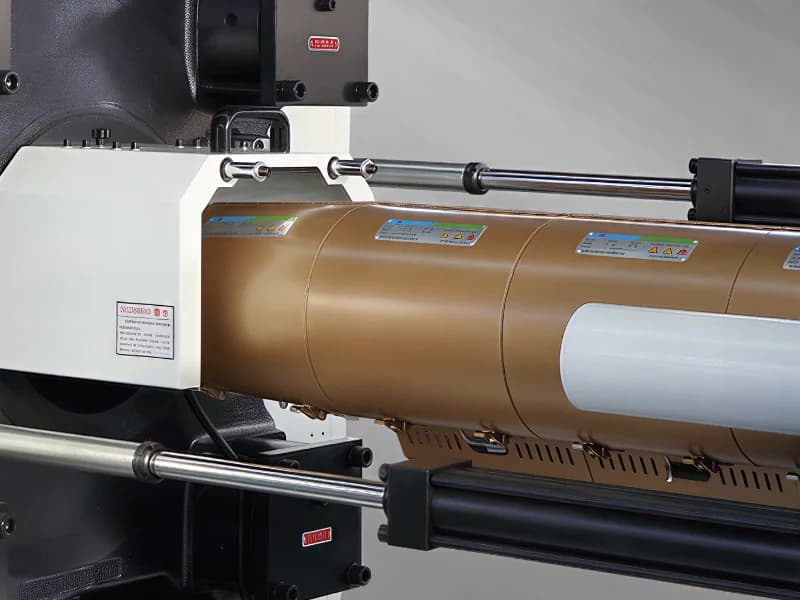
Servo-hydraulic drive system with energy recovery
Need Expert Advice?
Talk to our engineers about your specific production requirements. Free consultation.
Safety Circuit and Interlock System Faults
SPV5 safety circuits use a dual-channel architecture where two independent switch contacts must close simultaneously to enable machine operation. When the machine displays a safety fault and refuses to cycle, systematically check each interlock point. The front safety gate uses two proximity switches—verify both switch LED indicators illuminate when the gate is fully closed. Measure the switch output voltage (24V DC present when actuated). Rear gate interlocks use the same dual-switch configuration. The purge guard interlock prevents screw rotation when the guard is open; verify the limit switch actuator aligns with the switch roller within the specified 2-3mm engagement depth. Emergency stop circuits on SPV5 machines use NC (normally closed) contacts wired in series—pressing any of the 4 E-stop buttons breaks the safety relay circuit. After releasing an E-stop, the machine requires a deliberate reset sequence: release the E-stop button, then press the safety reset button on the controller. If the safety relay does not reset, one of the E-stop switches may have a welded contact (stuck closed when pressed)—test each switch with a multimeter in ohms mode. Wiring faults in the safety circuit require immediate repair by qualified electricians to maintain CE compliance.
Power Supply and Grounding Issues
Incoming power quality directly affects SPV5 machine reliability. Measure the three-phase supply at the main disconnect: voltage should be 380V plus or minus 10% (342-418V) with phase-to-phase balance within 2%. Frequency should be 50 Hz plus or minus 1 Hz. Power factor correction capacitors, if installed, must be checked annually for capacitance degradation—failed capacitors cause power factor penalties and voltage distortion. Check the main earth ground connection from the machine frame to the facility ground bus—resistance should not exceed 4 ohms per IEC 60204-1. Poor grounding causes erratic controller behavior, EMI-related sensor errors, and electrical shock hazards. SPV5 machines generate significant electromagnetic interference from the servo drives during switching; ensure the EMI filter on the drive input is connected and the filter ground lead is attached to a low-impedance ground point. For facilities with unreliable power, install a voltage stabilizer rated at 1.5 times the machine's connected load. The HMD 470M8-SPV with 45+45kW pumps and 35kW heaters has a connected load of approximately 140kVA, requiring a 210kVA stabilizer. UPS protection for the INOVA controller alone requires only 500VA and prevents parameter loss during power interruptions.
Key Specs
- •Measure the three-phase supply at the main disconnect: voltage should be 380V plus or minus 10% (342-418V) with phase-to-phase balance within 2%.
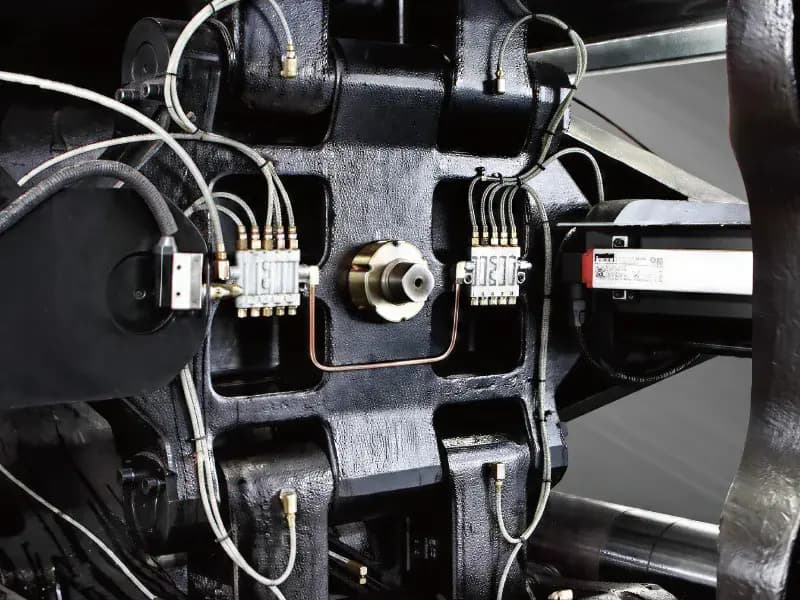
Toggle clamping unit — high rigidity for thin-wall molding
Preventive Electrical Maintenance Schedule
Weekly checks include verifying all heater zone temperatures are within plus or minus 3°C of setpoint, checking the INOVA controller alarm log for any new entries, and verifying that all status indicator lights on the servo drives show normal operation (steady green). Monthly tasks include thermal scanning of the main electrical cabinet with an infrared thermometer or camera to identify hotspots at terminal connections—any point exceeding 70°C requires immediate retorquing or replacement. Inspect all cable glands for tightness and check flexible conduit connections at moving parts like the injection carriage. Quarterly maintenance includes measuring motor insulation resistance on the pump motors (minimum 10 megaohms when cold), testing all SSR outputs, and verifying thermocouple calibration against a reference thermometer. Every 6 months, clean the electrical cabinet air filters and check the cabinet cooling fan operation—internal cabinet temperature should not exceed 45°C. Annually during the overhaul, retorque all power terminals, test the residual current device (RCD/GFCI), verify the earth continuity of all exposed metalwork, and update the electrical schematic if any modifications were made during the year. Store a copy of the complete electrical schematic inside the cabinet door.
Frequently Asked Questions
Essential spare parts include 2 SSRs per heater zone size (typically 40A and 60A rated), 2 J-type thermocouples per zone, 1 complete encoder cable assembly, 1 proximity switch for each type used in safety circuits, fuses for all ratings used in the control cabinet, the INOVA controller backup battery (CR2032), and 1 spare servo drive if operating multiple SPV5 machines. Total spare parts inventory value is approximately $2,000-4,000. Stock these parts on-site to minimize downtime from common electrical failures.
Related Guides
Ready to Start Your Project?
Get a free consultation and quotation for your thin-wall packaging production line.
Join 500+ manufacturers in 60+ countries who trust HWAMDA.
Get Free Quote