

In-Press Mold Cleaning Procedures
Perform in-press cleaning every 8-12 hours of continuous production or whenever reject rates exceed 2% from surface-related defects. With the HWAMDA SPV5 machine in manual mode and the mold open to its full daylight distance (1,160-1,730mm depending on model), spray the cavity and core surfaces with a food-grade mold cleaner approved for food packaging applications. Use lint-free cloths to remove residue buildup from the parting line surfaces, paying particular attention to the vent channels where PP off-gassing deposits accumulate. Vent channels in thin-wall molds are typically 0.02-0.03mm deep and 3-6mm wide—blockage causes burn marks and short shots. Use a brass or copper brush (never steel) to clean vent slots without damaging the precision-ground surfaces. Inspect the gate areas on YUDO or Synventive valve gate nozzles for material buildup that can affect gate quality. Clean the ejector pin holes by spraying with mold cleaner and cycling the ejector three times through the full 160-200mm stroke. Wipe the mold alignment components including guide pins, guide bushings, and interlocks. Apply a light coat of food-grade mold release spray only if sticking occurs—excessive release agent contaminates parts and builds up in cavities.
Key Specs
- •Perform in-press cleaning every 8-12 hours of continuous production or whenever reject rates exceed 2% from surface-related defects.
- •With the HWAMDA SPV5 machine in manual mode and the mold open to its full daylight distance (1,160-1,730mm depending on model), spray the cavity and core surfaces with a food-grade mold cleaner approved for food packaging applications.
- •Vent channels in thin-wall molds are typically 0.02-0.03mm deep and 3-6mm wide—blockage causes burn marks and short shots.
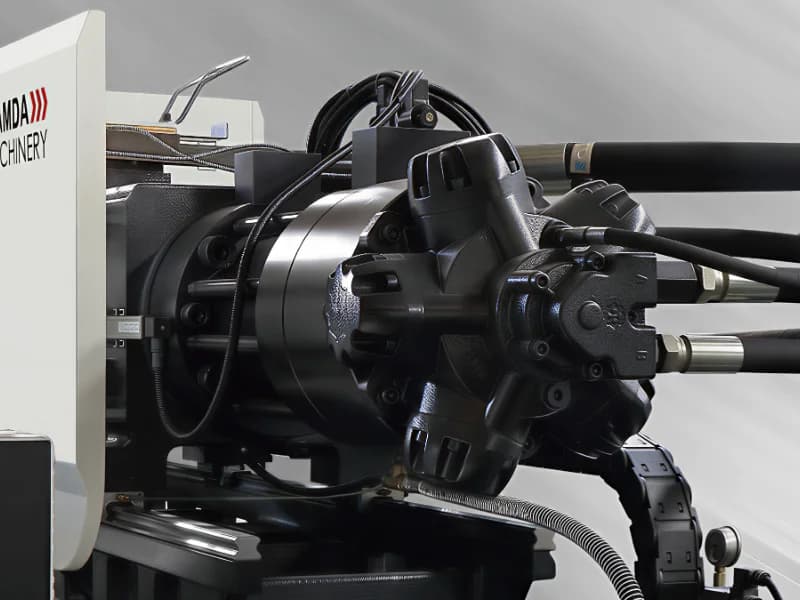
High-speed injection unit with linear guides
Deep Cleaning After Production Runs
After completing a production campaign (typically 500,000-2,000,000 shots per run), perform a thorough deep cleaning before mold storage. Remove the mold from the SPV5 machine using the crane attachment points and place it on a clean, padded workbench. Disassemble the mold systematically, separating the cavity plate, core plate, ejector assembly, and hot runner manifold. Soak all steel components in an ultrasonic cleaner filled with a specialized mold cleaning solution at 50-60°C for 30-60 minutes. The ultrasonic frequency of 25-40 kHz effectively removes carbonized PP residue from narrow channels and textured surfaces without mechanical damage. For hot runner manifolds with YUDO or Synventive components, follow the manufacturer's specific cleaning instructions—do not immerse electrical connectors or heating elements. Clean all cooling channel circuits by flushing with a scale-removing solution followed by compressed air drying. Blocked cooling channels reduce heat transfer by 20-40%, extending cycle times and causing dimensional variation. Inspect all O-rings, seals, and cooling plugs, replacing any that show compression set or damage. Polish cavity surfaces to their original finish specification using diamond paste in progressive grits from 6 micron to 1 micron for mirror finishes.
Mold Inspection and Measurement After Cleaning
After deep cleaning, perform a dimensional inspection to track mold wear and predict remaining service life. Measure critical cavity dimensions using a coordinate measuring machine (CMM) at the gate area, sidewall transitions, and rim sections. For thin-wall packaging molds producing parts with 0.4-0.8mm wall thickness, cavity wear of 0.02mm on diameter represents a 2.5-5% increase in wall thickness that affects part weight and stacking performance. Record all measurements in the mold history file and compare against the original mold qualification data. Inspect the parting line surfaces for compression damage using a surface plate and blue dye—any high spots or depression exceeding 0.01mm can cause flash at the injection pressures of 150-200 MPa used in thin-wall molding. Check guide pin and bushing fit by measuring clearance with pin gauges; replace bushings when clearance exceeds 0.03mm. Inspect the water cooling circuits by pressure testing at 0.6 MPa for 30 minutes—any pressure drop indicates internal leaks that require seal replacement. Examine the hot runner nozzle tips for wear at the gate seal diameter. Document all findings with photographs and measurements in the mold maintenance database.
Key Specs
- •For thin-wall packaging molds producing parts with 0.4-0.8mm wall thickness, cavity wear of 0.02mm on diameter represents a 2.5-5% increase in wall thickness that affects part weight and stacking performance.
- •Inspect the parting line surfaces for compression damage using a surface plate and blue dye—any high spots or depression exceeding 0.01mm can cause flash at the injection pressures of 150-200 MPa used in thin-wall molding.
- •Check guide pin and bushing fit by measuring clearance with pin gauges; replace bushings when clearance exceeds 0.03mm.
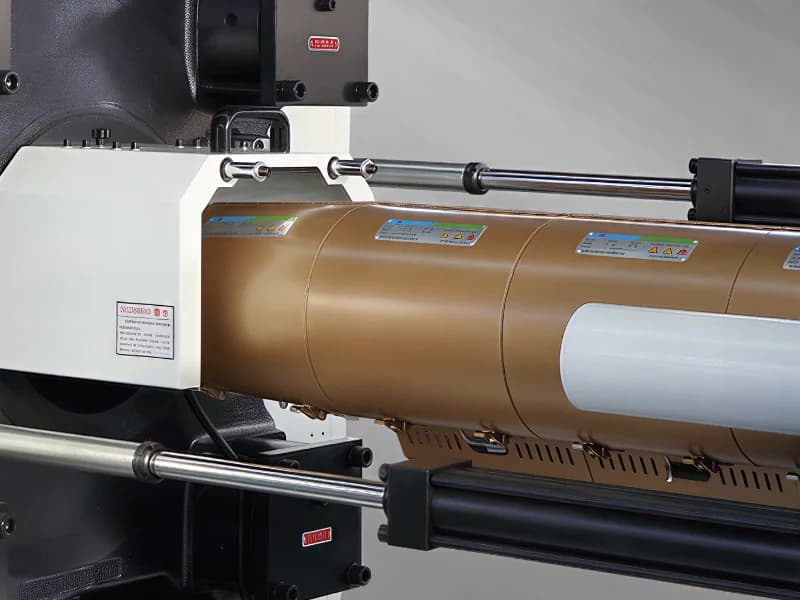
Servo-hydraulic drive system with energy recovery
Need Expert Advice?
Talk to our engineers about your specific production requirements. Free consultation.
Rust Prevention and Surface Preservation
Rust is the primary threat to idle mold surfaces, particularly in humid manufacturing environments common in Southeast Asia, Africa, and coastal regions. After cleaning and drying, apply a VCI (Vapor Corrosion Inhibitor) spray to all exposed steel surfaces including cavities, cores, parting lines, ejector pins, and guide components. VCI compounds provide protection for 6-12 months in sealed packaging by releasing corrosion-inhibiting vapors that form a molecular barrier on metal surfaces. For long-term storage exceeding 3 months, apply a rust-preventive oil coating (such as Castrol Rustilo DWX 30 or equivalent) over the VCI treatment. Avoid using general-purpose WD-40 or machine oil, as these products leave residues that contaminate food-grade mold cavities and require extensive cleaning before production restart. For molds with polished mirror finishes (SPI A-1 to A-3 grade), use only non-staining preservation products specifically rated for optical-quality surfaces. Wrap preserved molds in VCI film or paper before placing in storage. Insert desiccant packets (100-200 grams of silica gel per mold half) inside the wrapping to absorb moisture. Seal all water connection ports with threaded plastic plugs to prevent moisture entry into cooling channels.
Storage Environment and Racking Requirements
Store molds in a climate-controlled area maintained at 20-25°C with relative humidity below 50%. If dedicated climate control is not available, use dehumidifiers to maintain humidity below 60% as a minimum standard—rust formation accelerates rapidly above 65% relative humidity. Store molds on heavy-duty steel racking rated for the mold weight: thin-wall 4-cavity molds typically weigh 800-1,500 kg, 8-cavity molds weigh 1,500-3,000 kg, and 16-cavity molds can weigh 3,000-5,000 kg. Racking shelves must support these loads with a 1.5x safety factor. Position molds horizontally with the parting line facing up to prevent misalignment from gravity during storage. Never stack molds directly on top of each other. Label each mold storage location with the mold number, last production date, next scheduled maintenance date, and total shot count. Maintain a minimum aisle width of 1.5 meters for safe crane access. Keep molds away from grinding stations, welding areas, and chemical storage where airborne contaminants accelerate corrosion. Install a mold inventory management system—spreadsheet-based for small operations or barcode/RFID-based for facilities with 20+ molds.
Key Specs
- •Store molds in a climate-controlled area maintained at 20-25°C with relative humidity below 50%.
- •If dedicated climate control is not available, use dehumidifiers to maintain humidity below 60% as a minimum standard—rust formation accelerates rapidly above 65% relative humidity.
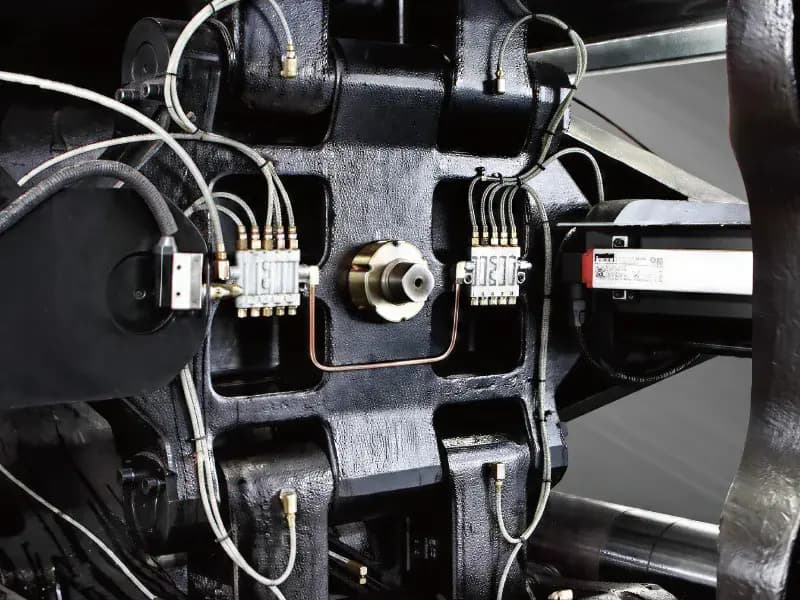
Toggle clamping unit — high rigidity for thin-wall molding
Pre-Production Mold Preparation and Startup
Before mounting a stored mold onto the HWAMDA SPV5 machine, perform a systematic preparation sequence. Remove all preservation compounds by wiping with a clean cloth dampened with a food-grade degreaser. Inspect all surfaces for any rust formation that may have occurred during storage—treat minor surface rust with a non-abrasive rust remover and re-polish affected areas. Verify all ejector pins move freely by manually pushing each pin through its full stroke. Reconnect cooling lines and pressure test at 0.6 MPa before mounting to the machine. Install the mold on the SPV5 platen using the T-slot clamps and torque all mounting bolts to specification. Connect the hot runner cables and verify all zone temperatures reach setpoint within the manufacturer's specified tolerance of plus or minus 2°C. Run 10 slow clamp cycles at low pressure (5kN mold protection setting) to verify proper alignment and no mechanical interference. Gradually increase to full clamping force (2,700-6,000kN depending on model) over 5 cycles. Inject 20-30 short shots at reduced speed (50% of production speed) while checking for leaks and mechanical issues. Ramp to full production speed and run 50-100 setup shots before beginning quality-verified production.
Frequently Asked Questions
Deep clean thin-wall molds every 500,000-1,000,000 shots or at the end of each production campaign, whichever comes first. Molds running highly filled PP grades or running at temperatures above 250°C accumulate deposits faster and may need deep cleaning every 300,000-500,000 shots. In-press cleaning should occur every 8-12 hours of continuous production. The frequency also depends on the PP grade—high-MFI grades (60-100 g/10min) generate more off-gassing deposits than standard grades.
Related Guides
Ready to Start Your Project?
Get a free consultation and quotation for your thin-wall packaging production line.
Join 500+ manufacturers in 60+ countries who trust HWAMDA.
Get Free Quote