

Machine Speed Optimization
Injection speed is the primary machine parameter affecting fill time. The HWAMDA SPV5 delivers 300-500 mm/s injection speed with accumulator assist, enabling complete cavity fill in 0.1-0.3 seconds for thin-wall parts. Ensure accumulators are properly charged between cycles and that pre-charge pressure matches the injection pressure profile. Injection speed profiling—starting fast, decelerating near the end of fill—reduces flash risk while maintaining minimum fill time. Clamp speed optimization reduces non-productive time. Maximize high-speed approach velocity (400+ mm/s on SPV5) and minimize low-speed mold protection distance to only what is necessary for safety—typically 5-10mm. Ejection speed should be maximized while avoiding part damage or sticking. Mold open time can be reduced by synchronizing ejection with mold opening and optimizing robotic part removal timing. Total mold open time should target 0.5-1.0 seconds for thin-wall packaging on HWAMDA SPV5 machines. Every aspect of machine timing should be reviewed systematically—a 0.1 second reduction in each of clamp close, injection, and ejection phases can collectively remove 0.3 seconds per cycle.
Key Specs
- •The HWAMDA SPV5 delivers 300-500 mm/s injection speed with accumulator assist, enabling complete cavity fill in 0.1-0.3 seconds for thin-wall parts.
- •Maximize high-speed approach velocity (400+ mm/s on SPV5) and minimize low-speed mold protection distance to only what is necessary for safety—typically 5-10mm.
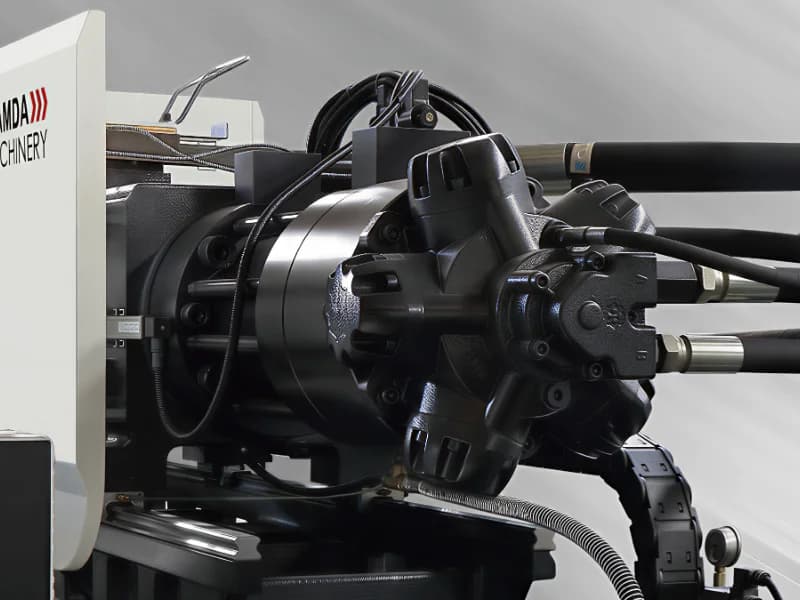
High-speed injection unit with linear guides
Mold Cooling Improvements
Cooling time represents 50-70% of total cycle time in thin-wall molding. The most impactful improvement is upgrading to beryllium copper (BeCu) cavity inserts. BeCu has thermal conductivity of 106 W/m·K compared to 25 W/m·K for standard steel, reducing cooling time by 20-30%. For an 8-cavity yogurt cup mold, BeCu inserts can reduce cycle time from 4.5 to 3.5 seconds. Conformal cooling channels—machined to follow the contour of the part surface—deliver 15-25% more uniform cooling than conventional straight-drilled channels. Uniform cooling eliminates hot spots that extend cycle time, reduces warpage, and improves dimensional consistency. Ensure cooling water flow is turbulent (Reynolds number above 10,000) in all circuits by maintaining sufficient flow rate and using clean water with appropriate treatment. Mold temperature controllers should maintain ±1°C stability. HWAMDA molds include optimized cooling circuit design as standard. Regular maintenance of cooling circuits is essential—scale buildup of just 0.5mm inside cooling channels can increase cooling time by 15-20%, significantly impacting production efficiency.
Material Selection for Faster Processing
High-flow PP grades with MFI of 40-80 g/10 min (230°C/2.16 kg) enable faster cavity filling at lower injection pressure, reducing fill time and allowing lower clamping force. Grades like Borealis BH348MO, SABIC PP 578N, and LyondellBasell Moplen HP548R are specifically formulated for thin-wall packaging with optimized crystallization rates for fast cycle times. Faster crystallization means shorter cooling time. Nucleated PP grades crystallize 15-25% faster than non-nucleated grades, directly reducing cycle time. Material suppliers offer thin-wall-specific grades with balanced properties: high flow for easy fill, fast crystallization for short cooling, and adequate stiffness for part removal without deformation. Avoid general-purpose PP grades with MFI below 20—they require higher injection pressure, longer fill times, and cannot achieve competitive cycle times in thin-wall applications. Material suppliers provide technical data sheets with recommended processing parameters for each grade—use these as starting points and optimize through systematic testing on your HWAMDA SPV5. The combination of high-flow grade and fast crystallization kinetics delivers the optimal balance of easy cavity filling and rapid solidification needed for competitive thin-wall cycle times.
Key Specs
- •High-flow PP grades with MFI of 40-80 g/10 min (230°C/2.16 kg) enable faster cavity filling at lower injection pressure, reducing fill time and allowing lower clamping force.
- •Nucleated PP grades crystallize 15-25% faster than non-nucleated grades, directly reducing cycle time.
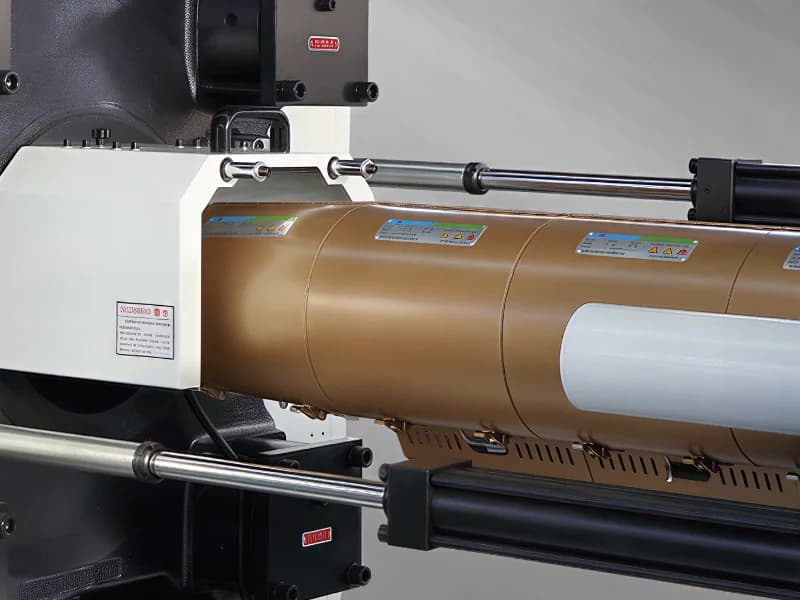
Servo-hydraulic drive system with energy recovery
Need Expert Advice?
Talk to our engineers about your specific production requirements. Free consultation.
Process Parameter Tuning
Optimize barrel temperature profile for your specific PP grade. Typical settings for thin-wall: rear zone 200-220°C, middle zone 220-240°C, front zone 240-260°C, nozzle 250-270°C. Higher melt temperature reduces viscosity and fill time but may extend cooling time—find the optimal balance through systematic trials. Packing (holding) time and pressure directly affect cycle time. Use minimum packing time needed to prevent sink marks and achieve target weight—typically 0.5-1.5 seconds for thin-wall parts. Excessive packing time adds cycle time without quality benefit. Switch-over point from injection to holding should occur at 95-98% fill to avoid over-packing. Decompression (suck-back) settings should be minimized to prevent air inclusion while reducing cycle time. Monitor screw recovery time—if it exceeds cooling time, the machine's plasticization rate is limiting cycle speed. Systematic DOE (Design of Experiment) methodology is the most efficient approach to optimizing multiple interacting parameters without the time waste of one-variable-at-a-time trial and error. Record all process changes and their effects systematically to build a process knowledge database that accelerates troubleshooting and optimization for future products and mold introductions.
Automation for Faster Part Removal
Manual part removal by gravity or operator creates inconsistent mold-open times of 1-3 seconds. A SWITEK robotic system reduces mold-open time to a consistent 0.5-0.8 seconds by simultaneously ejecting parts and placing IML labels (if applicable) in a single synchronized motion. For non-IML applications, side-entry robots or swing-arm extractors provide rapid, repeatable part removal. Air-assist ejection uses compressed air jets through the mold core to push thin-wall parts off the cores cleanly without mechanical ejector marks. Combined with robotic extraction, air-assist enables ejection times of 0.1-0.2 seconds. Conveyor systems with stacking stations below the mold eliminate the need for parts to travel far after ejection, reducing the risk of deformation and allowing faster machine cycling. HWAMDA SPV5 machines include high-speed ejection interfaces compatible with major automation suppliers. The investment in automation for part removal typically pays for itself within 12-18 months through the combination of faster cycles, reduced labor, and improved consistency.
Key Specs
- •Manual part removal by gravity or operator creates inconsistent mold-open times of 1-3 seconds.
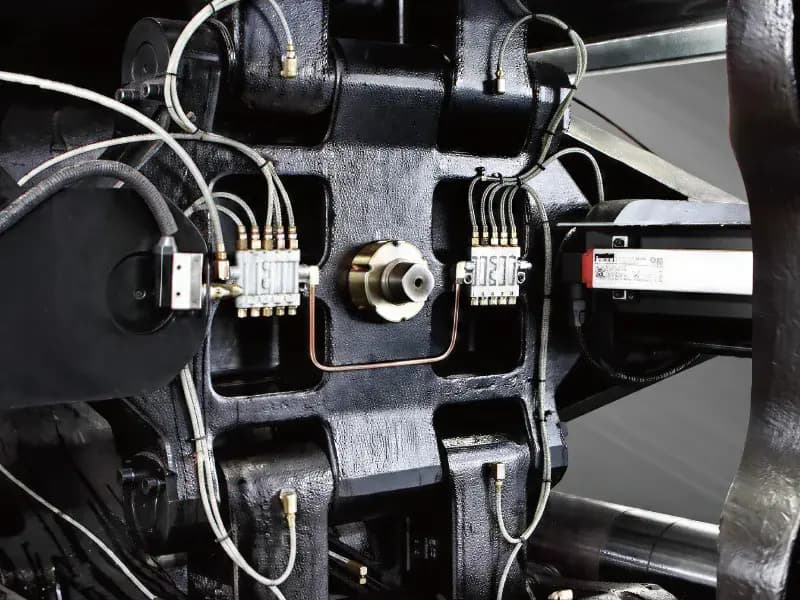
Toggle clamping unit — high rigidity for thin-wall molding
Realistic Cycle Time Targets
Based on HWAMDA SPV5 production data across hundreds of installations, realistic cycle time targets by product category are: yogurt cups (150ml, 8-cavity) 3.5-4.5 seconds, yogurt cups (150ml, 16-cavity) 4.0-5.0 seconds, food containers (500ml, 4-cavity) 5.0-6.0 seconds, food containers (500ml, 8-cavity) 6.0-7.5 seconds, sauce cups (60ml, 24-cavity) 3.0-3.5 seconds, tableware (plates, 32-cavity) 4.0-5.0 seconds. These targets assume optimized molds with proper cooling, high-flow PP material, and a well-tuned HWAMDA SPV5 machine. New installations typically reach within 15-20% of target cycle times during commissioning, with full optimization achieved within 2-4 weeks of production operation. Cycle times significantly faster than these targets may indicate insufficient packing, inadequate cooling, or other process compromises that affect part quality. HWAMDA engineering provides cycle time optimization support as part of after-sales service. Attempting to run significantly faster than these targets without corresponding improvements in mold cooling and material selection typically sacrifices part quality for marginal speed gains.
Frequently Asked Questions
The fastest production cycle times for 150ml yogurt cups on HWAMDA SPV5 380-400T machines are 3.5-4.0 seconds with 8-cavity molds using optimized BeCu cooling inserts, valve gate hot runner, high-flow PP (MFI 50+), and robotic part removal. Achieving sub-3.5 second cycles requires exceptional mold cooling design and is typically limited to 4-cavity molds. Running 16-cavity molds extends cycle time to 4.0-5.0 seconds due to increased cooling complexity. Running 16-cavity molds extends cycle time to 4.0-5.0 seconds due to increased shot volume and cooling complexity.
Related Guides
Ready to Start Your Project?
Get a free consultation and quotation for your thin-wall packaging production line.
Join 500+ manufacturers in 60+ countries who trust HWAMDA.
Get Free Quote