

Thin-Wall Mold Design Principles
Thin-wall mold design begins with understanding the fundamental constraint: the length-to-wall-thickness (L/t) ratio. Food packaging containers typically have L/t ratios exceeding 100:1, with yogurt cups reaching 200:1 or more. This means the melt must travel a distance 100 to 200 times the wall thickness before freezing, requiring injection speeds of 300 to 1,000 mm/s and pressures up to 2,400 bar. The mold must withstand these forces repeatedly over millions of cycles without deformation. Core alignment is critical because any shift creates uneven wall thickness. Interlocking features between core and cavity halves maintain alignment to within plus or minus 0.02 mm. Mold base rigidity prevents platen deflection from causing flash or short shots. Venting at the end of flow paths must allow air evacuation at speeds matching the injection rate, with vent depths of 0.01 to 0.03 mm for PP to prevent flash while avoiding burn marks from trapped air. These design principles apply across all HWAMDA mold configurations from 4 to 32 cavities.
Key Specs
- •This means the melt must travel a distance 100 to 200 times the wall thickness before freezing, requiring injection speeds of 300 to 1,000 mm/s and pressures up to 2,400 bar.
- •Interlocking features between core and cavity halves maintain alignment to within plus or minus 0.02 mm.
- •Venting at the end of flow paths must allow air evacuation at speeds matching the injection rate, with vent depths of 0.01 to 0.03 mm for PP to prevent flash while avoiding burn marks from trapped air.
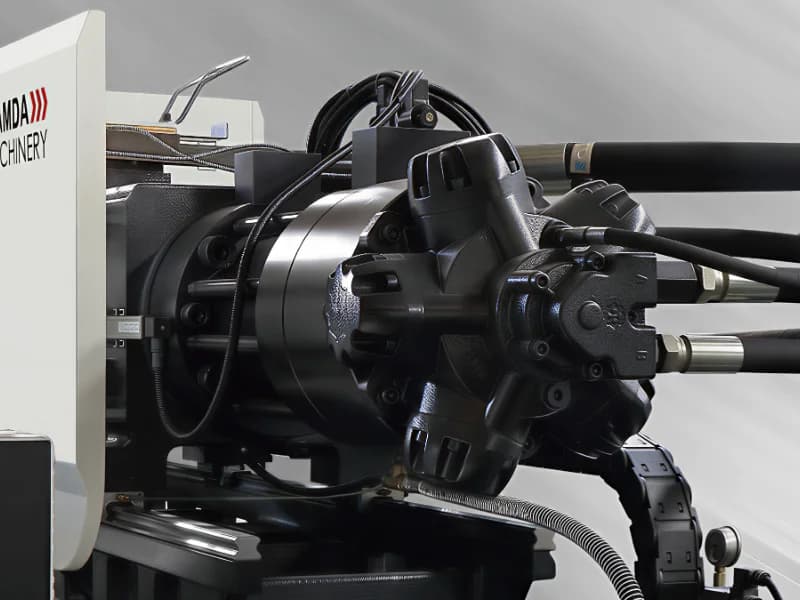
High-speed injection unit with linear guides
Gate Design and Location Strategy
Gate design in thin-wall molds determines filling pattern, weld line location, and gate vestige quality. For cylindrical containers like yogurt cups and milk tea cups, a center bottom gate creates radial filling that minimizes weld lines and ensures uniform wall thickness. The valve gate diameter is typically 1.5 to 3.0 mm depending on part size and wall thickness. For rectangular containers, edge gates or multiple gates may be required to fill the elongated cavity before freeze-off. Gate land length should be minimized to reduce pressure loss, typically 0.5 to 1.5 mm. In multi-cavity molds, runner balance ensures all cavities fill simultaneously within plus or minus 5 percent weight variation. Mold flow simulation software is used to optimize gate size, location, and runner geometry before steel cutting. HWAMDA validates every mold design with simulation analysis to predict filling pattern, pressure distribution, cooling performance, and potential defect locations before manufacturing begins. This simulation-based approach reduces the number of required mold trials and accelerates time to production.
Cooling System Design for Fast Cycle Times
Cooling accounts for 60 to 80 percent of the total cycle time in thin-wall molding, making cooling system design the single most impactful factor in productivity. Conventional drilled cooling channels provide adequate performance for simple geometries but cannot follow the contoured surfaces of tapered cups or complex containers. Conformal cooling channels, created through 3D metal printing or precision gun drilling, follow the part geometry at a uniform distance from the cavity surface, reducing cooling time by 20 to 40 percent. BeCu inserts placed in thermally critical areas like the container base and rim transfer heat 3 to 5 times faster than steel, further accelerating cooling. Chilled water at 8 to 15 degrees Celsius flows through circuits designed for turbulent flow with Reynolds numbers above 10,000, ensuring maximum heat transfer coefficient. Multi-zone temperature control with separate circuits for core and cavity sides manages the different thermal loads on each mold half.
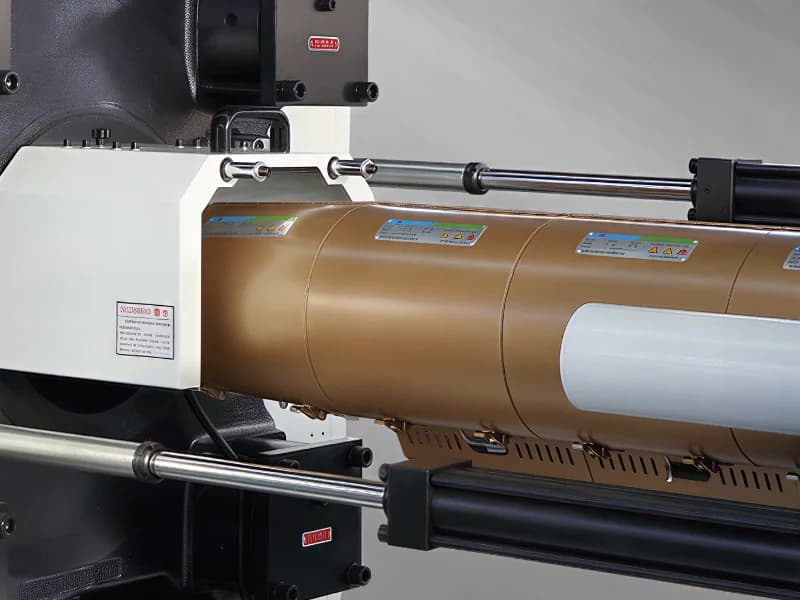
Servo-hydraulic drive system with energy recovery
Need Expert Advice?
Talk to our engineers about your specific production requirements. Free consultation.
Mold Steel Selection: S136 vs H13 vs 2738
Steel selection balances hardness, thermal conductivity, corrosion resistance, machinability, and cost for the specific demands of thin-wall packaging mold applications. DIN 1.2344 (AISI H13) is the industry standard for thin-wall molds, offering excellent thermal fatigue resistance at HRC 48-52 with good machinability and polishability to the SPI A-2 to A-3 mirror finish required for food container surfaces. H13 is suitable for most food packaging applications processing PP and PS materials. S136 (AISI 420) stainless steel provides superior corrosion resistance through its 13 percent chromium content, making it the preferred choice for molds processing materials with corrosive byproducts or operating in high-humidity factory environments. S136 is typically specified for yogurt cup and sauce cup molds where food-contact hygiene requirements are paramount. DIN 1.2738 (P20+Ni) is a pre-hardened steel at HRC 28-33 used for lower-cost molds with shorter production run targets, such as prototype tooling or commodity tableware. HWAMDA uses DIN 2344ESR as the default specification for all production molds, with S136 available as a premium upgrade.
Stack Mold vs Single-Face Mold Design
Stack molds contain two or more parting lines, effectively doubling or quadrupling the cavity count without increasing the required clamping force proportionally. A 2-level stack mold with 8 cavities per face provides 16 cavities total while requiring only 20 to 30 percent more clamping force than a single 8-cavity mold. This makes stack molds extremely efficient for high-volume production of smaller items like yogurt cups, sauce cups, and lids. The trade-off is increased mold complexity and cost: a stack mold costs approximately 60 to 80 percent more than an equivalent single-face mold. The hot runner system must route melt through a central sprue bushing to both parting faces, requiring specialized manifold design. Mold height increases significantly, requiring machines with larger daylight openings. HWAMDA produces both single-face and stack mold configurations, recommending stack molds when monthly output requirements exceed 5 million units and the customer's machine has sufficient daylight capacity. The mold steel and hot runner specifications are identical to the single-face version, ensuring the same part quality.
Key Specs
- •A 2-level stack mold with 8 cavities per face provides 16 cavities total while requiring only 20 to 30 percent more clamping force than a single 8-cavity mold.
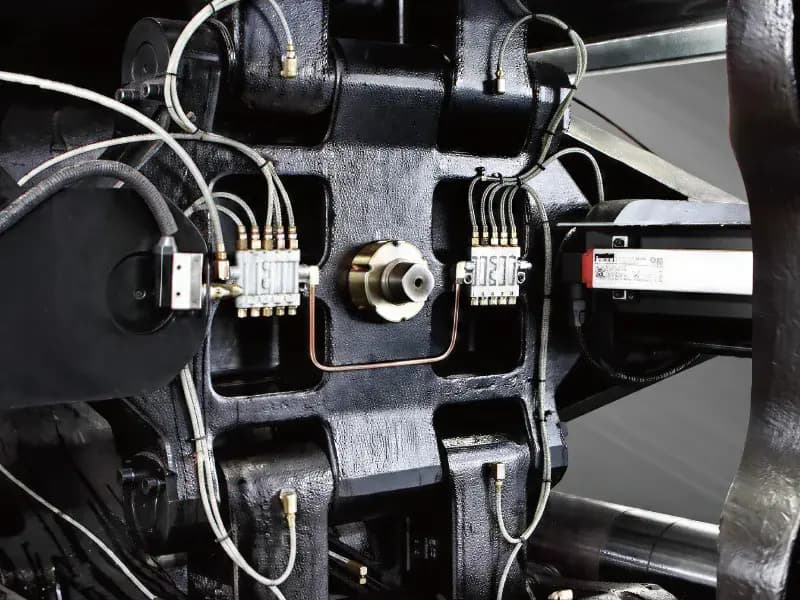
Toggle clamping unit — high rigidity for thin-wall molding
Mold Testing and Validation Protocol
Every HWAMDA mold undergoes a structured testing and validation process before shipment. Trial 1 (T1) is the initial mold trial using customer-specified PP grade, establishing baseline process parameters for injection speed, pressure, temperature, and cooling time. Weight consistency across all cavities is measured, targeting plus or minus 1 percent variation. Trial 2 (T2) optimizes process parameters based on T1 findings, fine-tuning gate seal time, cooling time, and packing pressure to minimize cycle time while maintaining quality. Dimensional measurements verify all critical dimensions against the container drawing specification within plus or minus 0.05 to 0.10 mm. Trial 3 (T3) is a production validation run of typically 10,000 to 50,000 shots to confirm mold performance under continuous operation. Customers are invited to witness mold trials at HWAMDA's Ningbo facility. Full trial reports including sample parts, dimensional data, and process parameters are provided before shipment. Customer witness of mold trials can be arranged at the HWAMDA Ningbo manufacturing facility.
Frequently Asked Questions
HWAMDA thin-wall molds manufactured from DIN 2344 or S136 steel typically achieve 5 million shots or more when properly maintained. Yogurt cup and sauce cup molds often exceed 8 to 10 million shots due to their simpler geometry and moderate injection pressures. Food container molds with more complex geometry and higher stresses typically last 3 to 8 million shots. Mold life depends on steel grade, maintenance quality, and processing conditions. BeCu inserts may require replacement at 2 to 3 million shots due to their lower hardness.
Related Guides
Ready to Start Your Project?
Get a free consultation and quotation for your thin-wall packaging production line.
Join 500+ manufacturers in 60+ countries who trust HWAMDA.
Get Free Quote