

Steel Types for Core and Cavity
Thin-wall packaging molds use different steel grades for different components based on their functional requirements. Core and cavity blocks, which form the container shape and endure the highest injection pressures and thermal loads, require premium tool steel. DIN 1.2344 (H13) hot-work tool steel is the standard choice, offering excellent resistance to thermal fatigue cracking, heat checking, and erosive wear from high-speed PP melt flow. For the mold base, which provides structural support but does not contact the melt, DIN 1.2312 or 1.2738 pre-hardened steels at HRC 28-33 provide adequate strength at lower cost. Ejector pins and plates use nitrided steels for wear resistance. BeCu (beryllium copper) alloy inserts are placed in thermally critical areas like the container base and rim sections where heat must be extracted fastest. BeCu has thermal conductivity 3 to 5 times higher than tool steel, enabling localized cooling time reductions of 30 to 40 percent. This multi-material approach optimizes performance and cost across the different functional zones of the mold.
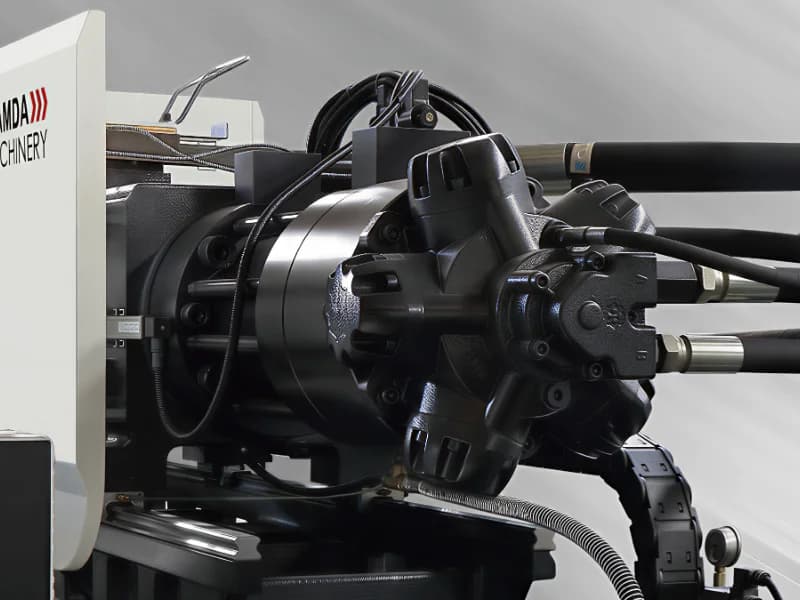
High-speed injection unit with linear guides
Hardness and Wear Resistance Requirements
Thin-wall molds must maintain dimensional accuracy over millions of high-pressure cycles. The core and cavity must be hardened to HRC 48-52 through vacuum heat treatment to resist the erosive forces of PP melt flowing at 300 to 1,000 mm/s through 0.30 to 0.80 mm wall sections. At these hardness levels, H13 maintains its compressive strength of approximately 1,600 to 1,800 MPa without brittle fracture. The gate area experiences the highest wear due to concentrated melt velocity and must often be fitted with replaceable gate inserts that can be refurbished without servicing the entire cavity. Surface hardness can be further enhanced through nitriding treatment, which creates a 0.05 to 0.15 mm hard layer at HRC 62-68 on the surface while maintaining the tough HRC 48-52 core. This provides exceptional wear resistance at the parting line and high-flow areas where flash and erosion are most likely. Gate inserts are designed as replaceable components to extend overall mold life without full cavity rework.
Corrosion Resistance for Food-Grade Molds
Corrosion resistance becomes important when molds operate in humid environments, process materials with corrosive additives, or must meet stringent food-contact hygiene standards. S136 (AISI 420) stainless mold steel provides excellent corrosion resistance through its 13 percent chromium content, forming a passive oxide layer that protects against rust and chemical attack. S136 is available in both pre-hardened (HRC 30-33) and quenched-tempered (HRC 48-52) conditions. The quenched-tempered condition matches H13 in wear resistance while adding corrosion protection. The trade-off is that S136 has lower thermal conductivity than H13, approximately 20 W/mK versus 25 W/mK, resulting in slightly longer cooling times. The cost premium for S136 versus H13 is approximately 20 to 40 percent. HWAMDA recommends S136 for yogurt cup molds exported to markets with high humidity, for molds that may sit idle for extended periods, and for applications requiring the highest food-contact hygiene levels. The decision between H13 and S136 should be based on the specific operating environment and export market requirements.
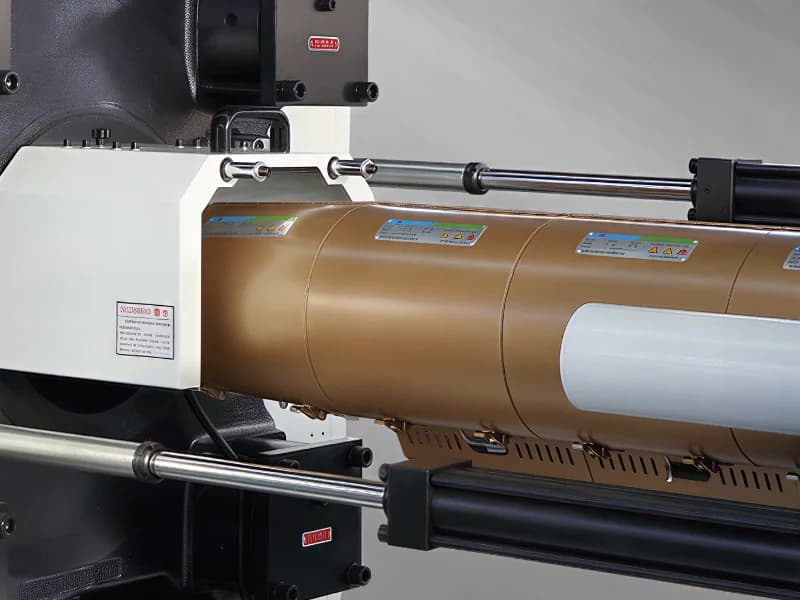
Servo-hydraulic drive system with energy recovery
Need Expert Advice?
Talk to our engineers about your specific production requirements. Free consultation.
Heat Treatment and Surface Finishing
Proper heat treatment is essential for achieving the target hardness and toughness combination in thin-wall mold steels. Vacuum heat treatment is the standard process for H13 and S136, providing uniform hardening without surface decarburization or oxidation. The process involves austenitizing at 1,000 to 1,050 degrees Celsius for H13 (or 1,020 to 1,050 degrees for S136), gas quenching, and double tempering at 520 to 620 degrees Celsius to achieve HRC 48-52. The tempering temperature must be carefully controlled because under-tempering leaves the steel too brittle while over-tempering reduces hardness below specification. After heat treatment, the cavity surfaces are polished to the required finish. For food containers, SPI A-2 to A-3 (mirror polish, Ra 0.025 to 0.05 micrometers) is typical for visible surfaces, while non-visible areas may use SPI B-1 (Ra 0.10 micrometers). EDM (electrical discharge machining) texturing creates specific surface finishes for improved container grip or aesthetics. All heat treatment is performed by certified suppliers using calibrated furnaces with documented temperature profiles.
Chinese vs European Steel Quality
The quality gap between Chinese-produced and European-produced mold steels has narrowed significantly over the past decade, though measurable differences persist in certain quality metrics. European steels from suppliers like Bohler (Austria), Uddeholm (Sweden, now part of Voestalpine), and Thyssenkrupp (Germany) offer tighter compositional tolerances, more uniform microstructure after heat treatment, and superior polishability due to lower non-metallic inclusion content from electroslag remelting processes. Chinese domestic steels from Baosteel, Daido China, and Finkl Asia offer significantly lower cost at approximately 40 to 60 percent of European equivalent pricing. For thin-wall food packaging molds where the primary performance requirement is thermal fatigue resistance rather than optical-grade surface quality, Chinese H13 equivalents provide acceptable performance at the lower price point for many applications. HWAMDA specifies DIN 2344ESR (electro-slag remelted) grade as its standard mold steel, which provides improved metallurgical cleanliness and microstructural homogeneity versus standard H13 at a moderate cost premium over conventional Chinese domestic grades.
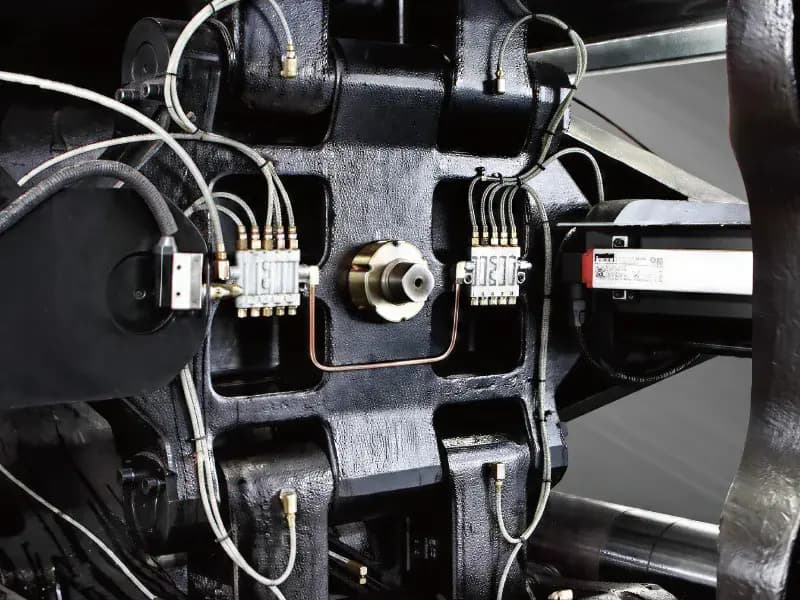
Toggle clamping unit — high rigidity for thin-wall molding
Steel Cost Impact on Total Mold Price
Steel material cost typically represents 15 to 25 percent of total mold manufacturing cost, with the balance going to machining, heat treatment, hot runner, polishing, assembly, and testing. For a typical 8-cavity yogurt cup mold, the steel blocks for cores and cavities weigh approximately 800 to 1,500 kg. At Chinese domestic H13 prices of approximately 3 to 5 dollars per kg, the steel cost is 2,400 to 7,500 dollars. European H13 at 6 to 10 dollars per kg raises this to 4,800 to 15,000 dollars. Upgrading from H13 to S136 adds approximately 30 to 50 percent to the steel cost component. BeCu inserts for base and rim zones add 2,000 to 5,000 dollars depending on the number and size of inserts. The total mold price impact of specifying European versus Chinese steel is approximately 5 to 10 percent of the finished mold cost, a relatively small premium for the quality assurance it provides on export molds.
Frequently Asked Questions
For yogurt cup molds requiring 5 to 10 million shot life, DIN 1.2344 (H13) hardened to HRC 48-52 is the standard choice. If the mold will operate in humid conditions, be exported to markets requiring high hygiene standards, or process materials with corrosive additives, upgrade to S136 stainless steel at the same hardness. HWAMDA's standard specification of DIN 2344ESR provides improved steel cleanliness at moderate additional cost. BeCu inserts at the cup base and rim zones are recommended for all yogurt cup molds to accelerate cooling in these thermally critical areas.
Related Guides
Ready to Start Your Project?
Get a free consultation and quotation for your thin-wall packaging production line.
Join 500+ manufacturers in 60+ countries who trust HWAMDA.
Get Free Quote