

Factors Affecting Cycle Time in Thin-Wall Molding
Five primary factors determine achievable cycle time in thin-wall molding: wall thickness (cooling time scales with the square of thickness), machine dry cycle time (the mechanical overhead of opening, closing, and ejecting), mold cooling efficiency (determined by channel design, coolant temperature, and flow rate), injection speed (time to fill all cavities), and automation overhead (robot entry and exit time for IML or part extraction). The HWAMDA SPV5 series addresses machine dry cycle time with a verified 1.1-second dry cycle, competitive with machines costing 3 to 5 times more. For a 200 mL yogurt cup with 0.45 mm walls on a 16-cavity mold, a realistic production cycle time is 3.5 to 5.0 seconds, comprising 0.2 seconds injection, 0.5 seconds packing, 1.5 to 2.5 seconds cooling, and 1.1 to 1.8 seconds for mold motion and ejection. Each fraction of a second saved translates to thousands of additional parts per shift. Even a 0.5-second improvement at these speeds adds thousands of parts per production shift.
Key Specs
- •For a 200 mL yogurt cup with 0.45 mm walls on a 16-cavity mold, a realistic production cycle time is 3.5 to 5.0 seconds, comprising 0.2 seconds injection, 0.5 seconds packing, 1.5 to 2.5 seconds cooling, and 1.1 to 1.8 seconds for mold motion and ejection.
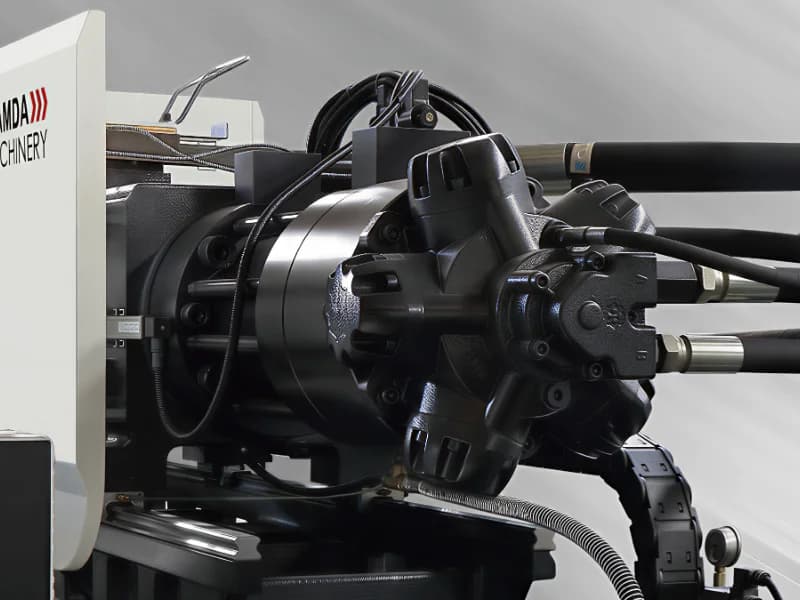
High-speed injection unit with linear guides
Cooling System Optimization
Since cooling represents 60 to 80 percent of cycle time, it offers the largest opportunity for optimization. The first strategy is minimizing coolant temperature to 8 to 12 degrees Celsius using a properly sized chiller, while monitoring for condensation that indicates excessive cooling. The second is maximizing flow rate to achieve turbulent flow (Reynolds number above 10,000) in all cooling circuits, which increases heat transfer coefficient by 3 to 5 times compared to laminar flow. Third, conformal cooling channels following part geometry reduce the maximum distance from any point on the cavity surface to a cooling channel, eliminating hot spots that extend cooling time. Fourth, BeCu inserts at the container base and rim zones accelerate heat removal at these thicker sections. Fifth, separating core and cavity cooling circuits with independent temperature controllers allows optimizing each side independently. Implementing all five strategies can reduce cooling time by 30 to 50 percent compared to a baseline conventional design.
Machine Response Speed and Acceleration
Machine mechanical performance during mold opening, closing, and ejection contributes the non-productive overhead portion of each cycle that does not directly form or cool parts. The HWAMDA SPV5 series achieves dry cycle times of 1.1 seconds through several advanced design features: nitride-treated toggle links with optimized geometry for rapid acceleration and deceleration during mold motion, self-lubrication steel copper bushes that eliminate friction-induced speed limitations at all pivot points, strengthened platens with high-rigidity structure that permits high-speed clamping without deflection or vibration, and a parallel-movement hydraulic system that performs screw charging simultaneously during mold opening. The servo-hydraulic drive provides rapid clamp positioning combined with full clamping force lockup, which is critical because the clamp must achieve complete locking before the high-pressure injection phase begins. Hydraulic accumulator systems store pressurized fluid and release it instantaneously for the injection stroke, achieving the 368 to 517 mm/s injection speeds needed for filling thin-wall cavities in 0.1 to 0.5 seconds across the SPV5 model range.
Key Specs
- •Hydraulic accumulator systems store pressurized fluid and release it instantaneously for the injection stroke, achieving the 368 to 517 mm/s injection speeds needed for filling thin-wall cavities in 0.1 to 0.5 seconds across the SPV5 model range.
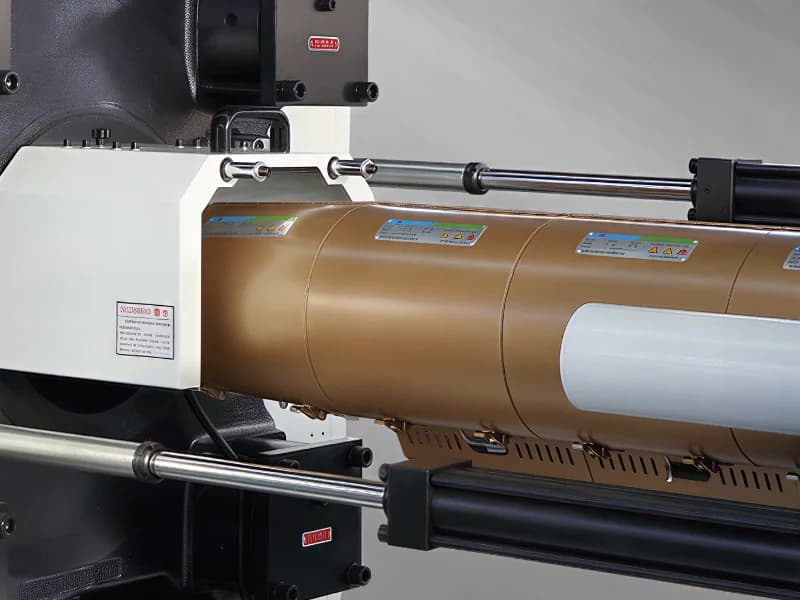
Servo-hydraulic drive system with energy recovery
Need Expert Advice?
Talk to our engineers about your specific production requirements. Free consultation.
Mold Design for Minimum Cycle Time
The mold itself is the largest determinant of achievable cycle time after wall thickness. Key mold design strategies include maximizing the number and surface area of cooling channels while maintaining core structural integrity, using conformal cooling in thermally critical areas, placing cooling circuits as close to the cavity surface as structurally safe (typically 8 to 15 mm), designing ejection systems that release parts cleanly without requiring long ejector strokes, and optimizing venting to eliminate air compression that slows the final filling phase. Gate design affects both injection time and packing time: a properly sized valve gate minimizes flow restriction while the valve pin provides instant shut-off at the end of packing. Runner balance in multi-cavity molds ensures all cavities fill and pack simultaneously, preventing some cavities from requiring extended packing time to compensate for later filling. HWAMDA's mold engineering team uses simulation tools to optimize all these factors before cutting steel.
Process Parameter Tuning
After mold and machine hardware are optimized, process parameter tuning extracts the final increments of cycle time reduction that separate good operations from world-class ones. Key tuning steps include injection speed profiling: using maximum speed during the initial 90 to 95 percent of cavity filling and reducing speed in the final 5 to 10 percent to prevent flash and burn marks while minimizing total fill time. Packing pressure optimization determines the minimum packing duration and pressure needed to eliminate sink marks and achieve target part weight, since excessive packing adds unnecessary cycle time without improving quality. Gate seal time measurement using cavity pressure transducers confirms exactly when the gate has frozen off, after which continued packing has no effect on the part. Cooling time reduction is achieved by progressively shortening the cooling phase in 0.1-second increments and monitoring part quality until the minimum acceptable cooling time is established through systematic experimentation. The INOVA controller on HWAMDA SPV5 machines supports this optimization with comprehensive data logging and trend analysis capabilities.
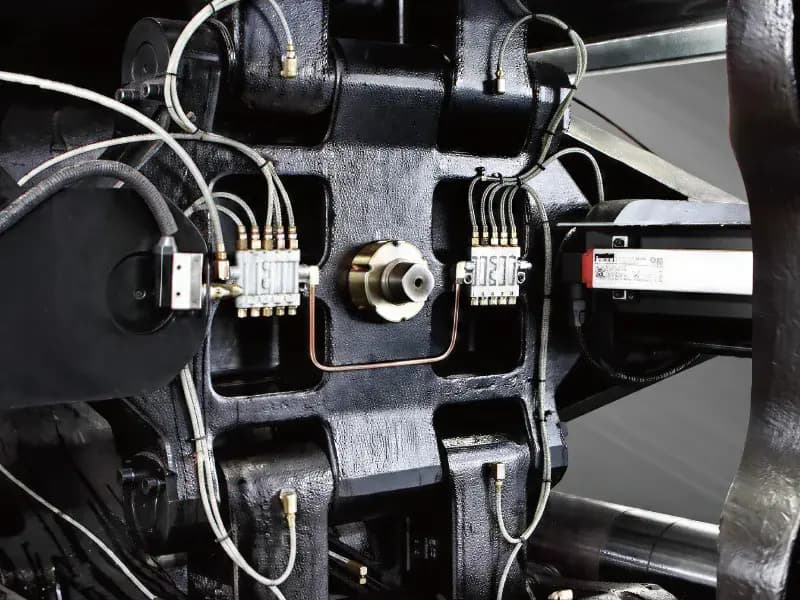
Toggle clamping unit — high rigidity for thin-wall molding
Real-World Cycle Time Benchmarks
Based on verified industry data and HWAMDA production experience, real-world cycle time benchmarks for thin-wall food packaging are as follows. A 200 mL yogurt cup at 6 grams in a 4-cavity mold runs at 3.5 to 4.5 seconds. A 500 mL milk tea cup at 15 grams in a 4-cavity configuration runs at 5 to 7 seconds. A 1,000 mL round container at 18 grams in a 4-cavity mold runs at 6 to 8 seconds. A 650 mL rectangular container at 14 grams runs at 5 to 7 seconds per 4 cavities. A 30 mL sauce cup at 3 grams in an 8-plus-8 cavity cup-and-lid mold runs at 3 to 4 seconds. A 3-liter yogurt pail at 45 grams in a 2-cavity mold runs at 10 to 14 seconds. A 500-gram margarine IML container at 12 grams runs at 5 to 7 seconds per 4 cavities. These benchmarks assume food-grade PP, optimized cooling, and properly tuned process parameters.
Frequently Asked Questions
On advanced high-speed platforms, yogurt cup cycle times as low as 3.5 seconds have been verified in 4-cavity molds with optimized conformal cooling and BeCu inserts. For higher cavity counts of 16 to 32 cavities, cycle times of 4.0 to 6.0 seconds are typical production targets. The HWAMDA SPV5 series with its 1.1-second dry cycle time provides the machine-side performance needed to approach these benchmarks. The limiting factor is almost always the mold cooling efficiency rather than machine speed. Mold cooling design is the primary lever for further reducing cycle time beyond these benchmarks.
Related Guides
Ready to Start Your Project?
Get a free consultation and quotation for your thin-wall packaging production line.
Join 500+ manufacturers in 60+ countries who trust HWAMDA.
Get Free Quote