

PP Grades for Thin-Wall Food Containers
Thin-wall injection molding requires PP grades with high melt flow index (MFI) to fill narrow cavity sections at acceptable injection pressures. Standard thin-wall packaging grades have MFI values of 30 to 60 grams per 10 minutes measured at 230 degrees Celsius and 2.16 kg load, compared to general-purpose PP at 10 to 20 MFI. Major suppliers include LyondellBasell (Moplen), SABIC (PP 526/548 series), Braskem (Prisma), Borealis (Borflow/Daploy), and CNPC/Sinopec for Chinese domestic grades. The higher MFI grades flow more easily but sacrifice some mechanical properties, particularly impact strength. For containers requiring both thin walls and drop-test performance, copolymer PP grades offering improved impact resistance at a slight MFI penalty are preferred. Random copolymer PP (PPR) provides excellent clarity for transparent containers. HWAMDA validates PP grade compatibility during mold trials, testing filling behavior, shrinkage, and mechanical properties specific to each container design. The specific grade recommendation is documented in the mold trial report for production reference.

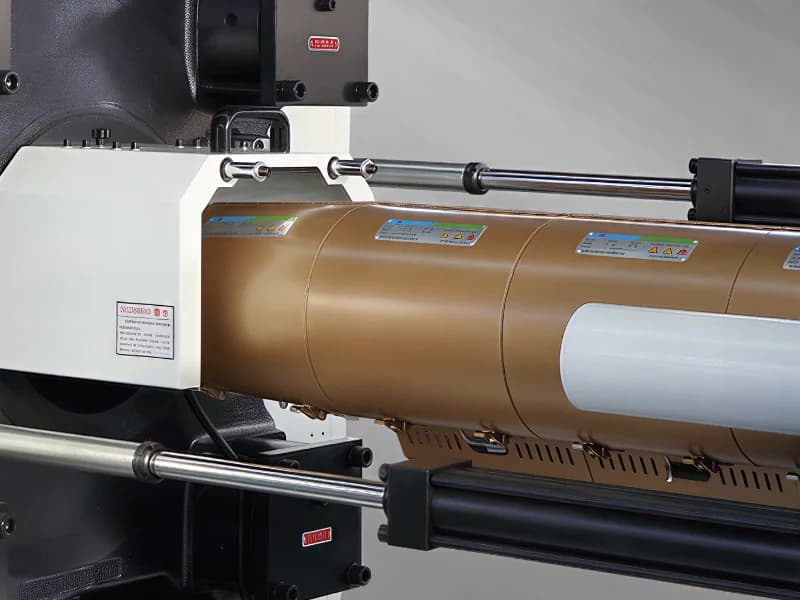
High-speed injection unit with linear guides
Melt Flow Rate and Processing Requirements
MFI is the single most important material property for thin-wall processability. Higher MFI means lower melt viscosity, enabling easier cavity filling at lower injection pressures. For containers with wall thickness of 0.30 to 0.50 mm, PP grades with MFI of 50 to 60 or higher are recommended. For 0.50 to 0.80 mm walls, MFI of 30 to 50 is sufficient. Processing temperature for thin-wall PP is 220 to 260 degrees Celsius melt temperature with mold surface temperatures of 20 to 40 degrees Celsius. The screw speed must provide sufficient plasticizing rate to match the rapid cycle: at 4-second cycle time with 100 grams per shot, the plasticizing rate must exceed 25 grams per second. HWAMDA SPV5 machines deliver verified plasticizing capacities of 17 to 23.5 grams per second across the model range, with infrared heating bands on the barrel improving plasticizing efficiency for high-MFI grades. Barrel zone temperature setpoints are documented during mold trials for each material grade.
Food Contact Compliance: FDA and EU Standards
All PP used in food packaging must comply with applicable food contact regulations. In the United States, PP is listed in FDA 21 CFR Part 177.1520 as an approved polymer for food contact applications. For the EU market, PP must comply with Regulation (EU) No 10/2011 on plastic materials and articles intended to come into contact with food, including specific migration limits (SML) for individual substances and an overall migration limit (OML) of 10 mg per square decimeter. The Declaration of Compliance (DoC) required under Article 15 must accompany all PP food packaging at each stage of the supply chain. For Middle East markets, Saudi Arabia follows SASO standards largely aligned with EU requirements, while UAE applies Emirates Quality Mark certification. In Southeast Asia, regulations vary by country with Japan, South Korea, and Thailand having the most stringent requirements. HWAMDA provides material traceability documentation and assists customers with compliance testing through its network of accredited laboratories.
Servo-hydraulic drive system with energy recovery
Need Expert Advice?
Talk to our engineers about your specific production requirements. Free consultation.
Impact Resistance vs Stiffness Tradeoffs
Thin-wall containers must balance stiffness for stacking strength with impact resistance for drop-test performance and handling during transport. Homopolymer PP provides the highest stiffness with flexural modulus of 1,300 to 1,800 MPa but lower impact strength. Impact copolymer PP (ICP) adds rubber phase domains that absorb energy during impact, improving drop-test performance at the expense of some stiffness and clarity. For yogurt cups that require stacking strength in refrigerated display cases, a balance of stiffness and impact is achieved by selecting homopolymer PP with MFI of 35 to 50 and compensating for lower impact by optimizing wall thickness distribution with thicker sections at stress concentration points. For containers that must survive shipping and handling, ICP grades with MFI of 30 to 45 are preferred. Container design features like reinforcing ribs, rolled rims, and bottom domes improve structural performance without increasing overall wall thickness. HWAMDA validates structural performance through stacking tests and drop tests during mold trials.
PP Price Trends and Cost Optimization
As of early 2026, food-grade PP injection molding grades are priced at approximately 930 to 1,510 dollars per metric ton globally, with significant regional variation driven by feedstock availability, logistics, and local market dynamics. China domestic prices average approximately 1,100 dollars per metric ton, Southeast Asia approximately 1,040 to 1,100 dollars, Middle East approximately 915 to 950 dollars benefiting from local petrochemical production, Europe approximately 1,290 to 1,400 dollars reflecting higher logistics and regulatory costs, and US approximately 1,027 to 1,525 dollars with wider variation. Material cost typically represents 50 to 70 percent of total container production cost, making resin price the single most impactful cost variable in packaging production economics. Optimization strategies for managing material costs include negotiating volume contracts with resin suppliers for 5 to 10 percent discounts, minimizing process scrap through parameter optimization targeting less than 2 percent waste, lightweighting container designs to reduce material consumption per unit, and evaluating recycled PP blends where food contact regulations permit.
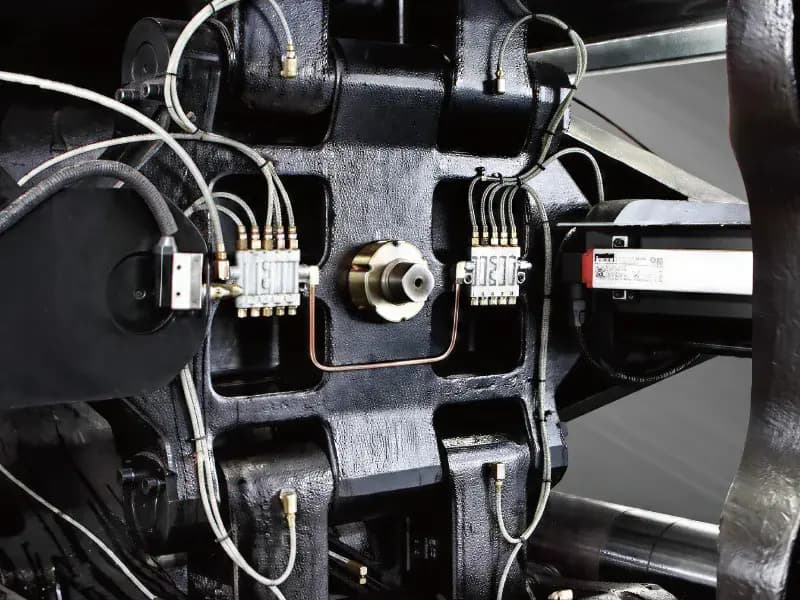
Toggle clamping unit — high rigidity for thin-wall molding
PP vs PS vs PET Material Comparison
PS (polystyrene) is widely used for transparent deli containers, food trays, and disposable tableware, processing at lower temperatures of 180 to 280 degrees Celsius with MFI of 10 to 30 grams per 10 minutes. PS offers excellent optical clarity and lower shrinkage of 0.4 to 0.7 percent versus PP's 1.0 to 2.5 percent, providing superior dimensional accuracy at thin walls. However, PS is inherently brittle, cannot withstand microwave heating, and faces growing regulatory restrictions in several markets due to recycling challenges and environmental concerns. PET (polyethylene terephthalate) is used for sauce cups and premium clear containers, offering excellent gas barrier properties and optical clarity but requiring higher processing temperatures and stringent moisture control below 50 ppm. Food-grade recycled PET (rPET) is priced at approximately 1,050 to 1,200 dollars per metric ton. PP remains the most versatile and widely specified choice for thin-wall food packaging due to its combination of chemical resistance, microwave safety, food contact regulatory compliance, and recyclability in established waste management streams globally.
Frequently Asked Questions
For yogurt cups with wall thickness of 0.30 to 0.55 mm, select a food-grade PP homopolymer or random copolymer with MFI of 45 to 60 grams per 10 minutes at 230 degrees Celsius and 2.16 kg load. Higher MFI enables reliable filling of the thin cavity sections at acceptable injection pressures. LyondellBasell Moplen, SABIC PP 526 series, and domestic Chinese grades from CNPC or Sinopec are commonly used. HWAMDA validates the specific PP grade during mold trials to confirm filling, shrinkage, and mechanical properties meet the container design specification.
Related Guides
Ready to Start Your Project?
Get a free consultation and quotation for your thin-wall packaging production line.
Join 500+ manufacturers in 60+ countries who trust HWAMDA.
Get Free Quote