

FDA 21 CFR Compliance for the US Market
The U.S. Food and Drug Administration regulates food contact materials under 21 CFR Parts 170-199, treating plastics as indirect food additives. For thin-wall PP packaging produced on HWAMDA SPV5 machines, the primary regulation is 21 CFR 177.1520, which governs olefin polymers including polypropylene. Compliance requires that the PP resin used carries an FDA-compliant certificate of analysis, specifying extractables below 0.02 mg/dm2 for aqueous food contact and overall migration limits appropriate for the intended food type. Manufacturers must maintain documentation showing that melt temperatures during processing stayed within 200-260 degrees Celsius to prevent thermal degradation that could release non-compliant substances. The INOVA controller on SPV5 machines logs barrel zone temperatures across all 6 heating zones at 0.5-second intervals, providing the detailed audit trail that FDA inspectors require during facility inspections. Additionally, any colorants, release agents, lubricants, or additives incorporated into the PP formulation must have separate FDA clearance documented in the master file. For hot-fill applications at temperatures above 85 degrees Celsius, additional migration testing per FDA guidelines is required, using food simulants that represent worst-case contact conditions for the specific food product being packaged.
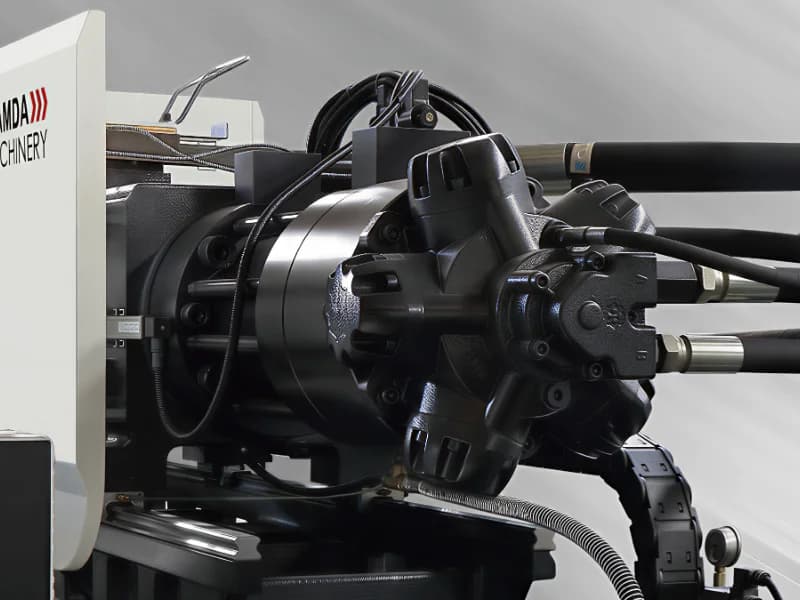
High-speed injection unit with linear guides
EU Regulation 10/2011 and the Plastics Framework
The European Union has the most comprehensive food contact material legislation globally. EU Regulation 10/2011 establishes an authorized positive list of monomers and additives for plastic food contact materials, with specific migration limits for each listed substance. For PP thin-wall packaging produced on HWAMDA SPV5 machines, the overall migration limit is 10 mg/dm2 of food contact surface area, measured under standardized test conditions. Testing must be performed using appropriate food simulants including 10% ethanol for aqueous foods, 3% acetic acid for acidic foods, 50% ethanol for dairy products and fatty foods up to moderate fat content, and vegetable oil for high-fat foods. Contact conditions must simulate worst-case use scenarios, typically 2 hours at 70 degrees Celsius for single-use containers or 10 days at 40 degrees Celsius for long-term storage applications. HWAMDA SPV5 machines support EU compliance through highly consistent processing conditions, with injection pressure repeatability within plus or minus 1% at pressures up to 182 MPa, ensuring uniform wall thickness of 0.35-0.70 mm that directly affects migration rates per unit surface area. Additionally, EU Regulation 2023/2006 requires Good Manufacturing Practice documentation, which the INOVA controller process logging facilitates through continuous data recording.
ISO 22000 Food Safety Management System
ISO 22000:2018 is the international standard for food safety management systems, increasingly applied to food contact material manufacturers alongside traditional food production companies. While originally designed for food producers, packaging converters using HWAMDA SPV5 machines can implement ISO 22000 to demonstrate systematic hazard control throughout their entire production process from raw material receipt through finished goods shipment. Key requirements include HACCP-based hazard analysis covering biological contamination from mold cooling water systems, chemical contamination from hydraulic oil leaks or release agent residues, and physical contamination from metal fragments or foreign particles. The SPV5 servo-hydraulic system uses food-grade hydraulic oil separated from the mold area by multiple seals and containment systems, substantially reducing contamination risk compared to older hydraulic machine designs. Critical control points in thin-wall production include material drying at 80-90 degrees Celsius for 2-4 hours, barrel temperature monitoring across 6 zones with alarms for deviation, and post-mold part handling via SWITEK side-entry robots that minimize human contact with finished products. Certification requires annual surveillance audits by an accredited certification body and typically takes 6-12 months to achieve for a new facility starting from scratch.
Key Specs
- •Critical control points in thin-wall production include material drying at 80-90 degrees Celsius for 2-4 hours, barrel temperature monitoring across 6 zones with alarms for deviation, and post-mold part handling via SWITEK side-entry robots that minimize human contact with finished products.
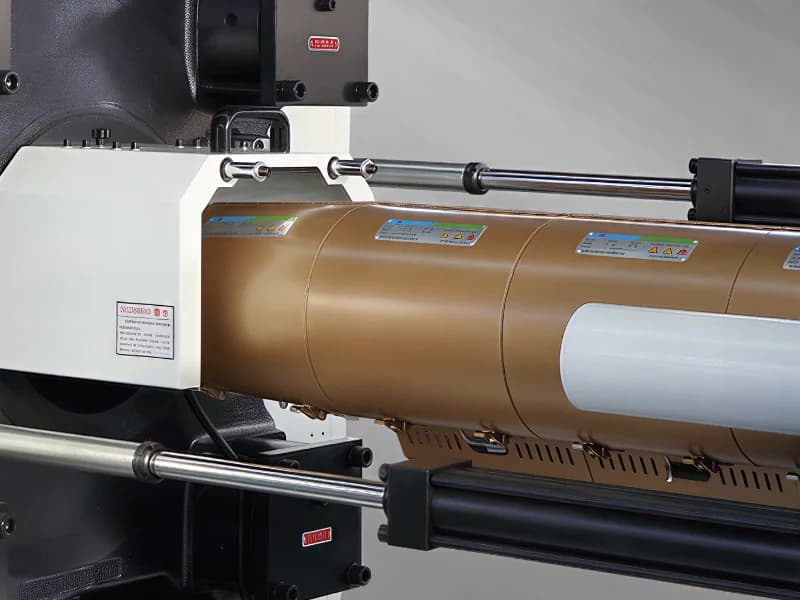
Servo-hydraulic drive system with energy recovery
Need Expert Advice?
Talk to our engineers about your specific production requirements. Free consultation.
BRC Global Standard for Packaging and Packaging Materials
The BRC Packaging standard, now in its 7th edition, is widely recognized by European and global retailers as a prerequisite for packaging suppliers seeking to serve major brand owners. Achieving BRC certification demonstrates that a facility meets rigorous retailer requirements for production hygiene, process control, and quality management systems. For thin-wall injection molding operations running HWAMDA SPV5 machines, BRC assessment covers factory environment standards including positive air pressure differentials in production areas, comprehensive pest control measures, segregated and controlled raw material storage, and defined clean and contamination zones. Process control requirements align well with SPV5 capabilities: the INOVA controller records all critical parameters including injection speed of 368-560 mm/s, holding pressure profiles across multiple stages, cooling time optimization, and cycle time of 3-7 seconds with repeatability documentation. BRC also requires full traceability from raw material lot numbers through to finished goods shipments, which can be implemented through the controller data logging function combined with a barcode or RFID scanning system on the production line. Most packaging converters targeting European retail customers aim for BRC Grade A certification, which requires participation in an unannounced audit program demonstrating continuous compliance readiness.
China GB Standards and Asian Market Requirements
For manufacturers based in China using HWAMDA SPV5 machines, domestic compliance requires adherence to the GB 4806 series of national standards for food contact materials and articles. GB 4806.6-2016 specifically covers plastic resins used as raw materials, establishing migration limits similar to EU regulations at 10 mg/dm2 overall migration for general food contact applications. GB 4806.7-2016 addresses finished plastic food contact products, requiring sensory evaluation for odor and color transfer, total migration testing using four standard food simulants, and specific migration testing for regulated heavy metals including lead below 0.01 mg/kg and cadmium below 0.002 mg/kg. For export to Southeast Asian markets, ASEAN member states generally reference Codex Alimentarius guidelines as the baseline framework, though individual countries like Thailand with FDA Thailand Notification 295, Vietnam with QCVN 12-1:2011, and Indonesia with BPOM regulations maintain their own specific national requirements that may differ in testing methodology or acceptable limits. Japanese regulations under the Food Sanitation Act require separate compliance testing using Japanese official analytical methods and approved positive lists. HWAMDA can provide documentation packages tailored to each target market through its export support team, and SPV5 machines are designed to produce parts meeting the tightest dimensional tolerances across all these international regulatory standards.
Key Specs
- •GB 4806.6-2016 specifically covers plastic resins used as raw materials, establishing migration limits similar to EU regulations at 10 mg/dm2 overall migration for general food contact applications.
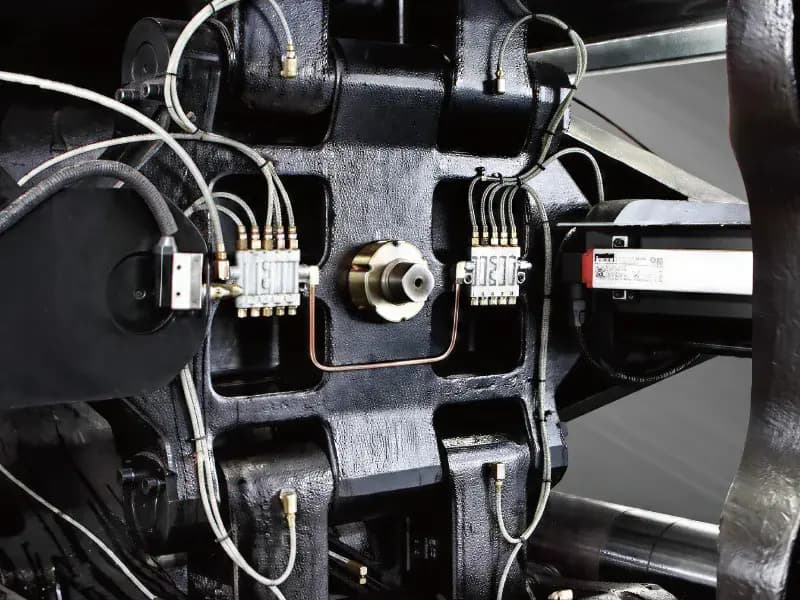
Toggle clamping unit — high rigidity for thin-wall molding
Building a Certification Roadmap for Your Facility
A practical certification strategy for a new thin-wall packaging facility with HWAMDA SPV5 machines should prioritize certifications based on target markets. Start with your domestic market compliance, which in China means GB 4806 series testing for each product and material combination, typically taking 4-6 weeks per product through an accredited laboratory. Simultaneously begin implementing ISO 22000 or FSSC 22000, which takes 6-12 months and provides the management system framework that supports all other certifications. For FDA compliance, work with your PP resin supplier to obtain Letters of Compliance confirming 21 CFR 177.1520 conformity, then conduct independent migration testing through an FDA-recognized laboratory. EU market entry requires engaging a European testing laboratory for Regulation 10/2011 testing, budgeting approximately 2,000-5,000 USD per product per food simulant combination. BRC certification should be pursued once the ISO management system is mature, typically in year two of operation. Throughout this process, leverage the INOVA controller data logging on your SPV5 machines to build the process validation records that all certifications require.
Frequently Asked Questions
Certification testing costs vary by market and product. FDA compliance testing for PP food containers typically costs 1,500-3,000 USD per product. EU Regulation 10/2011 migration testing runs 2,000-5,000 USD per product per food simulant combination. ISO 22000 certification costs 8,000-15,000 USD for initial audit plus annual surveillance fees. BRC certification averages 5,000-10,000 USD per audit. Budget 25,000-50,000 USD total for a comprehensive certification package covering US, EU, and Asian markets.
Related Guides
Ready to Start Your Project?
Get a free consultation and quotation for your thin-wall packaging production line.
Join 500+ manufacturers in 60+ countries who trust HWAMDA.
Get Free Quote