

FDA Requirements for Food-Contact Plastics
The US FDA regulates food contact materials under Title 21 of the Code of Federal Regulations (21 CFR). Polypropylene is listed as an approved food contact polymer under 21 CFR Part 177.1520 (Olefin polymers). PP food containers must comply with migration limits established through the Food Contact Substance Notification (FCSN) program. The FDA does not require pre-market approval for PP containers made from compliant resin grades but does require that the finished article be safe under its intended conditions of use including temperature, contact time, and food type. For thin-wall containers used with fatty, acidic, or aqueous foods, migration testing must demonstrate that extractable substances remain within safe levels. Good Manufacturing Practice (GMP) under 21 CFR Part 174.5 requires that all equipment and processes prevent contamination. HWAMDA machines are designed with food-safe materials in all melt-contact surfaces and provide process documentation supporting customer GMP compliance. Manufacturers must maintain documentation of material compliance throughout the supply chain from resin to finished container.

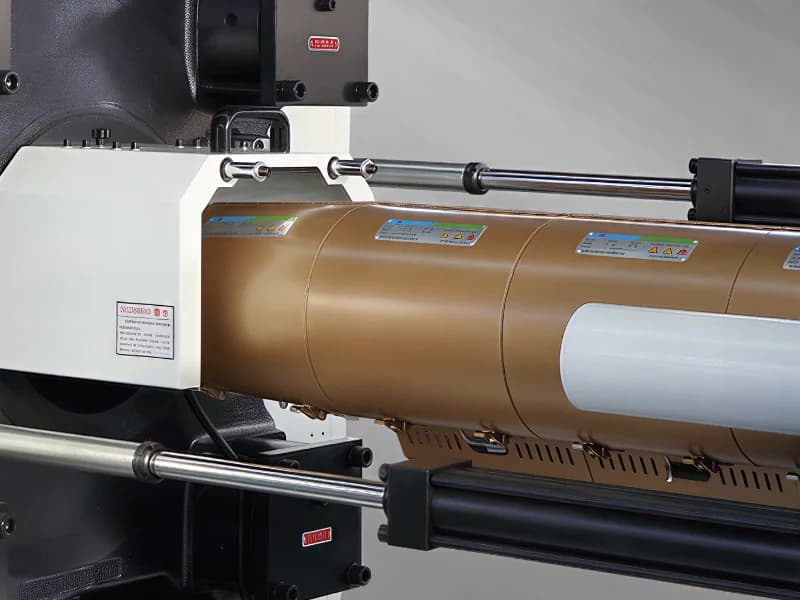
High-speed injection unit with linear guides
EU Regulation 10/2011 Overview
EU Regulation 10/2011 is the most comprehensive food contact plastics regulation globally. It establishes a positive list of authorized monomers and additives (Annex I), specific migration limits (SMLs) for individual substances, and an overall migration limit (OML) of 10 mg per square decimeter of food contact surface. Testing must be performed using food simulants appropriate to the intended food type: distilled water for aqueous foods, 3 percent acetic acid for acidic foods, 10 percent ethanol or 20 percent ethanol for alcoholic foods, and vegetable oil for fatty foods. A Declaration of Compliance (DoC) is required under Article 15, accompanying the material at every stage from resin supplier through converter to brand owner. The DoC must reference the specific regulations, list substances used, and confirm compliance with relevant SMLs and OML. For PP thin-wall containers, the key substances monitored include residual monomer content and any added clarifying agents, nucleating agents, or antioxidant stabilizers.
Middle East Food Safety Standards
Saudi Arabia regulates food contact materials through the Saudi Standards, Metrology and Quality Organization (SASO), with standards largely aligned to EU testing methodologies and migration limits. SASO standards for plastic food containers reference both ISO migration testing protocols and EU Regulation 10/2011 positive lists. The Emirates Authority for Standardization and Metrology (ESMA) in the UAE applies the Emirates Quality Mark (EQM) certification for food contact articles, requiring products to pass migration testing and comprehensive labeling requirements before receiving market approval. Egypt follows the Egyptian Organization for Standardization and Quality (EOS) standards, which reference both US FDA and EU testing frameworks depending on the intended market. Turkey, an important market for yogurt cup production equipment, follows Turkish Food Codex regulations administered by the Ministry of Agriculture and Forestry, closely harmonized with EU 10/2011 as part of Turkey's ongoing EU accession alignment process. All Middle Eastern markets consistently require Arabic-language labeling and resin type identification on food contact packaging.
Servo-hydraulic drive system with energy recovery
Need Expert Advice?
Talk to our engineers about your specific production requirements. Free consultation.
Southeast Asia Regulatory Landscape
Southeast Asian food contact regulations vary significantly by country in their stringency and enforcement. Japan has one of the strictest frameworks through the Food Sanitation Act, administered by the Ministry of Health, Labour and Welfare (MHLW), with positive lists for resins and additives and mandatory material-specific migration tests. South Korea's Ministry of Food and Drug Safety (MFDS) maintains Standards and Specifications for Food Utensils, Containers and Packages with lead, cadmium, and heavy metal migration limits. Thailand's FDA under the Ministry of Public Health regulates food contact materials with reference to both US and EU standards. Vietnam, Indonesia, Malaysia, and Philippines have developing regulatory frameworks that generally reference international standards (Codex Alimentarius) but may have less rigorous enforcement. For exporters serving multiple Southeast Asian markets, designing for compliance with Japan or South Korea standards typically ensures compliance across the entire region. HWAMDA assists customers with market-specific regulatory research for their target export destinations.
Material Testing and Certification
Compliance verification requires standardized testing performed by accredited laboratories following internationally recognized methodologies. Overall migration testing measures the total amount of non-volatile substances that transfer from the packaging material to a food simulant under specified time and temperature conditions matching the intended use, with the EU limit being 10 mg per square decimeter of contact surface. Specific migration testing measures individual authorized substances against their specific migration limits (SMLs), typically using gas chromatography-mass spectrometry (GC-MS) or liquid chromatography coupled with mass spectrometry (LC-MS) for precise quantification. Sensory testing evaluates whether the packaging imparts any detectable taste, odor, or color change to the food simulant that would be unacceptable to consumers. Testing conditions must reflect the intended product use: a microwave-safe container must be tested at elevated temperatures of 100 to 175 degrees Celsius. Accredited testing laboratories include SGS, Intertek, Bureau Veritas, and TUV for international markets. Testing costs range from 500 to 3,000 dollars per material and food type combination.

Toggle clamping unit — high rigidity for thin-wall molding
How Equipment Design Affects Compliance
The injection molding machine and mold design directly impact food contact compliance through several important mechanisms. All melt-contact surfaces including the barrel, screw, nozzle, hot runner manifold, nozzle tips, and mold cavity must be manufactured from food-safe metals with appropriate surface finish quality to prevent bacterial growth and facilitate thorough cleaning between production runs. HWAMDA uses hardened tool steel and stainless steel for all melt-contact components, with surface roughness specified to Ra 0.4 micrometers or better on all cavity surfaces that contact food packaging. Precise process temperature control prevents overheating that can generate thermal degradation byproducts from PP resin, which could migrate into the food product. The INOVA controller maintains temperature within plus or minus 1 degree Celsius across all heating zones to prevent localized overheating. Mold design must also avoid dead zones where material can stagnate and degrade over time. HWAMDA provides complete equipment compliance documentation including material certificates for all melt-contact components to support customer regulatory submissions.
Frequently Asked Questions
PP food packaging exported to the EU must comply with Regulation (EU) No 10/2011, demonstrated through overall migration testing below 10 mg per square decimeter, specific migration testing for relevant substances against their SMLs, and a Declaration of Compliance (DoC) under Article 15. The resin supplier provides a DoC for the raw PP, and the converter (container manufacturer) issues a DoC for the finished article. Good Manufacturing Practice under Regulation (EC) No 2023/2006 must also be documented. Testing by an accredited laboratory costs approximately 1,000 to 3,000 dollars per product-food type combination.
Related Guides
Ready to Start Your Project?
Get a free consultation and quotation for your thin-wall packaging production line.
Join 500+ manufacturers in 60+ countries who trust HWAMDA.
Get Free Quote