

Energy Consumption: Hydraulic vs Servo vs Electric
Three drive architectures serve the injection molding industry with distinct energy profiles. Standard hydraulic machines consume 1.4 to 1.6 kWh per kilogram of processed material, with constant pump operation wasting energy during non-injection phases. Servo-hydraulic machines reduce consumption to 1.0 to 1.2 kWh/kg by using variable-speed servo motors that match pump output to instantaneous demand, nearly eliminating idle energy waste. All-electric machines achieve the lowest consumption at 0.9 to 1.1 kWh/kg by replacing all hydraulic actuators with electric servo motors, but at a capital cost premium of 40 to 60 percent over hydraulic. For thin-wall packaging specifically, high-speed operations increase energy demand, with hydraulic machines consuming 1.8 to 2.2 kWh/kg and servo-hydraulic machines at 1.1 to 1.4 kWh/kg. The HWAMDA SPV5 series uses servo-hydraulic technology with dual-pump systems, achieving energy savings of 30 to 40 percent versus standard hydraulic while maintaining the high injection speed required for thin-wall applications. These savings compound over the typical 10-year machine life into substantial total cost of ownership advantages.
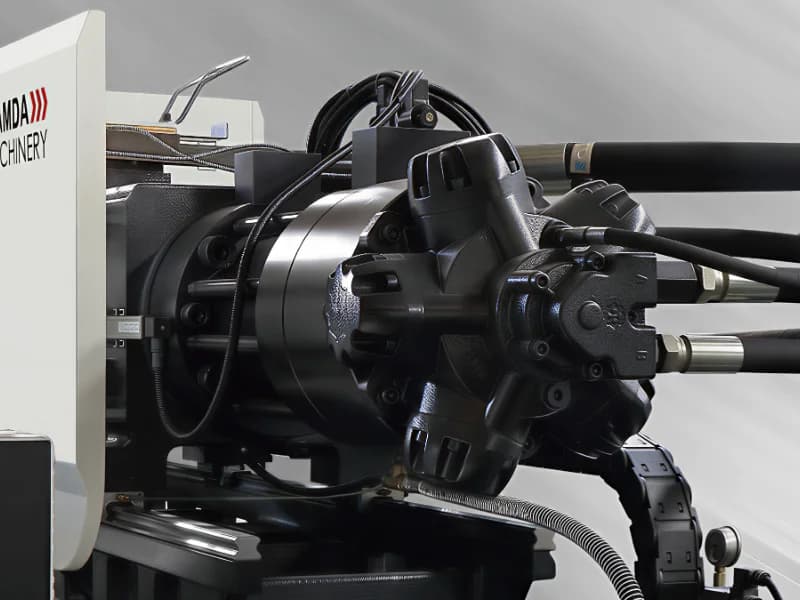
High-speed injection unit with linear guides
Servo Motor Technology Benefits
Servo-hydraulic drives use variable-frequency servo motors to control the hydraulic pump speed in proportion to the instantaneous flow and pressure demand. During the cooling phase when no hydraulic power is needed, the servo motor slows to near idle, consuming minimal electricity. This contrasts with standard hydraulic systems where the pump runs at full speed continuously, dissipating excess flow as heat through the relief valve. The HWAMDA SPV5 dual-pump servo system provides an additional benefit: parallel operation during injection and clamping phases maximizes speed when needed, while single-pump operation during low-demand phases minimizes energy consumption. The servo system also reduces hydraulic oil heating, extending oil life and reducing chiller load. Machine startup time is faster because the servo motor reaches operating speed in milliseconds. The result is a machine that delivers high-speed thin-wall performance when injecting while consuming only the energy actually needed for each phase of the cycle. The dual-pump configuration also provides redundancy, as production can continue on a single pump if one requires maintenance.
Power Requirements by Machine Tonnage
HWAMDA SPV5 machine power requirements scale with clamping force. The HMD 270M8-SPV uses dual 37 kW pump motors (74 kW total) plus 22.5 kW heater power, for approximately 96.5 kW connected load. The HMD 350M8-SPV uses dual 45 kW motors plus 32 kW heaters for 122 kW. The HMD 400M8-SPV uses dual 55 kW motors plus 31.7 kW heaters for 141.7 kW. The HMD 480M8-SPV continues this progression with higher pump motor ratings. However, connected load is not actual consumption. Servo-hydraulic operation means the actual average power draw is 40 to 60 percent of connected load during production, depending on cycle time and injection intensity. A 400-ton SPV5 machine running yogurt cups at a 4.5-second cycle typically draws 70 to 90 kW average, consuming approximately 1,680 to 2,160 kWh per 24-hour production day. At China's industrial electricity rate of approximately 0.10 dollars per kWh, daily energy cost is 168 to 216 dollars.
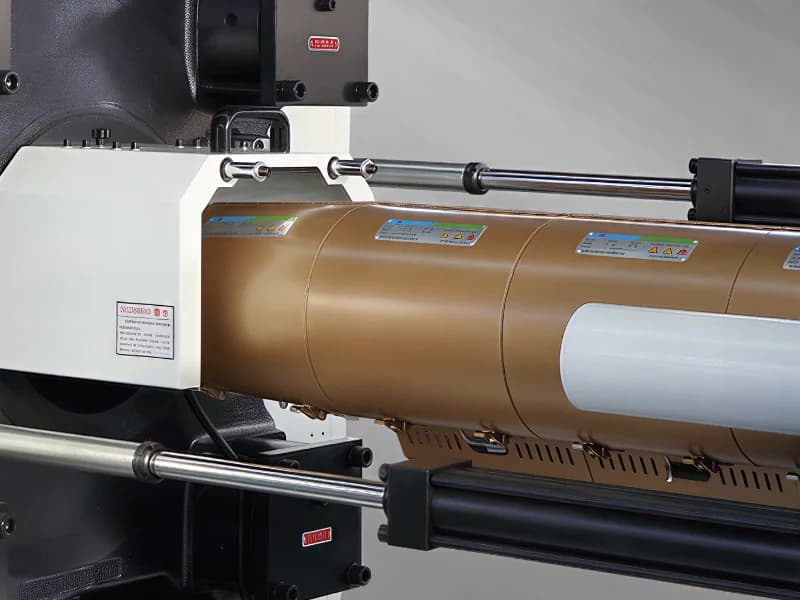
Servo-hydraulic drive system with energy recovery
Need Expert Advice?
Talk to our engineers about your specific production requirements. Free consultation.
Energy Cost Comparison by Country
Industrial electricity prices vary dramatically by country, making energy efficiency more critical in some markets than others. At approximately 0.10 dollars per kWh in China, energy represents roughly 10 to 15 percent of production cost. In the Philippines at 0.18 to 0.20 dollars per kWh or the UK at 0.22 dollars per kWh, energy can represent 20 to 30 percent of production cost, making drive efficiency a major competitive factor. In low-cost electricity markets like Bangladesh at 0.03 to 0.04 dollars per kWh or Egypt at 0.04 to 0.06 dollars per kWh, energy is less impactful on total cost, but the 30 to 40 percent savings from servo-hydraulic drives still contribute to profitability. For a HWAMDA SPV5 400-ton machine consuming approximately 2,000 kWh per day, annual energy cost ranges from approximately 22,000 dollars in Bangladesh to approximately 160,000 dollars in the UK. The servo-hydraulic drive saves approximately 8,000 to 64,000 dollars annually compared to a standard hydraulic machine.
Sustainability and Carbon Footprint
Energy efficiency directly translates to reduced carbon emissions in packaging manufacturing. Using the global average grid emission factor of approximately 0.5 kg CO2 per kWh, a servo-hydraulic machine producing yogurt cups at 1.1 kWh/kg generates approximately 0.55 kg CO2 per kilogram of PP processed, compared to 0.80 kg CO2 per kilogram for a standard hydraulic machine operating at 1.6 kWh/kg. Over a year of continuous production processing approximately 500 metric tons of PP, the servo-hydraulic system reduces CO2 emissions by approximately 125 metric tons compared to the hydraulic baseline. This measurable reduction supports corporate sustainability targets and aligns with the EU Packaging and Packaging Waste Regulation's lifecycle assessment requirements that are becoming mandatory for packaging sold in European markets. PP itself is a fully recyclable mono-material polymer, and when combined with PP IML labels, the packaging achieves the mono-material recyclability that regulators and brand owners increasingly demand. HWAMDA's SPV5 machines carry the energy efficiency credentials and documentation needed for customers pursuing ISO 14001 environmental management system certification.
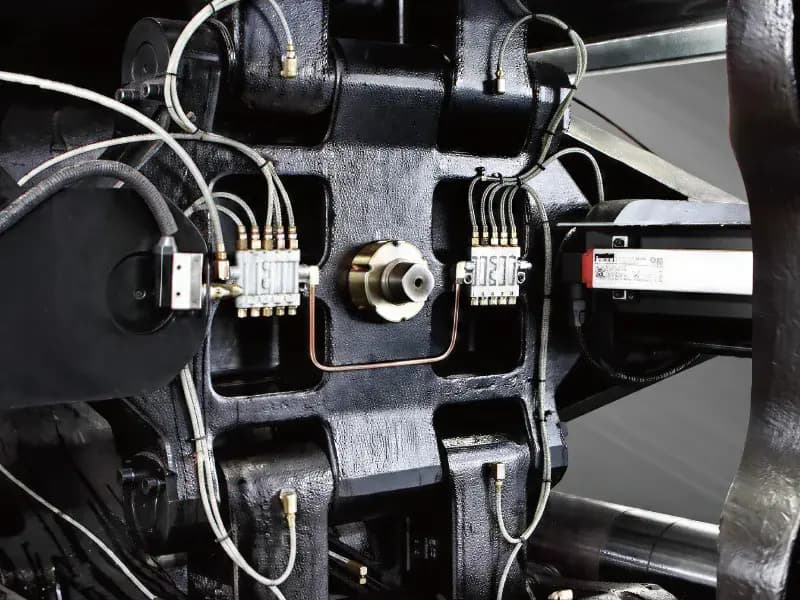
Toggle clamping unit — high rigidity for thin-wall molding
Total Cost of Ownership Analysis
Total Cost of Ownership (TCO) over a 5-year period for a 400-ton thin-wall machine includes purchase price, energy, maintenance, spare parts, and downtime costs. A Chinese mid-range servo-hydraulic machine like the HWAMDA SPV5 at approximately 85,000 to 120,000 dollars purchase price has annual maintenance of 3 to 5 percent, energy at approximately 0.95 to 1.2 kWh/kg, 4 to 6 percent downtime, and spare parts of 2,000 to 3,500 dollars per year, yielding a 5-year TCO of approximately 130,000 to 170,000 dollars. A European premium machine at 250,000 to 310,000 dollars purchase price has lower maintenance at 2 to 3 percent, lower energy at 0.75 to 1.0 kWh/kg, 1 to 3 percent downtime, and spare parts of 3,000 to 5,000 dollars per year, yielding a 5-year TCO of 310,000 to 380,000 dollars. The HWAMDA SPV5 delivers a TCO advantage of approximately 50 to 55 percent versus European alternatives while achieving comparable real-world production output for thin-wall food packaging.
Frequently Asked Questions
Energy consumption depends on machine tonnage and production intensity. The HMD 400M8-SPV running yogurt cups at a 4.5-second cycle typically draws 70 to 90 kW average power, consuming approximately 70 to 90 kWh per hour. The smaller HMD 270M8-SPV draws approximately 45 to 60 kW average. These figures represent actual average consumption during production, which is 40 to 60 percent of the connected load due to the servo-hydraulic drive's ability to reduce motor speed during low-demand cycle phases. The servo-hydraulic system adjusts power draw automatically based on each cycle phase demand.
Related Guides
Ready to Start Your Project?
Get a free consultation and quotation for your thin-wall packaging production line.
Join 500+ manufacturers in 60+ countries who trust HWAMDA.
Get Free Quote