

Daily, Weekly, and Monthly Maintenance Checklists
Daily maintenance tasks require approximately 15 to 30 minutes at shift start. These include checking hydraulic oil level and temperature (target 40 to 50 degrees Celsius during operation), inspecting safety guards and emergency stops, verifying cooling water flow and temperature at the mold inlet and outlet, cleaning the hopper and feed throat area, and reviewing the previous shift's process parameter logs for anomalies. Weekly tasks requiring 1 to 2 hours include lubricating all greasing points on the toggle mechanism and tie bars, checking hydraulic hose connections for leaks, inspecting the screw tip and check ring for wear by running a decompression test, and verifying all temperature controller readings against independent thermocouple measurements. Monthly tasks requiring 4 to 8 hours include full hydraulic oil analysis for contamination, viscosity, and acidity, inspection of the barrel heater bands and replacement of any showing hot spots, and verification of clamping force using strain gauge measurements.
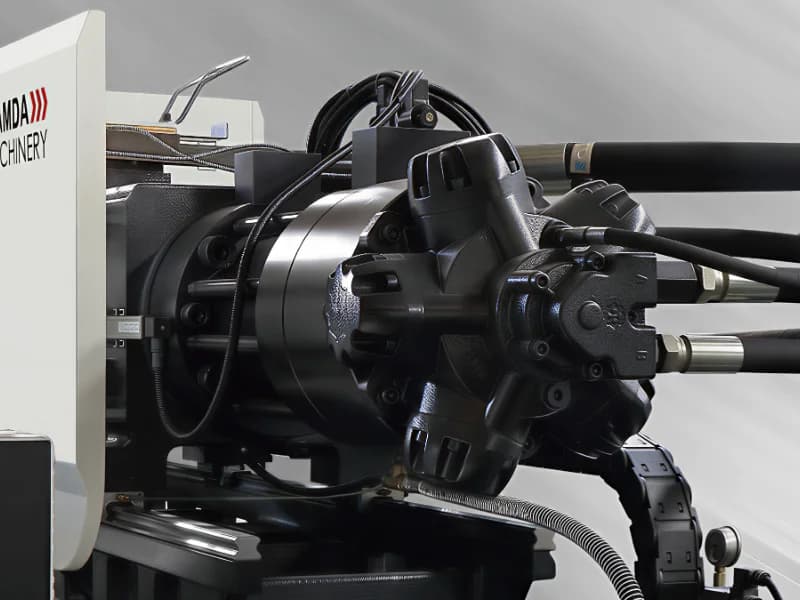
High-speed injection unit with linear guides
Hydraulic System Maintenance
The hydraulic system is the heart of the servo-hydraulic SPV5 machine, generating the forces for injection, clamping, and ejection. Hydraulic oil should be changed every 4,000 to 6,000 operating hours or annually, whichever comes first. The HWAMDA SPV5 uses oil tank capacities of 380 to 480 liters depending on model. Oil filter elements should be replaced every 1,000 to 2,000 hours or when the differential pressure indicator triggers. The dual-pump servo system requires periodic inspection of pump drive couplings, shaft seals, and servo motor encoder connections. Accumulator pre-charge pressure should be checked monthly against the nameplate specification, as nitrogen leakage reduces injection speed performance. Hydraulic hoses should be inspected for bulging, cracking, or abrasion every 3 months and replaced at the manufacturer's recommended interval or at the first sign of deterioration. System pressure should be verified against the specification of 17.5 to 19 MPa depending on the model. Maintaining clean hydraulic oil is the single most effective preventive measure for the entire servo-hydraulic drive system.
Screw and Barrel Inspection
The plasticizing screw and barrel are subject to progressive wear from abrasive PP additives, thermal fatigue from rapid heating and cooling cycles, and potential corrosion from moisture or contaminated feedstock. HWAMDA SPV5 screw diameters range from 50 to 65 mm with L/D ratios of 23:1 to 25:1, engineered for high-speed thin-wall processing. Key wear indicators that operators should monitor include increasing plasticizing time for a given shot weight, declining plasticizing capacity measured in grams per second, and growing shot-to-shot weight variation that was previously stable. The check ring (non-return valve) at the screw tip is the single most wear-prone component in the plasticizing unit, responsible for preventing backflow during the injection and packing phases. A worn check ring allows melt leakage backward during injection, reducing effective injection speed, shot weight consistency, and peak pressure delivery. The decompression test performed during weekly maintenance quantifies this leakage by monitoring pressure decay after injection hold. Check rings should be inspected every 3 to 6 months and replaced when measured leakage exceeds 5 percent of the target shot volume.
Key Specs
- •HWAMDA SPV5 screw diameters range from 50 to 65 mm with L/D ratios of 23:1 to 25:1, engineered for high-speed thin-wall processing.
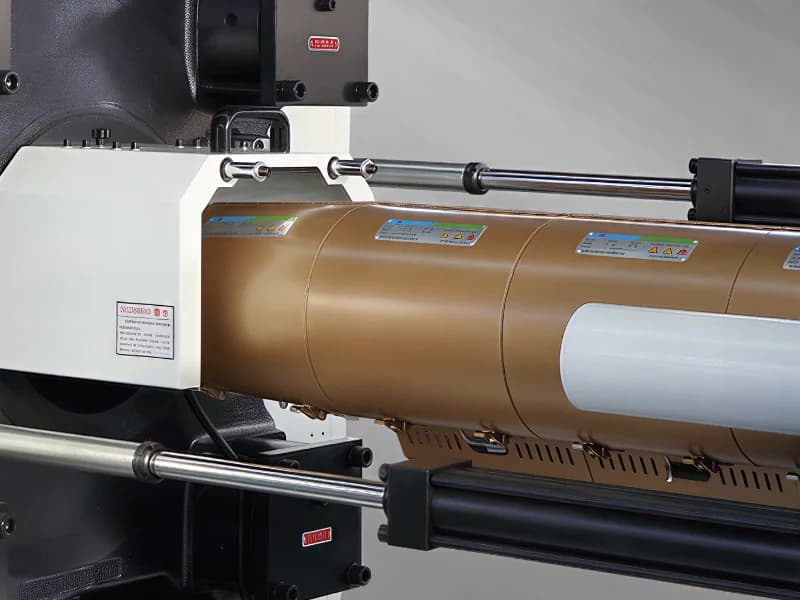
Servo-hydraulic drive system with energy recovery
Need Expert Advice?
Talk to our engineers about your specific production requirements. Free consultation.
Hot Runner Maintenance Schedule
Valve gate hot runner systems in thin-wall molds require regular maintenance to ensure consistent gate quality and balanced filling. Nozzle tip inspection should occur monthly, looking for wear, buildup, or damage that affects gate vestige quality. Valve pin stroke and sealing should be verified monthly by checking gate mark quality on sample parts. Heater cartridge resistance should be measured quarterly; values deviating more than 10 percent from specification indicate impending failure. Thermocouple accuracy should be verified quarterly against a calibrated reference. Full hot runner disassembly and cleaning should be performed annually or every 2 to 3 million shots, whichever comes first. During full service, all valve pins, nozzle seals, O-rings, and heater cartridges are inspected and replaced as needed. Manifold flow channels are cleaned of any PP residue or degradation deposits. HWAMDA recommends maintaining a complete spare parts kit for each hot runner system. HWAMDA provides hot runner maintenance training as part of the turnkey line installation and commissioning program.
Mold Maintenance Best Practices
Mold maintenance directly impacts part quality, cycle time consistency, and ultimate mold life, making it one of the highest-return maintenance investments in the production system. Every mold opening during production provides an opportunity for the operator to visually inspect cavity surfaces for damage, parting line condition for wear or foreign material, and vent channel cleanliness for buildup. Vents should be thoroughly cleaned every 50,000 to 100,000 shots or immediately whenever burn marks appear on molded parts, as burns indicate air trapping from blocked vents. Cooling channels should be flushed with appropriate descaling solution every 3 to 6 months depending on local water quality and hardness, since scale buildup on channel walls progressively reduces heat transfer efficiency and extends cooling time. All moving components including ejector pins, slides, and guide pins require periodic lubrication with food-grade grease at intervals specified in the mold maintenance manual. Parting line surfaces should be inspected regularly for damage, compression, or material buildup that could cause flash defects. HWAMDA provides a comprehensive mold maintenance manual with each mold delivery.
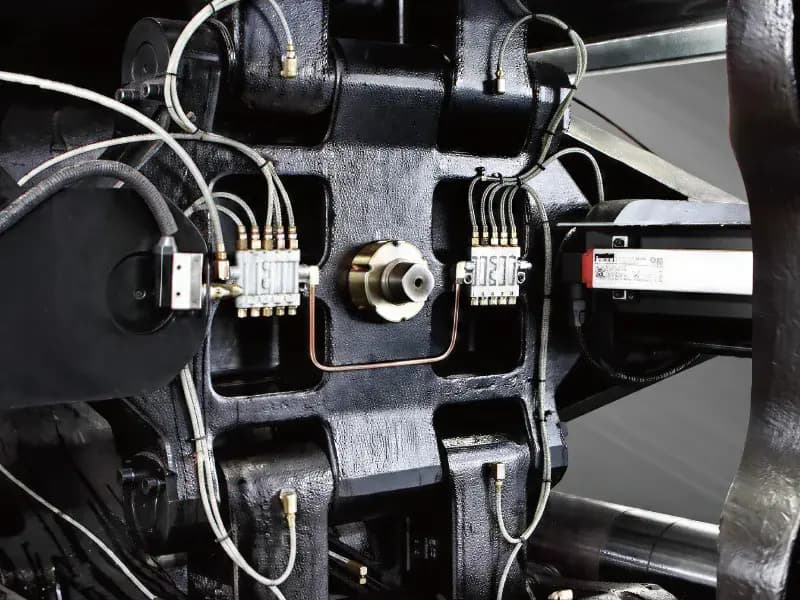
Toggle clamping unit — high rigidity for thin-wall molding
Spare Parts Inventory Planning
A well-planned spare parts inventory prevents extended downtime during maintenance or unplanned failures. For the HWAMDA SPV5 machine, critical spare parts include hydraulic oil filters (minimum 3 sets), screw tip and check ring assembly (1 complete spare), barrel heater bands (2 spare sets), and servo motor encoder (1 spare). For the mold, critical spares include valve pins (2 per hot runner drop), nozzle tips (2 complete assemblies), heater cartridges (4 spares per mold), thermocouples (4 spares), and ejector pins (1 complete set). For the SWITEK IML robot, spare vacuum cups, servo motor belts, and label magazine springs should be stocked. HWAMDA provides a recommended starter spare parts package with each machine delivery, sized for the first 12 months of production. Ongoing spare parts are available from HWAMDA's Ningbo warehouse with typical delivery time of 5 to 10 days for international orders. Remote technical support via WhatsApp and video call is available from HWAMDA's Ningbo engineering team for troubleshooting and parts identification.
Frequently Asked Questions
HWAMDA recommends changing hydraulic oil every 4,000 to 6,000 operating hours or annually, whichever comes first. The SPV5 oil tank holds 380 to 480 liters depending on the model. Before changing, oil should be analyzed for contamination, viscosity, and acidity level. Using the specified oil grade (typically ISO VG 46 or 68 hydraulic oil) is essential for proper servo system performance. Oil filters should be replaced every 1,000 to 2,000 hours or when the differential pressure indicator triggers. Regular oil analysis can extend change intervals in clean operating environments.
Related Guides
Ready to Start Your Project?
Get a free consultation and quotation for your thin-wall packaging production line.
Join 500+ manufacturers in 60+ countries who trust HWAMDA.
Get Free Quote