

Material Cost Calculation
Material cost is calculated as part weight in grams multiplied by PP price per gram plus scrap rate. At a PP price of 1,200 dollars per metric ton (1.20 dollars per kg, or 0.0012 dollars per gram), material costs by product are: yogurt cup at 6 grams equals 0.0072 dollars; milk tea cup at 15 grams equals 0.018 dollars; food container (1L) at 18 grams equals 0.0216 dollars; sauce cup at 3 grams equals 0.0036 dollars; yogurt pail (3L) at 45 grams equals 0.054 dollars; margarine tub at 12 grams equals 0.0144 dollars; PP fork at 4 grams equals 0.0048 dollars. Scrap rate in well-optimized thin-wall production is 1 to 3 percent, adding proportional material cost. For IML products, label cost adds 0.015 to 0.075 dollars per unit depending on label size and print complexity. Material cost varies by region: at Middle East PP prices of 915 dollars per metric ton, a yogurt cup material cost drops to 0.0055 dollars, while European prices of 1,400 dollars per metric ton raise it to 0.0084 dollars.
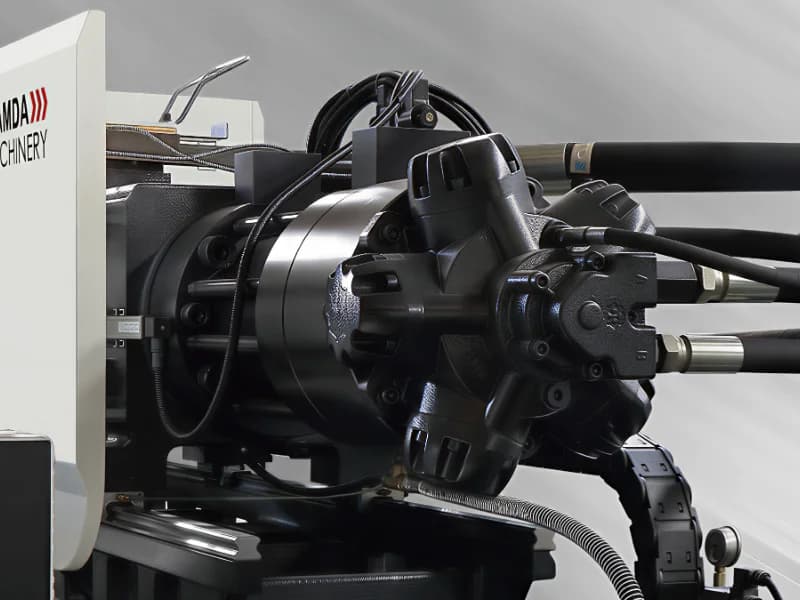
High-speed injection unit with linear guides
Machine and Mold Amortization
Equipment amortization is calculated by dividing the total investment by the expected production volume over the equipment's useful life, distributing the capital cost across every unit produced. A HWAMDA HMD 400M8-SPV machine at approximately 100,000 dollars amortized over a 10-year useful life produces approximately 200 million parts when running an 8-cavity mold at 4.5-second cycle across 7,200 annual operating hours. Machine amortization per part is therefore approximately 0.0005 dollars, a negligible contribution. A mold at 80,000 dollars amortized over its 5-million-shot expected life yields 0.016 dollars per shot; divided by 8 cavities, the mold amortization is 0.002 dollars per part. Auxiliary equipment including the chiller, material dryer, take-out robot, and conveyor at approximately 30,000 to 50,000 dollars amortized over 10 years adds approximately 0.0002 dollars per part. Total equipment amortization typically ranges from 0.002 to 0.005 dollars per unit, representing 10 to 20 percent of total production cost. The mold is consistently the largest amortization component because it has the shortest useful life among all line equipment.
Labor Cost by Country
Labor cost per unit depends on the local wage rate, the number of workers per line, and the line output. With 1.8 FTE per line at a monthly wage, labor cost per unit equals (monthly wage multiplied by 1.8 workers) divided by monthly output. For a line producing 3 million yogurt cups per month: in China at 700 dollars per operator month, labor cost is 0.00042 dollars per cup. In Turkey at 800 dollars, it is 0.00048 dollars. In India at 250 dollars, it is 0.00015 dollars. In Germany at 3,500 dollars, it is 0.0021 dollars. In the USA at 4,000 dollars, it is 0.0024 dollars. Labor typically represents 2 to 10 percent of thin-wall container production cost, with the wide range reflecting the dramatic wage differences between manufacturing regions. Automation investment is most justified in high-wage countries where labor savings provide the fastest payback. Automation investment is most strongly justified in high-wage countries where each displaced manual position saves thousands of dollars monthly.
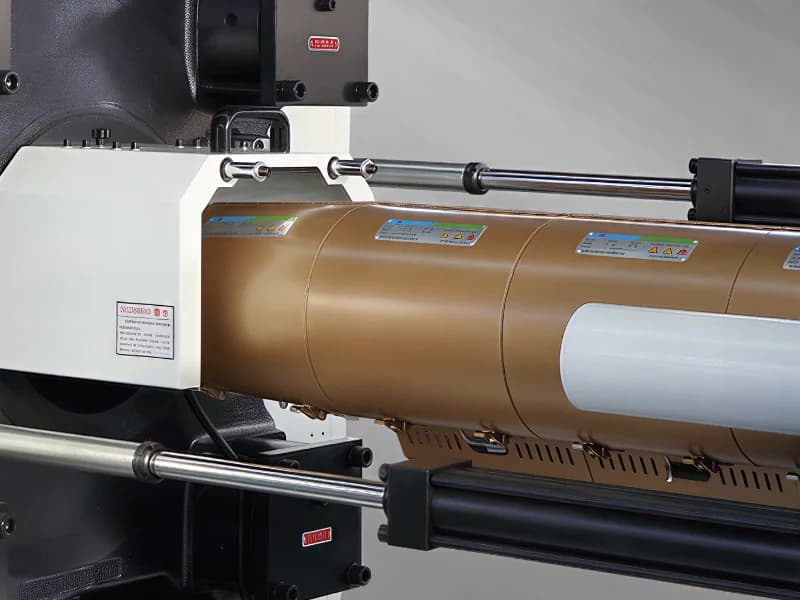
Servo-hydraulic drive system with energy recovery
Need Expert Advice?
Talk to our engineers about your specific production requirements. Free consultation.
Energy Cost per Unit
Energy cost per unit is calculated from machine power consumption, cycle time, cavity count, and local electricity price. For a HWAMDA HMD 400M8-SPV consuming approximately 80 kWh per hour running 8-cavity yogurt cups at 4.5-second cycle (6,400 cups per hour), energy consumption is 0.0125 kWh per cup. At China's rate of 0.10 dollars per kWh, energy cost per cup is 0.00125 dollars. In the USA at 0.08 dollars per kWh, it is 0.001 dollars per cup. In Germany at 0.18 dollars per kWh, it is 0.00225 dollars per cup. In the Philippines at 0.19 dollars per kWh, it is 0.00238 dollars per cup. Energy typically represents 3 to 10 percent of total production cost, with the percentage higher in countries with expensive electricity. Including chiller and auxiliary equipment energy adds approximately 20 to 30 percent to the machine-only consumption figure. Chiller and auxiliary equipment energy adds approximately 20 to 30 percent above the machine-only consumption figure for total line energy.
Market Selling Prices and Profit Margins
Market selling prices for thin-wall food packaging products, FOB China, provide the benchmark for profitability analysis. A 200 mL yogurt cup sells at 25 to 55 dollars per 1,000 units. A 500 mL milk tea cup sells at 45 to 90 dollars per 1,000. A 1,000 mL round container sells at 60 to 120 dollars per 1,000. A 30 mL sauce cup with lid sells at 30 to 60 dollars per 1,000 sets. A 3-liter yogurt pail sells at 180 to 350 dollars per 1,000. A 500-gram margarine IML container sells at 80 to 160 dollars per 1,000. PP forks sell at 8 to 18 dollars per 1,000. Gross margins (selling price minus total production cost divided by selling price) typically range from 25 to 55 percent depending on the product, market, and whether IML decoration is included. IML products command the highest margins due to their premium positioning and the significant value added by decoration.
Key Specs
- •A 200 mL yogurt cup sells at 25 to 55 dollars per 1,000 units.
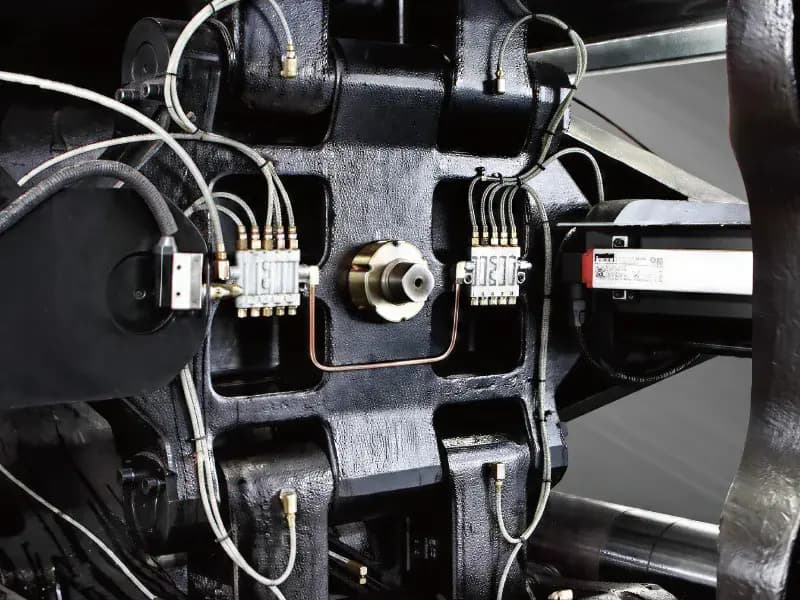
Toggle clamping unit — high rigidity for thin-wall molding
Break-Even Analysis for New Lines
Break-even analysis determines the minimum production volume needed to cover all fixed and variable costs, establishing the threshold for profitability. For a HWAMDA yogurt cup line with total investment of 160,000 dollars including machine, mold, automation, and auxiliaries, monthly fixed costs of approximately 3,500 dollars covering equipment depreciation, facility rent allocation, and insurance, variable production cost of approximately 0.012 dollars per cup, and average selling price of 0.035 dollars per cup, the contribution margin per cup is 0.023 dollars. Monthly break-even volume is 3,500 divided by 0.023 equals approximately 152,000 cups, achievable in roughly 5 production days at 8-cavity, 4.5-second cycle capacity. This demonstrates the rapid break-even achievable with HWAMDA equipment pricing, where most lines reach profitability within the first month of sustained commercial production. Full equipment ROI, meaning complete recovery of the initial capital investment, typically occurs within 10 to 18 months at 80 percent or higher capacity utilization depending on local cost structure and selling prices.
Frequently Asked Questions
The total production cost for a 6-gram PP yogurt cup on a HWAMDA line is approximately 0.012 to 0.020 dollars per cup. This breaks down approximately as: PP material 0.0072 dollars (60 percent), mold amortization 0.002 dollars (17 percent), energy 0.001 dollars (8 percent), labor 0.0004 dollars (3 percent), and machine amortization plus overhead 0.0014 dollars (12 percent). For IML-decorated cups, add 0.015 to 0.035 dollars for the label. These figures assume PP at 1,200 dollars per metric ton and China production costs.
Related Guides
Ready to Start Your Project?
Get a free consultation and quotation for your thin-wall packaging production line.
Join 500+ manufacturers in 60+ countries who trust HWAMDA.
Get Free Quote