

Cleanroom Classification Standards for Food Packaging
The required cleanroom classification depends on the food product type and regulatory market. For general food contact packaging (yogurt cups, food containers, disposable tableware), ISO 8 (Class 100,000 in the older Federal Standard 209E designation) is the standard requirement. This means fewer than 3,520,000 particles of 0.5 micrometers or larger per cubic meter of air. For dairy packaging in EU markets and pharmaceutical-adjacent food products, ISO 7 (Class 10,000) may be required, limiting particles to 352,000 per cubic meter. The air change rate for ISO 8 cleanrooms is 10-25 air changes per hour using HEPA-filtered supply air (H13 or H14 filters, 99.95-99.995 percent efficiency at 0.3 micrometers). For a production room housing 4 HWAMDA SPV5 machines with footprints of approximately 6.5m x 1.8m each, the room volume at 4m ceiling height is approximately 500-700 m3, requiring air handling capacity of 5,000-17,500 m3/hr. Positive pressure of 10-15 Pa relative to adjacent non-classified areas prevents unfiltered air ingress when doors are opened. The investment for ISO 8 cleanroom construction is approximately USD 150-300 per square meter of floor area.
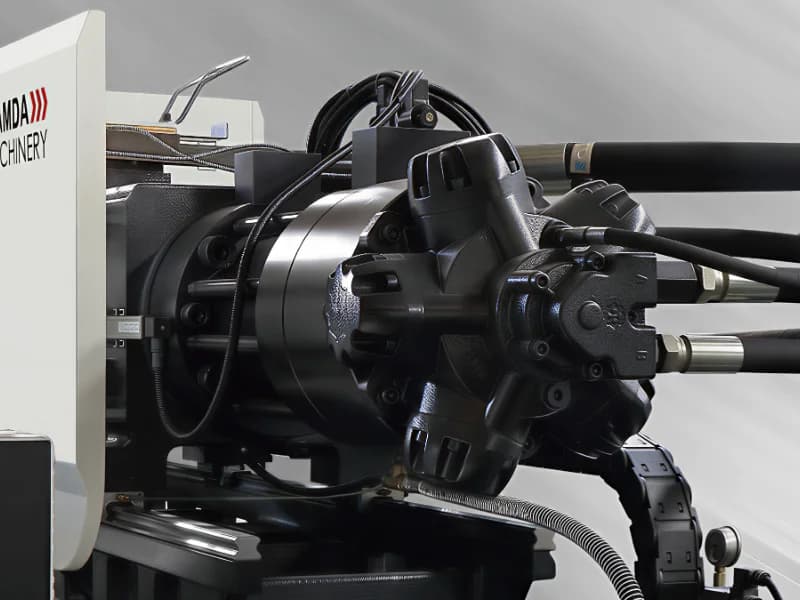
High-speed injection unit with linear guides
HWAMDA SPV5 Cleanroom Compatibility Features
HWAMDA SPV5 servo-hydraulic machines incorporate design features that minimize contamination sources in food packaging environments. The servo-hydraulic drive system eliminates the continuous oil circulation of conventional hydraulic machines -- the servo pump operates on demand, reducing oil temperature and preventing oil mist generation. Oil-free clamp area design ensures no hydraulic oil reaches the mold zone where open food contact surfaces are exposed during ejection and robot handling. The machine frame and platen surfaces in the mold area are available in stainless steel finish for ease of cleaning and sanitization. Full enclosure guarding with HEPA-filtered laminar flow over the mold area creates a localized ISO 7 environment even within an ISO 8 room. For IML applications on HWAMDA SPV5 machines, the SWITEK robot arm operates within the enclosed mold area, preventing label contamination during transfer. The machine's electrical cabinet is sealed to IP54 standard, preventing particle generation from electrical components. The INOVA controller supports clean-in-place (CIP) protocol logging, recording machine cleaning events for audit documentation required by BRCGS and FSSC 22000 certifications.
HVAC System Design for Production Cleanrooms
The HVAC system for a food packaging production cleanroom must control temperature (20-25 degrees C plus or minus 2 degrees C), humidity (40-60 percent RH), and particulate levels while managing the significant heat loads from injection molding machines. Each HWAMDA SPV5 machine dissipates approximately 15-30 kW of heat during operation (depending on tonnage and cycle time), plus 5-10 kW from the hot runner system, requiring cooling capacity calculations that exceed typical office HVAC by 5-10 times per square meter. Air supply must be HEPA filtered (H13 minimum, H14 preferred) with supply diffusers positioned to create a uniform downward flow pattern that sweeps particles away from the mold area toward low-level return grilles. Return air should be pre-filtered (G4/M5) before recirculation through the HEPA bank. Fresh air makeup of 10-15 percent compensates for positive pressure exhaust and provides occupant ventilation. Humidity control is critical: below 35 percent RH causes static charge buildup that attracts particles to parts and interferes with IML label handling on SWITEK robots, while above 65 percent RH promotes mold (biological) growth on stored packaging materials. The HVAC system should include redundancy: N+1 air handling units ensure continued cleanroom operation during maintenance.
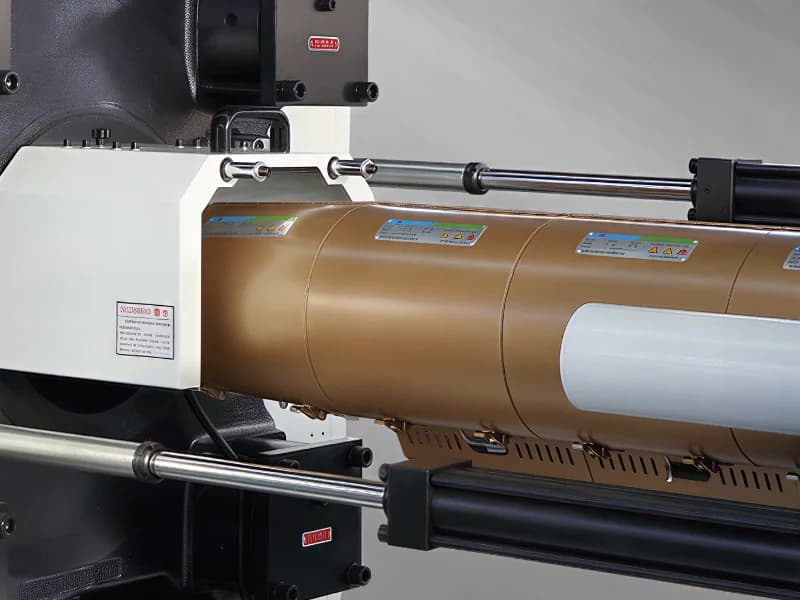
Servo-hydraulic drive system with energy recovery
Need Expert Advice?
Talk to our engineers about your specific production requirements. Free consultation.
Contamination Control Protocols for Production Personnel
Personnel are the primary contamination source in any cleanroom, generating 100,000-1,000,000 particles per minute during normal activity. Effective gowning protocols for ISO 8 food packaging cleanrooms include: clean uniforms (lint-free polyester fabric), hair nets or bouffant caps, beard covers where applicable, dedicated cleanroom footwear or shoe covers, and nitrile gloves (changed every 2 hours or when damaged). An air shower or step-over bench at the cleanroom entry reduces particle carryover from the gowning area. Limit personnel density to one operator per 2 HWAMDA SPV5 machines during normal production, with additional staff entering only for maintenance or quality inspections. Prohibit food, beverages, cosmetics, and personal items within the cleanroom. Training must cover proper gowning sequence, behavior rules (no running, no unnecessary movement, no touching face), and the purpose behind each requirement. Document training with signed attestations for audit purposes. BRCGS Packaging Materials certification requires evidence of ongoing personnel monitoring and retraining at annual intervals minimum.
Material Flow and Product Handling in Clean Environments
Raw materials and finished products must follow controlled pathways to prevent contamination. PP resin should be delivered in sealed bags or octabins (1,000-1,200 kg capacity) and transferred to the machine hopper via enclosed vacuum conveying with stainless steel piping and an inline magnetic separator to trap metallic contaminants above 0.5mm. On HWAMDA SPV5 lines, the hopper-to-screw pathway is enclosed, preventing airborne contamination of the granules. Finished containers exiting the mold are handled by SWITEK robots that place parts directly onto an enclosed conveyor leading to the packaging area. Part-to-part contact should be minimized during conveying to prevent scratching or particle generation. Stacking containers in nesting stacks of 25-50 units reduces handling. Packaging material (boxes, shrink wrap, pallets) must be clean and free from corrugated cardboard particles -- use plastic totes or sealed cartons for intra-facility transport. Reject parts should be collected in closed containers and removed from the cleanroom at regular intervals (minimum every 4 hours). Implement a first-in-first-out (FIFO) system for finished goods to prevent extended cleanroom storage.
Key Specs
- •PP resin should be delivered in sealed bags or octabins (1,000-1,200 kg capacity) and transferred to the machine hopper via enclosed vacuum conveying with stainless steel piping and an inline magnetic separator to trap metallic contaminants above 0.5mm.
- •Stacking containers in nesting stacks of 25-50 units reduces handling.
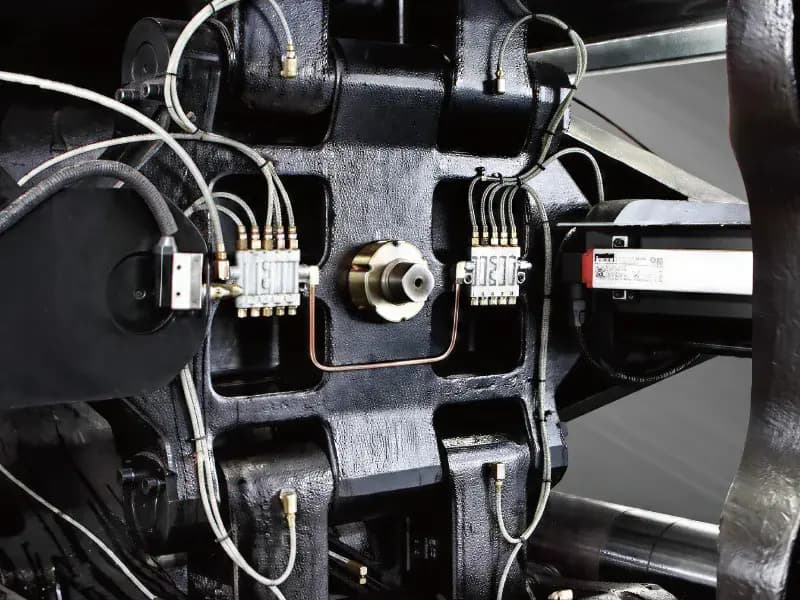
Toggle clamping unit — high rigidity for thin-wall molding
Certification and Audit Requirements for Food Packaging Production
Operating a food packaging production facility on HWAMDA SPV5 machines requires multiple certifications depending on target markets. BRCGS Packaging Materials (Global Standard for Packaging and Packaging Materials) is the most widely recognized certification for food packaging manufacturers. It requires documented HACCP-based food safety management, environmental monitoring programs (surface and air sampling quarterly), pest control, and traceability from raw material to finished product. FSSC 22000 (Food Safety System Certification) is based on ISO 22000 and is recognized by the Global Food Safety Initiative (GFSI). ISO 22000:2018 provides the framework for hazard analysis and critical control points in packaging manufacturing. For FDA-regulated markets, Good Manufacturing Practice (GMP) per 21 CFR 110 applies to the production facility. Environmental monitoring for a HWAMDA SPV5 cleanroom should include: quarterly particle count verification per ISO 14644-3, monthly surface contact plate testing on mold surfaces and robot grippers (target below 25 CFU per 25 cm2), and annual HEPA filter integrity testing using DOP or equivalent aerosol challenge. Maintain records for minimum 3 years for all monitoring and corrective actions.
Frequently Asked Questions
ISO 8 (Class 100,000) is the standard requirement for general food contact packaging including yogurt cups, food containers, and tableware. ISO 7 (Class 10,000) may be required for EU dairy markets and pharmaceutical-adjacent products. The classification requires 10-25 air changes per hour with HEPA-filtered air. HWAMDA SPV5 machines with enclosed mold area and localized HEPA filtration can achieve ISO 7 conditions in the mold zone within an ISO 8 room.
Related Guides
Ready to Start Your Project?
Get a free consultation and quotation for your thin-wall packaging production line.
Join 500+ manufacturers in 60+ countries who trust HWAMDA.
Get Free Quote