

Masterbatch Selection for Food-Contact Thin-Wall Applications
Color masterbatch for food packaging must meet food contact safety regulations (FDA 21 CFR, EU Regulation 10/2011) in addition to color specification requirements. The carrier resin should be compatible with the base PP grade: for homo-PP yogurt cup production on HWAMDA SPV5 machines at melt temperatures of 230-250 degrees C, the masterbatch carrier should be a low-viscosity homo-PP with MFI 30-50 g/10min to ensure rapid dispersion during the short plasticizing time (1.5-2.5s at 180-220 RPM screw speed). Pigment loading in the masterbatch is typically 20-40 percent for organic pigments and 40-70 percent for inorganic pigments (TiO2 for white, iron oxides for earth tones). The let-down ratio depends on the required color intensity: white PP containers use 2-4 percent TiO2-based masterbatch, providing opacity sufficient to hide the natural translucency of PP. Colored containers (blue, green, red for brand differentiation) typically use 1.5-3 percent masterbatch. All pigments must have documented specific migration testing below the limits specified in EU 10/2011 (typically 0.01 mg/kg for individual substances unless a higher limit is specifically listed).
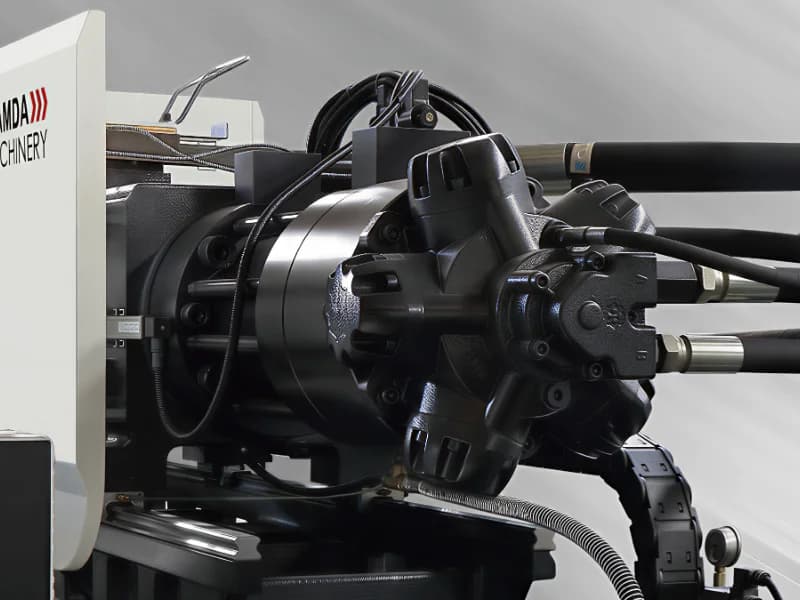
High-speed injection unit with linear guides
Gravimetric vs Volumetric Dosing Systems
Two blending technologies are used on HWAMDA SPV5 production lines: gravimetric (weight-based) and volumetric (volume-based). Gravimetric blenders (Maguire, Motan, or equivalent) weigh each component before dispensing, achieving accuracy of plus or minus 0.1 percent by weight regardless of changes in bulk density, pellet size, or hopper level. For a 6g yogurt cup using 2.5 percent white masterbatch, this means dosing accuracy of plus or minus 0.006g of masterbatch per shot -- sufficient for delta-E consistency below 0.5 units across production runs. Volumetric feeders use calibrated auger screws and are less expensive (USD 2,000-5,000 versus USD 8,000-15,000 for gravimetric) but only achieve plus or minus 0.5-1.0 percent accuracy, which can produce visible color variation between the beginning and end of a masterbatch bag as the bulk density changes. For food packaging production on HWAMDA SPV5 machines where brand color consistency is critical, gravimetric blending is the standard specification. The blender should be mounted directly on the machine feed throat to minimize the blend segregation that occurs during material transport through long conveying lines.
Mixing Uniformity in the Plasticizing Unit
The screw plasticizing unit of the HWAMDA SPV5 machine must disperse the masterbatch pellets uniformly throughout the base PP melt during the available plasticizing time. For an 8-cavity yogurt cup mold at 4.0s cycle time, plasticizing occurs during the 2.0-2.5s cooling phase, with the 55mm screw rotating at 180-220 RPM and back pressure of 8-12 MPa. Masterbatch dispersion is influenced by the screw mixing section design: HWAMDA SPV5 screws incorporate a mixing zone in the metering section (barrier-type or pin-type geometry) that generates distributive mixing without excessive shear heating. Adequate back pressure is critical for color uniformity -- below 5 MPa, the screw channels do not fill completely, creating unmixed regions that manifest as color streaks on parts. Increasing back pressure from 5 to 12 MPa typically eliminates color streaking but adds 0.1-0.3s to plasticizing time. For challenging masterbatch formulations with high pigment loading (above 50 percent) or large particle size pigments, a static mixer in the nozzle (Koch-type or equivalent, 6-12 elements) provides additional mixing energy without extending cycle time. Static mixer pressure drop is typically 3-8 MPa, which must be factored into the injection pressure budget.
Key Specs
- •For an 8-cavity yogurt cup mold at 4.0s cycle time, plasticizing occurs during the 2.0-2.5s cooling phase, with the 55mm screw rotating at 180-220 RPM and back pressure of 8-12 MPa.
- •Adequate back pressure is critical for color uniformity -- below 5 MPa, the screw channels do not fill completely, creating unmixed regions that manifest as color streaks on parts.
- •Increasing back pressure from 5 to 12 MPa typically eliminates color streaking but adds 0.1-0.3s to plasticizing time.
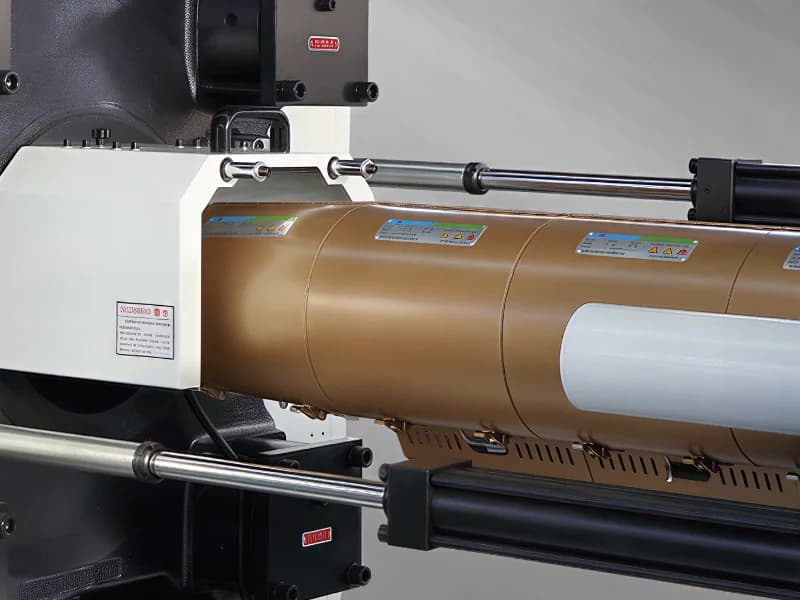
Servo-hydraulic drive system with energy recovery
Need Expert Advice?
Talk to our engineers about your specific production requirements. Free consultation.
Process Optimization for Color Consistency
Color consistency across production requires controlling material ratios, melt temperature, and contamination. On HWAMDA SPV5 machines, the INOVA controller monitors melt temperature via a thermocouple at the nozzle -- temperature variation affects color development, with a 10 degrees C increase typically shifting color by 0.5-1.0 delta-E units on heat-sensitive organic pigments. Maintain melt temperature within plus or minus 3 degrees C of the setpoint. Purging between color changes is essential to prevent contamination: on the HMD 380M8-SPV with a 55mm screw and 640 cm3 barrel, a minimum of 15-20 full screw strokes (approximately 10-13 kg of purging compound or base resin) is required for a light-to-dark color change. Dark-to-light changes require 30-40 strokes or the use of a chemical purging compound (Asaclean or equivalent) to remove residual pigment from dead spots in the screw flights, check ring, and nozzle. Document the purge procedure and first-article inspection color measurement (using a spectrophotometer, target delta-E below 1.0 versus the standard) for each color changeover to ensure traceability.
Regrind Integration and Color Management
Incorporating regrind (recycled sprues, runners, and rejected parts) into production requires careful color management. On HWAMDA SPV5 thin-wall lines, regrind from hot runner molds is minimal (hot runners eliminate runner waste), but startup rejects and quality discards generate 2-5 percent regrind. Regrind pellet size from a granulator should be 3-5mm, matching virgin pellet size to prevent segregation in the hopper. Color impact of regrind varies: white-to-white regrind typically does not shift color noticeably at 10-20 percent loading, but colored regrind mixed into a different color batch creates visible contamination at levels as low as 0.5 percent. Best practice on HWAMDA SPV5 lines: segregate regrind by color, limit regrind loading to 15-20 percent maximum (maintaining food contact compliance), and adjust masterbatch dosing to compensate for the residual color in regrind. The gravimetric blender should have a dedicated regrind hopper with independent weight calibration. For food contact compliance, regrind must be processed in the same cleanroom environment as virgin material and must not include any material that has been contaminated with non-food-grade substances.
Key Specs
- •Regrind pellet size from a granulator should be 3-5mm, matching virgin pellet size to prevent segregation in the hopper.
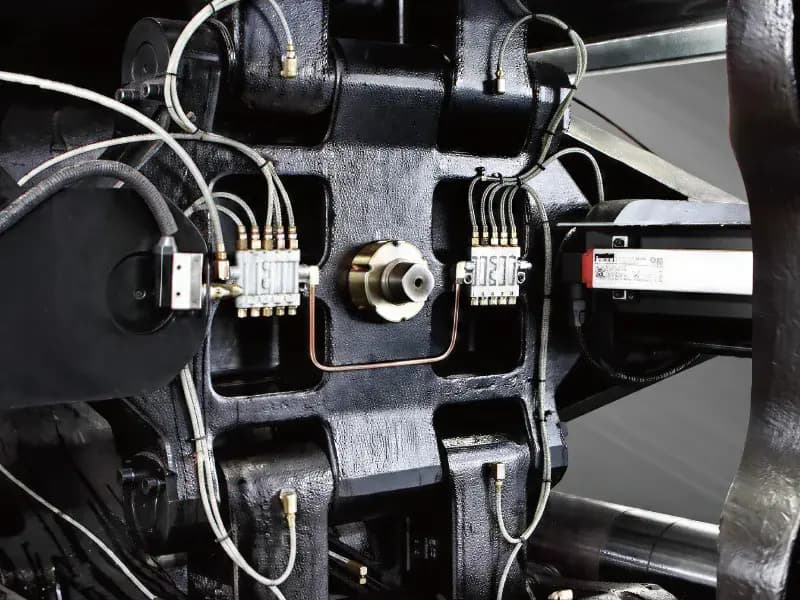
Toggle clamping unit — high rigidity for thin-wall molding
Quality Control Testing for Color and Appearance
Systematic color quality control on HWAMDA SPV5 production lines requires both instrumental and visual inspection methods. Spectrophotometric measurement (X-Rite SP64 or equivalent, D65 illuminant, 10-degree observer) provides objective delta-E values against the approved color standard. Measurement should be taken on flat sections of the container at a consistent location -- the container sidewall at mid-height is typical. Production acceptance criteria: delta-E below 1.0 for premium brands, below 1.5 for standard packaging. Measure a minimum of 5 parts per cavity every 2 hours during production. Gloss measurement (60-degree gloss meter) should be within plus or minus 5 GU of the standard for consistent shelf appearance. Visual inspection under standardized lighting (D65 light booth, 1000 lux minimum) checks for streaking, speckling, and color distribution uniformity that instruments may miss. For IML containers on HWAMDA SPV5 lines, verify that the container body color matches the IML label border color under the same lighting conditions -- delta-E below 2.0 between container and label is the typical requirement for seamless appearance.
Frequently Asked Questions
White PP food containers typically use 2-4 percent TiO2-based white masterbatch. For 0.5mm wall yogurt cups on HWAMDA SPV5 machines, 2.5-3.0 percent provides adequate opacity to hide the natural PP translucency. Use a gravimetric blender accurate to plus or minus 0.1 percent to maintain color consistency. The masterbatch carrier should be homo-PP with MFI 30-50 for rapid dispersion during the 2.0-2.5s plasticizing window.
Related Guides
Ready to Start Your Project?
Get a free consultation and quotation for your thin-wall packaging production line.
Join 500+ manufacturers in 60+ countries who trust HWAMDA.
Get Free Quote