Conveyor Belt Selection for Thin-Wall Parts
Thin-wall PP containers weighing 2-45 grams require conveyor belts that prevent part damage, static buildup, and stacking errors. Use food-grade PU (polyurethane) belts with a minimum thickness of 1.5mm and a surface texture that provides adequate friction without marking the container surface. Belt width should exceed the widest product dimension by at least 100mm on each side—for standard yogurt cups with 75mm top diameter, use 300mm minimum belt width. For IML containers, use anti-static belts with surface resistivity below 10^9 ohms to prevent label attraction and part clinging. Belt speed must match the machine output rate: for a 16-cavity yogurt cup mold cycling at 4.0 seconds producing 14,400 parts per hour, the belt speed should transport parts away from the drop zone within 0.8 seconds to clear for the next cycle. Calculate belt speed as: drop zone length (typically 300-500mm) divided by available clearance time (0.8-1.5 seconds), giving speeds of 0.2-0.6 m/s. Use variable frequency drives on conveyor motors to adjust speed when switching between mold configurations. Install side guides with 5-10mm clearance to prevent parts from falling off while allowing free movement.
Key Specs
- •Use food-grade PU (polyurethane) belts with a minimum thickness of 1.5mm and a surface texture that provides adequate friction without marking the container surface.
- •Belt width should exceed the widest product dimension by at least 100mm on each side—for standard yogurt cups with 75mm top diameter, use 300mm minimum belt width.
- •Calculate belt speed as: drop zone length (typically 300-500mm) divided by available clearance time (0.8-1.5 seconds), giving speeds of 0.2-0.6 m/s.
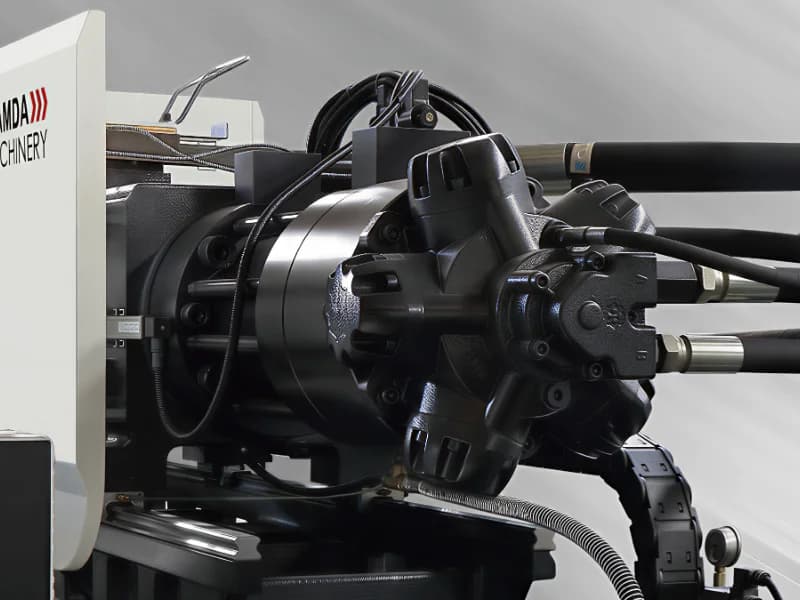
High-speed injection unit with linear guides
Automatic Stacking Unit Design
Automatic stackers receive individual containers from the conveyor and organize them into nested stacks of 25-100 units for packaging. For round containers like yogurt cups, use rotary stacking systems that orient and nest cups at rates matching the machine output. A typical rotary stacker for 75mm diameter yogurt cups processes 800-1,200 cups per minute across 4-8 stacking lanes. Stack height is limited by container structural integrity: thin-wall PP yogurt cups (0.4-0.6mm wall) can typically be stacked 50-80 cups high before the bottom cups deform, while heavier food containers (0.6-1.0mm wall, 15-25g) stack 25-50 units. Configure the stacker counter to match the customer's packaging requirements—common pack counts are 25, 50, 75, or 100 units per sleeve. The stacker must include a reject divert mechanism synchronized with the vision inspection system to remove defective parts before stacking. Stacking lanes should number at least twice the mold cavity count divided by the stacker speed to provide buffer capacity. For a 16-cavity mold producing 14,400 cups per hour, use 4-8 stacking lanes each running at 1,800-3,600 cups per hour per lane.
Integration with Take-Out Robots and IML Systems
When SWITEK IML robots or take-out systems are installed on SPV5 machines, the conveyor system must be positioned to receive parts from the robot's release point. Side-entry IML robots typically release parts 400-800mm from the mold centerline at a height of 200-400mm above the conveyor belt. Position the conveyor belt directly below the robot release position with a drop height not exceeding 150mm for thin-wall containers to prevent deformation on impact. For IML containers requiring label-side-up orientation, install a pneumatic turning device between the robot release point and the stacker that rotates containers 180 degrees at rates up to 200 parts per minute. Use photocell sensors at the robot release point to verify each container drops onto the belt and trigger an alarm if a container is missed. For multi-cavity molds where the robot releases all cavities simultaneously (for example, 8 cups at once), use a spreading conveyor with lane dividers to separate parts into individual streams before the stacker. The spreading section length should be at least 1,500mm to allow reliable lane separation at belt speeds of 0.3-0.5 m/s.
Key Specs
- •Side-entry IML robots typically release parts 400-800mm from the mold centerline at a height of 200-400mm above the conveyor belt.
- •Position the conveyor belt directly below the robot release position with a drop height not exceeding 150mm for thin-wall containers to prevent deformation on impact.
- •For multi-cavity molds where the robot releases all cavities simultaneously (for example, 8 cups at once), use a spreading conveyor with lane dividers to separate parts into individual streams before the stacker.
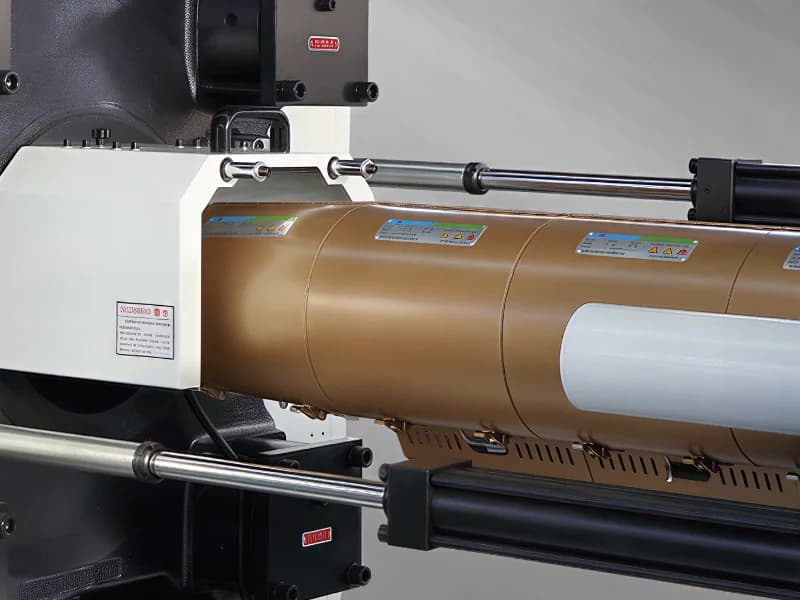
Servo-hydraulic drive system with energy recovery
Need Expert Advice?
Talk to our engineers about your specific production requirements. Free consultation.
Counting, Bagging, and Case Packing Systems
Downstream of the stacker, automatic bagging and case packing systems complete the packaging line. Sleeve bagging machines wrap counted stacks of cups or containers in PE film sleeves at rates of 15-30 sleeves per minute. Each sleeve typically contains 1-4 stacks depending on container size and customer requirements. For yogurt cups, standard packaging is 50 cups per sleeve in 2 stacks of 25, bagged in 25-micron PE film. Case packing robots or manual packing stations load sleeved products into corrugated shipping cases. Typical case configurations include 500-1,000 yogurt cups per case (10-20 sleeves) or 100-200 food containers per case. A complete downstream packaging line for a 16-cavity yogurt cup mold on an SPV5 380T machine handles approximately 14,000 cups per hour and requires one 8-lane stacker, one sleeve bagger, and one case packing station with 2 operators. Total downstream equipment cost ranges $40,000-120,000 depending on automation level. Fully automatic lines with robotic case packing and palletizing add $80,000-150,000 but reduce labor from 4-6 operators to 1-2 per shift, achieving payback in 18-24 months at typical thin-wall production volumes.
Line Layout and Floor Space Planning
Plan the complete production line layout considering material flow from resin silo to palletized finished goods. An HWAMDA SPV5 380T machine occupies approximately 7.5 x 1.9 meters. Add the IML robot footprint of 2.0 x 1.5 meters on the non-operator side. The downstream conveyor, stacker, bagger, and case packer extend 8-15 meters from the machine discharge point depending on configuration. Total production cell footprint for a complete IML yogurt cup line is approximately 12 x 6 meters (72 square meters). Maintain 1.5-meter minimum clearance around all moving equipment for operator access and maintenance. Position the material feeding system (hopper loader and dryer if needed) on the operator side of the machine to keep the non-operator side clear for IML robot access. Route cooling water, compressed air (6-8 bar, 200-400 NL/min for robot and EOAT), and electrical supply through overhead cable trays to keep the floor area clear. Install floor drainage at the machine location for cooling water leaks. For multi-machine production halls, arrange machines in parallel rows with shared central aisles of 3-4 meters width for forklift access to raw material delivery and finished goods removal.
Key Specs
- •Route cooling water, compressed air (6-8 bar, 200-400 NL/min for robot and EOAT), and electrical supply through overhead cable trays to keep the floor area clear.
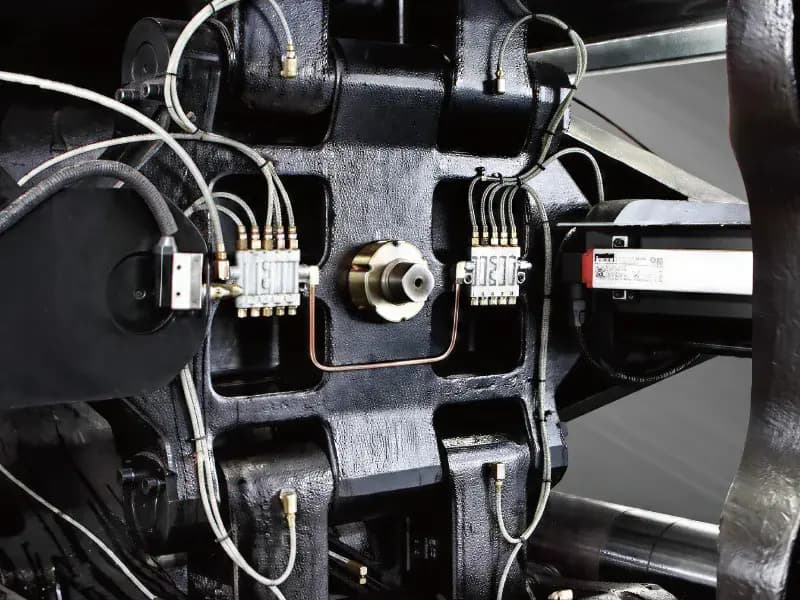
Toggle clamping unit — high rigidity for thin-wall molding
Maintenance and Changeover for Downstream Equipment
Conveyor and stacking systems require weekly cleaning of belt surfaces, guide rails, and sensors to remove PP dust and static-attracted particles. Inspect belt tracking weekly—misalignment exceeding 5mm causes parts to jam at side guides. Tighten conveyor belt tension monthly; PP containers weighing only 4-8 grams require very light belt tension to prevent surface marking. Lubricate stacker mechanisms every 500 operating hours with food-grade grease meeting NSF H1 certification. Replace photocell sensors annually or when detection reliability drops below 99.5%. Changeover between different container sizes on the stacking and bagging equipment takes 1-4 hours depending on the size difference. Maintain quick-change tooling sets for the stacker (nest guides, lane dividers) and bagger (film width, seal bar position) to minimize changeover time. Store changeover tooling in labeled, dedicated racks near the production line. Keep a changeover procedure checklist for each product and train operators on the sequence. Track downstream equipment overall equipment effectiveness (OEE) separately from the injection machine OEE to identify packaging bottlenecks—target 90% or higher downstream OEE to avoid limiting the SPV5 machine utilization.
Frequently Asked Questions
For a 16-cavity yogurt cup mold running at 4.0-second cycle time on an HWAMDA SPV5 machine, the conveyor must clear the drop zone within 0.8-1.0 seconds to prevent part collisions. With a typical drop zone length of 400mm, the minimum belt speed is 0.4-0.5 m/s. Use variable speed drives to adjust when changing molds. The conveyor capacity must handle the peak output of 14,400 cups per hour (240 cups per minute, delivered in batches of 16 every 4 seconds).
Related Guides
Ready to Start Your Project?
Get a free consultation and quotation for your thin-wall packaging production line.
Join 500+ manufacturers in 60+ countries who trust HWAMDA.
Get Free Quote