

Camera System Architecture for Inline Inspection
Inline vision inspection for thin-wall packaging uses high-speed area scan cameras (typically 2-8 megapixel resolution) with telecentric or machine vision lenses positioned at the robot discharge or conveyor transfer point. Camera frame rates must exceed the part presentation rate: for a 16-cavity mold producing 240 parts per minute, each camera must capture and process images within 250 milliseconds or less. For IML container inspection, a minimum of 2 cameras are required—one for the label side (checking placement, wrinkles, registration) and one for the base (checking short shots, gate vestige, contamination). Advanced systems use 4-6 cameras for 360-degree coverage including rim inspection and sidewall defects. LED strobe lighting synchronized to camera exposure provides consistent illumination regardless of ambient light changes. Ring lights are effective for flat surfaces, while dome lights eliminate shadows on curved container surfaces. Position cameras 150-400mm from the inspection point depending on field of view requirements. For yogurt cups with 75mm top diameter, a 5-megapixel camera at 200mm distance with a 50mm lens provides 0.03mm per pixel resolution, sufficient to detect label shifts of 0.3mm.
Key Specs
- •Position cameras 150-400mm from the inspection point depending on field of view requirements.
- •For yogurt cups with 75mm top diameter, a 5-megapixel camera at 200mm distance with a 50mm lens provides 0.03mm per pixel resolution, sufficient to detect label shifts of 0.3mm.
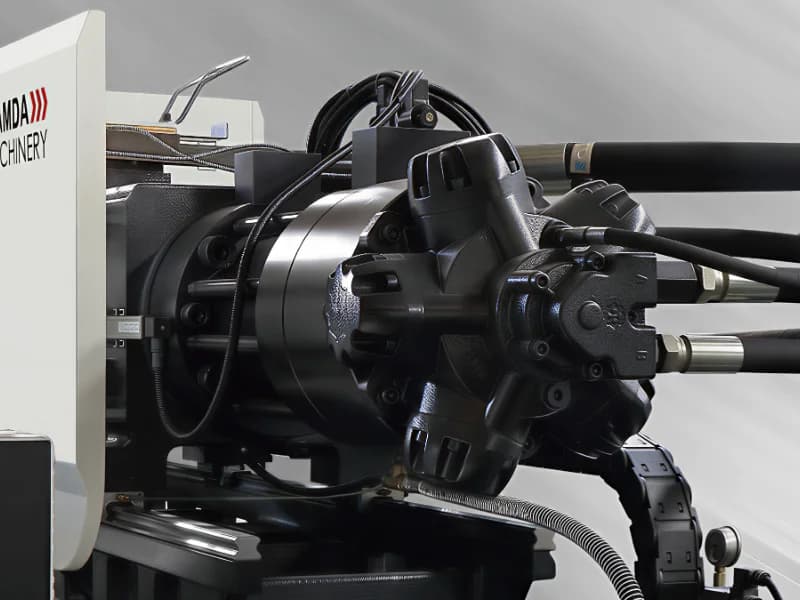
High-speed injection unit with linear guides
Defect Detection Algorithms and Capabilities
Modern vision systems use a combination of pattern matching, blob analysis, and deep learning algorithms to classify defects. For IML containers, the system verifies label position by comparing the actual label edge coordinates against the reference template—deviations exceeding 0.5mm trigger a reject. Label wrinkle detection uses texture analysis algorithms that compare surface roughness patterns against acceptable reference images. Short shot detection measures the container rim completeness by edge tracing—any gap in the rim contour exceeding 0.5mm flags the part. Flash detection uses bright-field illumination to highlight thin material extensions beyond the parting line, with sensitivity adjustable down to 0.1mm flash width. Color measurement verifies that label printing matches the approved color values within Delta-E less than 3.0 using calibrated color cameras. Wall transparency defects (thin spots below 0.3mm in a 0.5mm nominal wall) are detected using back-lighting that reveals variations in light transmission. Deep learning models trained on 10,000+ defect images can detect complex defects like contamination particles, surface scratches, and warpage that rule-based algorithms struggle with.
Integration with SPV5 Machine and IML Robot
The vision system interfaces with both the SWITEK IML robot controller and the HWAMDA INOVA machine controller to create a closed-loop quality system. When a defect is detected, the vision system sends a reject signal to the robot controller or a downstream diverter within 50-100 milliseconds, routing the defective container to a reject bin before it enters the stacking system. For cavity-specific defect tracking, the vision system maps each inspected container to its specific mold cavity by synchronizing with the robot pick-and-place sequence. If cavity number 7 in a 16-cavity mold shows a trend of increasing short shot defects over 20 consecutive cycles, the system sends an alarm to the INOVA controller display with the specific cavity identification. The INOVA controller can then be programmed to adjust individual valve gate timing (on YUDO or Synventive sequential valve gate hot runners) or halt production for mold inspection. Data logging stores inspection results with timestamps, cavity mapping, defect classification, and images of rejected parts. This data integrates with the INOVA controller's production database, providing complete traceability from machine parameters to final part quality for each production batch.
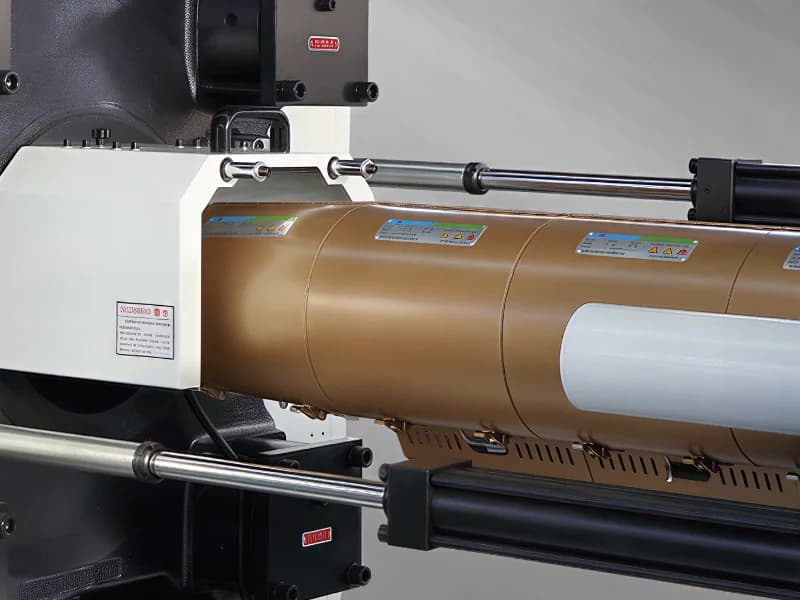
Servo-hydraulic drive system with energy recovery
Need Expert Advice?
Talk to our engineers about your specific production requirements. Free consultation.
IMLWatcher and Dedicated IML Inspection Solutions
The IMLWatcher system by Intravis represents the industry-specific solution for IML container inspection, used by Beck Automation and other IML system manufacturers. IMLWatcher performs 100% inspection of label placement, label presence, label wrinkles, part quality, and cavity identification in a single inspection station. The system uses multiple cameras with customized LED lighting to inspect all surfaces of the container within a single inspection cycle of less than 100 milliseconds per part. Key specifications include label position measurement accuracy of plus or minus 0.1mm, defect detection sensitivity down to 0.5mm minimum defect size, and throughput capability exceeding 1,200 parts per minute across multiple inspection lanes. The IMLWatcher integrates directly with the IML robot's reject mechanism, ensuring defective parts are removed before entering the stacking system. Statistical process control (SPC) charts display real-time quality trends on a dedicated monitor or via network connection to the plant quality management system. Cost for an IMLWatcher system ranges from $30,000-80,000 depending on the number of cameras and inspection stations. Alternative suppliers include INTRAVIS, Procitec, and IMDvista, each offering specialized solutions for IML quality inspection.
Calibration and Maintenance of Vision Systems
Calibrate vision inspection systems at the start of each production run and verify calibration every 8 hours during continuous operation. Use certified calibration targets (checkerboard patterns with known dimensions accurate to plus or minus 0.01mm) to verify spatial measurement accuracy. Recalibrate whenever ambient temperature changes exceed 10°C, as thermal expansion of the camera mounting structure can shift alignment. Clean camera lenses daily with optical-grade lens tissue and isopropyl alcohol—PP dust and oil mist from the hydraulic system accumulate on lens surfaces and degrade image contrast. Replace LED light sources when intensity drops below 80% of original output, typically every 10,000-15,000 operating hours. Back up all inspection recipes (reference images, tolerance settings, algorithm parameters) to external storage before any system updates. Maintain a golden sample set of 10-20 known-good and known-defective parts for each product to verify system detection performance during recipe changes. Test the reject mechanism daily by presenting intentionally defective parts (short shots, missing labels) and confirming they are properly diverted. Document all calibration activities and system performance metrics for quality audit compliance.
Key Specs
- •Use certified calibration targets (checkerboard patterns with known dimensions accurate to plus or minus 0.01mm) to verify spatial measurement accuracy.
- •Recalibrate whenever ambient temperature changes exceed 10°C, as thermal expansion of the camera mounting structure can shift alignment.
- •Replace LED light sources when intensity drops below 80% of original output, typically every 10,000-15,000 operating hours.
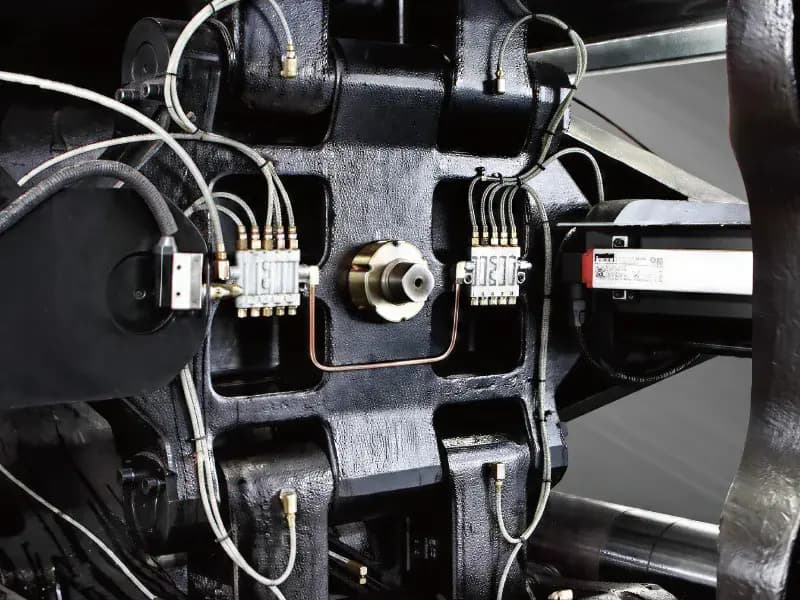
Toggle clamping unit — high rigidity for thin-wall molding
ROI and Cost Justification for Vision Systems
Vision inspection systems for thin-wall packaging lines deliver ROI through three mechanisms: reject rate reduction, labor savings, and customer complaint prevention. A typical 16-cavity yogurt cup line producing 14,400 cups per hour with manual inspection by 2 operators catches approximately 85-90% of defects. A vision system achieves 99.5%+ detection rates, reducing customer-side defect rates from 1,000 ppm to below 50 ppm. At $0.05-0.10 per cup retail value, preventing a single contaminated batch recall that would destroy 500,000+ cups saves $25,000-50,000. The vision system eliminates 1-2 quality inspection operators per shift, saving $20,000-40,000 annually per shift in labor costs. For 3-shift operations, annual labor savings reach $60,000-120,000. Cavity-specific monitoring enables targeted mold maintenance before quality degrades to reject levels, reducing overall scrap from 3-5% to 1-2% of production. At 14,400 cups per hour with material cost of $0.01 per cup, a 2% scrap reduction saves $25,000 annually. Total annual benefit of $100,000-200,000 against a system cost of $30,000-80,000 delivers payback within 4-10 months. HWAMDA can recommend vision system suppliers with proven integration experience on SPV5 production lines.
Frequently Asked Questions
Yes, using back-lighting or transmitted light techniques, vision systems can detect wall thickness variations in translucent PP containers. Thin spots below 0.3mm in a nominal 0.5mm wall appear as brighter areas when back-lit. Dedicated wall thickness measurement using infrared or capacitive sensors achieves accuracy of plus or minus 0.01mm but requires physical contact. For non-contact inline measurement, optical coherence tomography (OCT) systems measure wall thickness to plus or minus 0.005mm at speeds compatible with thin-wall production rates.
Related Guides
Ready to Start Your Project?
Get a free consultation and quotation for your thin-wall packaging production line.
Join 500+ manufacturers in 60+ countries who trust HWAMDA.
Get Free Quote