

Why Thin-Wall Molding Needs High Pressure
In thin-wall injection molding, the flow path-to-wall thickness ratio is exceptionally high, often exceeding 200:1 for food packaging containers. As molten PP enters a cavity with 0.4-0.7 mm wall thickness, it encounters extreme resistance from rapid cooling and restricted flow channels. The melt begins solidifying almost immediately upon contact with the cold mold surface, creating a frozen skin layer that progressively narrows the available flow path. This phenomenon, known as hesitation and freeze-off, requires injection pressures of 180-280 MPa to overcome. By comparison, conventional injection molding typically operates at only 80-120 MPa. The HWAMDA SPV5 series addresses this challenge with servo-hydraulic systems capable of generating injection pressures up to 250 MPa and injection speeds of 300-500 mm/s. These parameters work together synergistically: high speed ensures the cavity fills before freeze-off occurs, while high pressure maintains flow through the narrowing channels. Without sufficient pressure reserves in the machine specification, short shots and incomplete filling become inevitable production problems.
Key Specs
- •As molten PP enters a cavity with 0.4-0.7 mm wall thickness, it encounters extreme resistance from rapid cooling and restricted flow channels.
- •This phenomenon, known as hesitation and freeze-off, requires injection pressures of 180-280 MPa to overcome.
- •By comparison, conventional injection molding typically operates at only 80-120 MPa.
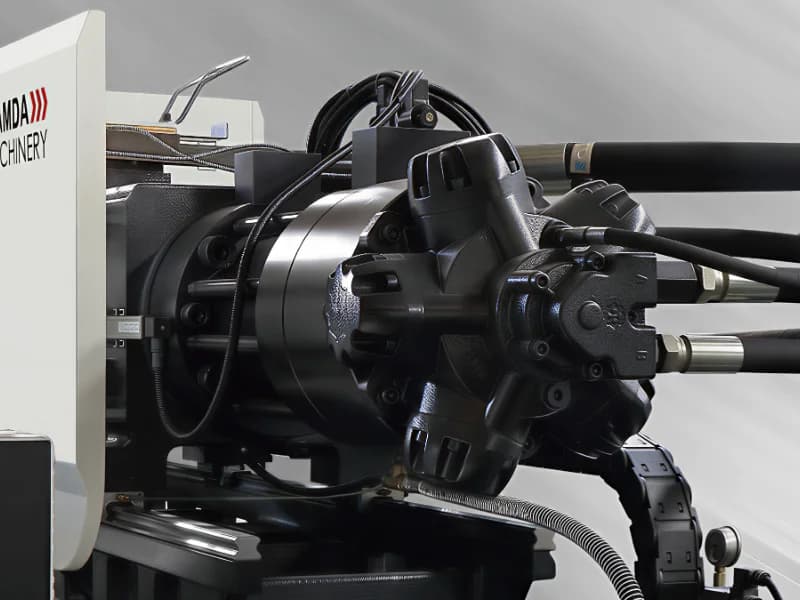
High-speed injection unit with linear guides
Pressure Calculation Methods
Calculating required injection pressure for thin-wall parts involves several interdependent variables. The primary formula considers the flow length-to-thickness ratio (L/t), material viscosity at processing temperature, and the target fill time. For PP food packaging with 0.5 mm wall thickness and 120 mm flow length, the L/t ratio is 240:1, requiring approximately 220-250 MPa injection pressure. A practical calculation approach starts with the material supplier's recommended pressure range for the specific PP grade, then applies correction factors. Wall thickness correction adds 30-50% pressure for every 0.1 mm reduction below 1.0 mm. Flow length correction adds 15-25% for every 50 mm increase beyond standard flow paths. Multi-cavity molds require additional pressure to account for runner system losses, typically 10-20% for balanced hot runner systems. Mold flow simulation software such as Moldflow or Moldex3D provides more accurate predictions by modeling the actual cavity geometry, cooling conditions, and gate configuration. HWAMDA recommends running simulations before finalizing mold designs for all thin-wall applications.
Machine Specification Requirements
Selecting a machine with adequate pressure capability requires examining several specifications beyond the maximum injection pressure rating. The specific injection pressure, calculated as the maximum hydraulic pressure multiplied by the intensification ratio, must exceed the calculated cavity pressure by at least 20% to provide a safety margin. For HWAMDA SPV5 machines in the 270T-600T range, the specific injection pressure reaches 220-260 MPa, providing sufficient margins for all standard thin-wall food packaging applications. The injection unit's plasticizing capacity must match production demands without becoming a bottleneck. For a 16-cavity yogurt cup mold running 3.5 second cycles, the machine must plasticize approximately 180-220 grams of PP per cycle continuously. The HWAMDA SPV5-380 achieves a plasticizing rate of 45-55 g/s with its specialized thin-wall screw design, featuring a compression ratio of 2.5:1 and L/D ratio of 22:1 optimized for high-flow PP resins. Accumulator systems are essential for maintaining consistent peak pressures across rapid injection sequences, ensuring repeatable fill patterns across all cavities in multi-cavity configurations.
Key Specs
- •The specific injection pressure, calculated as the maximum hydraulic pressure multiplied by the intensification ratio, must exceed the calculated cavity pressure by at least 20% to provide a safety margin.
- •For HWAMDA SPV5 machines in the 270T-600T range, the specific injection pressure reaches 220-260 MPa, providing sufficient margins for all standard thin-wall food packaging applications.
- •The HWAMDA SPV5-380 achieves a plasticizing rate of 45-55 g/s with its specialized thin-wall screw design, featuring a compression ratio of 2.5:1 and L/D ratio of 22:1 optimized for high-flow PP resins.
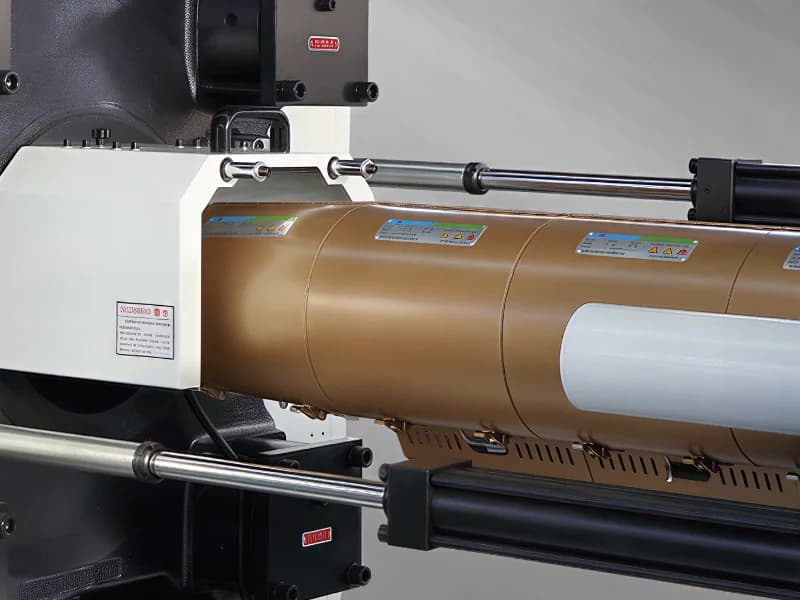
Servo-hydraulic drive system with energy recovery
Need Expert Advice?
Talk to our engineers about your specific production requirements. Free consultation.
Effect on Part Quality and Fill
Injection pressure directly governs several critical quality parameters in thin-wall packaging production. Insufficient pressure produces short shots where cavities remain incompletely filled, particularly in far-gate regions and thin ribs. Excessive pressure creates flash at parting lines and can cause mold damage through over-packing. The optimal pressure window for thin-wall PP food containers is typically narrow, spanning only 10-15 MPa between the minimum fill pressure and the flash threshold, requiring precise control. Holding pressure, typically set at 50-70% of peak injection pressure, controls part weight consistency and dimensional accuracy. For yogurt cups produced on HWAMDA SPV5-380 machines with 8-cavity molds, maintaining holding pressure at 120-150 MPa for 0.8-1.2 seconds ensures weight variation stays within plus or minus 0.3 grams. Cavity pressure monitoring using in-mold sensors provides real-time feedback, allowing the machine controller to adjust holding pressure profiles dynamically each cycle. This closed-loop approach reduces reject rates from the typical 2-3% to below 0.5% in optimized production environments.
High-Speed Injection vs High-Pressure Injection
High-speed injection and high-pressure injection serve different but complementary functions in thin-wall molding. High speed, measured in mm/s of screw advance, determines how quickly the melt reaches all areas of the cavity before freeze-off occurs. HWAMDA SPV5 machines achieve injection speeds of 300-500 mm/s, filling a typical yogurt cup cavity in 0.15-0.25 seconds. High pressure, measured in MPa at the nozzle, provides the force needed to push melt through increasingly resistant flow paths as the frozen layer builds. In practice, the injection profile typically begins with maximum speed to rapidly fill 90-95% of the cavity volume, then transitions to a pressure-controlled packing phase. This velocity-to-pressure switchover point is critical. Switching too early leaves the part unfilled; switching too late causes over-packing and flash. Modern HWAMDA SPV5 controllers offer 10-stage injection profiles with 1 ms response times, enabling precise control over the velocity-pressure transition. For food containers on SPV5-480 machines with 6-cavity molds, typical profiles use three speed stages followed by two pressure-controlled packing stages.
Key Specs
- •HWAMDA SPV5 machines achieve injection speeds of 300-500 mm/s, filling a typical yogurt cup cavity in 0.15-0.25 seconds.
- •In practice, the injection profile typically begins with maximum speed to rapidly fill 90-95% of the cavity volume, then transitions to a pressure-controlled packing phase.
- •For food containers on SPV5-480 machines with 6-cavity molds, typical profiles use three speed stages followed by two pressure-controlled packing stages.
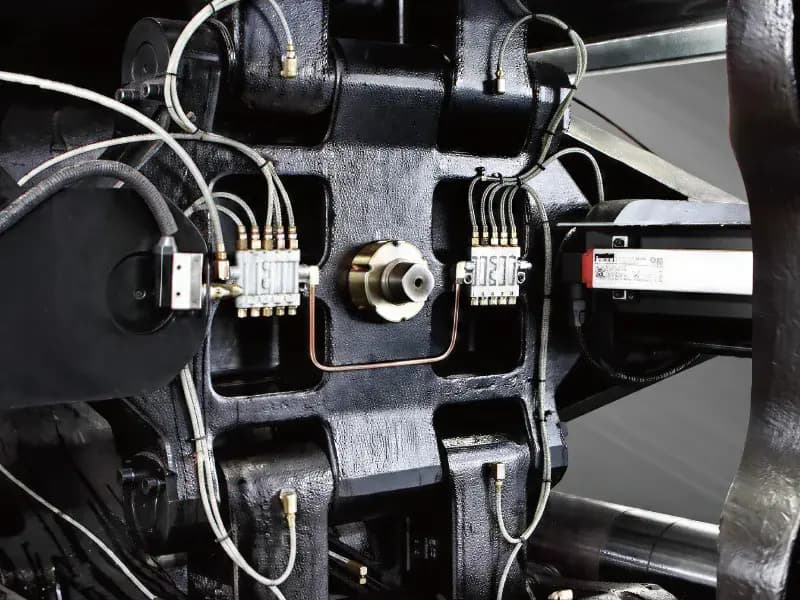
Toggle clamping unit — high rigidity for thin-wall molding
Troubleshooting Pressure Issues
Pressure-related defects in thin-wall molding follow predictable patterns that experienced operators learn to diagnose systematically. Short shots appearing consistently in the same cavity suggest localized issues: blocked vents, cold spots from inadequate cooling, or imbalanced runner systems. Short shots across all cavities simultaneously indicate insufficient machine pressure capacity or material viscosity problems from incorrect melt temperature. If pressure gradually increases over a production run while part quality deteriorates, check for material buildup on the screw or in the hot runner system. A 10-15% pressure increase over 4-8 hours typically signals the need for purging. Flash appearing at parting lines suggests the machine is compensating for a flow restriction elsewhere in the system, often a partially blocked gate or undersized runner. HWAMDA recommends maintaining detailed pressure trend logs for each mold. Comparing current pressure profiles against the validated baseline from mold trials quickly identifies deviations. The SPV5 controller's data logging function records injection pressure curves for every cycle, enabling statistical process control across production shifts.
Frequently Asked Questions
Thin-wall PP food packaging with 0.4-0.7 mm wall thickness typically requires injection pressures of 180-280 MPa, depending on flow length, cavity count, and gate configuration. HWAMDA SPV5 machines deliver specific injection pressures up to 260 MPa, providing adequate margins for yogurt cups, food containers, and sauce cups. The exact pressure depends on the flow length-to-thickness ratio, with higher ratios demanding proportionally more pressure. For a typical 500 mL yogurt cup with 0.5 mm walls and 120 mm flow length, expect to need approximately 220-250 MPa.
Related Guides
Ready to Start Your Project?
Get a free consultation and quotation for your thin-wall packaging production line.
Join 500+ manufacturers in 60+ countries who trust HWAMDA.
Get Free Quote