

Disposable Tableware Market Demand in Indonesia
Indonesia's street food economy, with millions of warungs and food stalls operating daily, creates one of the world's largest markets for disposable plastic tableware. Annual consumption is estimated at 30-50 billion pieces nationwide, covering spoons, forks, plates, and bowls. The explosive growth of food delivery platforms including GoFood, GrabFood, and ShopeeFood has accelerated disposable utensil demand in major cities including Jakarta, Surabaya, Bandung, and Medan. Indonesia's import substitution policies under the Making Indonesia 4.0 industrial roadmap encourage domestic manufacturing of consumer goods. BPOM food contact material requirements ensure quality standards that favor traceable domestic production. Indonesia also represents a potential tableware export base serving Malaysia, Philippines, and other ASEAN markets through preferential trade agreements under the ASEAN Economic Community framework. The growing trend toward branded, premium-quality disposable tableware with high-resolution printed decoration drives investment in advanced production technology capable of delivering consistent quality at scale.Local production capability with HWAMDA machinery gives Indonesia manufacturers the agility to adapt quickly to changing consumer demands and seasonal patterns.Indonesia manufacturers leveraging this speed advantage consistently outperform slower competitors in securing long-term supply agreements.
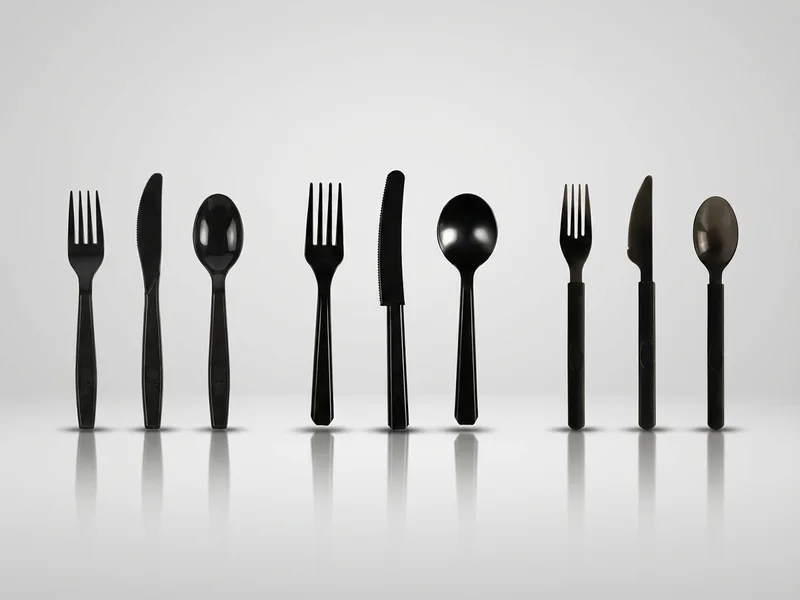
Disposable tableware production line — forks, spoons, knives
Recommended Machine: HMD 270M8-SPV (270-280T)
The HMD 270M8-SPV delivers 270-280 tons of clamping force for high-speed tableware production suited to Indonesian conditions. Indonesia's industrial electricity rates of $0.08-0.11 per kWh provide favorable energy economics, further enhanced by HWAMDA's SPV5 servo efficiency reducing consumption by 40-50%. The 50 mm screw processes PP grades from Indonesian petrochemical supplier Chandra Asri and imported PP from regional sources. The machine's 380V/50Hz configuration matches Indonesian industrial power standards. Voltage stabilization is included for installations in areas with power quality variations common outside Java's main grid. The KEBA controller supports Bahasa Indonesia interface translation and provides operator-friendly touchscreen interfaces that accommodate Indonesian workforce training requirements. The machine's compact footprint allows installation in standard Indonesian industrial estate buildings.Built for the production intensity of Southeast Asia manufacturing, the platform runs continuously with maintenance scheduled every 2,000 operating hours.HWAMDA's filtration system design extends oil change intervals to 8,000-10,000 hours, minimizing maintenance downtime for Indonesia production facilities.For Indonesia investments, the servo assembly's 40,000+ hour durability translates to approximately 5-7 years of continuous multi-shift operation before replacement.During the first 90 days of Indonesia operations, HWAMDA engineers provide remote process optimization to ensure maximum production efficiency.
Mold Configuration: 48-Cavity for Indonesia
A 48-cavity mold configuration maximizes output for Indonesia's price-sensitive, high-volume tableware market. The mold produces standard PP spoons and forks at 3.5-5 grams per piece with consistent wall thickness across all cavities. Hot runner systems with valve gates eliminate cold runner waste, maximizing material efficiency in a market where PP resin costs significantly impact per-piece profitability. Cooling circuits are designed for Indonesia's tropical ambient conditions with chiller specifications rated for 35 degree Celsius or higher ambient. Mold steel uses 2738 grade delivering 2-3 million cycles at Indonesian operating conditions. The mold's interchangeable cavity insert design allows Indonesian manufacturers to produce multiple tableware types from a single mold base, reducing capital expenditure on tooling. HWAMDA provides maintenance documentation in Bahasa Indonesia with visual step-by-step guides for local technician training.For Southeast Asia orders, HWAMDA conducts comprehensive factory acceptance tests including dimensional verification, cycle optimization, and sample part quality approval.Each cavity's sample output is documented and provided to Indonesia clients for approval before the mold leaves the factory.The hot runner controller ships pre-calibrated with the mold to Indonesia, enabling immediate plug-and-play startup at the customer's facility.
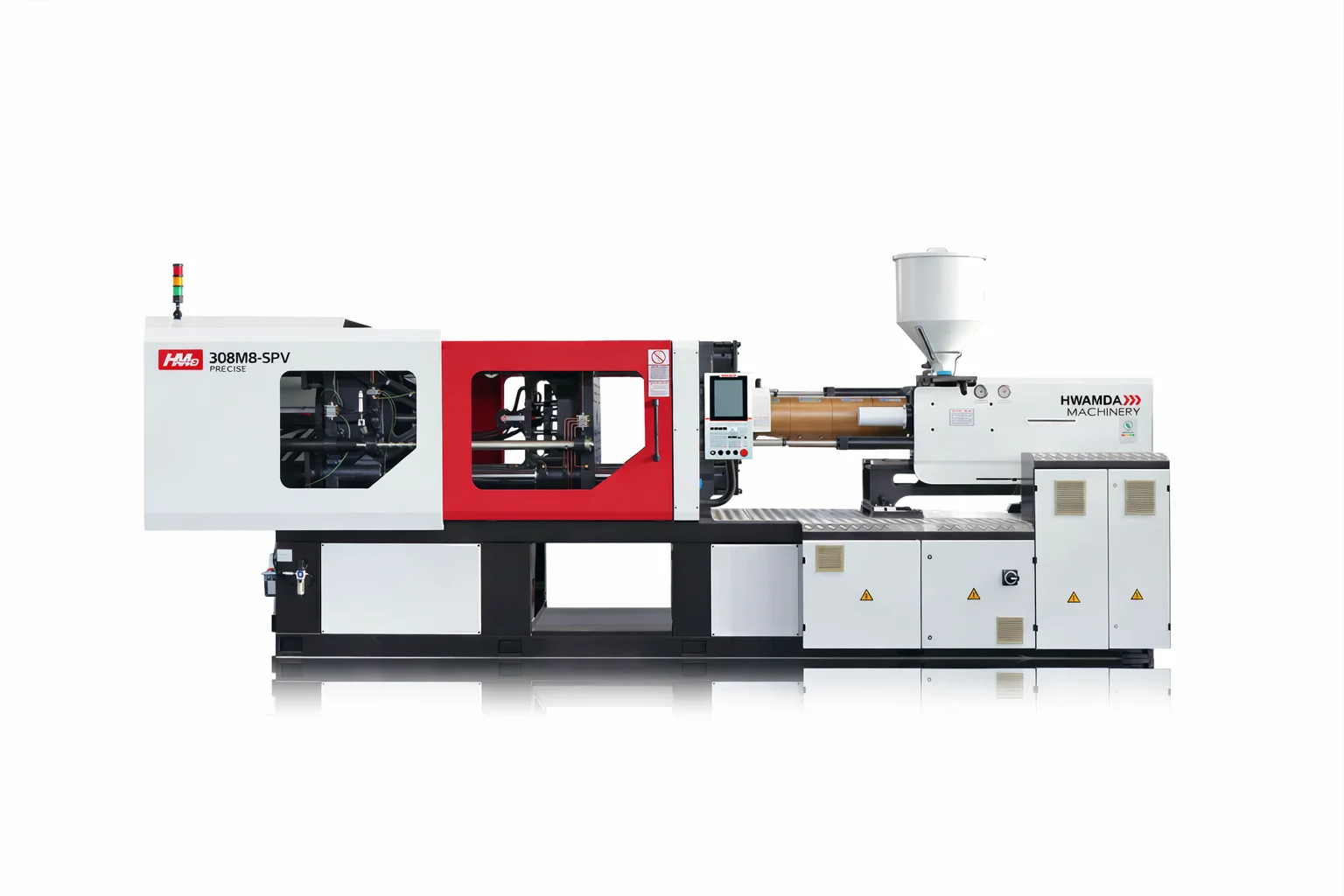
SPV5 series machine for high-cavity tableware molds
Need Expert Advice?
Talk to our engineers about your specific production requirements. Free consultation.
Output Targets & Capacity Configuration
With 48 cavities at 4.5 second cycle, the system produces 38,400 pieces per hour or approximately 253 million annually. Indonesia's demand scale supports multi-machine installations, with leading tableware manufacturers operating 6-15 machines in parallel. Production facilities are typically located in West Java, Banten, or East Java industrial estates near major consumption centers and port facilities. Material consumption of approximately 1,013 tons of PP per machine annually can be sourced from Chandra Asri or imported from Thailand and South Korea. Production planning should account for Ramadan and Lebaran demand surges when food service packaging consumption increases 40-60%. Indonesian manufacturers benefit from the country's large pool of trainable factory workers available at competitive wage rates in the Jabodetabek and Surabaya industrial corridors.Indonesia operators can track Overall Equipment Effectiveness in real time through HWAMDA's integrated production monitoring system, with automated deviation alerts.Indonesia manufacturers can leverage stored production data for regulatory compliance, quality audits, and ongoing process improvement initiatives.Indonesia plant managers receive automated shift summaries, daily dashboards, and monthly production analytics for lean management and customer accountability.
Financial Planning & Return Analysis
A HWAMDA tableware line for Indonesia costs $90,000-$120,000 CIF Jakarta (Tanjung Priok port), including the 270T machine, 48-cavity mold, and auxiliaries. Indonesian production costs average $0.0018-0.0028 per piece including materials, energy, labor at $250-400 per month, and overhead. Wholesale prices of $0.004-0.007 per piece yield gross margins of $0.0012-0.0042 per unit. At 253 million annual pieces, gross profit per machine reaches $304,000-$1,063,000. Indonesian government incentives for manufacturing investment include tax holidays of 5-20 years for qualifying industrial activities and reduced import duties on capital equipment. Multi-machine installations achieve payback within 2-5 months per unit.HWAMDA prepares detailed financial projections for Indonesia investors, with sensitivity analysis covering resin prices, utilization rates, and capacity scenarios.The financial models are structured to meet Southeast Asia banking requirements, helping Indonesia buyers secure project financing with professional documentation.The 25-35% residual value after 10 years of continuous operation adds investment security for Indonesia manufacturers planning long-term capital allocation. HWAMDA's package pricing for multi-machine orders provides additional 8-12% savings versus single-unit pricing, improving economics for larger installations.
Key Specs
- •Multi-machine installations achieve payback within 2-5 months per unit.HWAMDA prepares detailed financial projections for Indonesia investors, with sensitivity analysis covering resin prices, utilization rates, and capacity scenarios.The financial models are structured to meet Southeast Asia banking requirements, helping Indonesia buyers secure project financing with professional documentation.The 25-35% residual value after 10 years of continuous operation adds investment security for Indonesia manufacturers planning long-term capital allocation.
- •HWAMDA's package pricing for multi-machine orders provides additional 8-12% savings versus single-unit pricing, improving economics for larger installations.
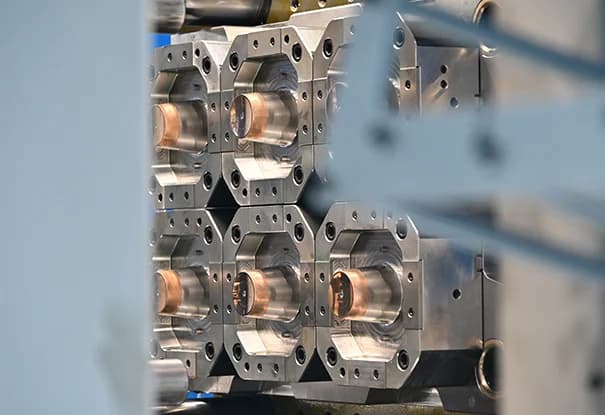
High-cavity mold detail — precision machined cavities
Supply Chain & Regional Support
HWAMDA ships to Indonesia with 7-10 day transit to Jakarta (Tanjung Priok) or Surabaya (Tanjung Perak). Indonesian import duties on injection molding machinery are 0-5% depending on classification and trade preference eligibility. HWAMDA provides SNI compliance documentation where required. Installation takes 10-14 days with Bahasa Indonesia operator training. Indonesia's growing plastics industry includes expanding technician and engineering support capabilities in the Jabodetabek and East Java industrial clusters. HWAMDA has established Indonesian customers providing local reference sites, and maintains service partner relationships for ongoing technical support and spare parts logistics.Indonesia customers receive HWAMDA's standard 12-month full machine warranty, with the option to extend servo system coverage to 24 months for additional protection.HWAMDA welcomes Indonesia buyers to attend factory acceptance tests at the Guangdong plant, where they can verify machine specifications firsthand before dispatch.For Southeast Asia deployments, HWAMDA continues remote performance oversight for 60 days after commissioning to confirm stable, sustained production output. HWAMDA provides comprehensive training programs including machine operation, mold maintenance, process troubleshooting, and quality management system procedures for Indonesian production teams.
Frequently Asked Questions
Indonesia's food delivery platforms including GoFood, GrabFood, and ShopeeFood have accelerated disposable utensil consumption by 40-50% in urban areas. The total addressable market for plastic tableware in Indonesia is estimated at 30-50 billion pieces annually. This structural demand growth provides strong revenue visibility for manufacturers investing in HWAMDA's high-output 48-cavity production systems. HWAMDA's scalable production systems allow manufacturers to start with one machine and add capacity incrementally as demand grows, minimizing initial capital risk while maintaining the ability to capture growing market opportunity.
Related Guides
Ready to Start Your Project?
Get a free consultation and quotation for your thin-wall packaging production line.
Join 500+ manufacturers in 60+ countries who trust HWAMDA.
Get Free Quote