

Disposable Tableware Market Demand in India
India's disposable tableware market is experiencing explosive growth driven by multiple converging factors: rapid urbanization, expanding food delivery platforms like Swiggy and Zomato, growing organized restaurant chains, and increasing hygiene awareness post-pandemic. Annual consumption is estimated at 50-80 billion pieces covering spoons, forks, plates, and bowls. The Make in India initiative promotes domestic manufacturing over imports, and BIS standards for food contact plastics ensure quality benchmarks for locally produced tableware. India's wedding and catering industry alone consumes billions of disposable utensils annually during the October-February wedding season. The market is transitioning from informal small-scale production using outdated machinery to organized, high-efficiency manufacturing capable of consistent quality output. HWAMDA's 48-cavity mold technology enables Indian manufacturers to achieve production efficiency levels that compete with imports while serving the massive domestic market. The growing trend toward branded, premium-quality disposable tableware with high-resolution printed decoration drives investment in advanced production technology capable of delivering consistent quality at scale.In South Asia's dynamic market, India producers using HWAMDA systems capture opportunities faster through shorter lead times and local production flexibility.The ability to deliver quickly and adapt to specification changes makes India-based HWAMDA operators preferred partners for major brand customers.
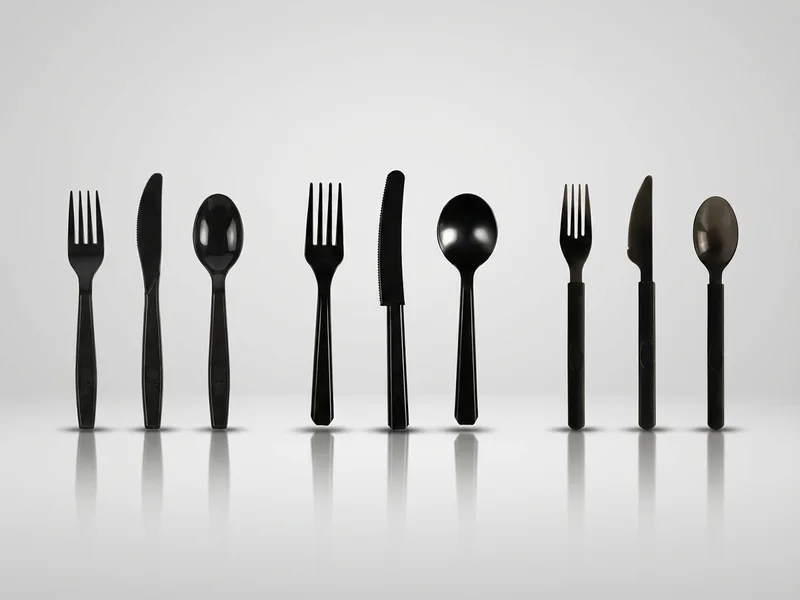
Disposable tableware production line — forks, spoons, knives
Recommended Machine: HMD 270M8-SPV (270-280T)
The HMD 270M8-SPV delivers 270-280 tons of clamping force for high-speed tableware production adapted to Indian operating conditions. India's variable industrial electricity rates of $0.08-0.14 per kWh across different states make HWAMDA's SPV5 servo energy efficiency a meaningful cost advantage, reducing power consumption by 40-50% versus conventional hydraulic machines. The machine processes PP and PS grades from Indian petrochemical suppliers including Reliance Industries, IOCL, and HPCL. Integrated voltage stabilization protects against India's common power quality issues including voltage fluctuations and momentary outages. The 50 mm screw with accumulator delivers injection speeds exceeding 350 mm/s for consistent thin-section filling. The KEBA controller supports English and Hindi interface options with simple operator screens suitable for Indian factory workforce training programs.Built for the production intensity of South Asia manufacturing, the platform runs continuously with maintenance scheduled every 2,000 operating hours.HWAMDA's filtration system design extends oil change intervals to 8,000-10,000 hours, minimizing maintenance downtime for India production facilities.For India investments, the servo assembly's 40,000+ hour durability translates to approximately 5-7 years of continuous multi-shift operation before replacement.During the first 90 days of India operations, HWAMDA engineers provide remote process optimization to ensure maximum production efficiency.
Mold Configuration: 48-Cavity for India
HWAMDA's 48-cavity tableware mold for India produces standard disposable spoons and forks at 3-5 grams per piece in PP material. The mold design emphasizes durability and ease of maintenance to suit Indian manufacturing environments, using 2738 pre-hardened steel with enhanced cooling channel access for routine cleaning and descaling. Hot runner systems minimize material waste with regrind rates under 2%. Cooling circuits are designed for Indian ambient temperatures up to 42 degrees Celsius with appropriate chiller specifications. The 48-cavity layout achieves 4-5 second cycles on the 270T platform with balanced filling across all positions. Interchangeable cavity inserts allow production of spoons, forks, knives, and Indian-specific items like dessert spoons and serving ladles on the same mold base. HWAMDA provides illustrated maintenance guides in Hindi and English designed for technician training in Indian factories.HWAMDA validates every mold through rigorous factory testing before it ships to India—ensuring dimensional accuracy, cycle consistency, and production-ready performance.India customers receive sample parts from each cavity for quality verification before final mold shipment.For India installations, the hot runner controller arrives factory-calibrated and ready for direct connection to the molding machine.
Key Specs
- •Hot runner systems minimize material waste with regrind rates under 2%.
- •The 48-cavity layout achieves 4-5 second cycles on the 270T platform with balanced filling across all positions.
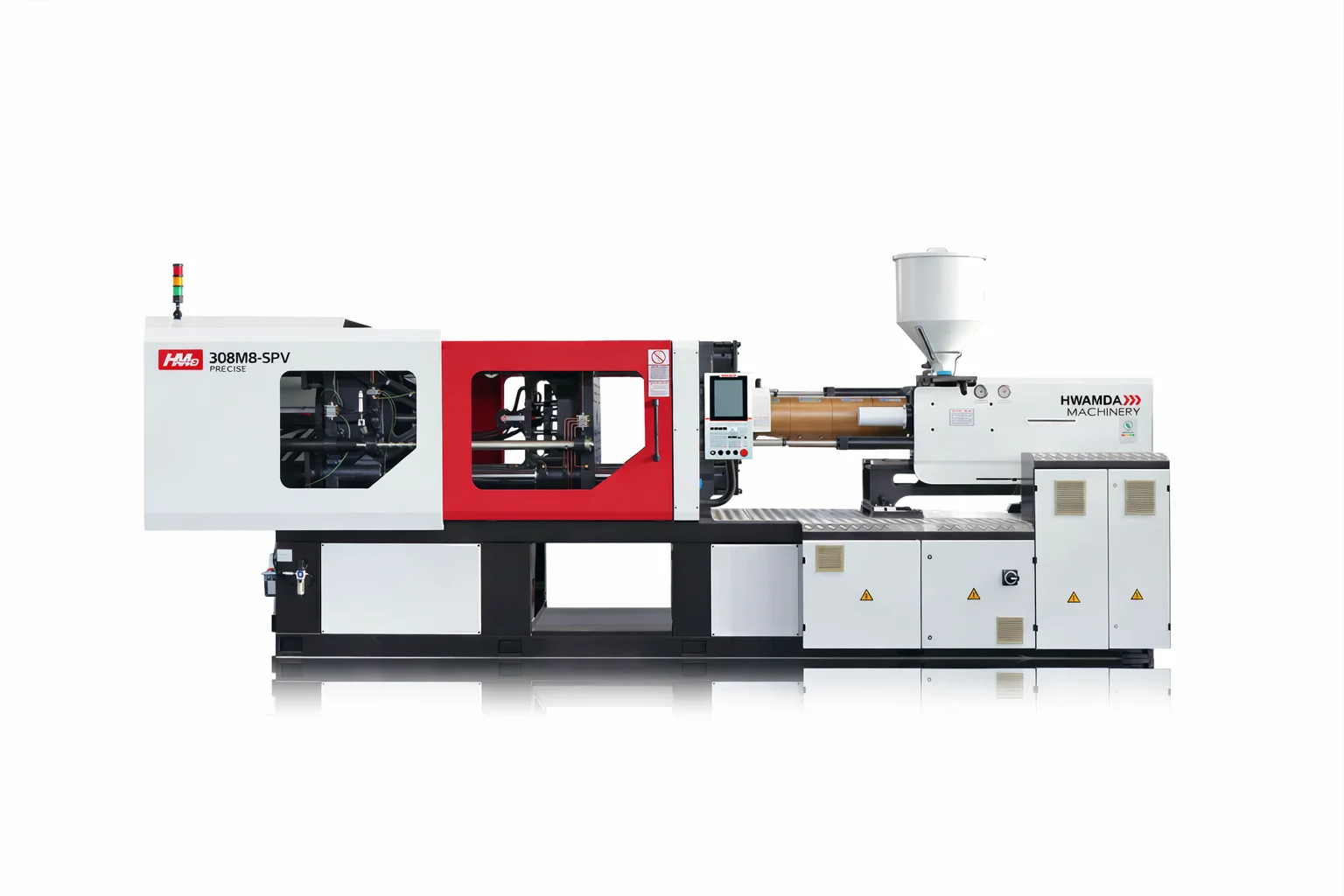
SPV5 series machine for high-cavity tableware molds
Need Expert Advice?
Talk to our engineers about your specific production requirements. Free consultation.
Line Performance & Production Goals
At 48 cavities and 4.5 second cycle, each machine produces 38,400 pieces per hour or 253 million pieces annually. India's massive market scale means even billion-piece annual requirements from single distributors are common, justifying multi-machine installations of 6-12 units in a single facility. Material consumption requires approximately 1,013 tons of PP annually per machine. Indian PP pricing from Reliance and IOCL at approximately $1,100-1,300 per ton is globally competitive. Production planning should account for Indian festival seasons including Diwali, Navratri, and the extended wedding season from October through February when disposable tableware demand surges 40-60%. Facilities in Gujarat, Maharashtra, Tamil Nadu, and Uttar Pradesh offer proximity to both resin supply and major consumption markets.India operators can track Overall Equipment Effectiveness in real time through HWAMDA's integrated production monitoring system, with automated deviation alerts.India manufacturers can leverage stored production data for regulatory compliance, quality audits, and ongoing process improvement initiatives.India plant managers receive automated shift summaries, daily dashboards, and monthly production analytics for lean management and customer accountability.
Cost Structure & Revenue Potential
A HWAMDA tableware production line for India costs $85,000-$115,000 CIF Nhava Sheva or Chennai, including the 270T machine, 48-cavity mold, and auxiliary equipment. Indian production costs average $0.0015-0.0025 per piece, benefiting from competitive labor at $300-500 per month and affordable domestic PP resin. Wholesale tableware prices of $0.004-0.006 per piece yield gross margins of $0.0015-0.0035 per unit. At 253 million annual output per machine, gross profit reaches $380,000-$886,000. Indian government schemes including PLI incentives for food processing equipment and state-level MSME subsidies can reduce effective investment by 15-25%. Multi-machine installations of 4-8 units achieve per-machine payback within 2-4 months.HWAMDA prepares detailed financial projections for India investors, with sensitivity analysis covering resin prices, utilization rates, and capacity scenarios.The financial models are structured to meet South Asia banking requirements, helping India buyers secure project financing with professional documentation.The 25-35% residual value after 10 years of continuous operation adds investment security for India manufacturers planning long-term capital allocation.
Key Specs
- •Indian government schemes including PLI incentives for food processing equipment and state-level MSME subsidies can reduce effective investment by 15-25%.
- •Multi-machine installations of 4-8 units achieve per-machine payback within 2-4 months.HWAMDA prepares detailed financial projections for India investors, with sensitivity analysis covering resin prices, utilization rates, and capacity scenarios.The financial models are structured to meet South Asia banking requirements, helping India buyers secure project financing with professional documentation.The 25-35% residual value after 10 years of continuous operation adds investment security for India manufacturers planning long-term capital allocation.
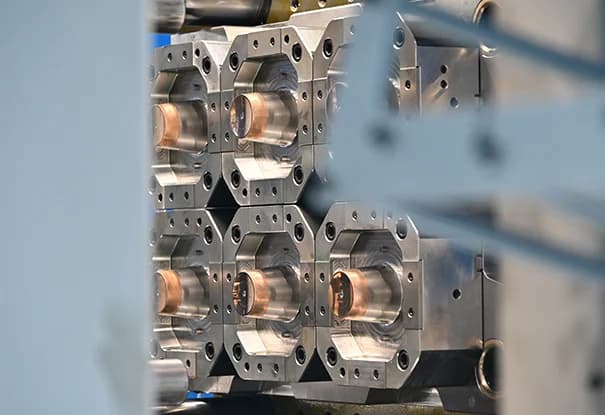
High-cavity mold detail — precision machined cavities
Freight Options & Local Assistance
HWAMDA ships to India with 12-18 day transit to Nhava Sheva (Mumbai), Chennai, or Mundra ports. Indian customs duties on injection molding machinery average 7.5% plus 18% GST on the CIF value. HWAMDA provides comprehensive customs documentation for smooth clearance. Installation takes 10-14 days with English and Hindi training support. India's extensive plastics industry service network includes qualified technicians in all major industrial cities. HWAMDA has established Indian customers and service partners in Mumbai, Ahmedabad, Chennai, and Delhi NCR for ongoing support. Spare parts delivery from Guangdong reaches Indian customers within 5-7 business days by air, with common wear items recommended for on-site stocking.India customers receive HWAMDA's standard 12-month full machine warranty, with the option to extend servo system coverage to 24 months for additional protection.HWAMDA welcomes India buyers to attend factory acceptance tests at the Guangdong plant, where they can verify machine specifications firsthand before dispatch.For South Asia deployments, HWAMDA continues remote performance oversight for 60 days after commissioning to confirm stable, sustained production output.
Frequently Asked Questions
HWAMDA's interchangeable cavity insert system produces standard spoons, forks, knives, dessert spoons, and specialty Indian items like serving ladles on the same mold base. Changeover between insert sets takes 3-4 hours. This flexibility allows Indian manufacturers to serve diverse customer requirements without investing in separate dedicated molds for each tableware type. HWAMDA's quality management system and documentation packages are designed to support customers' regulatory compliance requirements across all major international food packaging standards and certification frameworks.
Related Guides
Ready to Start Your Project?
Get a free consultation and quotation for your thin-wall packaging production line.
Join 500+ manufacturers in 60+ countries who trust HWAMDA.
Get Free Quote