

Production Output Comparison
A 2-level stack mold effectively doubles the cavity count without increasing machine clamp tonnage proportionally. For example, a single-face 8-cavity yogurt cup mold produces 8 cups per cycle. A 2-level stack mold with 8 cavities per level produces 16 cups per cycle on the same machine footprint. At a 4-second cycle time running 24/7, the single-face mold produces approximately 172,800 cups per day, while the stack mold produces 345,600 cups per day. This output advantage makes stack molds attractive for producers serving large dairy brands or national distributors requiring 10+ million units monthly. However, the cycle time on stack molds is typically 5-15% longer than equivalent single-face molds due to the longer flow path and more complex cooling requirements. For HWAMDA SPV5 400T machines running yogurt cup production, a 2-level stack mold with 2×8 cavities achieves approximately 4.5-5.0 second cycles compared to 3.5-4.0 seconds for a single-face 8-cavity mold. The cycle time trade-off means stack molds are most advantageous when floor space or machine count constraints are the limiting factor, while single-face molds optimize for cycle time.
Key Specs
- •For example, a single-face 8-cavity yogurt cup mold produces 8 cups per cycle.
- •A 2-level stack mold with 8 cavities per level produces 16 cups per cycle on the same machine footprint.
- •At a 4-second cycle time running 24/7, the single-face mold produces approximately 172,800 cups per day, while the stack mold produces 345,600 cups per day.
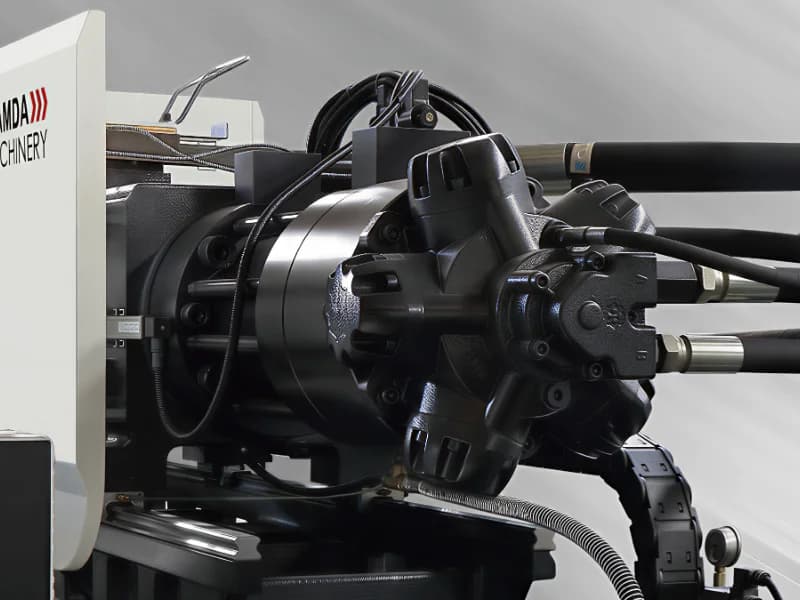
High-speed injection unit with linear guides
Machine Requirements
Stack molds require machines with longer daylight opening (platen stroke) to accommodate the additional mold height. A 2-level stack mold is approximately 40-60% taller than a single-face mold, requiring 600-900mm of additional daylight. The HWAMDA SPV5 series provides sufficient platen stroke for 2-level stack molds across the 270T-600T range. Clamp tonnage requirements increase by only 10-20% for a 2-level stack mold compared to the single-face version, because the projected area on each level is identical. Injection volume requirements double for stack molds since twice as many cavities must be filled per shot. This typically necessitates a machine with a larger barrel and shot capacity, or dual-injection configurations. Hydraulic systems must deliver sufficient flow for the longer clamping stroke. HWAMDA SPV5 machines with accumulator-assisted injection provide the shot volume and injection speed needed for stack mold applications in thin-wall packaging production. HWAMDA engineering verifies all machine-stack mold compatibility parameters during the quotation phase to prevent specification mismatches that could delay production startup.
Mold Cost and Complexity
A 2-level stack mold costs 2.5-3.5 times more than an equivalent single-face mold. For yogurt cup production, a single-face 8-cavity mold ranges $45,000-65,000, while a 2-level stack mold with 2×8 cavities costs $130,000-200,000. The additional cost comes from the center section mechanism, dual hot runner systems, additional cooling circuits, and significantly more complex engineering and manufacturing. Stack mold design requires specialized engineering expertise. The center section must rotate or translate precisely to open both parting lines simultaneously. Hot runner systems for stack molds use a complex sprue bar arrangement to deliver melt from the machine nozzle through the moving center section to both parting levels. Any misalignment or thermal imbalance between levels causes quality inconsistencies. Lead time for stack molds is typically 16-24 weeks compared to 8-14 weeks for single-face molds. Stack mold engineering also requires precise alignment between the center section and both platens, with tolerances tighter than single-face configurations.
Key Specs
- •For yogurt cup production, a single-face 8-cavity mold ranges $45,000-65,000, while a 2-level stack mold with 2×8 cavities costs $130,000-200,000.
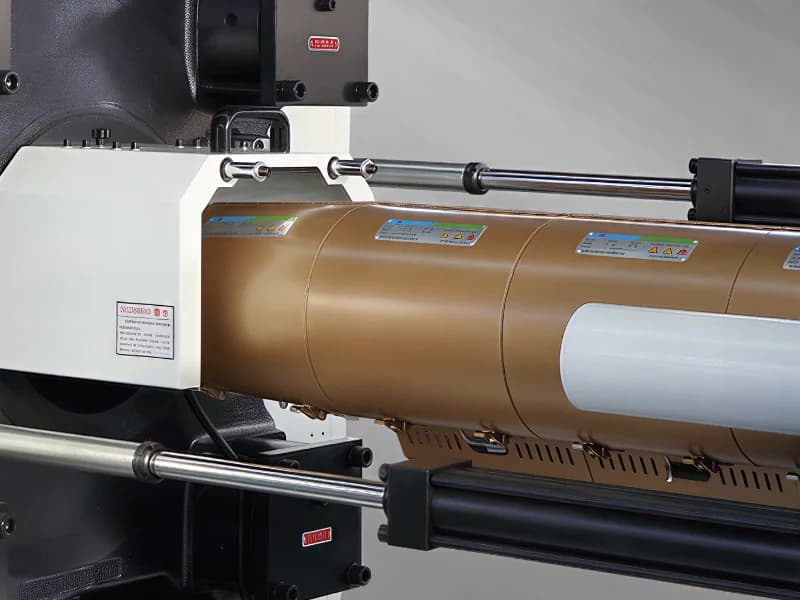
Servo-hydraulic drive system with energy recovery
Need Expert Advice?
Talk to our engineers about your specific production requirements. Free consultation.
Maintenance and Reliability
Single-face molds are inherently simpler to maintain. Technicians can access all cavities, cooling channels, and ejection systems directly. Mold cleaning, cavity repair, and hot runner maintenance follow standard procedures familiar to any experienced mold technician. Planned maintenance intervals are typically every 250,000-500,000 cycles. Stack mold maintenance is significantly more complex. The center section mechanism requires regular lubrication and alignment verification. Both hot runner levels must be balanced independently. When one level develops issues, the entire mold must be pulled for service, stopping all production. Diagnosing whether a quality issue originates from Level 1 or Level 2 adds troubleshooting time. Stack mold maintenance requires specialized training and often factory support from the mold builder. Unplanned downtime events on stack molds typically last 2-3 times longer than on single-face molds. Having at least one backup single-face mold available when running stack mold production ensures that output continues during maintenance without complete production loss.
Space Utilization
Stack molds deliver the best output per square meter of factory floor space. A single HWAMDA SPV5 400T machine with a 2-level stack mold occupies approximately 25 square meters and produces 345,000+ cups per day. Achieving the same output with single-face molds requires two complete machine installations totaling 50 square meters, plus additional auxiliary equipment, conveyors, and operator stations. For factories in high-rent industrial zones or those facing physical space constraints, stack molds can be the only feasible path to meeting production volume targets. The space savings extend to downstream equipment—one packing station instead of two, one quality inspection line instead of two, and consolidated material handling. However, the single-machine concentration creates a risk: if the stack mold machine goes down, 100% of output is lost, whereas two single-face machines maintain 50% output during any single machine failure. For factories planning new construction for stack mold operations, building design can be optimized with appropriate ceiling height for crane access and floor loading for heavier mold handling.
Key Specs
- •However, the single-machine concentration creates a risk: if the stack mold machine goes down, 100% of output is lost, whereas two single-face machines maintain 50% output during any single machine failure.
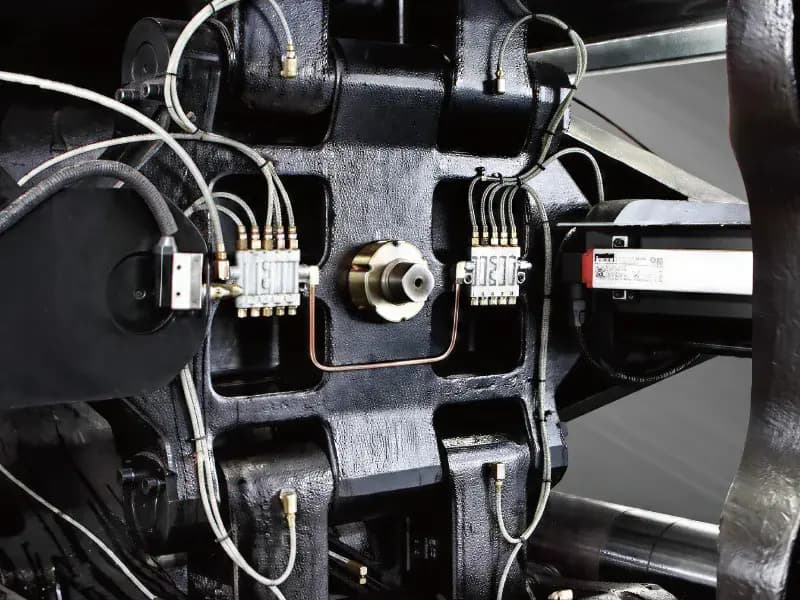
Toggle clamping unit — high rigidity for thin-wall molding
Decision Framework
Choose stack molds when monthly production requirements exceed 15-20 million units of a single product, factory floor space is a binding constraint, and the additional capital investment of $70,000-130,000 for the stack mold premium can be justified. Stack molds also make sense when machine availability is limited and adding new machines is not feasible due to power supply or building limitations. Choose single-face molds when production volumes are below 10 million units monthly per SKU, when product designs change frequently, when maintenance resources are limited, or when starting a new production operation where simplicity reduces risk. HWAMDA recommends starting with single-face molds for new factories and upgrading to stack molds once production volumes and operator experience justify the investment. A typical growth path is: 1 machine with 8-cavity single-face mold, then 2 machines with single-face molds, then consolidate to 1 machine with a 2-level stack mold plus 1 backup single-face mold.
Frequently Asked Questions
A 2-level stack mold typically costs 2.5-3.5 times more than an equivalent single-face mold. For a yogurt cup application, a single-face 8-cavity mold costs $45,000-65,000 while a 2-level 2×8 stack mold costs $130,000-200,000. The premium covers the center section mechanism, dual hot runner system, additional cooling complexity, and specialized engineering. Despite the higher upfront cost, the cost per cavity is only 60-75% higher than single-face, making stack molds cost-effective for high-volume production. The cost premium is offset by the output increase that delivers more revenue per machine-hour of production capacity.
Related Guides
Ready to Start Your Project?
Get a free consultation and quotation for your thin-wall packaging production line.
Join 500+ manufacturers in 60+ countries who trust HWAMDA.
Get Free Quote