

Mold Design Requirements Specification
Begin mold procurement by preparing a detailed design requirements specification covering part geometry, dimensional tolerances, material specifications, and production targets. For thin-wall food packaging, specify wall thickness with tolerances (typically 0.45mm +/-0.05mm for yogurt cups), surface finish requirements (SPI A-2 or better for food contact surfaces), and ejection system type. Include your target cycle time, as this drives cooling system design and runner selection. Specify the production machine model so the mold designer can match dimensions to platen size and tie bar spacing. For HWAMDA SPV5 machines, provide exact platen dimensions, maximum mold height, and locating ring diameter. Define gate type and location, with valve gates being standard for thin-wall food packaging to eliminate gate vestige. Include a 2D part drawing with all critical dimensions and a 3D STEP file for mold flow analysis.
Key Specs
- •For thin-wall food packaging, specify wall thickness with tolerances (typically 0.45mm +/-0.05mm for yogurt cups), surface finish requirements (SPI A-2 or better for food contact surfaces), and ejection system type.
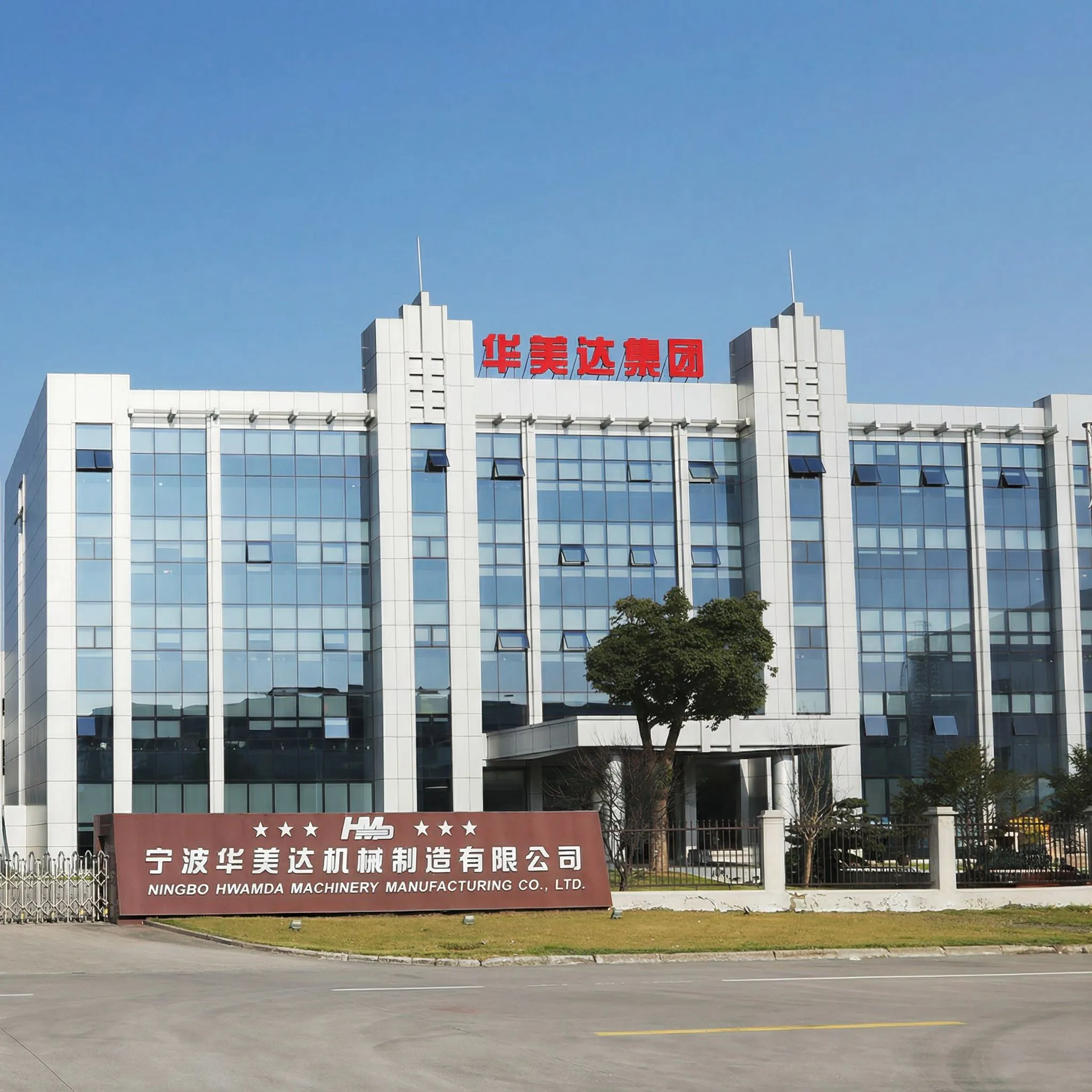
HWAMDA factory — quality manufacturing since 2003
Steel Selection and Quality Standards
Mold steel selection balances hardness, thermal conductivity, polishability, and cost. For thin-wall molds running millions of cycles, cavity and core inserts require hardened steel with HRC 48-52. Common choices include S136 stainless (AISI 420) for food-contact applications requiring corrosion resistance, H13 for high-volume production requiring maximum durability, and P20 pre-hardened to HRC 30-34 for mold bases. Thin-wall molds benefit from high thermal conductivity steels like Moldmax or Ampcoloy beryllium-copper alloys for core inserts, improving cooling efficiency by 3-5x compared to standard tool steel and reducing cycle times by 10-20%. Specify steel certification with mill certificates for all cavity-grade steels. Request hardness test reports showing uniform hardness across cavity surfaces. HWAMDA's mold engineering team specifies optimal steel combinations balancing performance against budget while ensuring guaranteed cycle time targets on SPV5 machines.
Cavity Count and Layout Planning
Cavity count selection balances production volume requirements against mold cost, machine tonnage, and quality consistency. For yogurt cups on HWAMDA SPV5 380-400T machines, practical counts are 8, 12, or 16 cavities. The 12-cavity configuration offers the best balance for most volumes. For food containers on 480-530T machines, 4, 6, or 8 cavities are standard. Sauce cups on 270-280T machines reach 16, 24, or 32 cavities due to small projected area. Cavity layout must ensure balanced filling across all cavities. Unbalanced layouts cause weight variation, inconsistent wall thickness, and dimensional problems. Symmetrical layouts with equal runner lengths from the hot runner manifold to each cavity are essential. HWAMDA performs mold flow simulation for every multi-cavity design, verifying fill balance within 2% weight variation across all cavities before steel is cut.
Key Specs
- •For yogurt cups on HWAMDA SPV5 380-400T machines, practical counts are 8, 12, or 16 cavities.
- •For food containers on 480-530T machines, 4, 6, or 8 cavities are standard.
- •Sauce cups on 270-280T machines reach 16, 24, or 32 cavities due to small projected area.
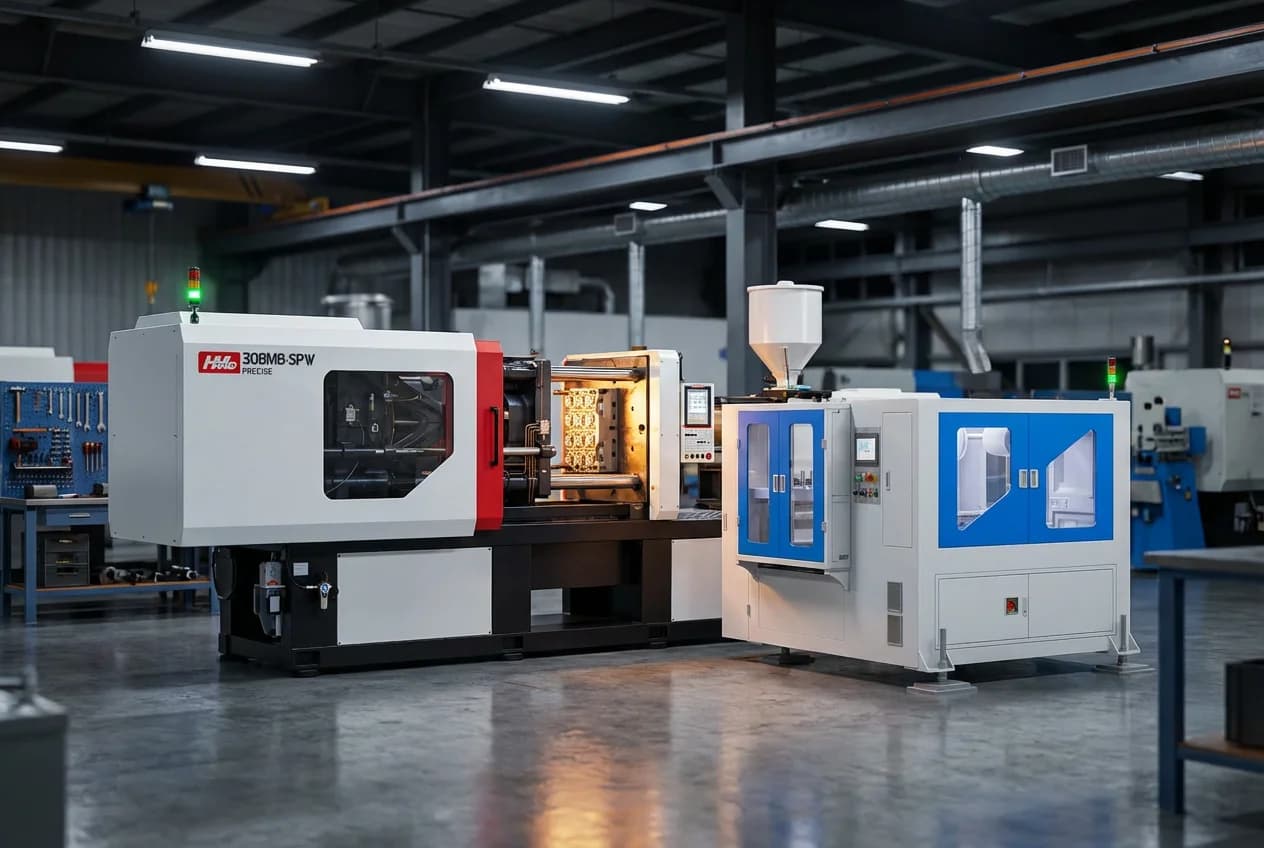
SPV5 machines on the production floor
Need Expert Advice?
Talk to our engineers about your specific production requirements. Free consultation.
Hot Runner System Selection
Hot runner systems are standard for thin-wall molds, eliminating cold runner waste (5-15% of shot weight) and enabling faster cycles. Valve gate hot runners provide clean gate cutoff with no vestige on the product surface, essential for stackable food packaging. Specify drops per cavity, nozzle tip type, and manifold heating capacity. Leading hot runner suppliers include Synventive, Mold-Masters, YUDO, and INCOE. Nozzle sizing must match thin-wall gate diameter (typically 1.2-2.5mm for food packaging). Manifold balance ensures equal melt temperature and pressure at each drop. For 12-cavity yogurt cup molds, an H-pattern manifold with equal-length channels is standard. Temperature control should maintain +/-1 degree C across all zones. HWAMDA integrates hot runner systems during mold design, ensuring compatibility between the controller, machine interface, and mold wiring to eliminate communication issues between separately sourced components.
Mold Trial and Acceptance Process
Mold trials verify that the mold meets all specifications and achieves target cycle time. A structured acceptance process includes three phases. T0 trial verifies basic function: opening, closing, ejection, and first shots confirming cavity filling. T1 trial optimizes process parameters to achieve target cycle time, dimensions, and part weight consistency. T2 trial runs minimum 8 hours at target cycle time, verifying sustained performance and process stability. Acceptance criteria should include: part weight within +/-2% across all cavities, wall thickness within specified tolerances, cycle time at or below target, and cavity pressure balance within 5%. HWAMDA conducts mold trials on the actual production machine model at their facility before shipment, providing complete trial reports with process parameters, dimensional measurements, and cycle time data to ensure the mold performs to specification upon arrival.
Key Specs
- •Acceptance criteria should include: part weight within +/-2% across all cavities, wall thickness within specified tolerances, cycle time at or below target, and cavity pressure balance within 5%.
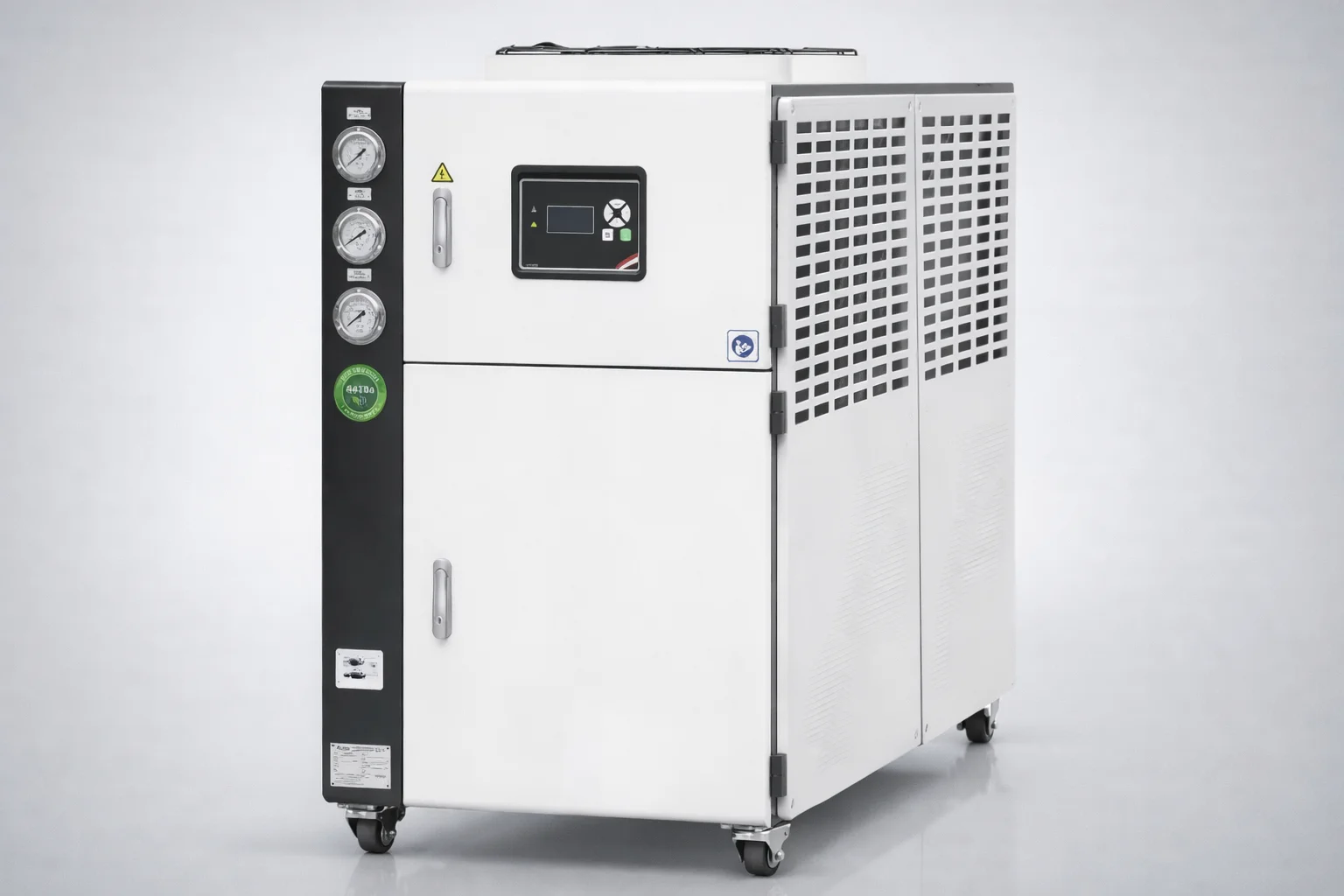
Industrial cooling system for injection molding
Mold Pricing: What Drives Cost
Thin-wall mold pricing is driven by cavity count, steel grade, hot runner system, and cooling circuit complexity. A 4-cavity food container mold with P20 base and H13 cavities typically costs $30,000-$50,000. Scaling to 8 cavities increases cost to $50,000-$90,000. Yogurt cup molds range from $30,000-$45,000 for 8-cavity to $50,000-$80,000 for 16-cavity. High-cavitation sauce cup molds (24-32 cavity) range from $60,000-$100,000. The hot runner system represents 25-35% of total cost. Premium steels like S136 add 15-20% over standard H13. Conformal cooling using 3D-printed inserts adds 20-30% but can reduce cycle times by 15-25%, paying back within 6-12 months. When comparing quotations, ensure suppliers quote the same steel grades, hot runner brand, and cooling complexity. HWAMDA provides transparent pricing with itemized breakdowns showing steel, hot runner, machining, and assembly costs separately.
Frequently Asked Questions
Lead time is typically 45-75 days from design approval to mold trial completion. Simple 4-cavity molds finish in 45-55 days, while complex 16-32 cavity molds with advanced cooling require 60-75 days. This includes design (10-15 days), steel procurement (5-10 days), CNC machining and EDM (20-30 days), assembly and polishing (5-10 days), and mold trials (3-5 days). HWAMDA coordinates mold and machine manufacturing timelines to ensure simultaneous readiness for shipment.
Related Guides
Ready to Start Your Project?
Get a free consultation and quotation for your thin-wall packaging production line.
Join 500+ manufacturers in 60+ countries who trust HWAMDA.
Get Free Quote