

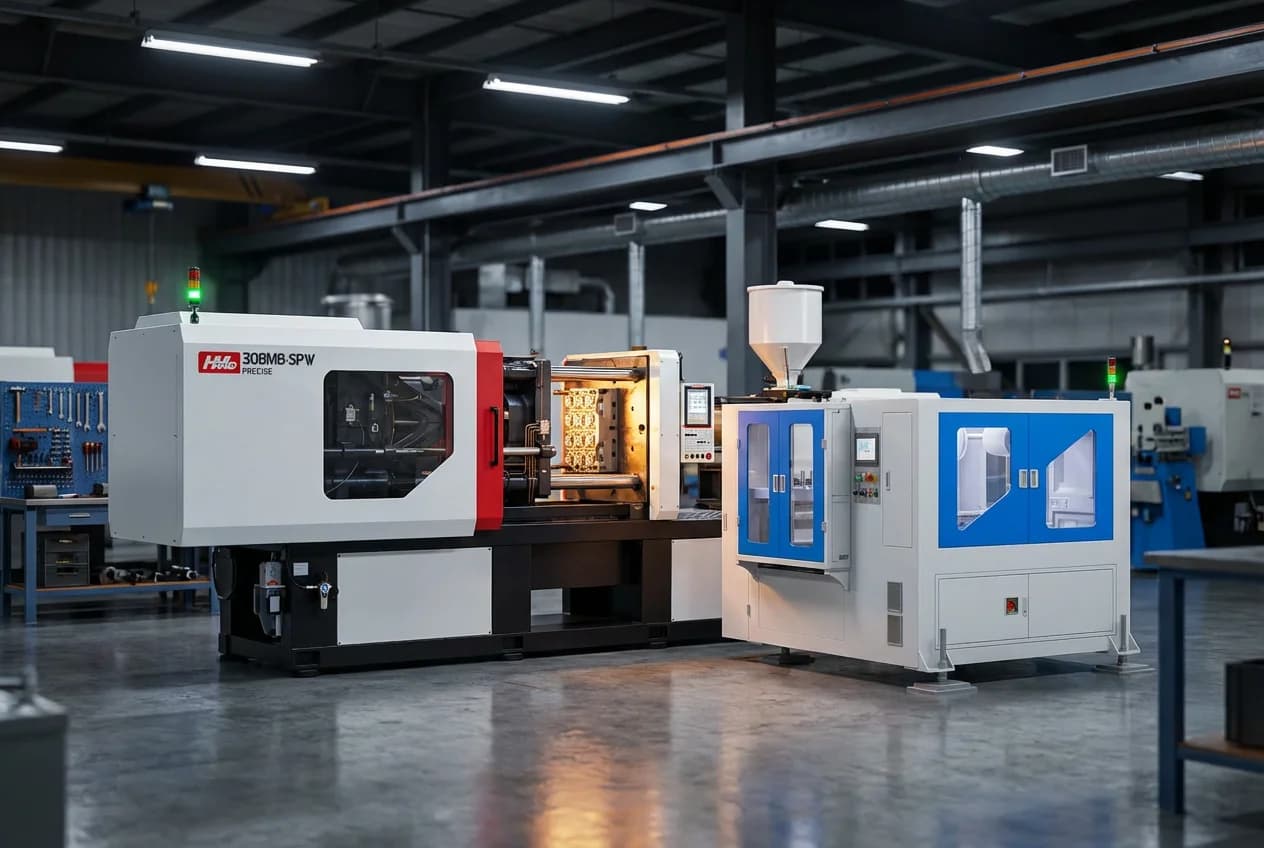
Clamping Force and Platen Specifications Compared
The 100 kN difference between the HMD 270M8-SPV at 2,700 kN and the HMD 280M8-SPV at 2,800 kN translates to approximately 10 tonnes of additional clamping force. While this seems modest, it provides meaningful headroom for applications at the upper limit of the 270-tonne class. The HMD 270M8-SPV features platen size of 860 x 850 mm with tie bar distance of 580 x 570 mm, mold opening stroke of 560 mm, and maximum daylight of 1,160 mm. The HMD 280M8-SPV offers slightly larger platen dimensions of approximately 880 x 870 mm with tie bar distance of 590 x 580 mm, enabling marginally larger mold footprints. Both machines accept mold thicknesses from 220-600 mm for the 270 and 230-620 mm for the 280. The ejector stroke on both models is 160 mm with 77 kN ejector force. For practical purposes, the platen size difference means the 280 can accommodate molds approximately 20 mm wider in each direction, which matters when fitting 4-cavity molds with tight cavity pitch for products like yogurt cup lids at 75-95 mm diameter. Machine footprint is similar at 6.2 x 1.7 x 2.4 m for the 270 versus 6.3 x 1.7 x 2.4 m for the 280.
Key Specs
- •The 100 kN difference between the HMD 270M8-SPV at 2,700 kN and the HMD 280M8-SPV at 2,800 kN translates to approximately 10 tonnes of additional clamping force.
- •The HMD 270M8-SPV features platen size of 860 x 850 mm with tie bar distance of 580 x 570 mm, mold opening stroke of 560 mm, and maximum daylight of 1,160 mm.
- •The HMD 280M8-SPV offers slightly larger platen dimensions of approximately 880 x 870 mm with tie bar distance of 590 x 580 mm, enabling marginally larger mold footprints.
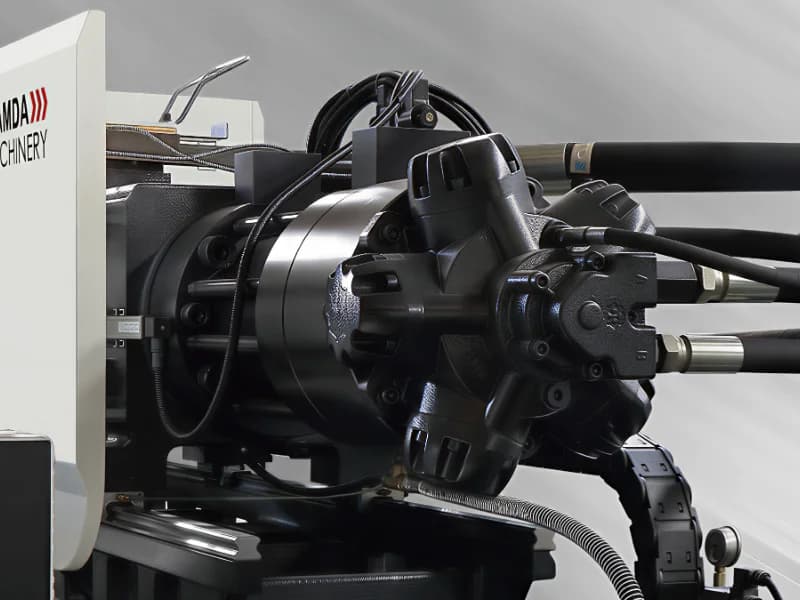
High-speed injection unit with linear guides
Shared Injection Unit Performance
Both models use the identical injection unit configuration, making their filling performance equivalent for any given mold. The shared injection specifications include screw diameter options of 50 mm (A) and 53 mm (B), injection volume of 530-595 cm3, injection weight of 482-541 grams of PP, injection speed of 368 mm/s for both screw options, injection pressure of 177 MPa for the 50 mm screw and 158 MPa for the 53 mm screw, screw L/D ratio of 24.5:1 and 23:1 respectively, screw stroke of 270 mm, and screw speed of 0-300 rpm. For thin-wall packaging applications, the 50 mm screw is recommended when shot size is below 300g and maximum injection pressure is needed for walls under 0.40 mm. The 53 mm screw suits shot sizes of 300-541g with slightly lower pressure but higher plasticizing capacity. The 368 mm/s injection speed is suitable for wall thicknesses down to 0.40 mm, though applications requiring 0.35 mm walls may benefit from the higher injection speeds of 418-517 mm/s available on larger SPV5 models. The identical injection performance means your mold and product design, not the injection unit, should drive the choice between these two machines.
Application Fit: Cup Lids and Small Containers
Both machines target the small-format packaging market, but the optimal application differs slightly. The HMD 270M8-SPV is ideal for 4-cavity cup lids with diameters up to 90 mm, requiring projected areas of approximately 255 cm2 and clamping force of 2,000-2,500 kN with comfortable safety margin. It also handles 4-cavity small containers of 250 ml or less, and 8-cavity sauce cup molds for 30 ml cups where the small projected area per cavity keeps total clamping requirements within 2,500 kN. The HMD 280M8-SPV is better suited when mold dimensions push against the 270 platen boundaries. This includes 8-cavity cup lids at 70-80 mm diameter where the 8-cavity layout requires the slightly wider 590 x 580 mm tie bar distance, 4-cavity containers approaching 500 ml where per-cavity projected area of 100+ cm2 brings total clamping near 2,700 kN, and production with heavier molds that benefit from the larger platen support area. For new entrants and contract manufacturers starting with a single SPV5 machine, the HMD 270M8-SPV offers the lowest capital investment while the HMD 280M8-SPV provides slightly more growth capacity.
Key Specs
- •The HMD 270M8-SPV is ideal for 4-cavity cup lids with diameters up to 90 mm, requiring projected areas of approximately 255 cm2 and clamping force of 2,000-2,500 kN with comfortable safety margin.
- •It also handles 4-cavity small containers of 250 ml or less, and 8-cavity sauce cup molds for 30 ml cups where the small projected area per cavity keeps total clamping requirements within 2,500 kN.
- •This includes 8-cavity cup lids at 70-80 mm diameter where the 8-cavity layout requires the slightly wider 590 x 580 mm tie bar distance, 4-cavity containers approaching 500 ml where per-cavity projected area of 100+ cm2 brings total clamping near 2,700 kN, and production with heavier molds that benefit from the larger platen support area.
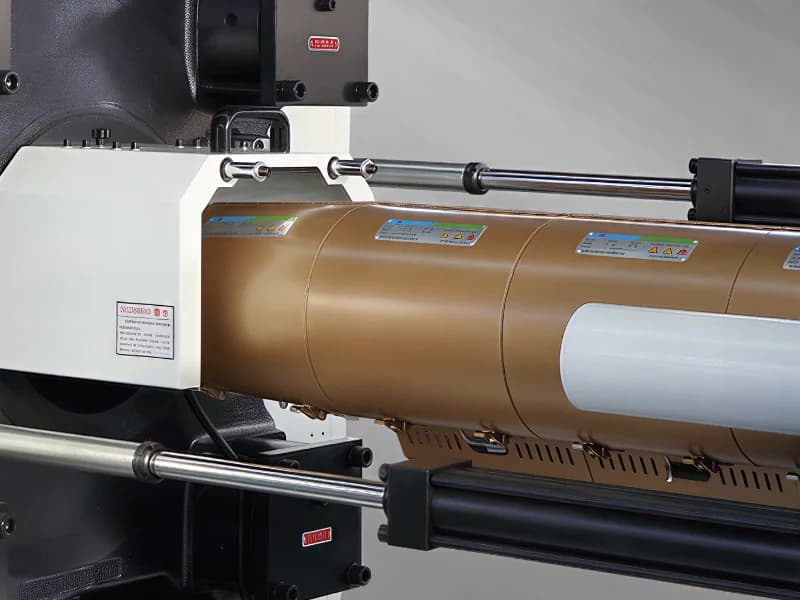
Servo-hydraulic drive system with energy recovery
Need Expert Advice?
Talk to our engineers about your specific production requirements. Free consultation.
Power System and Energy Consumption
Both machines share the same power configuration, reflecting their similar operational demands. The hydraulic system operates at 17.5 MPa with dual pump motors of 37+37 kW total power. This dual-pump configuration enables charging-on-fly parallel operation, where one pump drives screw rotation while the other operates the clamp mechanism. The heater power is 22.5 kW across 6 temperature control zones for barrel heating. Oil tank capacity is 380 liters on both models. The servo-hydraulic drive system provides energy savings of 25-35% compared to standard hydraulic machines, with specific energy consumption of approximately 1.0-1.2 kWh per kilogram of PP processed. At a typical production rate for 4-cavity cup lids weighing 5g each at 4.5-second cycle, total PP throughput is approximately 16 kg per hour, consuming 16-19 kW of average power. Annual energy cost at 0.10 USD/kWh running 24/7 at 85% OEE is approximately 12,000-14,000 USD for either machine. The energy recovery system captures braking energy during deceleration of clamp and injection movements, feeding it back into the hydraulic circuit. This feature is standard on all SPV5 models and contributes approximately 5-8% additional energy savings beyond the servo-hydraulic efficiency gains.
Mold Compatibility and Changeover Flexibility
The mold thickness range defines the molds each machine can accept. The HMD 270M8-SPV accepts molds from 220-600 mm thickness with maximum daylight of 1,160 mm and 560 mm mold opening stroke. The HMD 280M8-SPV accepts 230-620 mm mold thickness with approximately 1,180 mm daylight and 570 mm stroke. For typical thin-wall packaging molds in the 350-500 mm thickness range, both machines handle the full range of applications without limitation. The maximum daylight of 1,160-1,180 mm provides sufficient clearance for SWITEK robot entry on parts up to 80 mm deep. Both machines feature the INOVA controller with 500-parameter-set storage, enabling rapid changeover between different molds. The quick mold change process takes 2-4 hours on either machine, with parameter recall from the controller eliminating manual setup. For facilities planning to run multiple mold configurations, the slightly larger platen of the 280 offers marginal additional flexibility for future mold designs. However, if all planned molds fit within the 270 specifications, the cost savings of the smaller model may be the deciding factor.
Key Specs
- •The HMD 270M8-SPV accepts molds from 220-600 mm thickness with maximum daylight of 1,160 mm and 560 mm mold opening stroke.
- •The HMD 280M8-SPV accepts 230-620 mm mold thickness with approximately 1,180 mm daylight and 570 mm stroke.
- •For typical thin-wall packaging molds in the 350-500 mm thickness range, both machines handle the full range of applications without limitation.
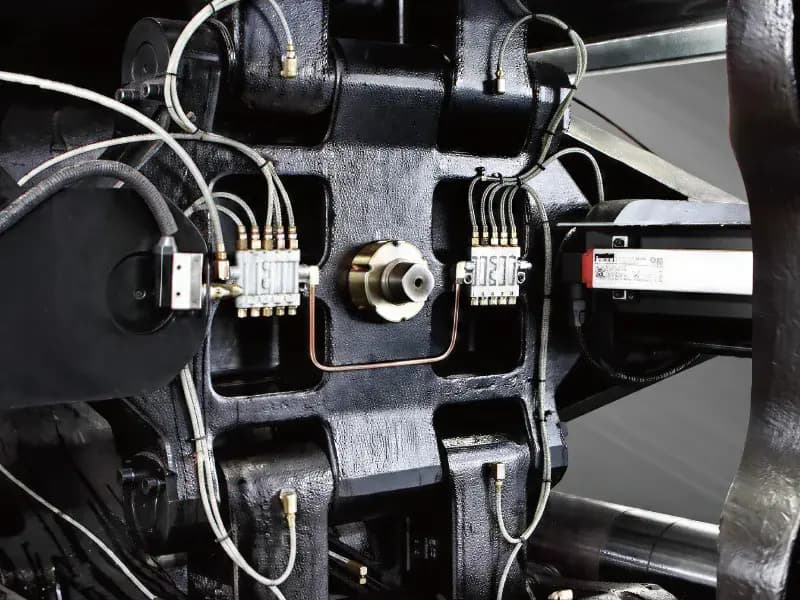
Toggle clamping unit — high rigidity for thin-wall molding
Investment Decision: Which Model to Choose
The decision between HMD 270M8-SPV and HMD 280M8-SPV comes down to specific application requirements and growth planning. Choose the HMD 270M8-SPV when your product range is defined and all mold designs fit within 580 x 570 mm tie bar distance, when maximum clamping force requirements stay below 2,500 kN with safe margins, when minimizing initial capital investment is a priority for new production startups, and when the target products are cup lids, small sauce cups, or containers under 250 ml with 4-cavity molds. Choose the HMD 280M8-SPV when you anticipate developing new mold designs that may push against the 270 platen limits, when your product range includes items with projected areas approaching the 270 clamping force ceiling, when the slightly larger tie bar distance opens up 8-cavity mold layouts for your specific products, and when the modest cost difference between models is justified by the operational flexibility gained. Both machines deliver identical injection performance at 368 mm/s and 177 MPa, identical INOVA controller functionality, identical energy efficiency from the 37+37 kW servo-hydraulic system, and the same HWAMDA build quality and after-sales support. The price difference between these adjacent models is typically 3-5% of the machine price.
Frequently Asked Questions
The injection performance is identical: both deliver 368 mm/s injection speed, 177 MPa pressure, and 482-541g shot capacity. The differences are in the clamping side: the 280 offers 100 kN additional clamping force (2,800 vs 2,700 kN), approximately 20 mm wider platen dimensions, and 20 mm wider tie bar spacing. These differences matter only when mold designs push against the 270 specifications. For most small-format applications, the machines produce identical results.
Related Guides
Ready to Start Your Project?
Get a free consultation and quotation for your thin-wall packaging production line.
Join 500+ manufacturers in 60+ countries who trust HWAMDA.
Get Free Quote