

T0 to T2 Trial Process
The mold trial process follows an industry-standard three-stage protocol that systematically identifies and resolves issues. The T0 trial is the first test of the completed mold, focusing on basic functionality: the mold opens and closes properly, all cavities fill, ejection works correctly, and the cooling system operates without leaks. T0 samples are typically evaluated only for completeness of fill and basic dimensional conformity, with surface quality and cycle time optimization addressed later. The T1 trial occurs after T0 corrections, which commonly include adjustments to gate sizing, venting modifications, cooling circuit optimization, and ejection system refinements. T1 focuses on achieving target dimensions, acceptable surface quality, and preliminary cycle time evaluation. For HWAMDA thin-wall molds, T1 typically targets 80-90% of the final production speed. The T2 trial validates production-ready performance, confirming that the mold achieves target cycle times, all cavities produce parts within dimensional tolerances, and the mold runs continuously for a minimum of 4-8 hours without interruption.
Key Specs
- •For HWAMDA thin-wall molds, T1 typically targets 80-90% of the final production speed.
- •The T2 trial validates production-ready performance, confirming that the mold achieves target cycle times, all cavities produce parts within dimensional tolerances, and the mold runs continuously for a minimum of 4-8 hours without interruption.

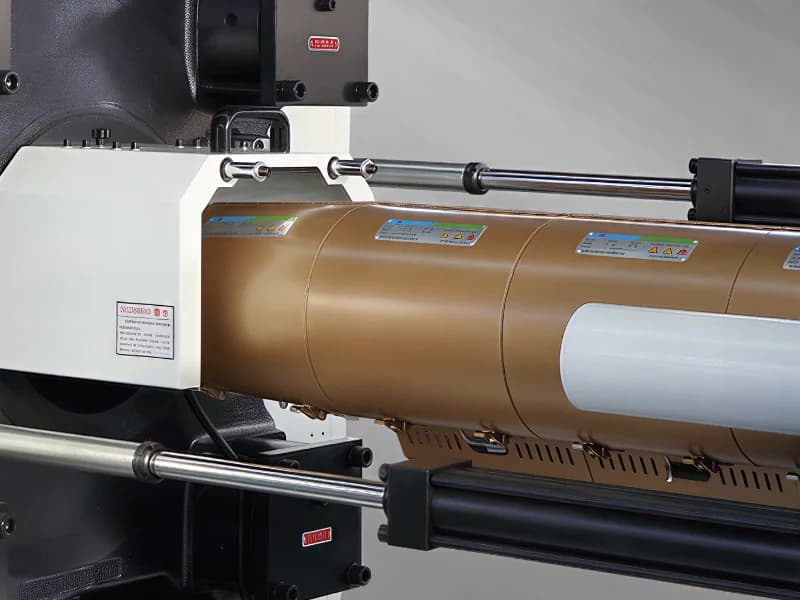
High-speed injection unit with linear guides
Sample Evaluation Criteria
Sample evaluation during mold trials follows a structured assessment covering multiple quality dimensions. Each trial stage produces sample sets from all cavities, with samples clearly identified by cavity number using the numbering system engraved in the mold. A standard evaluation set includes 5-10 consecutive shots per cavity, providing statistical data on cavity-to-cavity consistency and shot-to-shot repeatability. For thin-wall food packaging, the evaluation criteria include wall thickness uniformity, part weight consistency, dimensional accuracy against the product drawing, surface finish quality, gate vestige condition, and stacking performance. HWAMDA's quality team measures each parameter against predefined acceptance limits specified in the customer's purchase order or the applicable product drawing. Critical dimensions receive tighter tolerances, typically plus or minus 0.05 mm for wall thickness and plus or minus 0.1 mm for diameter and height. Samples from T1 and T2 trials are photographed, measured, and documented in a comprehensive trial report that accompanies the mold shipment.
Dimensional and Weight Testing
Dimensional testing verifies that molded parts conform to the product drawing specifications across all critical dimensions. For thin-wall food containers, the key measurements include overall height, top diameter, bottom diameter, wall thickness at multiple points (typically gate area, mid-wall, and far-gate regions), rim flatness, and stacking ledge dimensions. HWAMDA's quality lab uses calibrated digital calipers, micrometers, and coordinate measuring machines (CMM) for precise dimensional verification across all cavity samples. Wall thickness measurements use ultrasonic thickness gauges providing non-destructive readings at multiple locations around the circumference and along the container height, creating a comprehensive thickness profile. Weight testing is equally critical for thin-wall packaging, as it directly reflects filling completeness and process consistency. Each cavity's average weight and standard deviation are calculated from the sample set of 5-10 consecutive shots. For yogurt cups, the target weight tolerance is typically plus or minus 0.3 grams. The cavity-to-cavity weight spread should not exceed 1-2% of the target weight for a properly balanced mold.
Key Specs
- •The cavity-to-cavity weight spread should not exceed 1-2% of the target weight for a properly balanced mold.
Servo-hydraulic drive system with energy recovery
Need Expert Advice?
Talk to our engineers about your specific production requirements. Free consultation.
Visual Quality Standards
Visual quality evaluation assesses surface appearance against reference standards or approved limit samples. For food packaging, key visual criteria include surface gloss uniformity, absence of flow lines and weld lines in visible areas, gate vestige quality, and freedom from cosmetic defects such as scratches, burn marks, or contamination from degraded material. HWAMDA evaluates samples under standardized lighting conditions, examining both interior and exterior surfaces of each container against the approved reference standard. Gate vestige quality receives particular attention in thin-wall packaging because consumers directly handle these containers during daily use. Valve gate systems, standard on HWAMDA thin-wall molds, produce flush gate vestiges with no protrusion above the container surface. The gate mark diameter, typically 2-3 mm for thin-wall applications, should show no stringing, drooling, or discoloration. For IML containers, additional visual criteria apply: label position accuracy within plus or minus 0.5 mm, label adhesion with no peeling or bubbling, and consistent label appearance across all cavities.
Production Rate Validation
Production rate validation during the T2 trial confirms that the mold achieves its specified output capacity in sustained continuous operation. This test requires running the complete production setup, including the injection molding machine, mold temperature controller, robot take-out system, and downstream stacking equipment, at the target cycle time for a continuous period of 4-8 hours minimum. For HWAMDA thin-wall molds, the target cycle times are specific to each application: 3.5-4.5 seconds for yogurt cups in 8/12/16-cavity configurations, 5-7 seconds for food containers in 4/6/8-cavity molds, 3-4 seconds for sauce cups in 16/24/32-cavity molds, and 4-6 seconds for tableware in 16/24/32/48-cavity molds. During the production rate validation run, key metrics tracked include actual cycle time versus target, machine utilization percentage, reject rate categorized by defect type, and any unplanned stoppages with root cause analysis. The acceptable reject rate during T2 validation is typically below 1.5% for standard thin-wall packaging and below 2% for IML applications.
Key Specs
- •This test requires running the complete production setup, including the injection molding machine, mold temperature controller, robot take-out system, and downstream stacking equipment, at the target cycle time for a continuous period of 4-8 hours minimum.
- •For HWAMDA thin-wall molds, the target cycle times are specific to each application: 3.5-4.5 seconds for yogurt cups in 8/12/16-cavity configurations, 5-7 seconds for food containers in 4/6/8-cavity molds, 3-4 seconds for sauce cups in 16/24/32-cavity molds, and 4-6 seconds for tableware in 16/24/32/48-cavity molds.
- •The acceptable reject rate during T2 validation is typically below 1.5% for standard thin-wall packaging and below 2% for IML applications.
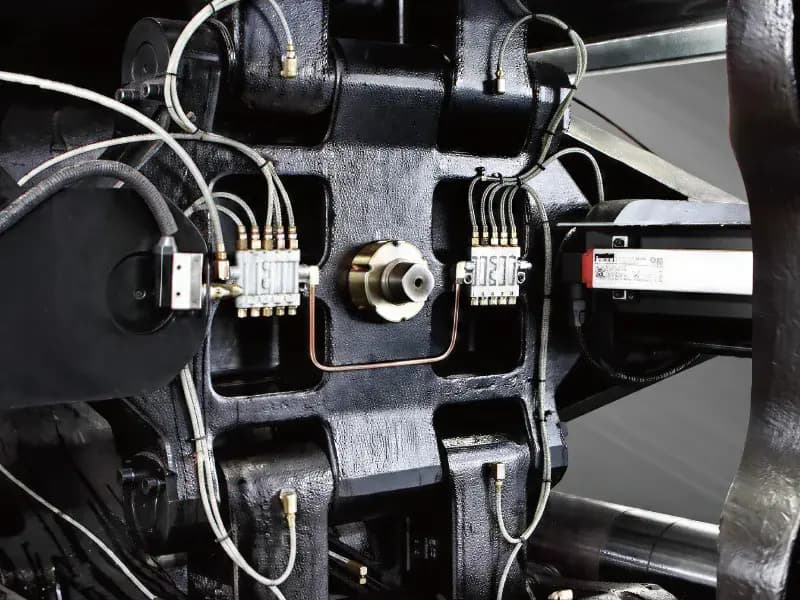
Toggle clamping unit — high rigidity for thin-wall molding
Acceptance Protocol and Documentation
The formal acceptance protocol defines the criteria and process by which the customer approves the mold for shipment. HWAMDA's standard acceptance package includes dimensional inspection reports for all cavities, weight analysis with statistical summaries, photographic documentation of samples from multiple angles, production rate validation data including cycle time logs, and a video recording of the mold running at production speed. All measurement data is compiled into a structured trial report with clear pass or fail designations against each specification. Customer acceptance can be conducted in person at HWAMDA's facility in China or remotely through video conference with real-time sample inspection. For remote acceptances, HWAMDA ships sample sets to the customer for independent verification while providing all digital documentation. Upon acceptance, the mold undergoes final preservation treatment: all surfaces are coated with anti-corrosion agent, cooling circuits are purged and sealed, and the mold is packed in a moisture-barrier wooden crate suitable for ocean freight.
Frequently Asked Questions
HWAMDA conducts three trial stages: T0, T1, and T2. T0 verifies basic mold functionality including cavity filling, ejection, and cooling system operation. T1 optimizes dimensions, surface quality, and begins cycle time tuning after T0 corrections. T2 validates full production-ready performance over 4-8 hours of continuous operation at target cycle times with reject rates below 1.5%. The entire process takes 4-8 weeks depending on mold complexity. Customers can attend trials in person at HWAMDA's facility in China or participate remotely via video conference with shipped sample sets.
Related Guides
Ready to Start Your Project?
Get a free consultation and quotation for your thin-wall packaging production line.
Join 500+ manufacturers in 60+ countries who trust HWAMDA.
Get Free Quote