

Runner System Design for Naturally Balanced Flow
Naturally balanced (geometrically symmetrical) runner layouts are the foundation of multi-cavity mold flow balancing. In an H-pattern runner system, each cavity is positioned at an equal flow distance from the sprue, with identical runner cross-sections on all branches. For an 8-cavity yogurt cup mold running on the HWAMDA HMD 380M8-SPV, the primary runner diameter is typically 8-10mm, secondary runners 6-8mm, and tertiary runners (if present) 5-6mm. Runner length from sprue to each gate should be identical within plus or minus 0.5mm. The total runner volume for an 8-cavity system is approximately 12-18 cm3, representing 15-25 percent of the total shot volume. Despite geometric symmetry, shear-induced imbalances still occur: the melt flowing along the outer wall of a runner turn experiences different shear history than melt at the center, causing viscosity variations of 3-8 percent between inner and outer cavities. This phenomenon, documented as the Beaumont Effect, is particularly pronounced at the high shear rates (10,000-50,000 s-1) typical of thin-wall filling on SPV5 machines.
Key Specs
- •For an 8-cavity yogurt cup mold running on the HWAMDA HMD 380M8-SPV, the primary runner diameter is typically 8-10mm, secondary runners 6-8mm, and tertiary runners (if present) 5-6mm.
- •Runner length from sprue to each gate should be identical within plus or minus 0.5mm.
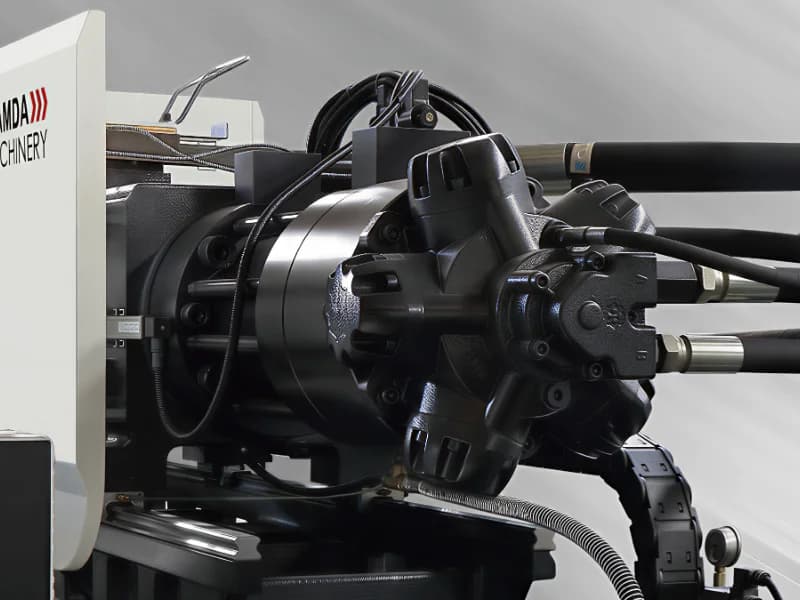
High-speed injection unit with linear guides
Melt Rotation Technology for Shear-Induced Imbalance Correction
Melt rotation devices (MeltFlipper or equivalent) installed at runner branch points physically reorganize the melt cross-section to counteract shear-induced imbalances. The technology works by splitting the runner flow, rotating each half by 90 degrees, and recombining -- effectively placing the high-shear melt from the runner wall into the center of the downstream branch and vice versa. For an 8-cavity yogurt cup mold, melt rotation devices at each of the 4 secondary runner branch points reduce cavity-to-cavity weight variation from 4-6 percent to 1-2 percent. The cost is approximately USD 2,000-4,000 per mold for the additional mold machining and inserts. On HWAMDA SPV5 machines where injection speeds reach 368-422 mm/s, the shear-induced imbalance effect is more pronounced than on slower machines, making melt rotation technology particularly valuable. The alternative approach of valve-gate sequential opening can also achieve balanced filling but at higher cost (USD 8,000-15,000 for valve gate actuator upgrades on an existing mold) and added maintenance complexity.
Valve Gate Sequential Control for Fill Balancing
Valve gate hot runner systems (YUDO SUMR, Synventive SVG+) enable individual cavity flow control through independent valve pin actuation. On HWAMDA SPV5 machines, the INOVA controller interfaces with the hot runner controller to coordinate valve opening timing with the injection speed profile. For a 16-cavity sauce cup mold producing 3g parts at 0.4mm wall, sequential valve opening compensates for the inherent flow imbalance caused by longer flow paths to outer cavities. The opening sequence typically stages inner cavities first, then outer cavities at 0.02-0.05s delay, allowing the pressure to build before opening the longer flow paths. Each valve pin actuator (pneumatic at 5-6 bar or hydraulic at 80-120 bar) responds in 20-50 milliseconds, providing sufficient resolution for cycle times of 3.0-4.5s. The key to effective sequential control is cavity pressure monitoring: Kistler 6157C sensors (or equivalent) installed behind ejector pins in each cavity provide real-time pressure data that the hot runner controller uses to adjust individual valve timing. Cavity-to-cavity weight uniformity below 1.5 percent is achievable with properly tuned sequential valve gate systems on 16-cavity molds.
Key Specs
- •For a 16-cavity sauce cup mold producing 3g parts at 0.4mm wall, sequential valve opening compensates for the inherent flow imbalance caused by longer flow paths to outer cavities.
- •Each valve pin actuator (pneumatic at 5-6 bar or hydraulic at 80-120 bar) responds in 20-50 milliseconds, providing sufficient resolution for cycle times of 3.0-4.5s.
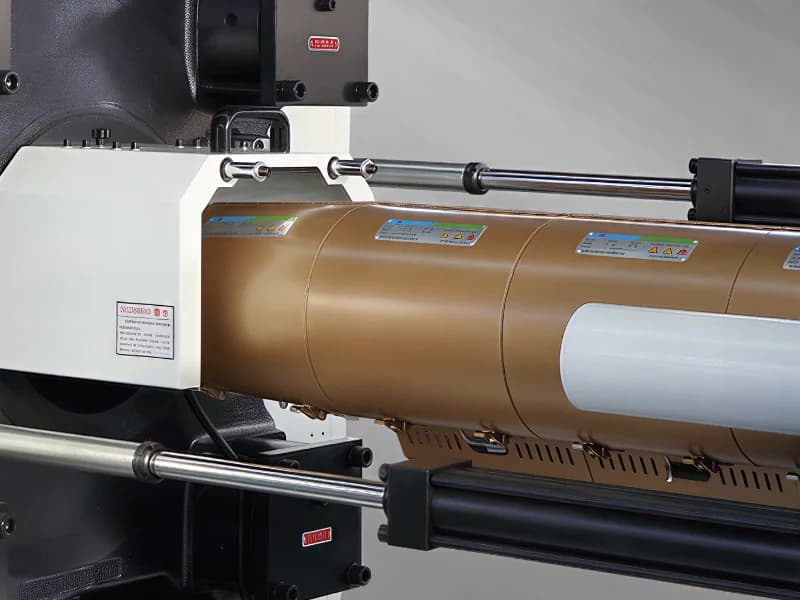
Servo-hydraulic drive system with energy recovery
Need Expert Advice?
Talk to our engineers about your specific production requirements. Free consultation.
Short Shot Analysis for Flow Balance Verification
The short shot study is the definitive diagnostic method for characterizing flow balance in multi-cavity molds. The procedure on HWAMDA SPV5 machines: set injection speed to the production target (e.g., 360 mm/s), then progressively reduce shot volume in 5 percent increments from 100 percent fill, weighing all individual cavity parts at each level. At 50 percent, 60 percent, 70 percent, 80 percent, and 90 percent fill levels, measure the fill percentage in each cavity. A well-balanced mold shows all cavities at the same fill percentage (within plus or minus 3 percent) at every level. Imbalanced molds show diverging fill percentages as the shot is reduced -- outer cavities may show 45 percent fill when inner cavities are at 55 percent. Document results with photographs at each fill level and plot the fill curves for all cavities on a single graph. The INOVA controller's shot-by-shot data logging captures injection pressure curves that overlay to show the filling signature -- any cavity filling significantly later produces a visible secondary pressure peak. For new mold qualification on HWAMDA SPV5 machines, perform the short shot study with 3 consecutive shots at each level to confirm repeatability.
Runner Dimension Adjustments for Fine-Tuning Balance
When natural balance and melt rotation technology are insufficient, targeted runner dimension modifications correct residual imbalances. The most common adjustment is varying the runner diameter at specific branch points: enlarging the runner to a lagging cavity by 0.5-1.0mm increases flow by approximately 10-20 percent (flow rate scales with the fourth power of diameter for laminar flow, though thin-wall filling is typically transitional to turbulent). On HWAMDA SPV5 molds, runner modifications should be performed incrementally -- increase by 0.3mm at a time, run a short shot study, and evaluate before further changes. An alternative approach is gate size modification: increasing the gate diameter from 1.2mm to 1.4mm on a lagging cavity increases flow by approximately 35 percent. However, gate changes also affect gate vestige appearance and freeze-off time, requiring requalification of pack pressure and hold time. For hot runner systems, individual nozzle temperature adjustment provides non-invasive flow balancing: increasing a nozzle zone by 5-10 degrees C reduces melt viscosity by approximately 8-15 percent, directing more flow to that cavity. This approach is limited to corrections below 5 percent imbalance to avoid temperature-related quality issues.
Key Specs
- •The most common adjustment is varying the runner diameter at specific branch points: enlarging the runner to a lagging cavity by 0.5-1.0mm increases flow by approximately 10-20 percent (flow rate scales with the fourth power of diameter for laminar flow, though thin-wall filling is typically transitional to turbulent).
- •On HWAMDA SPV5 molds, runner modifications should be performed incrementally -- increase by 0.3mm at a time, run a short shot study, and evaluate before further changes.
- •An alternative approach is gate size modification: increasing the gate diameter from 1.2mm to 1.4mm on a lagging cavity increases flow by approximately 35 percent.
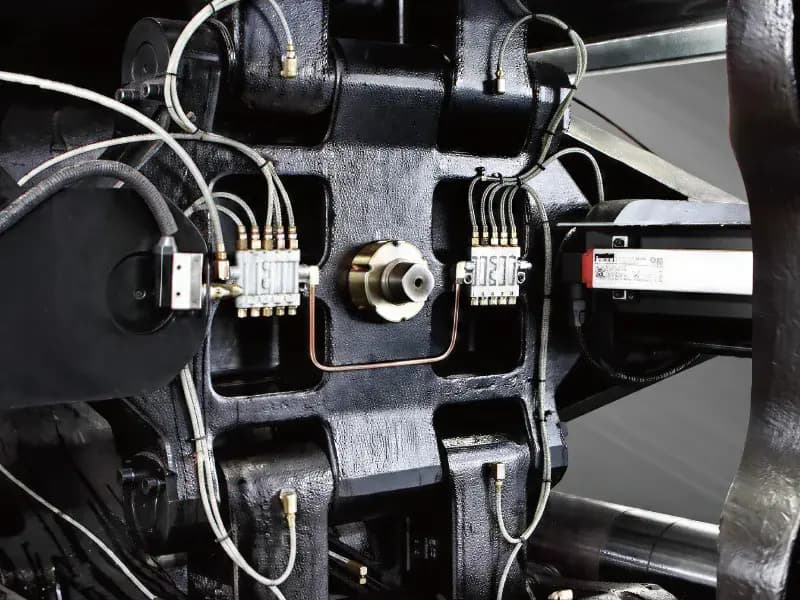
Toggle clamping unit — high rigidity for thin-wall molding
Monitoring and Maintaining Balance During Production
Achieving flow balance during qualification is only the first step -- maintaining it through production requires ongoing monitoring. On HWAMDA SPV5 lines, the INOVA controller logs shot weight (when paired with a post-mold weighing station integrated with the SWITEK robot), cavity pressure traces, and fill time data. Set statistical process control (SPC) limits on individual cavity weights at plus or minus 3 sigma from the qualified target. Individual cavity weight drift exceeding 0.2g on a 6g yogurt cup indicates developing imbalance from thermal changes, material lot variation, or progressive mold wear. Weekly verification by weighing individual cavity parts (minimum 20 shots per cavity) catches gradual drift before it generates customer complaints. Material lot changes are a common source of balance disruption: a new PP lot with MFI 2 points higher than the previous lot can shift flow patterns enough to move outer cavities from 0.3 percent light to 1.5 percent heavy. The INOVA controller's material lot tracking function (linked to barcode scanning of resin bags) flags lot changes and triggers automatic cavity weight verification alerts.
Frequently Asked Questions
For thin-wall food packaging on HWAMDA SPV5 machines, target cavity-to-cavity weight variation below plus or minus 2 percent. For a 6g yogurt cup, this means individual cavity weights between 5.88g and 6.12g. Premium applications (IML containers, export-quality) may require plus or minus 1.5 percent. Measure by weighing 20 consecutive shots per cavity and calculating the range and standard deviation. Variation above 3 percent requires mold correction.
Related Guides
Ready to Start Your Project?
Get a free consultation and quotation for your thin-wall packaging production line.
Join 500+ manufacturers in 60+ countries who trust HWAMDA.
Get Free Quote