

Understanding Fill Speed Requirements for Thin-Wall Cavities
The fundamental challenge in thin-wall molding is that the melt front must reach all extremities of the cavity before the flow channel freezes. For PP at 230-250 degrees C melt temperature entering a 0.5mm-thick cavity at 25-35 degrees C mold temperature, the available fill window is approximately 0.15-0.25 seconds before the frozen layer reduces the effective flow channel to a point where filling is impossible. This dictates injection speeds: for a yogurt cup with 100mm flow length and 0.5mm wall (flow length-to-thickness ratio of 200:1), the minimum linear screw speed is approximately 300 mm/s. The HWAMDA HMD 380M8-SPV delivers 368 mm/s with a 55mm screw (Screw A), producing volumetric flow rates of approximately 875 cm3/s. For thinner walls of 0.35mm (sauce cups), the HWAMDA HMD 330M8-SPV at 385 mm/s injection speed with its 52mm screw is required. Fill time monitoring on the INOVA controller should show variation below plus or minus 0.02s shot to shot -- larger variation indicates process instability from check ring wear, material viscosity changes, or hydraulic system issues.
Key Specs
- •For PP at 230-250 degrees C melt temperature entering a 0.5mm-thick cavity at 25-35 degrees C mold temperature, the available fill window is approximately 0.15-0.25 seconds before the frozen layer reduces the effective flow channel to a point where filling is impossible.
- •This dictates injection speeds: for a yogurt cup with 100mm flow length and 0.5mm wall (flow length-to-thickness ratio of 200:1), the minimum linear screw speed is approximately 300 mm/s.
- •The HWAMDA HMD 380M8-SPV delivers 368 mm/s with a 55mm screw (Screw A), producing volumetric flow rates of approximately 875 cm3/s.
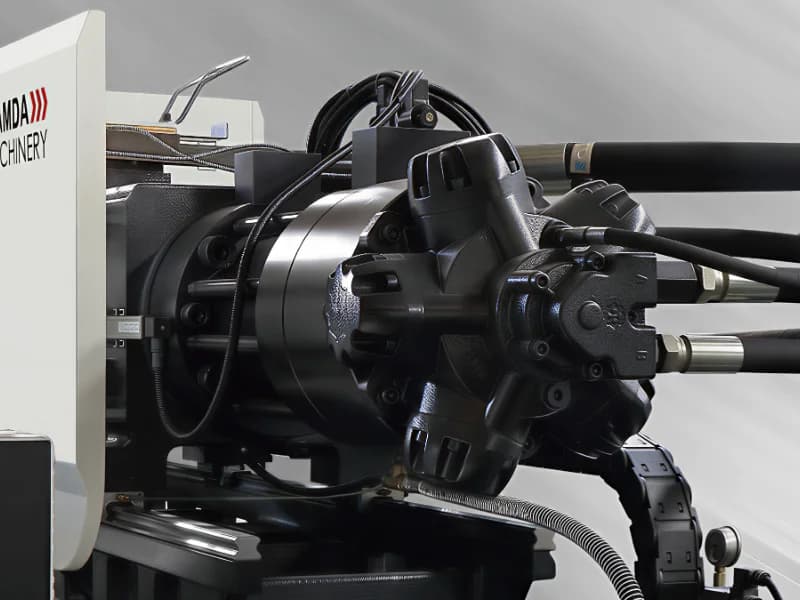
High-speed injection unit with linear guides
Multi-Stage Injection Speed Profiling
Single-speed injection causes defects in thin-wall parts: too fast at the gate creates jetting and gate blush, while constant speed across variable cross-sections produces inconsistent packing. HWAMDA SPV5 machines support 10-stage injection speed profiling via the INOVA controller, enabling precise flow control through different part geometries. A typical 4-stage profile for a yogurt cup on the HMD 380M8-SPV: Stage 1 (0-15 percent fill) at 200 mm/s -- slow initial fill through the gate to prevent jetting. Stage 2 (15-85 percent fill) at 360-380 mm/s -- maximum speed to fill the thin wall section before freeze-off. Stage 3 (85-95 percent fill) at 250-280 mm/s -- reduced speed to prevent air entrapment at the flow front end. Stage 4 (95-100 percent fill) at 150-180 mm/s -- deceleration to prevent overpacking and flash at the parting line. Transfer from fill to pack occurs at 95-98 percent cavity fill, triggered by screw position. The position-based transfer point should be determined during process qualification and typically sits at 8-12mm cushion remaining on the SPV5 injection unit.
Injection Pressure Settings and Cavity Pressure Analysis
Injection pressure must be set high enough to maintain the programmed speed profile throughout filling. On HWAMDA SPV5 machines, the maximum available injection pressure ranges from 158 MPa (HMD 270M8-SPV, Screw B) to 213 MPa (HMD 600M8-SPV). For PP thin-wall molding at 0.5mm wall thickness, actual peak cavity pressure during filling reaches 80-120 MPa, with the machine hydraulic pressure typically set at 130-160 MPa to provide a 15-25 percent overhead margin. If the machine reaches the pressure limit before completing the fill, injection speed drops and short shots result. Pack pressure (holding pressure) follows the fill phase and compensates for volumetric shrinkage as the PP crystallizes -- typically set at 50-70 percent of the peak fill pressure, held for 0.5-1.5 seconds. On multi-cavity molds, cavity pressure sensors (Kistler 6157C or equivalent, mounted behind ejector pins) provide direct measurement of the fill balance across cavities. Pressure variation between cavities exceeding 10 percent indicates runner imbalance requiring mold correction. The INOVA controller supports cavity-pressure-based transfer, switching from fill to pack when the pressure signal reaches a preset threshold.
Key Specs
- •On HWAMDA SPV5 machines, the maximum available injection pressure ranges from 158 MPa (HMD 270M8-SPV, Screw B) to 213 MPa (HMD 600M8-SPV).
- •For PP thin-wall molding at 0.5mm wall thickness, actual peak cavity pressure during filling reaches 80-120 MPa, with the machine hydraulic pressure typically set at 130-160 MPa to provide a 15-25 percent overhead margin.
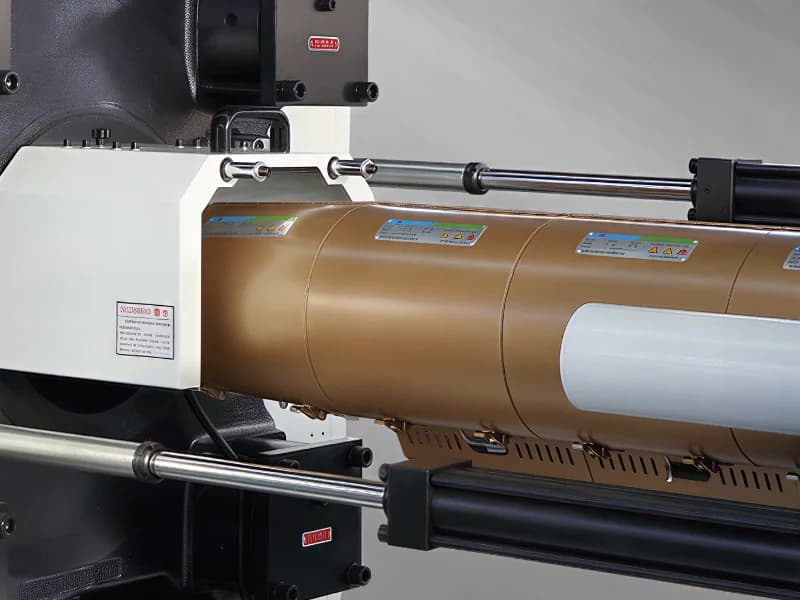
Servo-hydraulic drive system with energy recovery
Need Expert Advice?
Talk to our engineers about your specific production requirements. Free consultation.
Relationship Between Speed, Pressure, and Part Quality
Injection speed and pressure interact to determine three critical quality attributes: fill completeness, residual stress, and surface finish. Increasing injection speed from 250 to 380 mm/s on a 0.5mm-wall yogurt cup reduces peak injection pressure by approximately 15-20 percent because the melt arrives at the flow front before significant frozen layer buildup restricts the channel. However, excessive speed above 420 mm/s causes shear heating at the gate -- melt temperature can rise 15-25 degrees C above the barrel setpoint, degrading PP molecular weight and producing off-odors that fail food packaging sensory tests. Surface finish is directly affected by injection speed: too slow produces flow hesitation lines visible on high-gloss containers, while too fast causes jetting marks near the gate. The optimal speed range for each application is determined during mold qualification by running a series of short shots at progressively increasing speed and measuring the fill pattern at each level. On HWAMDA SPV5 machines, the INOVA controller's shot weight monitoring (resolution 0.1g on scales integrated with SWITEK robots) provides immediate feedback on process stability as speed and pressure parameters are adjusted.
Process Window Determination and Scientific Molding Approach
Scientific molding methodology applied to HWAMDA SPV5 thin-wall production establishes a robust process window through systematic experimentation. The procedure begins with a viscosity curve: inject at constant speed (e.g., 300 mm/s) with incrementally increasing pressure limits, plotting pressure versus injection time to identify the viscosity inflection point. Next, perform a gate seal study: at the qualified fill speed, vary holding time from 0.2s to 3.0s in 0.2s increments while weighing each shot -- the point where weight stabilizes indicates gate seal time (typically 0.5-1.2s for thin-wall PP). Then conduct a pressure-drop study: measure pressure at the nozzle, runner, and cavity using the INOVA controller's pressure trace function to identify restrictions. Document the process window boundaries: minimum speed for complete fill (typically 280-320 mm/s for 0.5mm wall), maximum speed before burn marks or flash (typically 400-420 mm/s), minimum pack pressure for full weight (60-80 MPa), and maximum pack pressure before flash (100-130 MPa). The qualified process center-point should sit at 70 percent of the window width to accommodate normal material and environmental variation.
Key Specs
- •The procedure begins with a viscosity curve: inject at constant speed (e.g., 300 mm/s) with incrementally increasing pressure limits, plotting pressure versus injection time to identify the viscosity inflection point.
- •Document the process window boundaries: minimum speed for complete fill (typically 280-320 mm/s for 0.5mm wall), maximum speed before burn marks or flash (typically 400-420 mm/s), minimum pack pressure for full weight (60-80 MPa), and maximum pack pressure before flash (100-130 MPa).
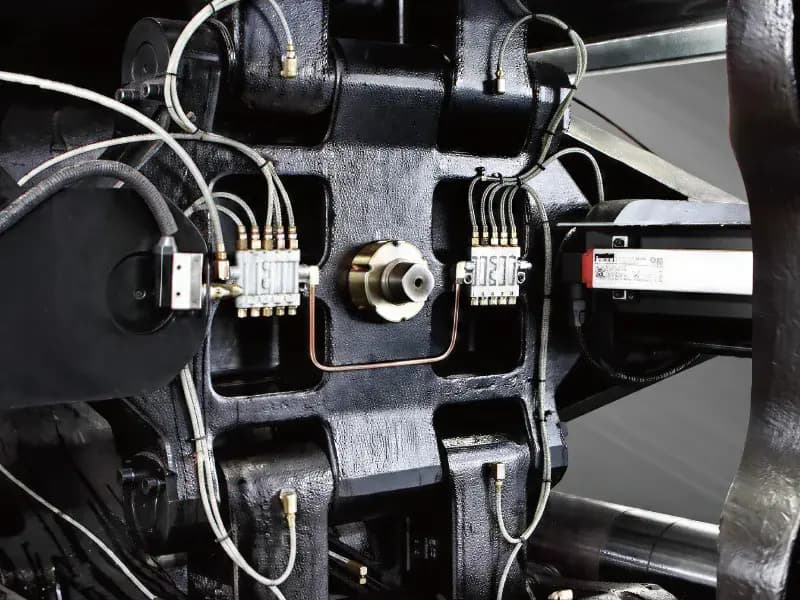
Toggle clamping unit — high rigidity for thin-wall molding
Troubleshooting Speed and Pressure Related Defects
Systematic defect diagnosis links specific visual defects to speed and pressure parameters. Short shots (incomplete fill) -- increase injection speed by 10-15 percent increments or verify speed is not pressure-limited (check if machine reaches peak pressure before fill completes). Flash at parting line -- reduce pack pressure by 5-10 percent or check clamp tonnage (recalculate: projected area in cm2 multiplied by peak cavity pressure in MPa should not exceed 80 percent of machine clamping force). Burn marks at flow front end -- reduce final-stage injection speed by 20-30 percent and verify venting (vent depth 0.02-0.03mm for PP, vent land length 3-5mm). Gate blush (whitening around gate) -- increase first-stage injection speed from 150 mm/s to 200 mm/s to establish a stable melt front before transitioning to full speed. Sink marks opposite ribs -- increase pack pressure by 5-10 MPa and extend hold time by 0.2-0.3s. Weld lines -- redirect or accelerate flow by adjusting speed profile to ensure the melt fronts meet at higher temperature. On HWAMDA SPV5 machines, the INOVA controller stores the pressure and speed curve for each shot, enabling overlay comparison of good versus defective shots.
Frequently Asked Questions
Minimum injection speed for 0.5mm wall PP containers is approximately 300 mm/s, with optimal speeds of 350-400 mm/s depending on flow length. The HWAMDA HMD 380M8-SPV delivers 368 mm/s (Screw A, 55mm) or up to 385 mm/s on the HMD 330M8-SPV. Fill time should be 0.15-0.25s for yogurt cups with 100mm flow length. Use multi-stage profiling with slower gate entry at 200 mm/s and peak speed in the thin-wall section.
Related Guides
Ready to Start Your Project?
Get a free consultation and quotation for your thin-wall packaging production line.
Join 500+ manufacturers in 60+ countries who trust HWAMDA.
Get Free Quote