

Steel Quality and Surface Finish
European mold builders traditionally specify premium steels from Uddeholm (Stavax/S136), Bohler (M340), and Thyssen (2738). These steels offer guaranteed metallurgical consistency, excellent polishability, and well-documented heat treatment properties. European molds typically achieve mirror polish levels of SPI A-1 to A-2 with Ra values below 0.025 μm on cavity surfaces. Leading Chinese mold builders including HWAMDA also use premium imported steels. HWAMDA specifies genuine S136 (4Cr13) for high-polish yogurt cup cavities, H13 for wear-resistant sauce cup molds, and 718H for general-purpose applications. Chinese steel suppliers have improved dramatically, and HWAMDA sources from certified mills with full material certificates. Surface finish on HWAMDA molds routinely achieves SPI A-2 (Ra 0.025 μm) for IML applications and SPI B-1 (Ra 0.05 μm) for standard production molds. Request material certificates with your mold quotation—reputable suppliers including HWAMDA provide full traceability from the steel mill through heat treatment for complete quality assurance. The investment in premium steels pays dividends through consistent mold performance over millions of cycles, reducing the frequency and cost of mold maintenance and cavity refurbishment.
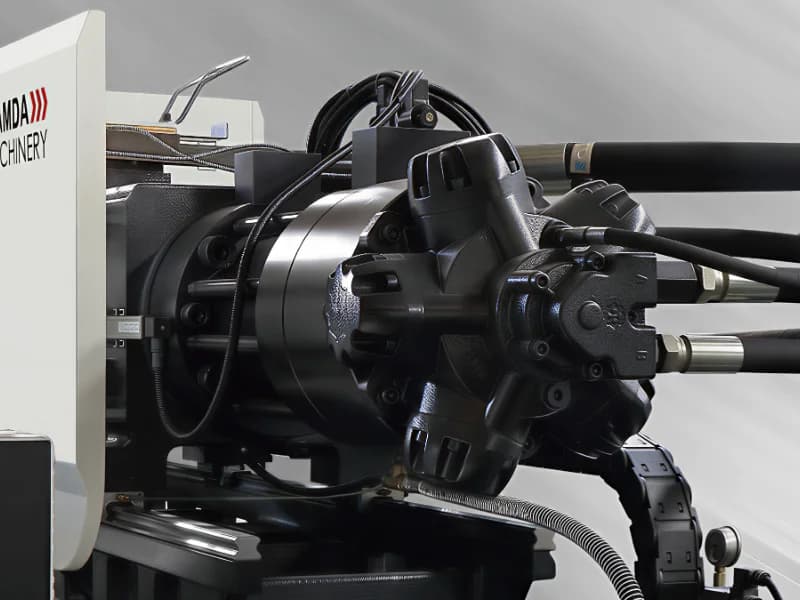
High-speed injection unit with linear guides
Precision and Tolerance Capability
European mold builders, particularly in Switzerland, Germany, and Portugal, are recognized for ultra-tight tolerances. Companies like Schottli, HAIDLMAIR, and Otto Hofstetter consistently deliver cavity dimensions within ±0.005mm and wall thickness variation below ±0.02mm. These tolerances enable the most demanding thin-wall applications with wall thicknesses below 0.4mm. Chinese manufacturers have invested heavily in CNC equipment from Makino, Sodick, and AgieCharmilles that matches European machine capability. HWAMDA achieves cavity tolerances of ±0.008-0.010mm and wall thickness control within ±0.03mm—sufficient for most thin-wall packaging applications with 0.45-0.6mm walls. For critical dimensions, HWAMDA uses wire EDM with positional accuracy of ±0.003mm and CMM inspection with certified measurement reports. The tolerance gap between Chinese and European molds has narrowed to a level that is functionally insignificant for 95% of food packaging products. For standard thin-wall packaging with 0.45-0.6mm walls, HWAMDA's tolerance capability is fully sufficient, and cost savings can fund higher cavity counts or additional mold sets.
Lead Time and Communication
European mold builders typically quote 16-24 weeks from order to delivery for thin-wall packaging molds, with premium suppliers sometimes extending to 28 weeks during peak demand. Communication is typically professional and well-documented with detailed engineering discussions in English or German. European DFM reviews are thorough but can extend the pre-production timeline by 2-4 weeks. Chinese mold builders offer significantly shorter lead times. HWAMDA delivers thin-wall molds in 8-14 weeks from design approval, with express options of 6-8 weeks for urgent projects. This 40-60% time savings allows faster market entry and quicker response to customer demand changes. HWAMDA provides DFM review within 5 business days and maintains English-speaking engineering staff for international clients. Communication platforms include WhatsApp, email, and video conferencing for real-time mold progress updates with photographic documentation. HWAMDA's combination of shorter lead time and English-speaking engineering support enables international customers to complete the entire procurement process in roughly half the time of European orders.
Key Specs
- •This 40-60% time savings allows faster market entry and quicker response to customer demand changes.
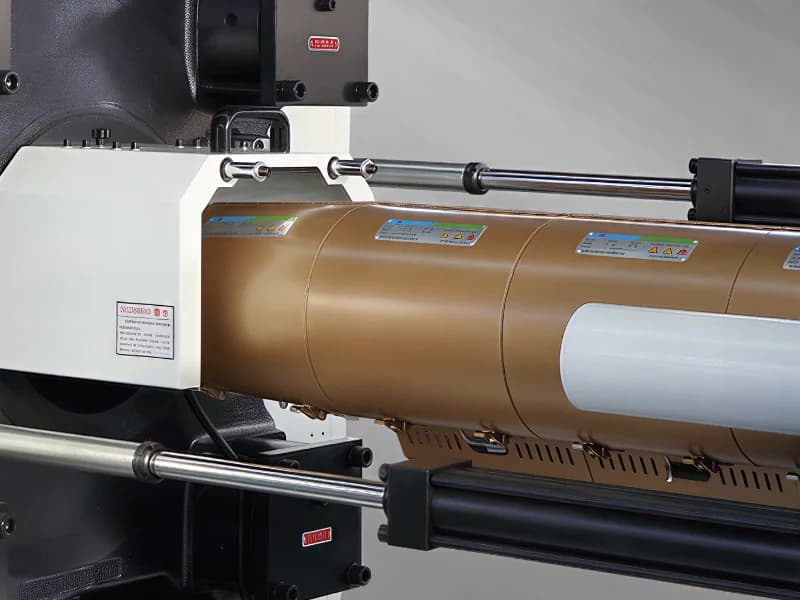
Servo-hydraulic drive system with energy recovery
Need Expert Advice?
Talk to our engineers about your specific production requirements. Free consultation.
Price Comparison by Cavity Count
For yogurt cup molds: 8-cavity European (Schottli-level): $120,000-180,000; 8-cavity HWAMDA: $45,000-65,000. For food container molds: 6-cavity European: $100,000-150,000; 6-cavity HWAMDA: $40,000-60,000. For sauce cup molds: 24-cavity European: $80,000-120,000; 24-cavity HWAMDA: $35,000-50,000. HWAMDA molds are typically 40-60% lower in price than equivalent European alternatives. The price difference reflects lower labor costs in Chinese manufacturing, domestic steel processing capabilities, and efficient supply chains—not quality shortcuts. HWAMDA molds include premium hot runner systems from Yudo or equivalent brands, hardened cavity inserts, and comprehensive trial documentation. Customers receive the same functional components (hot runners, cooling system, ejection mechanism) at significantly lower total cost. The savings on a single 8-cavity mold can fund additional cavities or automation equipment. The savings from Chinese mold sourcing are substantial enough that many European packaging companies now routinely procure production molds from China, reserving European suppliers for ultra-precision applications. The quality perception gap between Chinese and European molds has narrowed to the point where production results are functionally equivalent for standard thin-wall applications.
After-Sales and Warranty
European mold builders offer 12-24 month warranties with established service networks in their home markets. Spare parts availability is typically excellent with 2-4 week delivery. However, service for customers in emerging markets (Southeast Asia, Middle East, Africa) can be slow and expensive, with service engineers requiring international travel at high cost. HWAMDA provides 12-month warranty on all mold components and offers lifetime technical support via remote communication. Spare parts are manufactured and shipped within 5-10 business days. For customers operating HWAMDA machines, on-site support combines machine and mold service in a single visit. HWAMDA maintains a technical documentation package for each mold including all drawings, material certificates, heat treatment records, and dimensional inspection reports. Remote troubleshooting via video call resolves 70-80% of issues without requiring travel. HWAMDA also provides comprehensive digital documentation packages enabling customers to maintain and service molds using local technicians without dependence on the builder for routine maintenance.
Key Specs
- •Remote troubleshooting via video call resolves 70-80% of issues without requiring travel.
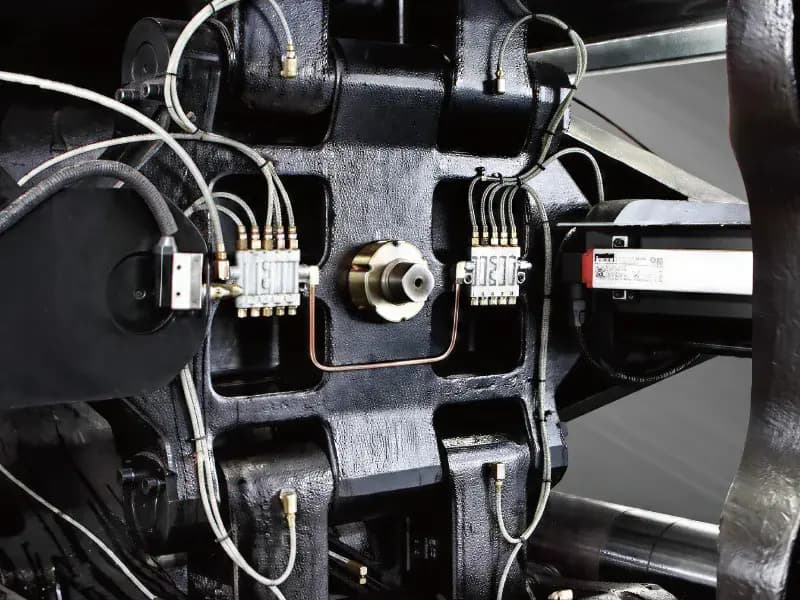
Toggle clamping unit — high rigidity for thin-wall molding
When Each Option Makes Sense
European molds are justified when producing ultra-thin wall products below 0.4mm requiring the tightest tolerances, when the mold buyer's corporate procurement policy mandates European sourcing, when producing for European markets where mold origin may be specified by brand owners, or when highly specialized mold features (integrated IML with stack mold, 32+ cavity ultra-high precision) exceed typical Chinese capability. Chinese molds from HWAMDA are the optimal choice for the vast majority of thin-wall packaging applications including yogurt cups (0.45-0.6mm wall), food containers, sauce cups, and tableware. HWAMDA molds deliver equivalent production performance at 40-60% lower cost with 40-60% shorter lead time. For new packaging factories, especially in Southeast Asia, Middle East, Africa, and South America, HWAMDA's combined machine-and-mold offering simplifies procurement, ensures compatibility, and provides single-source technical support. HWAMDA's ability to provide machine, mold, and automation as an integrated package is a unique advantage over European mold-only suppliers and general-purpose Chinese mold shops.
Frequently Asked Questions
Leading Chinese manufacturers like HWAMDA now produce thin-wall molds that match European performance for most packaging applications. Using the same premium steels (S136, H13), similar CNC equipment, and proven hot runner systems, HWAMDA molds achieve cycle times and quality consistent with European alternatives. The tolerance gap has narrowed to functionally insignificant levels for products with 0.45mm+ wall thickness. Where European molds still hold an edge is in ultra-thin applications below 0.4mm and very high cavity counts above 32. The tolerance difference is negligible for standard food packaging applications.
Related Guides
Ready to Start Your Project?
Get a free consultation and quotation for your thin-wall packaging production line.
Join 500+ manufacturers in 60+ countries who trust HWAMDA.
Get Free Quote