

Material Properties Side-by-Side Comparison
PP homopolymer and random copolymer share the same 0.90-0.91 g/cm3 density but diverge in critical performance properties. Homopolymer: tensile strength 30-40 MPa, flexural modulus 1,300-1,700 MPa, HDT at 0.45 MPa of 100-120°C, haze 15-30% at 1mm thickness, and Izod impact strength of 2-5 kJ/m2 at 23°C. Random copolymer: tensile strength 25-35 MPa, flexural modulus 800-1,200 MPa, HDT 80-100°C, haze 5-15% at 1mm thickness, and Izod impact strength of 5-10 kJ/m2 at 23°C. Both grades achieve MFI ranges of 30-100+ g/10min suitable for thin-wall injection molding on HWAMDA SPV5 machines. The critical difference for packaging converters is that random copolymer incorporates 1-7% ethylene comonomer into the PP chain, disrupting crystallinity and creating a more amorphous structure that transmits light better while absorbing impact energy. Homopolymer's higher crystallinity produces stiffer, more heat-resistant containers ideal for hot-fill applications above 85°C.
Key Specs
- •Homopolymer: tensile strength 30-40 MPa, flexural modulus 1,300-1,700 MPa, HDT at 0.45 MPa of 100-120°C, haze 15-30% at 1mm thickness, and Izod impact strength of 2-5 kJ/m2 at 23°C.
- •Random copolymer: tensile strength 25-35 MPa, flexural modulus 800-1,200 MPa, HDT 80-100°C, haze 5-15% at 1mm thickness, and Izod impact strength of 5-10 kJ/m2 at 23°C.
- •The critical difference for packaging converters is that random copolymer incorporates 1-7% ethylene comonomer into the PP chain, disrupting crystallinity and creating a more amorphous structure that transmits light better while absorbing impact energy.
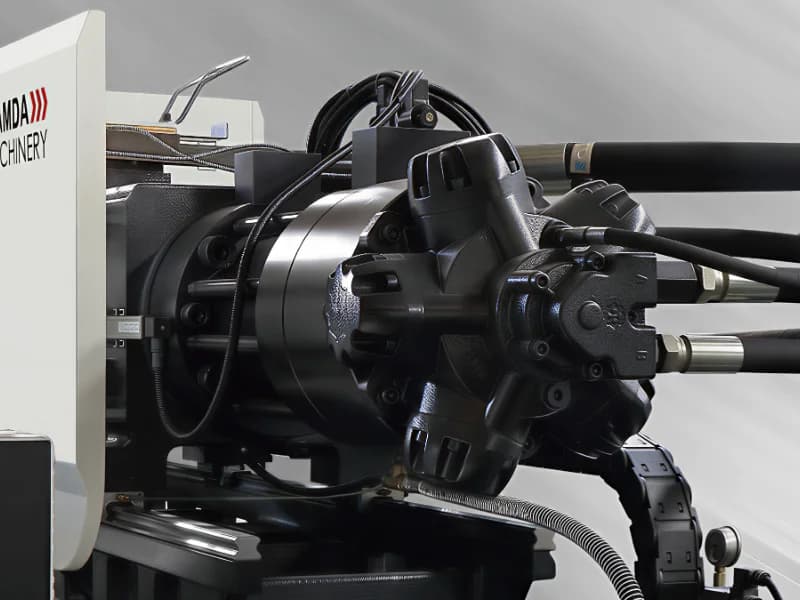
High-speed injection unit with linear guides
Processing Parameters on HWAMDA SPV5 Machines
Both PP types process well on HWAMDA SPV5 machines at injection speeds of 368-560 mm/s, but optimal parameters differ. Homopolymer processing: melt temperature 220-260°C (recommended 230-245°C for thin-wall), mold temperature 20-40°C, injection pressure 120-177 MPa, holding pressure 40-60% of injection pressure, back pressure 5-15 MPa, and screw speed 200-300 r/min. Random copolymer processing: melt temperature 210-250°C (recommended 220-235°C), mold temperature 15-35°C, injection pressure 110-165 MPa, holding pressure 35-55% of injection pressure, back pressure 5-12 MPa, and screw speed 200-300 r/min. Copolymer's lower melting point (135-150°C vs 160-170°C for homopolymer) allows 10-15°C lower melt temperatures, reducing cooling time by 5-10% and enabling slightly shorter cycle times. On an HMD 400M8-SPV producing 8-cavity yogurt cups, this translates to a 0.2-0.3 second cycle time reduction from 4.5s to 4.2-4.3s when switching from homopolymer to copolymer.
Application Suitability for Specific Food Products
The choice between homopolymer and copolymer depends on the specific food product and packaging requirements. Homopolymer is preferred for: hot-fill applications (soups, sauces above 85°C), microwave-safe containers (withstands 120°C+), yogurt cups where stiffness enables thinner walls (0.35-0.40mm vs 0.40-0.45mm for copolymer), stacking-critical containers (25-30% higher top-load strength), and high-temperature sterilization packaging. Random copolymer is preferred for: clear containers where product visibility matters (salads, deli items, fresh fruit), frozen food packaging requiring impact resistance at -20°C to -40°C, dairy packaging where low organoleptic transfer is critical (premium yogurt, cream cheese), IML containers where label bond aesthetics benefit from the smoother surface, and medical/pharmaceutical food supplements requiring high purity. For yogurt cup production on HWAMDA SPV5 machines, homopolymer grades like SABIC 578N (MFI 47) dominate for their superior stiffness-to-weight ratio, while copolymer grades like Borealis BorPure RJ766MO (MFI 70) are chosen for premium clear-lid applications.
Key Specs
- •Homopolymer is preferred for: hot-fill applications (soups, sauces above 85°C), microwave-safe containers (withstands 120°C+), yogurt cups where stiffness enables thinner walls (0.35-0.40mm vs 0.40-0.45mm for copolymer), stacking-critical containers (25-30% higher top-load strength), and high-temperature sterilization packaging.
- •Random copolymer is preferred for: clear containers where product visibility matters (salads, deli items, fresh fruit), frozen food packaging requiring impact resistance at -20°C to -40°C, dairy packaging where low organoleptic transfer is critical (premium yogurt, cream cheese), IML containers where label bond aesthetics benefit from the smoother surface, and medical/pharmaceutical food supplements requiring high purity.
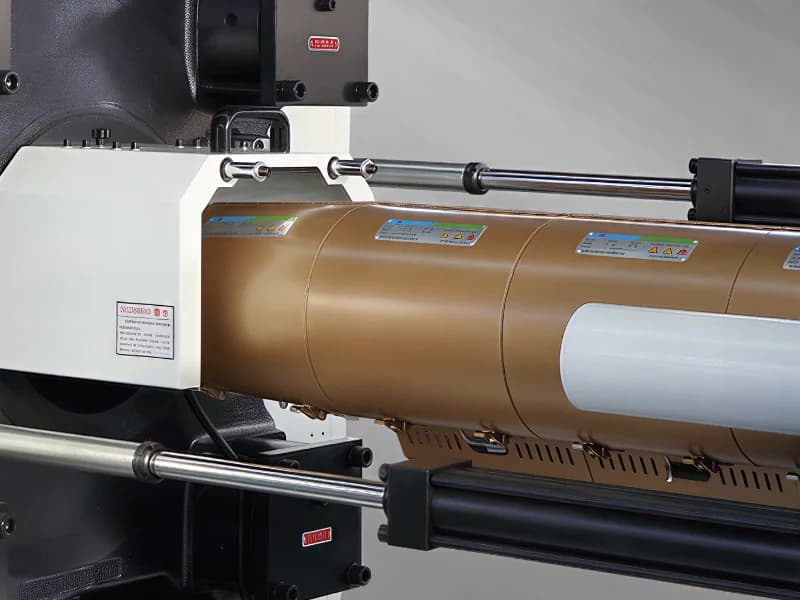
Servo-hydraulic drive system with energy recovery
Need Expert Advice?
Talk to our engineers about your specific production requirements. Free consultation.
Cost Analysis and Material Pricing
PP homopolymer trades at $1,100-1,350/ton globally, while random copolymer commands a $50-150/ton premium at $1,150-1,500/ton. For thin-wall applications where wall thickness differences offset the price premium, the per-part cost comparison is more nuanced. Consider a 150ml yogurt cup: homopolymer at 0.38mm wall thickness weighs approximately 5.8g ($0.0064-0.0078 material cost per cup), while copolymer at 0.42mm wall thickness weighs 6.4g ($0.0074-0.0096 per cup). The homopolymer cup uses 10% less material per unit, largely offsetting the lower resin price. On an HWAMDA HMD 400M8-SPV producing 8-cavity molds at 4.5s cycles (6,400 cups/hr), daily material consumption at 7,200 hours/year is: homopolymer 267 kg/day ($294-360), copolymer 295 kg/day ($339-443). Annual material cost difference: $12,000-22,000 favoring homopolymer. However, for premium products where clarity commands a price premium on the finished cup ($0.005-0.01 more per cup to end customers), copolymer delivers higher margin despite higher material cost.
Food Contact Compliance Across Markets
Both PP homopolymer and random copolymer comply with major food contact regulations when produced from FDA-listed monomers under 21 CFR 177.1520. Key compliance parameters are identical for both types: overall migration limit of 10 mg/dm2 (EU 10/2011) or 60 mg/kg, specific migration limits for individual substances per the positive list, and extractive limits in n-hexane not exceeding 2.6% by weight. For GCC markets governed by GSO 1863/2013 (based on EU 10/2011), both grades meet the same positive substance list requirements. In China under GB 4806.7-2023, PP homopolymer and copolymer are both covered with specific migration limits for propylene monomer and ethylene monomer (for copolymer). For India under FSSAI regulations referencing BIS IS 10910, both PP types must meet the 60 mg/kg overall migration limit. The primary compliance difference arises with random copolymers containing higher ethylene content (above 7%), which may require additional specific migration testing for ethylene monomer. HWAMDA's food packaging customers typically source pre-certified food-grade PP from SABIC, Borealis, or LyondellBasell with complete regulatory documentation.
Key Specs
- •Key compliance parameters are identical for both types: overall migration limit of 10 mg/dm2 (EU 10/2011) or 60 mg/kg, specific migration limits for individual substances per the positive list, and extractive limits in n-hexane not exceeding 2.6% by weight.
- •The primary compliance difference arises with random copolymers containing higher ethylene content (above 7%), which may require additional specific migration testing for ethylene monomer.
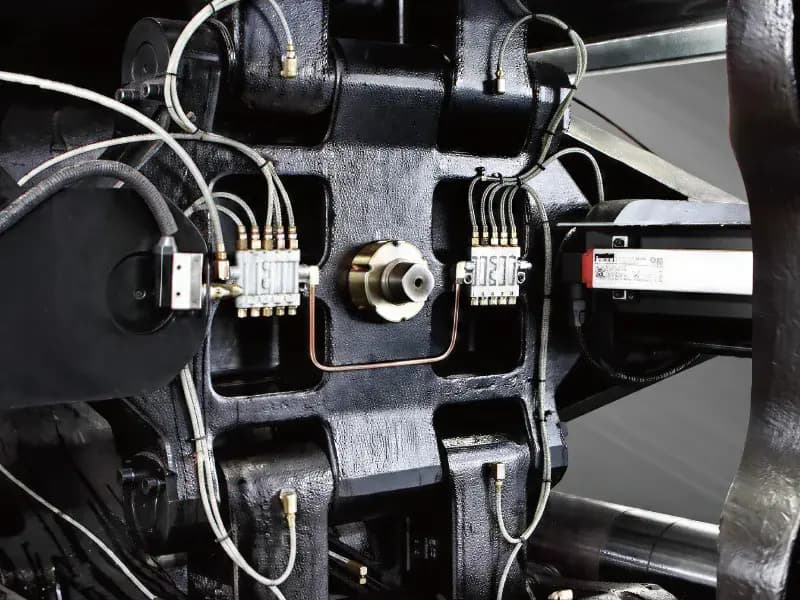
Toggle clamping unit — high rigidity for thin-wall molding
Recommendation Matrix by Product Category
Based on processing data from HWAMDA SPV5 production lines, here are specific recommendations. Yogurt cups (4-8g, 0.35-0.45mm wall): homopolymer for standard white cups, copolymer for clear-lid variations. Use HMD 350M8-SPV to HMD 400M8-SPV with 4-8 cavity molds. Food containers (15-25g, 0.5-0.7mm wall): homopolymer for hot-fill and microwave applications, copolymer for fresh food display containers. Use HMD 400M8-SPV to HMD 480M8-SPV with 2-4 cavity molds. Sauce cups (2-4g, 0.3-0.4mm wall): homopolymer preferred for maximum stiffness at ultra-thin walls. Use HMD 270M8-SPV to HMD 350M8-SPV with 8-16 cavity molds. Milk tea cups (8-12g, 0.4-0.5mm wall): copolymer for clarity if transparent design, homopolymer for IML-decorated versions. Use HMD 350M8-SPV to HMD 418M8-SPV. Margarine IML containers (20-30g, 0.5-0.6mm wall): homopolymer for superior IML label adhesion and stacking strength. Use HMD 400M8-SPV to HMD 480M8-SPV with 2-4 cavity IML molds. Contact HWAMDA for material grade recommendations specific to your product.
Frequently Asked Questions
Yes, the same mold works for both PP types with minor process adjustments. Reduce melt temperature by 10-15°C when switching to copolymer (from 235°C to 220-225°C). Adjust holding pressure down by 5-10% to prevent overpacking due to copolymer's lower viscosity. Wall thickness will increase by approximately 0.02-0.04mm with copolymer due to lower shrinkage (1.0-1.5% vs 1.5-2.0% for homopolymer), so verify dimensional specifications before switching.
Related Guides
Ready to Start Your Project?
Get a free consultation and quotation for your thin-wall packaging production line.
Join 500+ manufacturers in 60+ countries who trust HWAMDA.
Get Free Quote