Clamping Force and Platen Differences
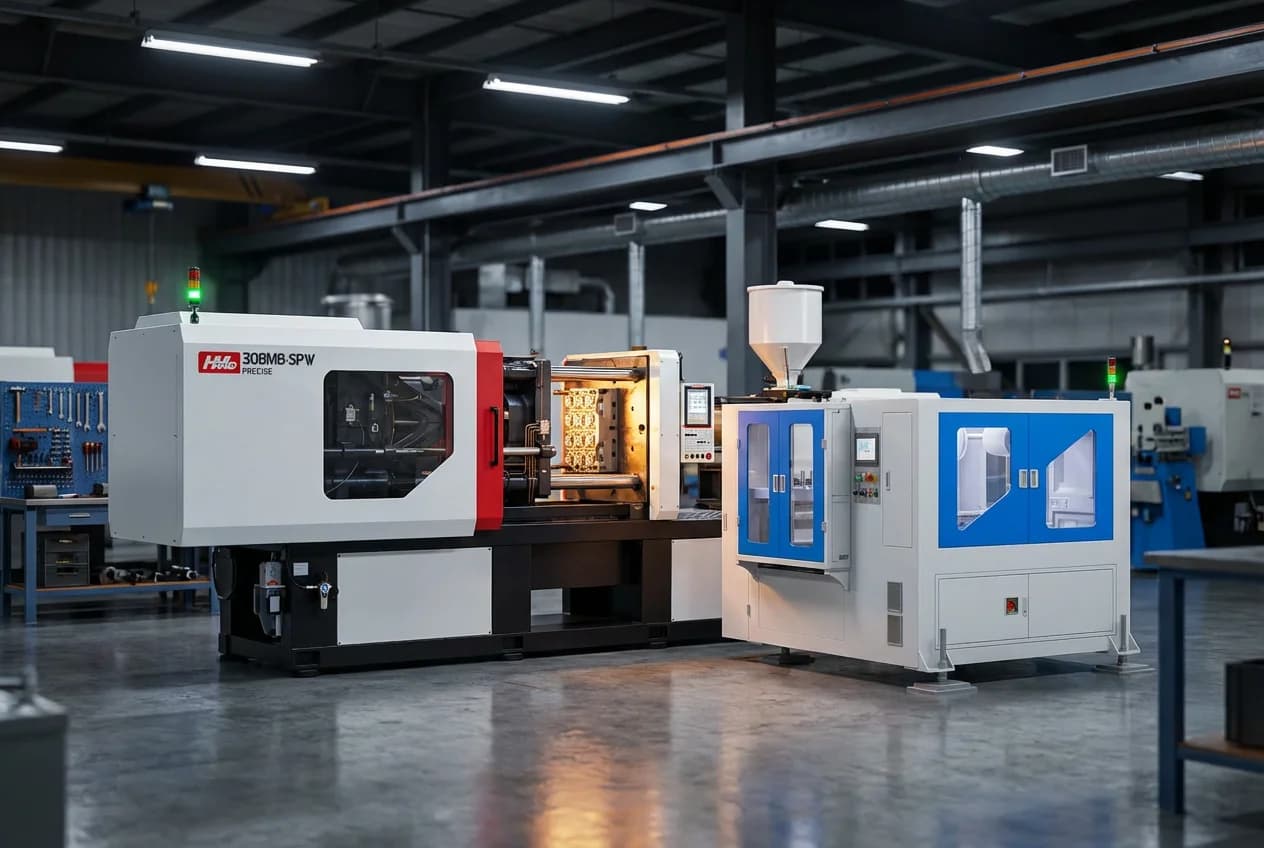
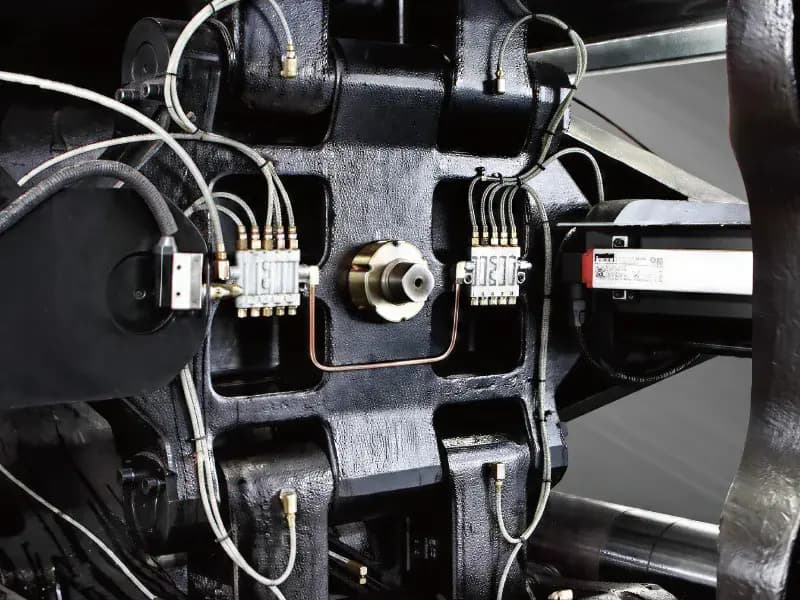
The clamping force difference of 200 kN between these models masks more significant differences in their platen and toggle systems. The HMD 380M8-SPV (referencing the HMD 368M8-SPV platform) delivers 3,680 kN clamping force with platen size of 1,030 x 1,000 mm and tie bar distance of 670 x 640 mm. Mold opening stroke is 640 mm with maximum daylight of 1,310 mm and mold thickness range of 270-670 mm. The HMD 400M8-SPV provides 4,000 kN with platen size of 1,080 x 1,060 mm and tie bar distance of 720 x 700 mm. Its mold opening stroke is 720 mm with maximum daylight of 1,390 mm and mold thickness range of 270-670 mm. The 400 offers 50-60 mm wider tie bar distance in each direction, which is significant for 8-cavity molds where cavity pitch determines minimum mold width. The 80 mm additional mold opening stroke and 80 mm greater daylight on the 400 provide more clearance for SWITEK robot access on deeper containers and IML label placement operations. The 400 also delivers higher ejector force options and can accommodate heavier molds up to 3,000 kg compared to approximately 2,500 kg for the 380 platform.
Key Specs
- •The clamping force difference of 200 kN between these models masks more significant differences in their platen and toggle systems.
- •The HMD 380M8-SPV (referencing the HMD 368M8-SPV platform) delivers 3,680 kN clamping force with platen size of 1,030 x 1,000 mm and tie bar distance of 670 x 640 mm.
- •Mold opening stroke is 640 mm with maximum daylight of 1,310 mm and mold thickness range of 270-670 mm.
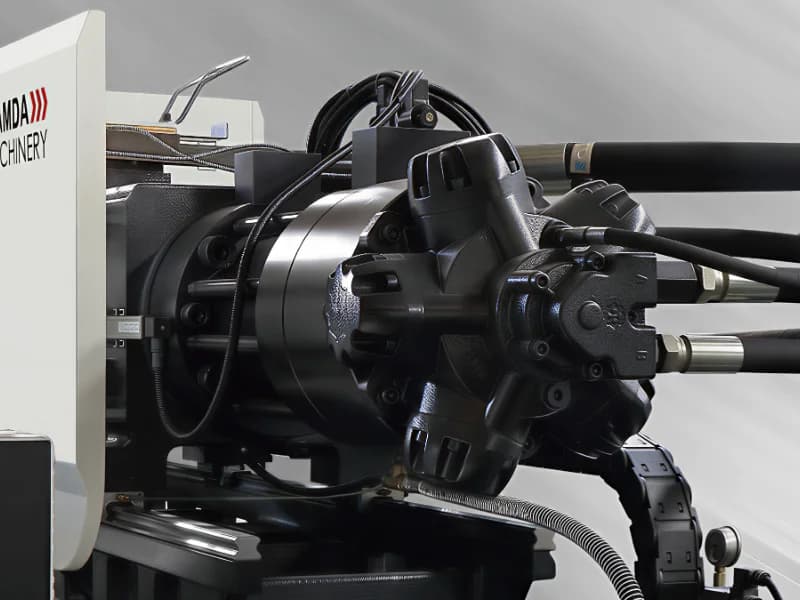
High-speed injection unit with linear guides
Injection Unit: Two Different Platforms
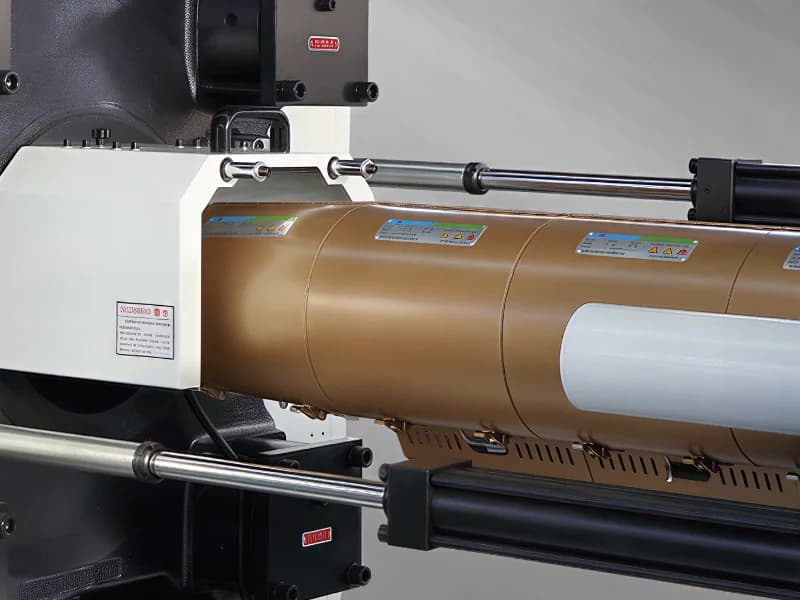
This is where the two machines diverge most significantly. The HMD 380M8-SPV uses a 55 mm screw with L/D ratio of 25.3:1 (option A) or 57 mm with 24.4:1 (option B). Injection volume is 475-510 cm3, injection weight is 432-465 grams PP, injection speed is 400 mm/s, and injection pressure is 182-169 MPa. Screw stroke is 200 mm with screw speed of 0-300 rpm. The HMD 400M8-SPV uses a 60 mm screw with 25:1 L/D (option A) or 65 mm with 23:1 (option B). Injection volume is substantially larger at 918-1,078 cm3, injection weight is 835-981 grams PP, injection speed is 442 mm/s for the 60 mm screw and 374 mm/s for the 65 mm, and injection pressure is 164-165 MPa. Screw stroke is 325 mm with screw speed of 0-350 rpm. The 400 delivers approximately double the injection capacity, making it suitable for heavier shot weights. However, the 380 offers higher injection pressure at 182 MPa versus 164 MPa, advantageous for filling the thinnest walls of 0.35-0.38 mm where flow resistance is highest.
Application Comparison: Yogurt Cups
For yogurt cup production, the choice between these machines depends on cavity count and cup size. For 4-cavity yogurt cups at 150-200 ml with part weight of 5.4-7.5g, total shot weight including runner is approximately 30-40g. The HMD 380M8-SPV handles this easily with its 432g injection capacity, and its 400 mm/s injection speed fills the 0.30-0.40 mm walls effectively. Injection pressure of 182 MPa provides extra margin for the thinnest 0.30 mm walls. For 8-cavity yogurt cups with total shot weight of 55-70g, both machines offer adequate injection capacity. However, the HMD 400M8-SPV is preferred for 8-cavity production due to its wider tie bar distance of 720 x 700 mm accommodating the 8-cavity mold layout versus 670 x 640 mm on the 380. The 400 also delivers 442 mm/s injection speed with the 60 mm screw, the fastest option between the two models. The larger mold opening stroke of 720 mm and daylight of 1,390 mm on the 400 provide better clearance for the SWITEK IML robot serving 8 cavities. For 4-cavity yogurt cups without IML, the 380 offers a cost-effective solution with higher injection pressure for the thinnest walls.
Key Specs
- •The HMD 380M8-SPV handles this easily with its 432g injection capacity, and its 400 mm/s injection speed fills the 0.30-0.40 mm walls effectively.
- •Injection pressure of 182 MPa provides extra margin for the thinnest 0.30 mm walls.
- •However, the HMD 400M8-SPV is preferred for 8-cavity production due to its wider tie bar distance of 720 x 700 mm accommodating the 8-cavity mold layout versus 670 x 640 mm on the 380.
Servo-hydraulic drive system with energy recovery
Need Expert Advice?
Talk to our engineers about your specific production requirements. Free consultation.
Application Comparison: Food Containers
Food containers require larger shot weights and platen areas, where the HMD 400M8-SPV advantages become more pronounced. For 4-cavity 500 ml containers at 15-20g each, total shot weight of 70-90g is within both machines' capacity, but the 400's wider platen and tie bar distance better accommodates the rectangular mold footprint. For 2-cavity 1,000 ml containers at 25-35g each, the 400 is strongly preferred: its 720 x 700 mm tie bar distance fits the wider mold, and its 835g injection capacity provides ample headroom for the 70-90g shot. The 380 can manage 2-cavity 1,000 ml containers, but mold design is constrained by the 670 x 640 mm tie bar distance. For any application requiring single-cavity 1,500 ml containers at 35-45g, the 400 is the minimum recommended machine due to the large projected area. The HMD 400M8-SPV's dual 55+55 kW pump motors versus 45+45 kW on the 380 also provide more hydraulic power for faster mold movements on heavier molds, reducing dry cycle time by 0.2-0.4 seconds for containers with larger molds weighing 2,000-3,000 kg.
Power System and Operating Costs
The two models use different power configurations reflecting their size difference. The HMD 380M8-SPV runs on 45+45 kW dual pump motors with 19 MPa hydraulic pressure, 27.5 kW heater power, and 380-liter oil tank. Machine dimensions are 7.3 x 2.0 x 2.4 m. The HMD 400M8-SPV runs on 55+55 kW dual pump motors with 17.5 MPa hydraulic pressure, 31.7 kW heater power, and 380-liter oil tank. Machine dimensions are 7.7 x 2.0 x 2.4 m. The 400 consumes approximately 15-20% more power due to its larger pump motors and higher heater output, translating to roughly 2,000-4,000 USD additional annual electricity cost at 0.10 USD/kWh. However, when producing 8-cavity products versus 4-cavity, the per-part energy cost on the 400 is lower due to doubling the output per cycle. The energy cost per yogurt cup on the 400 running 8-cavity at 4.8-second cycle is approximately 0.001 USD, versus 0.0015 USD per cup on the 380 running 4-cavity at 4.0-second cycle. Both models feature servo energy recovery during deceleration phases, and both achieve the 25-35% energy savings characteristic of the SPV5 servo-hydraulic system compared to standard hydraulic machines.
Key Specs
- •The HMD 380M8-SPV runs on 45+45 kW dual pump motors with 19 MPa hydraulic pressure, 27.5 kW heater power, and 380-liter oil tank.
- •The HMD 400M8-SPV runs on 55+55 kW dual pump motors with 17.5 MPa hydraulic pressure, 31.7 kW heater power, and 380-liter oil tank.
- •The 400 consumes approximately 15-20% more power due to its larger pump motors and higher heater output, translating to roughly 2,000-4,000 USD additional annual electricity cost at 0.10 USD/kWh.
Toggle clamping unit — high rigidity for thin-wall molding
Recommendation: When to Choose Each Model
Choose the HMD 380M8-SPV when your production focuses on 4-cavity molds for yogurt cups, small containers, and cup lids where the higher injection pressure of 182 MPa is advantageous for the thinnest walls. The 380 is also the better choice when floor space is limited, as its 7.3 m length saves 400 mm versus the 400. Facilities producing small-batch specialty packaging where shot weights stay below 300g will not utilize the 400's larger injection capacity. Choose the HMD 400M8-SPV when your production plan includes 8-cavity yogurt cup or cup lid molds requiring the wider 720 x 700 mm tie bar distance, food containers of 500-1,500 ml in 2-4 cavity configurations, IML packaging where the 1,390 mm daylight and 720 mm mold opening stroke provide optimal robot access, or future growth into larger products requiring the 835-981g injection capacity. For a facility investing in its primary production machine, the HMD 400M8-SPV offers significantly more versatility across product types and cavity configurations, making it the preferred choice despite the approximately 10-15% higher investment. The 380 excels as a dedicated 4-cavity production machine or as a second machine in a multi-machine facility.
Frequently Asked Questions
The HMD 400M8-SPV with 8-cavity mold at 4.8-second cycle produces 6,000 cups per hour. The HMD 380M8-SPV with 4-cavity mold at 4.0-second cycle produces 3,600 cups per hour. The 400 delivers 67% higher output despite similar cycle times, due to doubling the cavity count that its larger platens accommodate. For facilities needing maximum yogurt cup throughput, the 400 is clearly superior.
Related Guides
Ready to Start Your Project?
Get a free consultation and quotation for your thin-wall packaging production line.
Join 500+ manufacturers in 60+ countries who trust HWAMDA.
Get Free Quote