

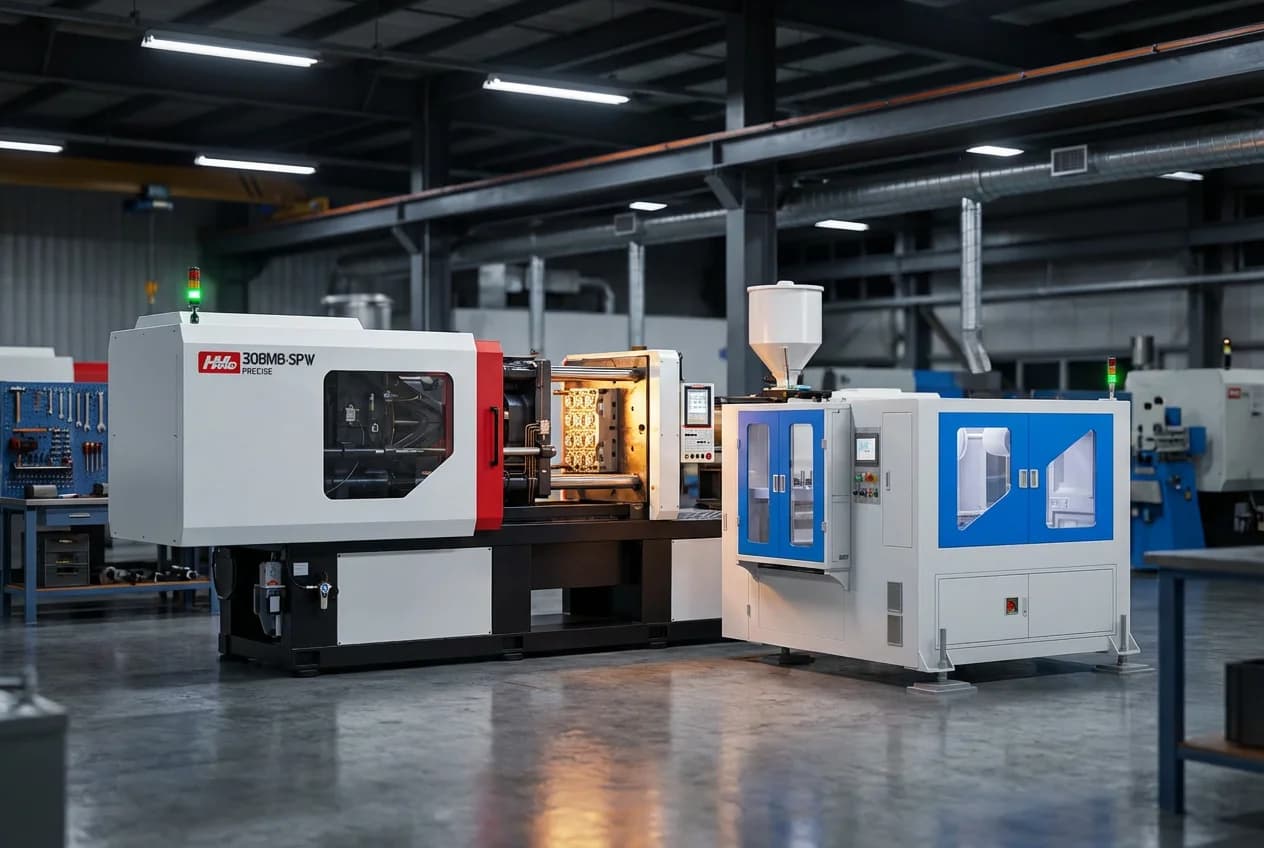
Morocco Food Packaging Market Overview
Morocco's food packaging industry is valued at approximately USD 1.8-2.3 billion, growing at 5-6% annually driven by urbanization, modern retail expansion, and rising middle-class consumption. The dairy sector is dominated by Centrale Danone (joint venture with Danone SA, approximately 55% market share), Copag (Jaouda brand), and Safilait. These three companies operate over 30 processing plants across Morocco, collectively consuming over 1.5 billion yogurt cups annually. Morocco benefits from proximity to European markets and its free trade agreements with the EU, making it an attractive manufacturing hub for food packaging serving both domestic and export markets. The plastic packaging sector employs approximately 25,000 workers across 800+ enterprises. PP resin is primarily imported through Casablanca and Tangier Med ports, with pricing at $1,200-1,500/MT including duties. Morocco's industrial zones in Casablanca, Tangier, Kenitra, and Agadir offer competitive factory rental rates of $3-6/m2/month.
Key Specs
- •Morocco's food packaging industry is valued at approximately USD 1.8-2.3 billion, growing at 5-6% annually driven by urbanization, modern retail expansion, and rising middle-class consumption.
- •The dairy sector is dominated by Centrale Danone (joint venture with Danone SA, approximately 55% market share), Copag (Jaouda brand), and Safilait.
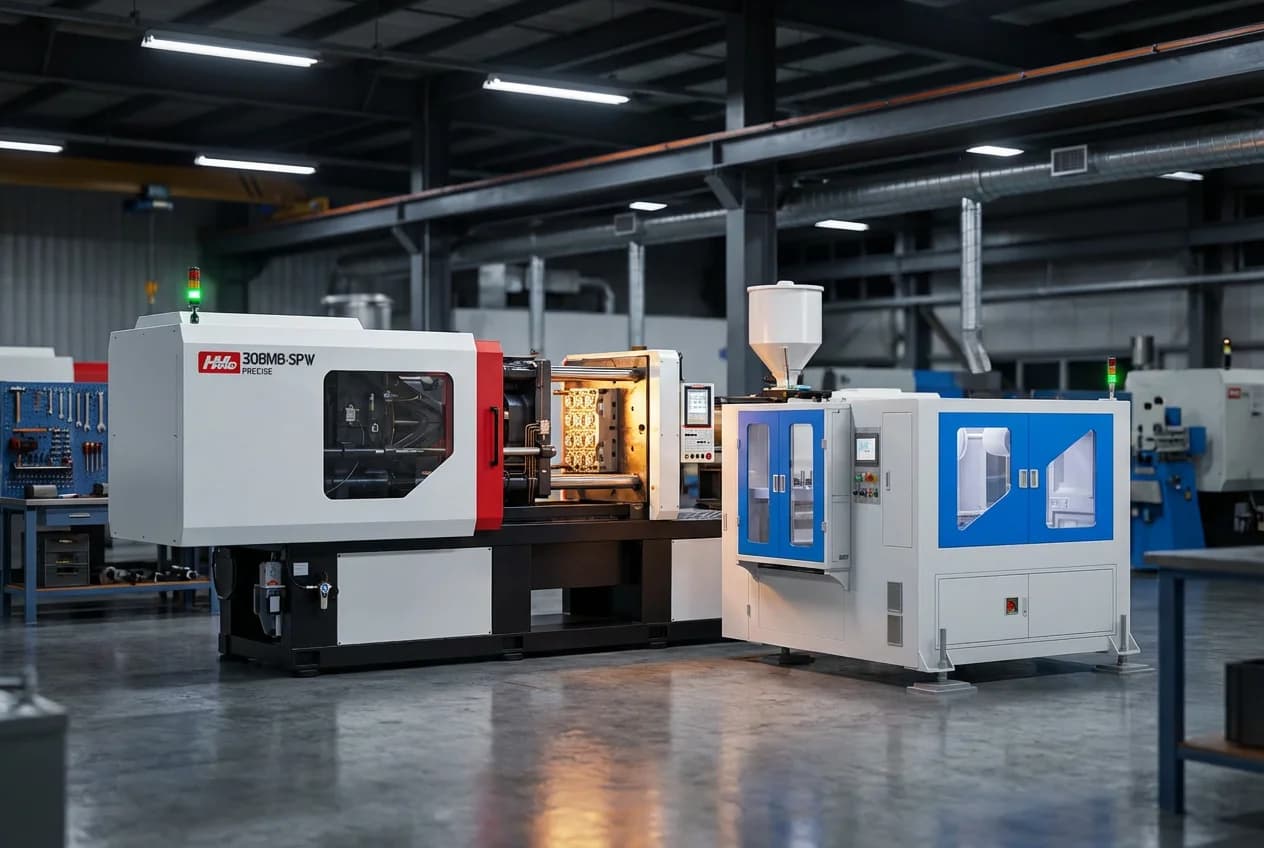
Finished yogurt cups — high-speed thin-wall production
Key Opportunities: Yogurt Cup Production Sector
Moroccan yogurt cups predominantly follow European formats, with 80 ml, 100 ml, and 125 ml being the most common volumes. Part weights range from 3.5-5.5 g with wall thicknesses of 0.38-0.50 mm. The multi-pack format (4x, 6x, 8x, 12x) dominates retail sales, requiring efficient high-cavity production. Centrale Danone's conversion to IML across its product range has set the market standard, with competitors following suit. For 80-125 ml Moroccan-format cups, an 8-cavity IML mold on the HWAMDA HMD 380M8-SPV (3,800 kN) achieves 6,400-8,228 cups per hour at 3.5-4.5 second cycles. The smaller cup diameter (60-75 mm) allows tighter cavity spacing, and lighter part weights (3.5-5.0 g) reduce total shot weight to 28-40 g for 8 cavities. Annual output on a single line reaches 40-50 million cups. Key PP grades used in Morocco include SABIC PP 520P, Borealis RB307MO, and Total PPH 3060 (MFI 30-55 g/10 min).
Import Regulations and Certification Requirements
Injection molding machines enter Morocco under HS code 8477.10.00 with import duty of 2.5% and 20% VAT. Morocco's free trade agreement with China (not yet fully in force) may further reduce duties in the future. Equipment must meet Moroccan industrial safety standards aligned with EU directives (CE marking is widely accepted). Food contact packaging must comply with Morocco's food safety regulation aligned with EU Regulation 10/2011 and Codex Alimentarius standards, enforced by ONSSA (Office National de Sécurité Sanitaire des Produits Alimentaires). Migration testing for PP food contact follows NM 09.0.154 (equivalent to EN 1186). HWAMDA provides CE documentation and test reports compatible with Moroccan import requirements. Customs clearance at Casablanca port typically takes 5-10 business days. Morocco's single window customs system (PortNet) streamlines the clearance process for industrial machinery imports.
Key Specs
- •Injection molding machines enter Morocco under HS code 8477.10.00 with import duty of 2.5% and 20% VAT.
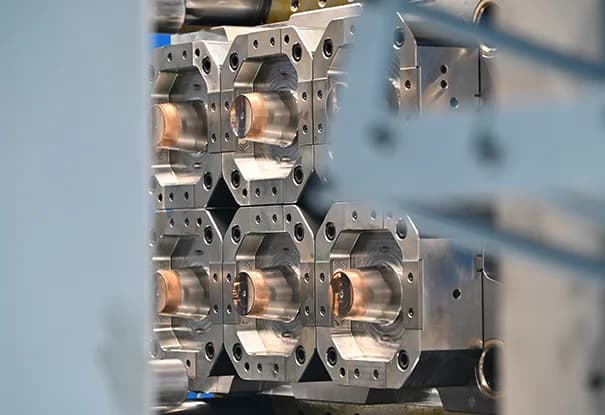
Multi-cavity yogurt cup mold with precision cooling channels
Need Expert Advice?
Talk to our engineers about your specific production requirements. Free consultation.
HWAMDA Equipment Configuration for Morocco
For Morocco's yogurt cup market, HWAMDA recommends the HMD 380M8-SPV (3,800 kN) for 8-cavity IML production of 80-125 ml cups, providing injection speed of 368-422 mm/s and platen dimensions of 1,000 x 980 mm. For larger operations requiring 200 ml cups or higher cavity counts, the HMD 400M8-SPV (4,000 kN) with 1,080 x 1,060 mm platen is recommended. Both machines use servo-hydraulic drives with 45+45 kW (380T) or 55+55 kW (400T) dual pump motors at 17.5 MPa system pressure. Molds are manufactured in 2344 (H13) steel with YUDO or Synventive valve gate hot runners. For the small 80-100 ml Moroccan cup format, HWAMDA offers optimized mold designs that achieve 3.2-3.8 second cycles in 8 cavities, leveraging the lower part weight (3.5-4.5 g) for faster cooling. IML automation uses the SWITEK SW833 robot with 5-axis servo control. The INOVA controller supports French-language interface. Machines ship in 380V/50Hz configuration matching Morocco's electrical standard.
Logistics and After-Sales Support for Morocco
HWAMDA ships from Ningbo to Morocco's primary ports of Casablanca and Tangier Med. Transit time is 25-32 days with transshipment at a Mediterranean hub port. Ocean freight costs approximately $3,000-5,000 per 40ft container. Tangier Med port offers efficient customs processing and proximity to the Tangier free zone where several packaging companies operate. Installation and commissioning by HWAMDA engineers takes 5-7 days on-site, including French-language operator training over 3-5 days. HWAMDA has experience with Moroccan industrial regulations and can coordinate with local electrical contractors for power supply connection meeting ONEE (Office National de l'Electricité et de l'Eau Potable) standards. After-sales support includes remote diagnostics, a 24-month parts warranty, and spare parts shipment from Ningbo (18-25 days) or from HWAMDA's European logistics partner (7-10 days). HWAMDA's Morocco service contact is reachable via WhatsApp at +86-159-5888-5672 for French-language technical support.
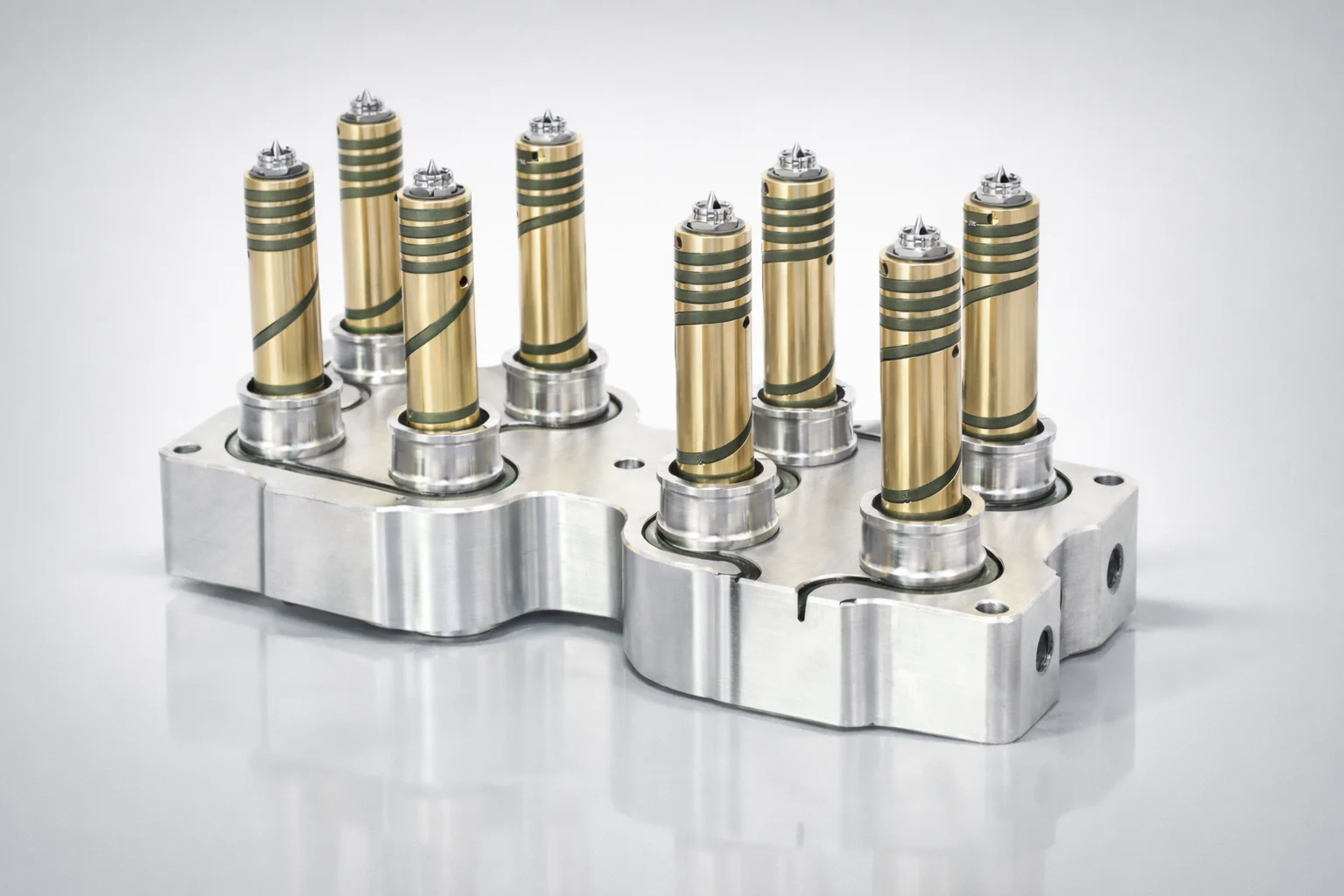
Hot runner system for balanced melt flow distribution
Getting Started: Investment and ROI for Morocco
A complete 8-cavity yogurt cup IML line for Morocco includes: HMD 380M8-SPV ($75,000-95,000), 8-cavity IML mold for 100 ml cups ($16,000-24,000), SWITEK SW8 IML robot ($18,000-25,000), industrial chiller ($3,500-5,500), auxiliaries ($4,000-6,000), and shipping ($4,000-6,000). Total investment: $120,500-161,500. At 8 cavities, 3.8-second cycles, and 85% OEE, annual output reaches approximately 45-50 million cups. Material cost at 4.5 g per cup and $1,300/MT PP is $0.0059 per cup. With Moroccan industrial electricity at $0.09-0.11/kWh and labor at approximately $350-500/month, total production cost is $0.010-0.014 per cup. Wholesale IML cup prices in Morocco range from MAD 0.20-0.35 ($0.020-0.035), yielding gross margins of 50-65%. Morocco's growing yogurt market and its position as a packaging export hub for West Africa make this investment compelling, with payback estimated at 15-22 months.
Frequently Asked Questions
Yes. The Tangier free zone offers duty-free import of production equipment, 0% corporate tax for the first 5 years (then 8.75%), and streamlined customs procedures. HWAMDA has shipped to Tangier free zone clients and is familiar with the documentation requirements. Machines shipped to the free zone are exempt from the 2.5% import duty and 20% VAT, significantly reducing initial capital outlay compared to mainland import.
Related Guides
Ready to Start Your Project?
Get a free consultation and quotation for your thin-wall packaging production line.
Join 500+ manufacturers in 60+ countries who trust HWAMDA.
Get Free Quote