

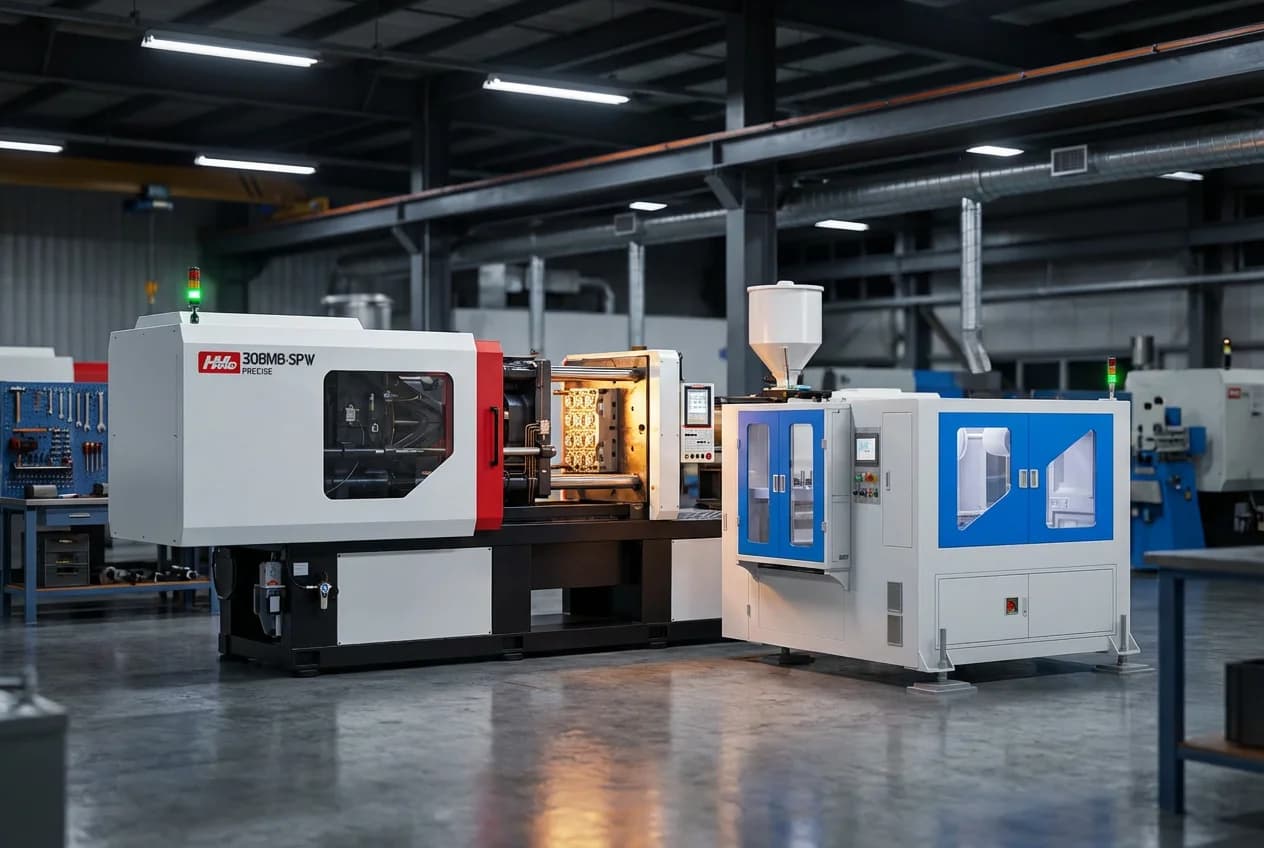
Production Volume Requirements
Match cavity count to your monthly volume target: 8-cavity molds at 4-second cycles with 85% utilization produce approximately 4.3 million cups per month running 24/7. This suits manufacturers serving local or regional dairy brands with steady but not extreme demand. Monthly order volumes of 3-5 million cups justify 8-cavity tooling. 12-cavity molds at 4.2-second cycles produce approximately 6.2 million cups per month—45% more than 8-cavity at only slightly longer cycle time. This suits manufacturers with growing demand or serving multiple dairy brands. 16-cavity molds at 4.5-second cycles produce approximately 7.7 million cups per month—80% more than 8-cavity. This configuration is for high-volume dedicated lines serving national dairy brands or export markets requiring 6+ million cups monthly from a single line. For manufacturers just entering the yogurt cup market, matching cavity count to realistic sales projections rather than optimistic growth estimates prevents over-investment in mold capacity. For seasonal products with variable demand, a moderate cavity count provides flexibility to adjust production schedules without expensive tooling sitting idle during low-demand periods.
Key Specs
- •Match cavity count to your monthly volume target: 8-cavity molds at 4-second cycles with 85% utilization produce approximately 4.3 million cups per month running 24/7.
- •12-cavity molds at 4.2-second cycles produce approximately 6.2 million cups per month—45% more than 8-cavity at only slightly longer cycle time.
- •16-cavity molds at 4.5-second cycles produce approximately 7.7 million cups per month—80% more than 8-cavity.
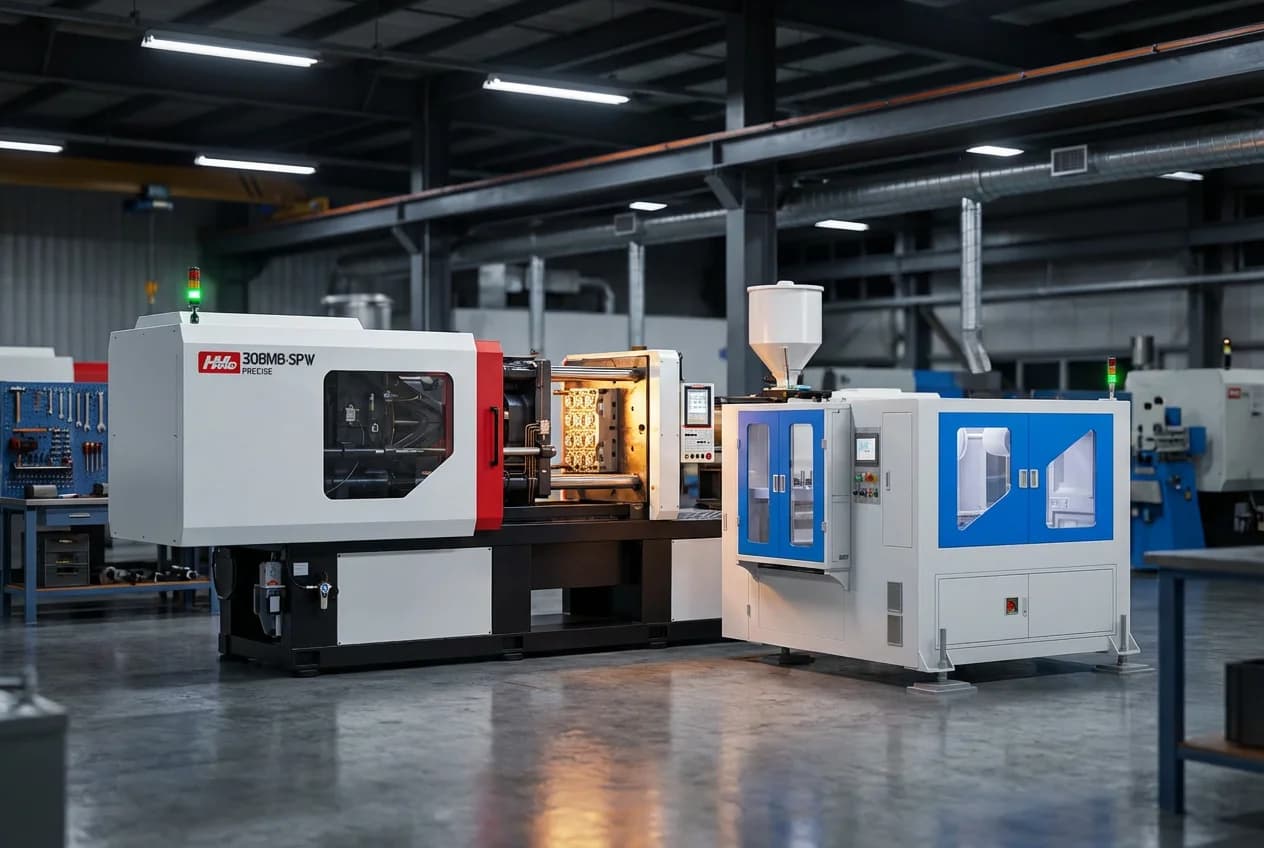
Finished yogurt cups — high-speed thin-wall production
Machine Size for Each Option
8-cavity yogurt cup molds (150ml, PP, 0.5mm wall) require the HWAMDA SPV5 380T-400T. The 380T is adequate for standard cup dimensions, while the 400T provides additional clamping margin for cups with larger diameters or shorter wall thickness. Shot weight for 8 cavities is approximately 80-100g including runner. 12-cavity molds require the HWAMDA SPV5 400T. The projected area increases by 50% over 8-cavity, pushing clamping force requirements to 380-400 tons. Shot weight increases to 120-150g, requiring verification that the machine's shot capacity is sufficient. 16-cavity molds typically require the HWAMDA SPV5 400T as well, though some larger cup designs may need the 450T. Shot weight of 160-200g must fall within the barrel's effective shot range. HWAMDA verifies machine-mold compatibility for every order. HWAMDA verifies machine-mold compatibility for every order, including shot weight capacity verification that ensures the barrel can deliver the required volume for the specified cavity count. Shot weight capacity is the most commonly overlooked compatibility factor. Always verify that the barrel can deliver at least 120% of total shot weight for the specified cavity count.
Cost Per Cup at Each Cavity Count
Material cost per cup is identical regardless of cavity count: approximately $0.010-0.014 for a 150ml PP yogurt cup weighing 6-8g. The cost advantage of higher cavity counts comes from spreading machine, labor, and overhead costs over more cups per cycle. Machine cost per cup: 8-cavity at 4s cycle = $0.0031/cup, 12-cavity at 4.2s cycle = $0.0022/cup (29% reduction), 16-cavity at 4.5s cycle = $0.0017/cup (45% reduction). Mold depreciation per cup (over 5 million cycles): 8-cavity mold at $50,000 = $0.0013/cup, 12-cavity mold at $70,000 = $0.0012/cup, 16-cavity mold at $90,000 = $0.0011/cup. Total production cost per cup: 8-cavity approximately $0.028-0.032, 12-cavity approximately $0.025-0.029, 16-cavity approximately $0.023-0.027. The 16-cavity configuration delivers approximately 15-20% lower cost per cup than 8-cavity. These cost-per-cup calculations demonstrate that higher cavity counts deliver diminishing but still meaningful per-unit savings, with the most significant drop occurring between 8-cavity and 12-cavity. For manufacturers serving price-sensitive markets where per-cup cost is the primary competitive factor, the 16-cavity configuration delivers the most competitive pricing capability.
Key Specs
- •Machine cost per cup: 8-cavity at 4s cycle = $0.0031/cup, 12-cavity at 4.2s cycle = $0.0022/cup (29% reduction), 16-cavity at 4.5s cycle = $0.0017/cup (45% reduction).
- •The 16-cavity configuration delivers approximately 15-20% lower cost per cup than 8-cavity.
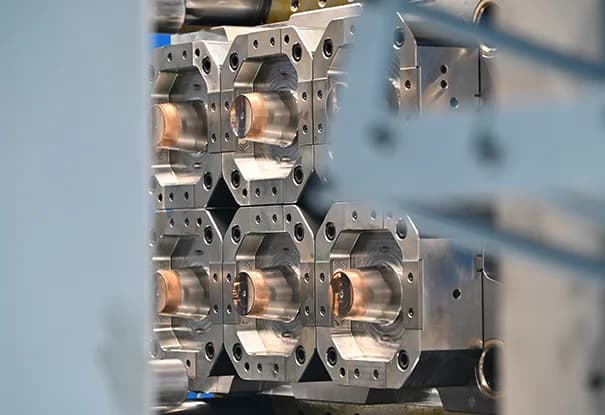
Multi-cavity yogurt cup mold with precision cooling channels
Need Expert Advice?
Talk to our engineers about your specific production requirements. Free consultation.
Quality Consistency Considerations
8-cavity molds offer the best cavity-to-cavity consistency with weight variation typically within ±1.0%. The hot runner manifold design is straightforward with well-proven balanced layouts. Cooling system design is simpler with more space for optimal channel placement. Mold trial and balancing is completed in 2-3 trials (T0, T1, T2) over 3-4 weeks. 12-cavity molds require more careful manifold balancing, typically using a naturally balanced H-pattern layout. Weight variation within ±1.5% is achievable with experienced mold builders like HWAMDA. Cooling becomes more challenging with tighter cavity spacing—conformal cooling and BeCu inserts become increasingly important. 16-cavity molds demand the highest engineering precision. Manifold balance, cooling uniformity, and ejection synchronization must be meticulously designed and tuned. Weight variation of ±2.0% is the practical target. HWAMDA uses Moldflow simulation for all 12+ cavity molds. HWAMDA uses Moldflow simulation for all 12+ cavity molds to verify fill balance, predict warpage, and optimize cooling before machining begins, reducing the number of trial iterations required.
Mold Price Comparison
8-cavity yogurt cup mold from HWAMDA: $40,000-60,000 including valve gate hot runner, S136 cavities, optimized cooling, and 3 mold trials. Lead time: 8-12 weeks. 12-cavity yogurt cup mold from HWAMDA: $55,000-80,000. The 50% increase in cavity count adds approximately 35-40% to the mold price due to additional cavity inserts, hot runner drops, cooling circuits, and more complex manifold design. Lead time: 10-14 weeks. 16-cavity yogurt cup mold from HWAMDA: $70,000-100,000. The doubling of cavities from 8 adds approximately 65-75% to the mold price. The hot runner manifold becomes more complex, requiring a 16-drop system with precise thermal management. Lead time: 12-16 weeks. Per-cavity cost: 8-cavity $5,000-7,500, 12-cavity $4,600-6,700, 16-cavity $4,400-6,250. The per-cavity cost decreases as cavity count increases, reflecting economies in mold base and manifold sharing. The per-cavity cost decrease reflects shared mold base and manifold components—the fixed portion of the mold cost is distributed across more revenue-generating cavity positions.
Key Specs
- •8-cavity yogurt cup mold from HWAMDA: $40,000-60,000 including valve gate hot runner, S136 cavities, optimized cooling, and 3 mold trials.
- •The 50% increase in cavity count adds approximately 35-40% to the mold price due to additional cavity inserts, hot runner drops, cooling circuits, and more complex manifold design.
- •The doubling of cavities from 8 adds approximately 65-75% to the mold price.
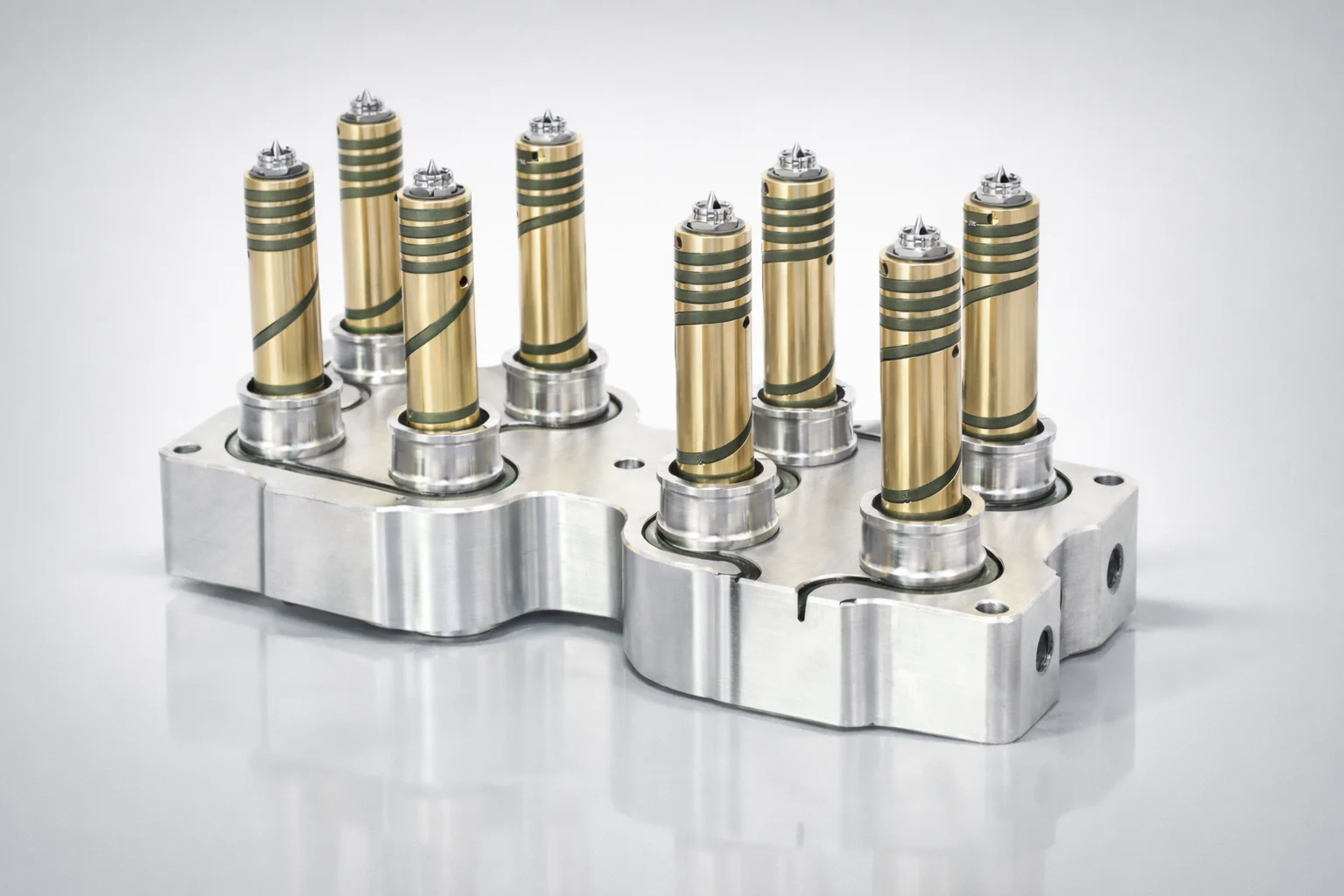
Hot runner system for balanced melt flow distribution
Recommendation by Factory Size
New factories (1-2 machines, startup phase): Start with 8-cavity molds. The lower investment ($40,000-60,000 vs $70,000-100,000 for 16-cavity), simpler operation, and easier balancing minimize risk during the learning phase. Focus on perfecting production quality and building customer relationships before scaling cavity count. Growing factories (2-4 machines, established operations): Upgrade to 12-cavity molds for the next machine or as replacement tooling. The 12-cavity configuration delivers the best balance of output increase, manageable complexity, and cost efficiency. Many successful HWAMDA customers operate 12-cavity molds as their standard production tooling. Large factories (5+ machines, high-volume dedicated): Invest in 16-cavity molds for dedicated high-volume lines serving major customers. Pair with 8 or 12-cavity backup molds for production continuity during 16-cavity mold maintenance. HWAMDA customers who followed this progression report that the gradual capability building produces more reliable production operations than attempting to operate high-cavity molds from day one. This gradual progression produces more reliable production operations with lower risk at each expansion stage, compared to attempting complex high-cavity molds without building experience first.
Frequently Asked Questions
Start with an 8-cavity mold unless you have confirmed orders exceeding 5 million cups per month. The 8-cavity mold costs $40,000-60,000 compared to $70,000-100,000 for 16-cavity, is easier to balance and maintain, and achieves slightly faster cycle times. Once production is stable and demand is proven, upgrade to 12 or 16 cavities for the next mold investment. Starting with 16 cavities risks quality issues from inexperienced operation and ties up capital that may be better allocated to working capital. The lower cavity count reduces operational complexity during the critical learning period.
Related Guides
Ready to Start Your Project?
Get a free consultation and quotation for your thin-wall packaging production line.
Join 500+ manufacturers in 60+ countries who trust HWAMDA.
Get Free Quote