

Milk Tea Cup Design and Material Specifications
Milk tea cups are characterized by their tall, slightly tapered cylindrical form. A standard 500 ml cup measures approximately 90 mm top diameter, 65 mm bottom diameter, and 120 mm height. The larger 700 ml version reaches 90 mm top diameter, 65 mm bottom diameter, and 155-180 mm height. Wall thickness ranges from 0.40 mm in the upper sections to 0.55-0.60 mm near the base, with a graduated thickness profile that facilitates melt flow from the base gate upward through the tall cavity. Part weight ranges from 18 grams for 500 ml to 25 grams for 700 ml cups. The rim section is thickened to 1.0-1.5 mm for structural integrity during lid application and consumer handling. PP homopolymer with MFI of 45-70 g/10min is the primary material, providing the balance of stiffness at 1,300-1,500 MPa flexural modulus and impact resistance needed for beverage service. For transparent milk tea cups, PP random copolymer or PET can be used, though PP random copolymer requires slightly lower processing temperatures of 210-235 degrees Celsius to maintain clarity. Draft angle of 2-3 degrees per side is standard for reliable ejection of the tall geometry.
Key Specs
- •A standard 500 ml cup measures approximately 90 mm top diameter, 65 mm bottom diameter, and 120 mm height.
- •The larger 700 ml version reaches 90 mm top diameter, 65 mm bottom diameter, and 155-180 mm height.
- •Wall thickness ranges from 0.40 mm in the upper sections to 0.55-0.60 mm near the base, with a graduated thickness profile that facilitates melt flow from the base gate upward through the tall cavity.
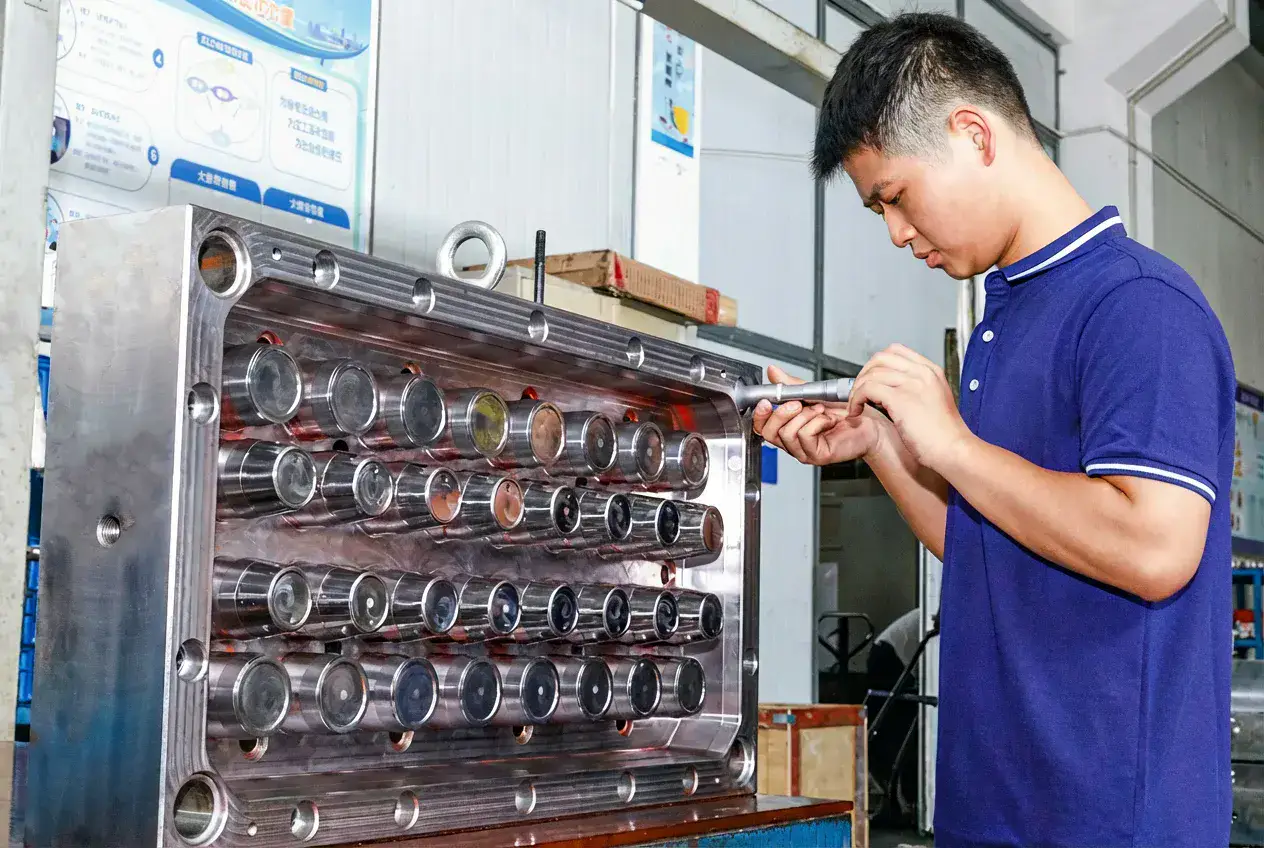
12-cavity milk tea cup mold with IML capability
Machine Selection for Tall Cup Production
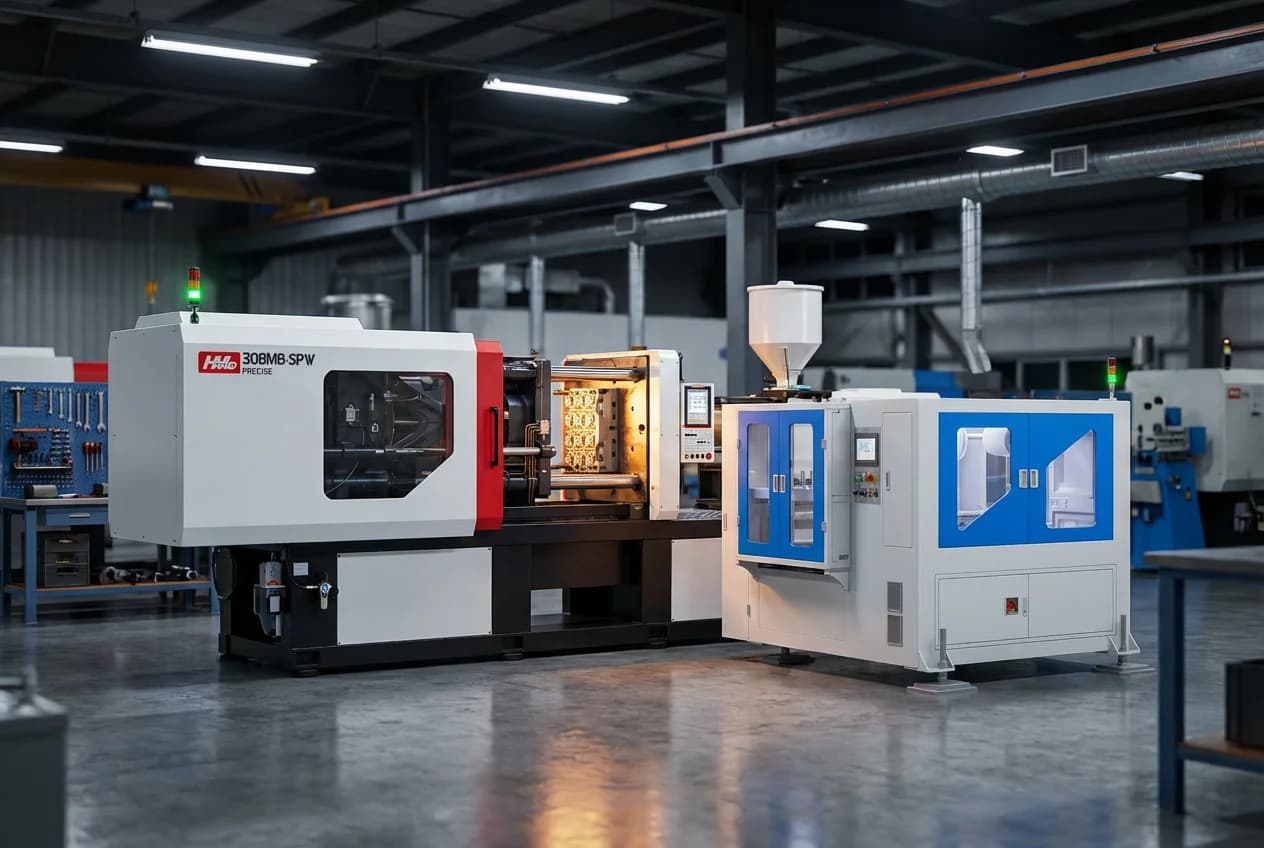
The tall geometry of milk tea cups demands specific machine features that differ from standard packaging applications. For 8-cavity 700 ml cup production, the HMD 418M8-SPV at 4,180 kN is recommended. The injection speed of 517 mm/s is critical for filling the tall 155-180 mm cavity through the thin 0.40-0.60 mm wall section before melt freeze-off occurs. The 55 mm screw with L/D ratio of 25.3:1 provides excellent melt homogeneity for the PP grades used. Total shot weight for 8 cups at 25g each plus runner is approximately 210-230g, well within the 432g injection capacity. The platen dimensions of 1,070 x 1,050 mm and tie bar distance of 675 x 655 mm accommodate the 8-cavity mold layout. Maximum daylight of 1,315 mm provides adequate clearance for the tall mold stack plus robot entry. For 4-cavity configurations, the HMD 368M8-SPV at 3,680 kN offers a more economical option with injection speed of 400 mm/s, platen size of 1,030 x 1,000 mm, and tie bar distance of 670 x 640 mm. The key machine requirement is sufficient mold opening stroke, where the 640 mm stroke on the HMD 368M8-SPV must exceed twice the cup height plus robot clearance.
Mold Engineering for Tall Cup Geometries
Milk tea cup molds face unique engineering challenges from the tall aspect ratio. The base gate position is standard, with a single valve gate of 1.8-2.5 mm diameter per cavity injecting PP melt upward through the tall, tapered wall. The flow path from gate to rim reaches 150-180 mm, requiring injection speeds of 400-517 mm/s and pressures of 160-182 MPa to fill before the thin wall freezes. The mold uses core pins that are exceptionally long at 120-180 mm relative to their base diameter of 60-85 mm, creating a core deflection risk under injection pressure. Core support at the base and precision alignment within plus or minus 0.01 mm are critical to maintain uniform wall thickness. Cooling design requires circuits on both core and cavity sides, with the core cooling using cascading baffles inside the tall core pin and the cavity using spiral circuits. Mold temperature targets 18-22 degrees Celsius on the cavity and 20-25 degrees Celsius on the core. For IML application, the label is placed on the core side, requiring the robot to insert labels deep into the tall cavities during the mold-open phase. Mold weight ranges from 2,000-3,500 kg for 8-cavity configurations. Ejection uses air-assist combined with stripper plate to release the tall cups without wall deformation.
Key Specs
- •The base gate position is standard, with a single valve gate of 1.8-2.5 mm diameter per cavity injecting PP melt upward through the tall, tapered wall.
- •The flow path from gate to rim reaches 150-180 mm, requiring injection speeds of 400-517 mm/s and pressures of 160-182 MPa to fill before the thin wall freezes.
- •The mold uses core pins that are exceptionally long at 120-180 mm relative to their base diameter of 60-85 mm, creating a core deflection risk under injection pressure.
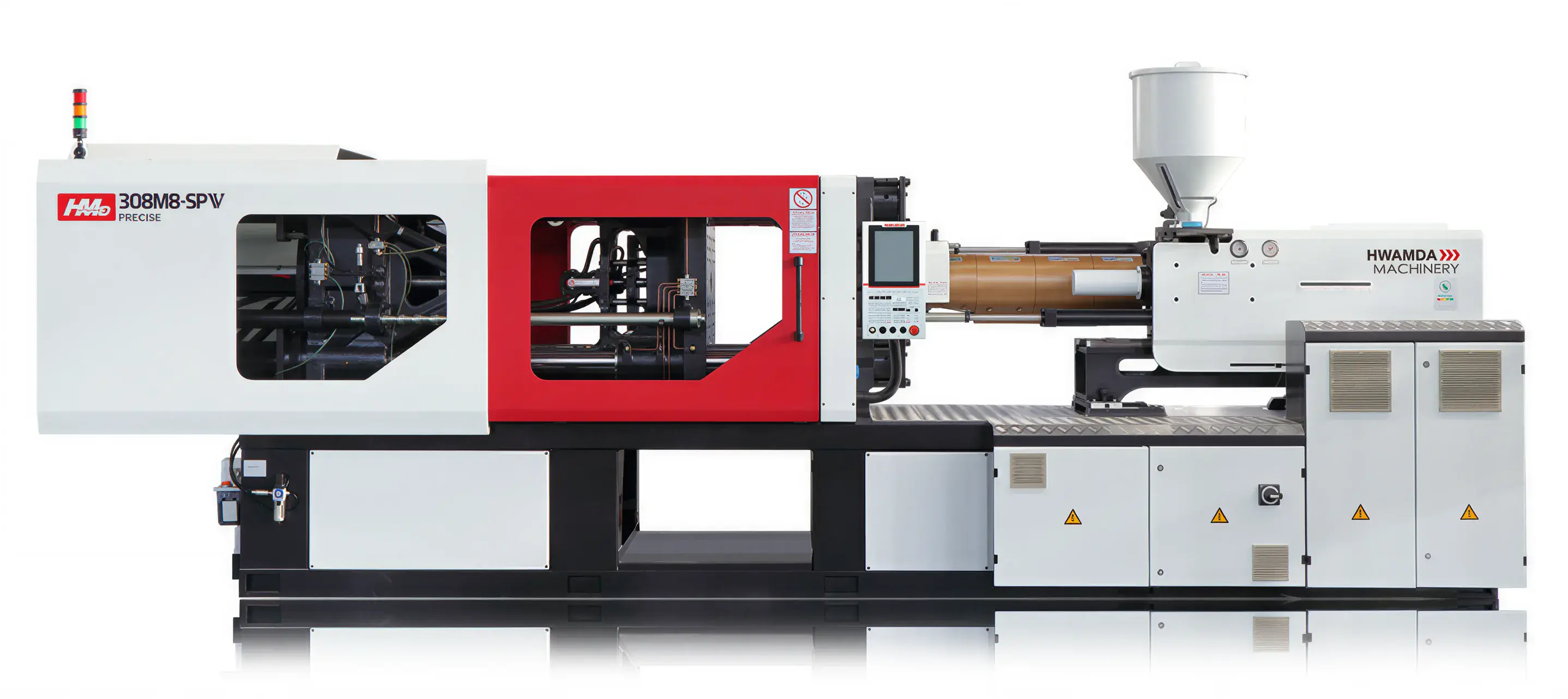
SPV5 high-speed machine for milk tea cup production
Need Expert Advice?
Talk to our engineers about your specific production requirements. Free consultation.
Process Parameters and Fill Analysis
Filling a 700 ml milk tea cup with 0.40-0.60 mm wall at a height of 155-180 mm requires aggressive injection parameters. On the HMD 418M8-SPV, set injection speed to 480-517 mm/s with a multi-stage velocity profile: fast initial fill at 100% speed through the base and lower third of the cup, then reduce to 80% speed through the middle section to prevent jetting, and finally boost back to 95% speed for the final rim fill where the melt front cools most rapidly. Injection pressure reaches 170-182 MPa at the point of peak resistance, typically when the melt front passes through the narrowest wall section at 0.40 mm. Melt temperature of 230-250 degrees Celsius provides optimal flow characteristics for PP with MFI of 45-70 g/10min. Hold pressure at 45-55% of injection pressure for 0.8-1.2 seconds packs the part and compensates for PP shrinkage of 1.5-2.0%. Cooling time of 2.0-3.0 seconds at mold temperature of 18-22 degrees Celsius is sufficient for wall solidification, though the thicker rim section of 1.0-1.5 mm may require slightly longer cooling. Total cycle time with IML is 5.5-6.5 seconds for 8-cavity production, achieving output of approximately 4,400-5,200 cups per hour.
IML Decoration for Beverage Market Branding
In-Mold Labeling is a competitive differentiator in the milk tea cup market, where brand visibility on the cup drives consumer purchase decisions. The IML system for tall milk tea cups uses wrap-around labels that cover 180-360 degrees of the cup circumference, with label heights of 80-150 mm. Labels are made from 50-70 micrometer OPP or PP film with reverse-printed graphics and a heat-seal inner layer. The SWITEK IML robot places labels into the core side of the mold, where they wrap around the core pin and are held by electrostatic charge at 20-30 kV until mold closing. During injection, the PP melt at 230-250 degrees Celsius fuses with the label inner surface, creating a permanent bond that resists moisture, condensation, and handling. The critical quality parameters for milk tea cup IML are circumferential registration within plus or minus 0.5 mm, vertical position within plus or minus 0.3 mm, and absence of wrinkles or air pockets. For tall cups, label wrinkle risk increases at the bottom radius where the label transitions from sidewall to base. This is controlled by label pre-forming in the magazine and precise electrostatic charge application. IML adds 0.5-0.8 seconds to cycle time and 0.010-0.018 USD per cup in label cost.
Key Specs
- •The IML system for tall milk tea cups uses wrap-around labels that cover 180-360 degrees of the cup circumference, with label heights of 80-150 mm.
- •The critical quality parameters for milk tea cup IML are circumferential registration within plus or minus 0.5 mm, vertical position within plus or minus 0.3 mm, and absence of wrinkles or air pockets.

Automatic packing and stacking system
Output Capacity and Market Applications
Milk tea cup production serves a rapidly growing beverage market, particularly in East and Southeast Asia. An HMD 418M8-SPV with 8-cavity mold at 6.0-second cycle produces 4,800 cups per hour. At 85% OEE running 24/7, monthly output reaches 2.93 million cups. Material cost for a 22g PP cup at 1.20 USD/kg is 0.0264 USD per cup. IML label cost adds 0.010-0.018 USD. Energy cost at 1.0-1.2 kWh/kg is approximately 0.003 USD per cup. Total variable cost is 0.039-0.047 USD per cup. Wholesale selling prices of 0.06-0.10 USD per cup provide healthy gross margins of 35-55%. The milk tea market in Asia exceeds 3.5 billion cups annually, with IML-decorated cups commanding a 15-25% price premium over plain versions. Production cells can be configured for multiple cup sizes by maintaining interchangeable mold sets for 500 ml and 700 ml volumes on the same SPV5 machine, with changeover time of 2-3 hours using the INOVA controller stored parameter recall function. Lids are produced separately on a smaller machine, typically 200-300 tonne class, using the same PP material.
Frequently Asked Questions
Milk tea cups are taller at 120-180 mm versus 60-80 mm for yogurt cups, creating longer flow paths and higher core deflection risk. Wall thickness is thicker at 0.40-0.60 mm versus 0.30-0.40 mm, but the height-to-diameter ratio exceeding 1.5:1 demands higher injection speeds of 480-517 mm/s on SPV5 machines. The tall core pins of 120-180 mm length require precision alignment within plus or minus 0.01 mm. Cycle times are similar at 5.5-6.5 seconds but cavity counts are typically limited to 4-8 versus 4-8 for yogurt cups.
Related Guides
Ready to Start Your Project?
Get a free consultation and quotation for your thin-wall packaging production line.
Join 500+ manufacturers in 60+ countries who trust HWAMDA.
Get Free Quote