

Yogurt Cup Market Demand in Poland
Poland produces over 400,000 tonnes of yogurt annually, ranking among the top five dairy producers in the EU. The country serves as a key manufacturing base for international dairy brands including Danone, Lactalis, and Mlekpol, all requiring high-volume thin-wall PP cup production. Polish yogurt cup demand centers on 125 mL, 150 mL, and 200 mL formats with wall thicknesses of 0.45-0.6 mm. The domestic market consumes over 3 billion yogurt cups per year, with additional export demand to neighboring Czech Republic, Slovakia, and Baltic states. Poland's competitive labor costs and central EU location make it an attractive production hub for dairy packaging. Local converters are increasingly replacing older European machines with cost-effective Chinese equipment to maintain margins against rising PP resin costs. HWAMDA has established a growing customer base among Polish plastics processors seeking high-speed thin-wall capability at 40-50% lower capital expenditure. The growing demand across both traditional retail and modern foodservice channels creates a sustained need for high-volume, cost-efficient yogurt cups production equipment. Local manufacturers who invest in high-speed thin-wall injection molding gain competitive advantage over both imported finished products and local competitors using slower conventional equipment.
Key Specs
- •Poland produces over 400,000 tonnes of yogurt annually, ranking among the top five dairy producers in the EU.
- •Polish yogurt cup demand centers on 125 mL, 150 mL, and 200 mL formats with wall thicknesses of 0.45-0.6 mm.
- •HWAMDA has established a growing customer base among Polish plastics processors seeking high-speed thin-wall capability at 40-50% lower capital expenditure.
Finished yogurt cups — high-speed thin-wall production
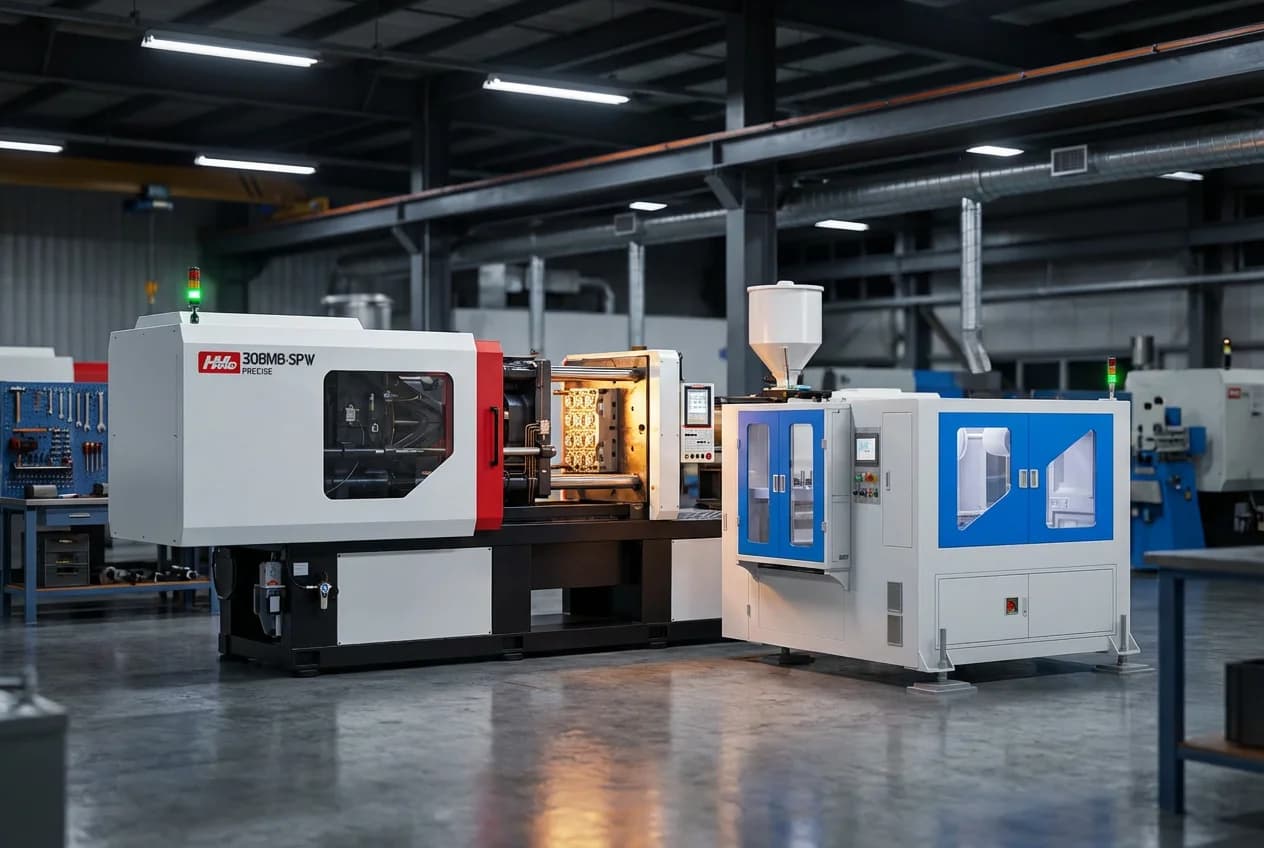
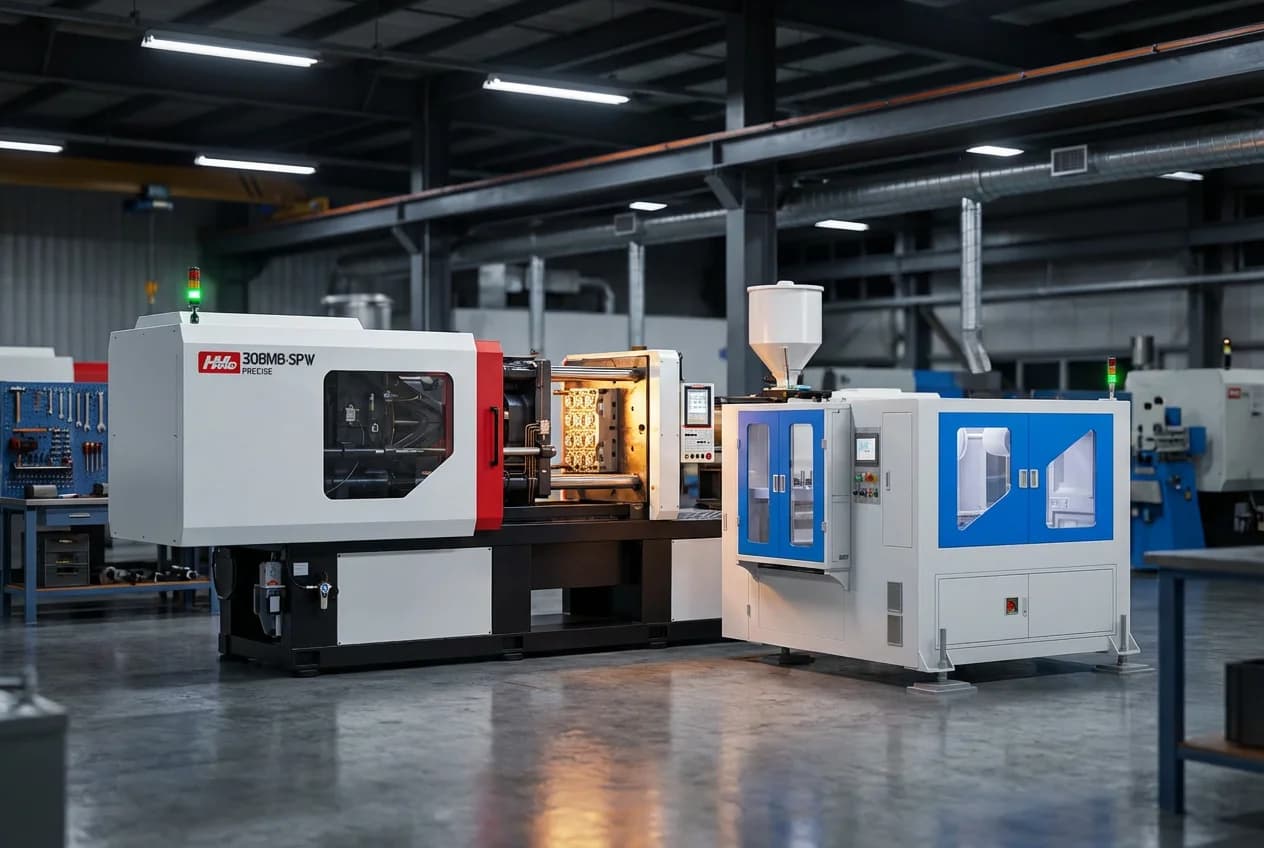
Recommended Machine: HMD 380M8-SPV (380-400T)
The HMD 380M8-SPV is engineered for continuous high-speed yogurt cup production demanded by Polish dairy packaging operations. With 3800-4000 kN clamping force and injection speeds reaching 450 mm/s, the machine fills 16 thin-wall cavities simultaneously in under 0.5 seconds. The servo-hydraulic drive system reduces energy consumption to 4.5-5.5 kWh/kg, cutting electricity costs by 30-40% compared to older fixed-pump machines common in Polish factories. Platen dimensions of 860 x 860 mm accommodate both single-face and stack-mold configurations. The control system features a 15-inch color touchscreen with multi-language support including Polish, enabling local operators to manage recipes, monitor cavity balance, and track production statistics. Dry cycle time of 1.6 seconds ensures maximum throughput potential. The machine meets CE and EMC directives, with all safety guards, e-stops, and interlocks conforming to EN ISO 13849-1 PLd requirements standard for Polish industrial installations. The hydraulic oil system features a closed-loop cooling circuit with plate-type heat exchanger maintaining oil temperature within 40-50 degrees Celsius for consistent viscosity and system response. The proportional servo valve provides pressure and flow control accurate to within 1% of setpoint, ensuring shot-to-shot consistency critical for thin-wall yogurt cup quality.
Mold Configuration: 16-Cavity for Poland
HWAMDA's 16-cavity yogurt cup mold is the preferred configuration for Polish dairy packaging producers balancing output volume with operational reliability. The mold features a valve-gate hot runner manifold from Yudo or HRS with 16 individually controlled nozzles ensuring balanced fill across all cavities. Core and cavity inserts are machined from H13 tool steel hardened to 50-52 HRC, with beryllium copper cooling inserts achieving coolant-to-cavity thermal conductivity of 210 W/mK. Cooling circuit design targets a mold surface temperature of 18-25 degrees Celsius using 12-15 degrees chilled water. For Polish operations running 125 mL cups at 4.2 grams each, total shot weight is approximately 67 grams per cycle. The mold includes automatic degating and in-mold ejection to a peripheral stacking conveyor. HWAMDA also offers 8-cavity and 12-cavity variants for customers starting with lower volumes or running larger 200 mL cup formats requiring additional cavity spacing. HWAMDA's mold engineering team provides comprehensive DFM (Design for Manufacturability) analysis before mold production begins, optimizing gate location, cooling channel layout, and ejection strategy for the specific yogurt cups geometry. All molds undergo full dimensional inspection and trial production at HWAMDA's factory before shipment.
Key Specs
- •Core and cavity inserts are machined from H13 tool steel hardened to 50-52 HRC, with beryllium copper cooling inserts achieving coolant-to-cavity thermal conductivity of 210 W/mK.
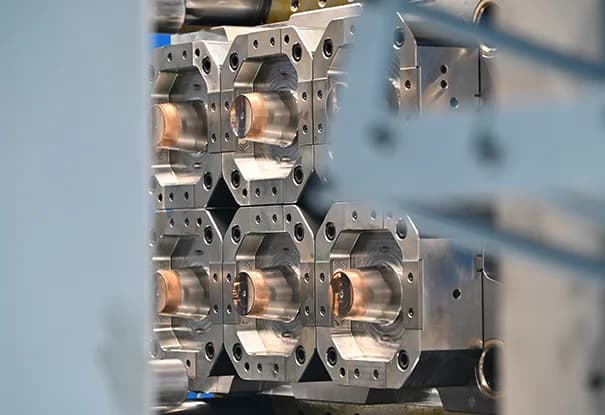
Multi-cavity yogurt cup mold with precision cooling channels
Need Expert Advice?
Talk to our engineers about your specific production requirements. Free consultation.
Production Capacity and Output Planning
A single HMD 380M8-SPV with 16-cavity mold operating at 4.0-second cycles produces 14,400 yogurt cups per hour. Running 22 hours per day allows for 316,800 cups daily, or approximately 95 million cups per year at 300 working days. Polish dairy packaging operations typically target 150-300 million cups annually, requiring 2-3 machine cells. HWAMDA designs multi-machine layouts with centralized PP resin drying and feeding systems, shared chilled water circuits, and unified conveyor lines leading to automated counting and packaging stations. Material throughput per machine averages 90-100 kg/hour of PP homopolymer (MFI 45-60 g/10min). HWAMDA's production planning service helps Polish customers calculate optimal machine quantities based on their contracted volumes, accounting for 93-95% OEE, scheduled maintenance, and mold changeover time for different cup sizes. HWAMDA's capacity modeling for Polish operations includes detailed shift scheduling for the standard Polish three-shift pattern, accounting for weekend overtime availability during peak dairy season from April through September when yogurt consumption peaks.
Investment Budget and ROI for This Market
The complete HWAMDA yogurt cup production cell for Poland, comprising the HMD 380M8-SPV machine, 16-cavity mold, robot/stacker, and chiller, is priced at approximately $175,000-210,000 FOB Ningbo. Polish customers benefit from EU structural funds and PARP grants that can subsidize 20-35% of new manufacturing equipment investments. At 95 million cups annual output and a conversion margin of $7-10 per thousand cups, annual gross margin reaches $665,000-950,000. With PP resin at EUR 1,100-1,300/tonne and Polish electricity at EUR 0.15-0.18/kWh, operating costs are among the lowest in the EU. Payback period for the equipment investment ranges from 12-18 months depending on utilization rates. HWAMDA supports Polish customers with EUR-denominated invoicing and payment terms aligned with EU trade finance practices. Polish Special Economic Zones (SEZs) in locations like Katowice, Lodz, and Walbrzych offer additional tax exemptions for manufacturing investments. HWAMDA's sales team assists Polish customers with investment documentation for both EU grants and SEZ tax benefit applications.
Key Specs
- •Polish customers benefit from EU structural funds and PARP grants that can subsidize 20-35% of new manufacturing equipment investments.
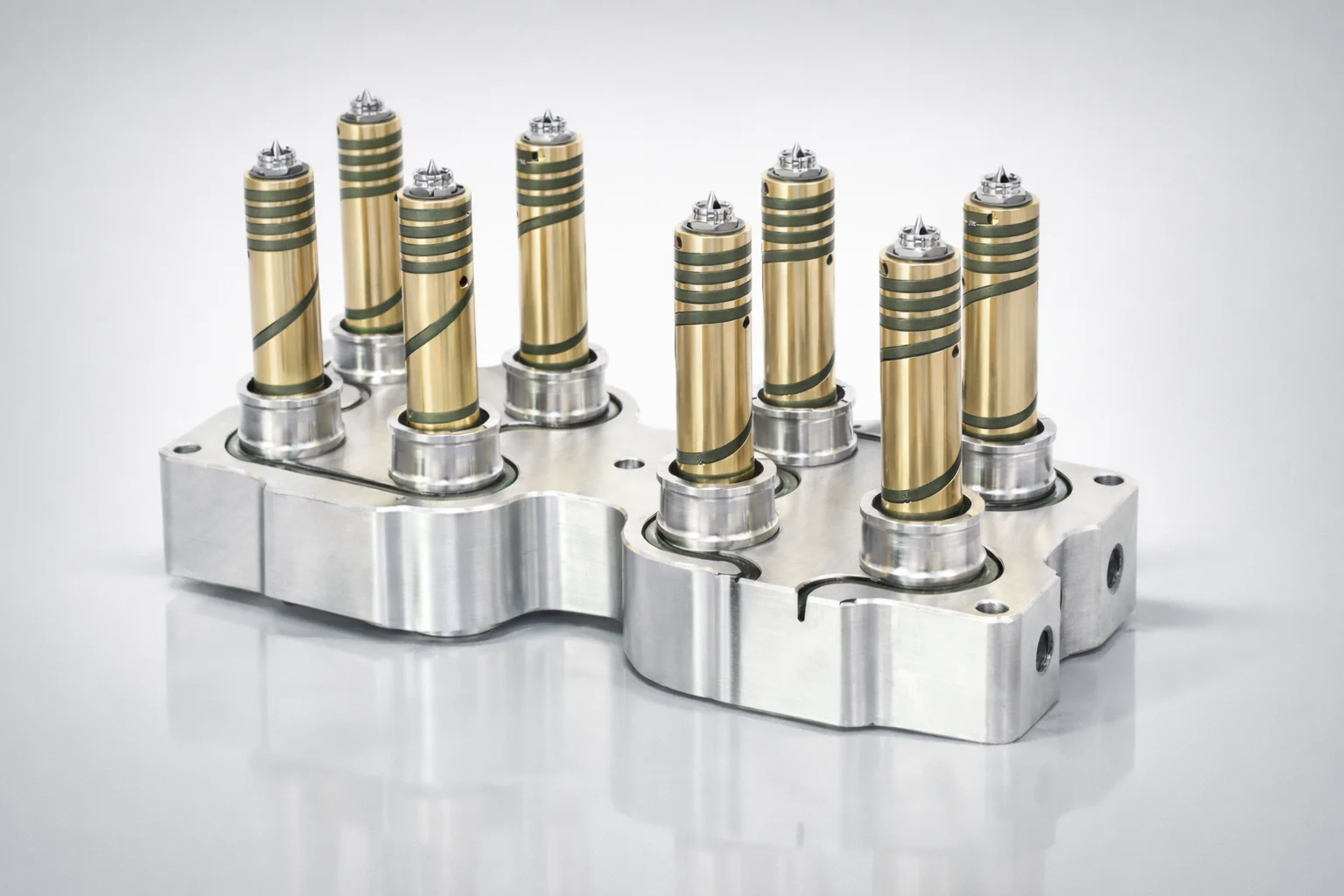
Hot runner system for balanced melt flow distribution
Logistics and Local Support
HWAMDA ships to Poland through the ports of Gdansk and Gdynia on the Baltic coast, with sea freight from Ningbo taking 30-35 days via the Suez Canal route. Equipment can also be routed through Hamburg with overland transport to Polish factory sites. Each machine cell ships in 1-2 containers depending on auxiliary equipment scope. HWAMDA dispatches 2 installation engineers for 7-10 days covering foundation work, machine commissioning, mold trials, and operator training in basic maintenance and parameter adjustment. All machines undergo full factory acceptance testing with the customer's mold before shipment, documented with video and production data reports. HWAMDA's European service network, based in Germany, provides spare parts delivery to Poland within 24-48 hours. Remote PLC diagnostics enable real-time troubleshooting support during Polish working hours. HWAMDA also coordinates land transport via rail from Chinese ports through the Belt and Road Initiative rail network to Poland, offering a 20-22 day alternative to sea freight for customers requiring faster delivery.
Frequently Asked Questions
Yes. HWAMDA machines ship with full CE certification and EU-standard documentation required for Polish PARP and regional EU structural fund applications. Several Polish customers have successfully obtained 20-35% equipment subsidies using HWAMDA pro-forma invoices and technical specifications in their grant applications. HWAMDA provides all necessary documentation including CE declarations, machine specifications, and energy efficiency certifications to support the subsidy application process. HWAMDA's documentation includes detailed energy efficiency certifications showing kWh/kg metrics that strengthen grant applications by demonstrating environmental benefit and operational cost reduction.
Related Guides
Ready to Start Your Project?
Get a free consultation and quotation for your thin-wall packaging production line.
Join 500+ manufacturers in 60+ countries who trust HWAMDA.
Get Free Quote