

P20 Steel Properties and Applications in Thin-Wall Molds
P20 (AISI P20, DIN 1.2311) is a pre-hardened chromium-molybdenum alloy steel supplied at 30-36 HRC, eliminating the need for post-machining heat treatment. Its key advantage is machinability -- P20 machines approximately 30 percent faster than H13, reducing mold manufacturing lead time by 2-3 weeks on a typical 8-cavity yogurt cup mold. Thermal conductivity is 29-34 W/m-K, adequate for moderate cycle times. However, P20's limitations become apparent in high-volume thin-wall production. At injection pressures above 160 MPa, P20 cores running 0.5mm-wall yogurt cups show measurable surface wear after 400,000-500,000 shots, manifesting as dimensional drift on wall thickness. P20 is best suited for prototype molds, low-volume production runs under 500,000 shots, or non-critical mold components like support plates and spacer blocks. For food packaging molds running on HWAMDA SPV5 machines at 4.0-4.5s cycle times, P20 should only be specified for outer mold plates and ejector plates, not for core or cavity inserts that contact the melt.
Key Specs
- •P20 (AISI P20, DIN 1.2311) is a pre-hardened chromium-molybdenum alloy steel supplied at 30-36 HRC, eliminating the need for post-machining heat treatment.
- •At injection pressures above 160 MPa, P20 cores running 0.5mm-wall yogurt cups show measurable surface wear after 400,000-500,000 shots, manifesting as dimensional drift on wall thickness.
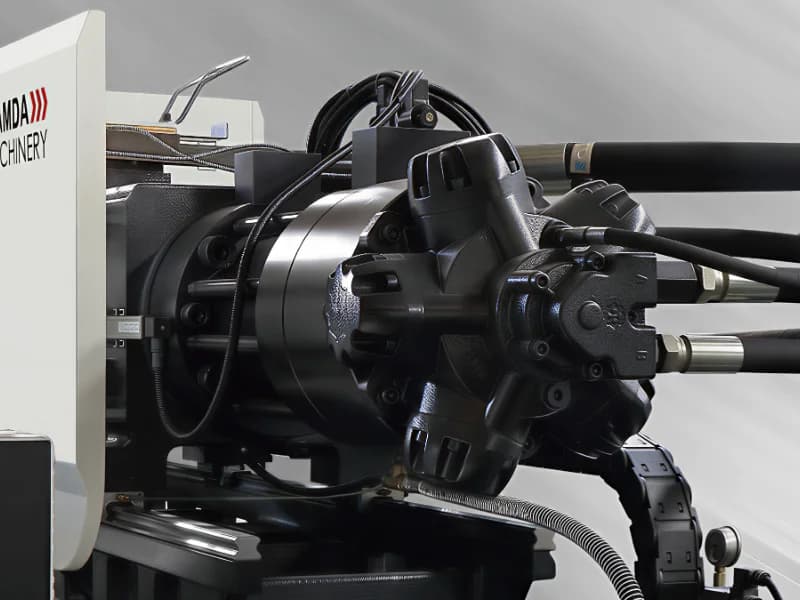
High-speed injection unit with linear guides
H13 Hot-Work Tool Steel for High-Volume Production
H13 (AISI H13, DIN 1.2344) is the industry standard for thin-wall food packaging mold cores and cavities. Heat-treated to 48-52 HRC, H13 delivers excellent wear resistance, hot hardness retention up to 540 degrees C, and toughness sufficient to withstand the 2,000-2,400 bar cavity pressures generated during thin-wall filling. Mold life with H13 cores typically reaches 3-5 million shots for 0.5mm-wall PP containers running at cycle times of 3.5-5.0s. Thermal conductivity is 24-28 W/m-K -- lower than P20, which requires more aggressive cooling channel design to maintain cycle times. For the HWAMDA HMD 470M8-SPV running 4-cavity food containers at 165 MPa injection pressure, H13 cores maintain dimensional stability within plus or minus 0.02mm over 3 million shots. The steel's resistance to thermal fatigue is critical when mold surface temperatures cycle between 25-45 degrees C every 4-5 seconds. H13 requires vacuum heat treatment with triple tempering to achieve optimal microstructure -- specifying heat treatment to NADCA 207-2003 standards ensures consistent performance across multiple cavity inserts.
S136 Stainless Steel for Corrosion-Resistant Mold Applications
S136 (AISI 420 modified, DIN 1.2083) is a high-chromium (13.5 percent) stainless tool steel that combines corrosion resistance with hardness of 48-52 HRC after heat treatment. Its primary application in thin-wall molding is for food packaging molds that must resist corrosion from condensation in chilled mold environments, or when processing hygroscopic materials like nylon. Thermal conductivity is 20-23 W/m-K -- the lowest of the three grades -- requiring beryllium copper inserts in thermally critical areas to maintain cycle times. S136 mold life reaches 5-10 million shots for PP containers, the longest of any standard mold steel. The premium cost is significant: S136 raw material is approximately 3-4 times the cost of P20 and 1.5-2 times the cost of H13. For an 8-cavity yogurt cup mold, the steel cost difference between H13 and S136 cores is approximately USD 8,000-12,000. S136 is justified when running molds in humid environments (Southeast Asia, tropical regions), when FDA or EU 10/2011 compliance requires documentation of corrosion-free mold surfaces, or when target mold life exceeds 5 million shots.
Key Specs
- •S136 (AISI 420 modified, DIN 1.2083) is a high-chromium (13.5 percent) stainless tool steel that combines corrosion resistance with hardness of 48-52 HRC after heat treatment.
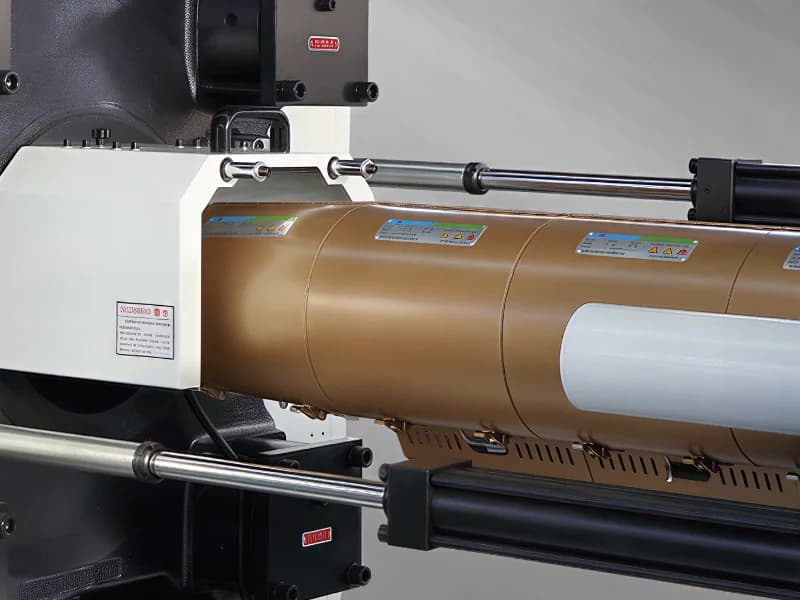
Servo-hydraulic drive system with energy recovery
Need Expert Advice?
Talk to our engineers about your specific production requirements. Free consultation.
Thermal Conductivity Comparison and Cooling Impact
The thermal conductivity difference between P20 (29-34 W/m-K), H13 (24-28 W/m-K), and S136 (20-23 W/m-K) directly affects achievable cycle times and cooling uniformity. On an 8-cavity yogurt cup mold running 0.5mm-wall PP at a mold temperature of 30 degrees C, switching from H13 to S136 cores without modifying the cooling circuit adds approximately 0.3-0.5s to the cycle time -- a 7-12 percent productivity loss. Compensating requires additional cooling measures: conformal cooling channels manufactured by direct metal laser sintering reduce the cooling gap by providing uniform cooling within 3-5mm of the cavity surface versus 8-12mm for conventional drilled channels. Alternatively, beryllium copper (BeCu) alloy inserts with thermal conductivity of 105-130 W/m-K can be press-fitted into thermally critical areas such as core tips and thin ribs. On HWAMDA SPV5 production lines, the optimal approach for S136 molds is a hybrid design: S136 cavity blocks with BeCu core tips, reducing the cycle time penalty to under 0.2s while maintaining full corrosion protection on melt-contact surfaces.
Cost-Benefit Analysis Across Production Volumes
Steel selection is fundamentally an economic decision balanced against production volume and part requirements. For a typical 8-cavity yogurt cup mold producing 6g PP cups on the HWAMDA HMD 380M8-SPV at 4.2s cycle, the comparative economics are: P20 cores at USD 15,000-20,000 total steel cost lasting 500,000 shots yields a steel cost of USD 0.004 per cup. H13 cores at USD 25,000-35,000 lasting 4 million shots yields USD 0.001 per cup. S136 cores at USD 40,000-55,000 lasting 7 million shots yields USD 0.001 per cup. The breakeven point between P20 and H13 occurs at approximately 700,000-900,000 shots. Beyond this volume, H13 is always more economical despite the higher upfront investment. The H13-to-S136 breakeven is at approximately 5-6 million shots, relevant only for high-volume contracts running 3 or more years. Additional factors include polishability -- S136 achieves mirror finishes of SPI A-1 (Ra 0.012-0.025 micrometers) more readily than H13, which is relevant for transparent PP containers where cavity surface quality directly affects part clarity.
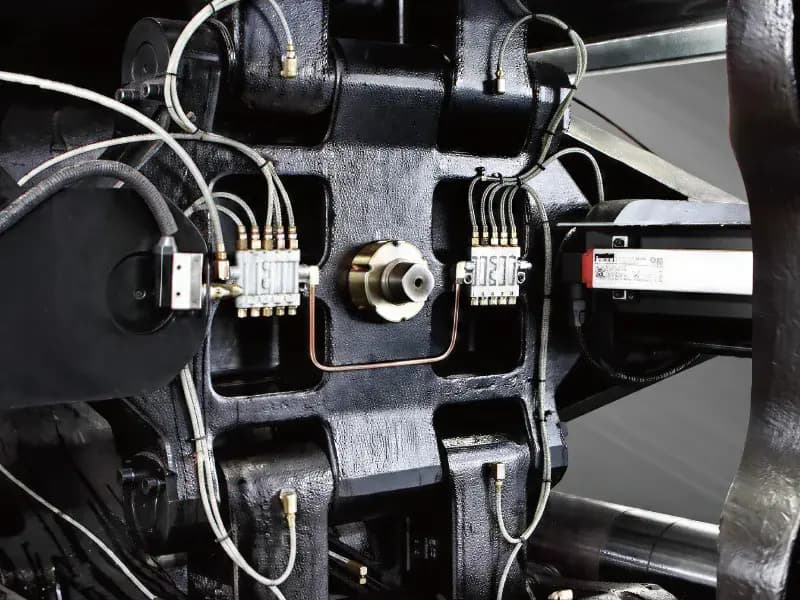
Toggle clamping unit — high rigidity for thin-wall molding
Steel Specification Best Practices for HWAMDA SPV5 Mold Orders
When ordering molds for HWAMDA SPV5 thin-wall machines, specifying mold steel correctly prevents costly mistakes. The mold specification should include: steel grade with hardness range (e.g., H13, 48-50 HRC), heat treatment standard (NADCA 207-2003 or equivalent), surface finish requirement per SPI classification, and material certification with mill certificate. For multi-cavity molds, all cavity inserts must be sourced from the same steel heat to ensure uniform hardness and thermal behavior across cavities -- hardness variation between cavities should not exceed 1 HRC. The mold maker should provide Charpy impact test results (minimum 15 J for H13 at room temperature) and a metallographic report confirming tempered martensite microstructure with no retained austenite above 5 percent. For HWAMDA's standard mold interface specifications, the mold locating ring should be 160mm diameter for the HMD 380M8-SPV and 200mm for the HMD 600M8-SPV. Sprue bushing radius must match the HWAMDA nozzle tip radius of 15mm (standard) or 20mm (large-bore option).
Frequently Asked Questions
H13 (DIN 1.2344) heat-treated to 48-52 HRC is the standard choice for 8-cavity yogurt cup molds running on HWAMDA SPV5 machines. It provides 3-5 million shot life at 0.5mm wall thickness, adequate thermal conductivity (24-28 W/m-K) for 4.0-4.5s cycle times, and resists thermal fatigue from repeated temperature cycling. Use S136 only if the mold operates in high-humidity environments or if the contract exceeds 5 million shots.
Related Guides
Ready to Start Your Project?
Get a free consultation and quotation for your thin-wall packaging production line.
Join 500+ manufacturers in 60+ countries who trust HWAMDA.
Get Free Quote