

Daily and Shift-Level Hot Runner Inspections
Every production shift should begin with a systematic hot runner check before the first shot. On HWAMDA SPV5 machines with the INOVA controller, access the hot runner temperature screen to verify all zone temperatures are within plus or minus 2 degrees C of setpoint -- a 230 degrees C nozzle zone should read 228-232 degrees C at steady state. Record the heater power draw percentage for each zone: healthy heaters operate at 30-60 percent duty cycle during stable production. A zone showing 85-100 percent power draw indicates a failing heater element or poor thermocouple contact. Check the manifold pressure reading during purging -- pressure spikes above 15 MPa during low-speed purging indicate a developing restriction. Visually inspect the mold parting line for any resin leakage or drool from the nozzle tips. On valve gate systems (YUDO SUMR or Synventive SVG+), verify that all valve pins are cycling by observing the gate vestige quality on the first 5-10 shots. A gate mark diameter exceeding 1.5mm or showing asymmetry indicates a sticking valve pin requiring immediate attention.
Key Specs
- •Check the manifold pressure reading during purging -- pressure spikes above 15 MPa during low-speed purging indicate a developing restriction.
- •On valve gate systems (YUDO SUMR or Synventive SVG+), verify that all valve pins are cycling by observing the gate vestige quality on the first 5-10 shots.
- •A gate mark diameter exceeding 1.5mm or showing asymmetry indicates a sticking valve pin requiring immediate attention.
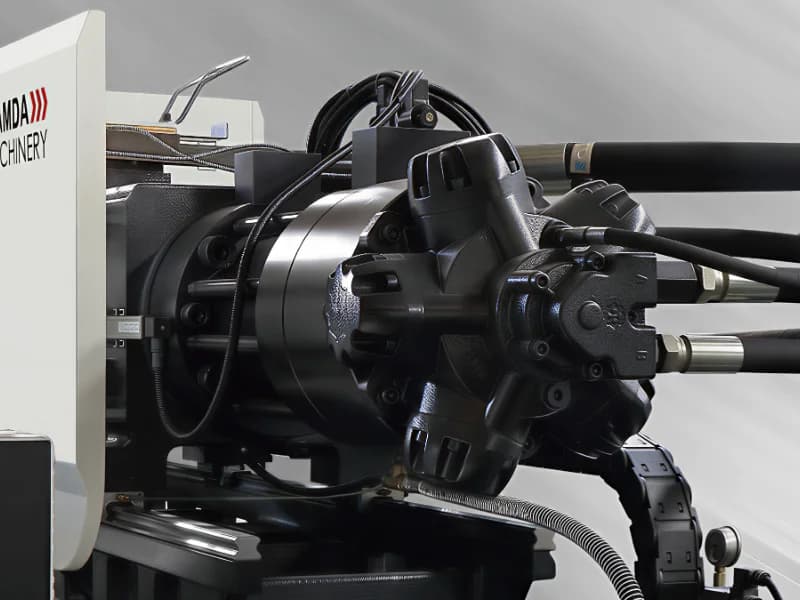
High-speed injection unit with linear guides
Preventive Maintenance Schedule: 250K to 2M Shot Intervals
Structured preventive maintenance at defined shot intervals prevents unplanned downtime that costs USD 500-1,500 per hour on a high-speed thin-wall line. At 250,000 shots: replace all nozzle tip insulators and inspect tip condition -- replace if gate orifice has enlarged by more than 0.1mm from nominal (typically 1.2-1.8mm for PP thin-wall). At 500,000 shots: pull all valve pins and inspect for wear, scoring, or carbon buildup. Replace valve pin seals and clean pin bores with brass brushes. Measure pin diameter with a micrometer -- replace when worn 0.02mm below nominal. At 1 million shots: remove the manifold for full inspection. Check manifold bore surfaces for carbon deposits and clean with approved solvents. Verify heater element resistance with a multimeter -- resistance should be within plus or minus 10 percent of nameplate value (typically 40-80 ohms for 200-400W nozzle heaters). At 2 million shots: perform complete system teardown including thermocouple replacement, manifold flatness verification (within 0.05mm across the full length), and hydraulic cylinder rebuild on valve gate actuators.
Troubleshooting Temperature Deviations and Heater Failures
Temperature control issues account for approximately 45 percent of hot runner-related defects in thin-wall production. When a zone reads below setpoint, first check the thermocouple connection at the controller terminal -- loose connections cause intermittent readings and temperature overshoot. If the thermocouple tests good (measure resistance: Type J should read 0-20 ohms at room temperature, Type K should read 0-15 ohms), measure the heater element resistance. A healthy 300W, 230V tubular heater reads approximately 176 ohms. Open circuit indicates a burned-out element; resistance below 80 percent of nominal suggests internal damage and imminent failure. Short-to-ground testing is critical for safety: measure insulation resistance between heater leads and the manifold body with a megohm meter -- minimum acceptable reading is 1 megohm at 500V DC. On HWAMDA SPV5 machines, the INOVA controller's zone diagnostic screen displays real-time heater current draw, making it possible to identify degrading heaters before failure by tracking progressive current reduction over time.
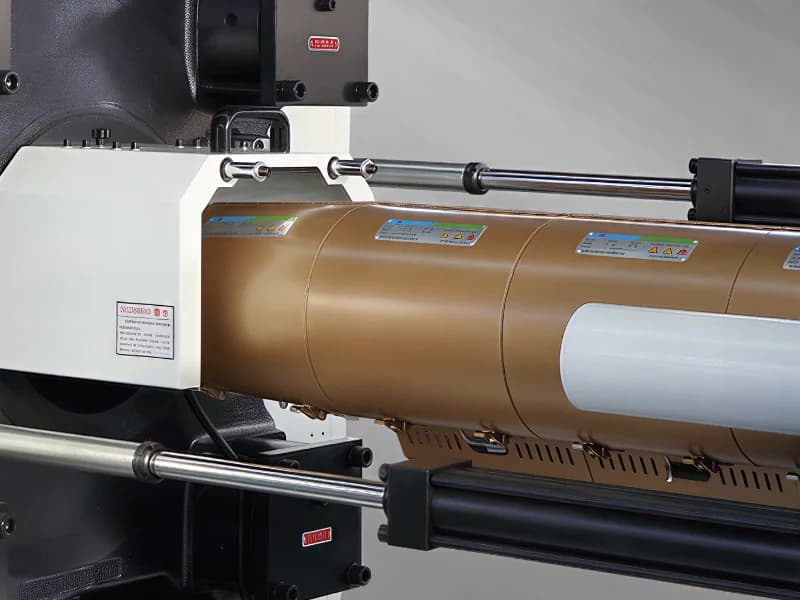
Servo-hydraulic drive system with energy recovery
Need Expert Advice?
Talk to our engineers about your specific production requirements. Free consultation.
Valve Pin and Gate Wear Diagnosis
Valve gate systems on thin-wall molds cycle the valve pin 800-1,000 times per hour at cycle times of 3.5-4.5s, accumulating 15-20 million cycles per year on a continuous production line. This extreme duty cycle makes pin and gate wear the primary maintenance concern. Worn valve pins cause several identifiable defects: stringing or drool between shots indicates the pin no longer seats fully, creating a positive shut-off gap exceeding 0.01mm. Gate blush (whitening around the gate area) results from turbulent flow around a worn pin tip that no longer matches the gate geometry. Uneven gate vestige height across cavities points to differential pin wear -- measure vestige height with a depth micrometer and compare across all cavities. On YUDO SUMR systems, valve pins are typically H13 steel nitrided to 60-65 HRC with a pin diameter of 2.0-3.0mm for PP thin-wall applications. Replace pins when tip diameter is worn by more than 0.03mm or when the seating face shows visible scoring under 10x magnification. Gate bushings in the cavity block should be replaced simultaneously to ensure proper pin-to-gate seal.
Manifold Leak Detection and Seal Replacement
Manifold leaks range from minor nuisances to catastrophic failures that damage molds costing USD 50,000-200,000. Early detection is essential. Signs of developing leaks include: discoloration or smoke from the manifold area during startup, progressive increase in injection pressure at constant process settings, and resin accumulation visible when the mold is opened for inspection. The most common leak locations are nozzle-to-manifold interfaces and manifold-to-sprue bushing seals. These interfaces rely on thermal expansion to create a metal-to-metal seal at operating temperature -- the cold gap is typically 0.05-0.10mm, which closes as the manifold heats to 230-260 degrees C and expands. Improper assembly torque on manifold bolts (typically 45-65 Nm for M10 bolts in steel manifolds) is the leading cause of interface leaks. During reassembly after maintenance, torque bolts in a star pattern to specified values using a calibrated torque wrench. Check manifold alignment pins for wear -- a worn pin allowing 0.05mm lateral shift can open the nozzle-to-manifold seal. For HWAMDA SPV5 mold installations, verify the manifold mounting surface parallelism is within 0.02mm across the full mold width.
Key Specs
- •These interfaces rely on thermal expansion to create a metal-to-metal seal at operating temperature -- the cold gap is typically 0.05-0.10mm, which closes as the manifold heats to 230-260 degrees C and expands.
- •Check manifold alignment pins for wear -- a worn pin allowing 0.05mm lateral shift can open the nozzle-to-manifold seal.
- •For HWAMDA SPV5 mold installations, verify the manifold mounting surface parallelism is within 0.02mm across the full mold width.
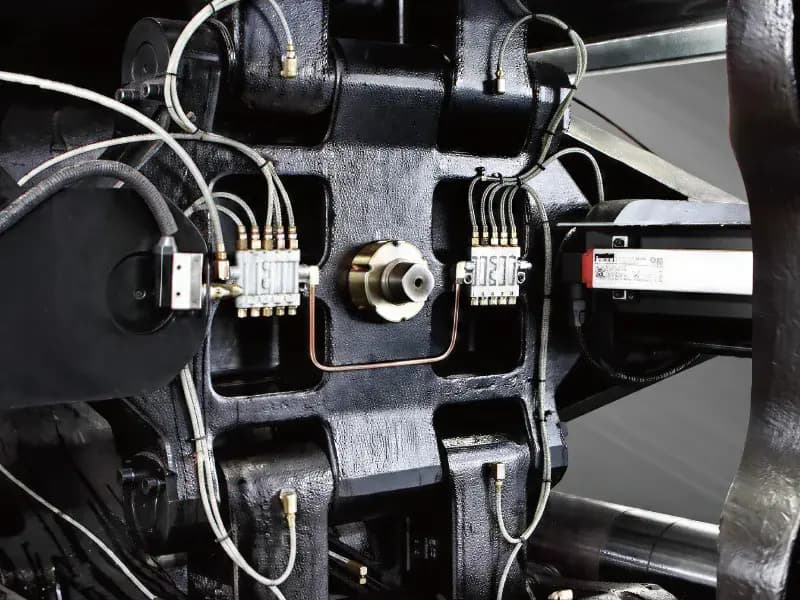
Toggle clamping unit — high rigidity for thin-wall molding
Hot Runner System Spare Parts Inventory Management
Maintaining the right spare parts inventory prevents extended downtime while avoiding excessive capital tied up in unused components. For a single 8-drop valve gate system running on HWAMDA SPV5 machines, the recommended critical spares inventory includes: 2 complete sets of valve pins (16 pins), 4 nozzle tip assemblies (50 percent spare coverage), 2 complete sets of valve pin seals, 4 heater elements (1 per size used in the system), 4 thermocouples (matching type and length), and 1 set of manifold O-rings and backup rings. The estimated inventory cost is USD 3,000-5,000 for a YUDO system and USD 4,000-7,000 for a Synventive system. This investment protects against production losses of USD 500-1,500 per hour of unplanned downtime. Organize spares by shot count replacement interval and track consumption to refine ordering quantities. Store heater elements in a dry environment -- moisture absorption in ceramic insulators causes premature failure. Keep valve pins in labeled containers with anti-corrosion packaging, noting the specific mold and drop position each pin fits.
Frequently Asked Questions
Inspect valve pins every 500,000 shots and plan replacement at 1.5-2.0 million shots for PP thin-wall production at 3.5-4.5s cycle times. Replace earlier if pin tip diameter has worn by more than 0.03mm, if gate vestige shows asymmetry, or if stringing occurs between shots. Always replace gate bushings simultaneously with pins to maintain the seal geometry. On a continuous 3-shift operation, this translates to pin replacement every 4-6 months.
Related Guides
Ready to Start Your Project?
Get a free consultation and quotation for your thin-wall packaging production line.
Join 500+ manufacturers in 60+ countries who trust HWAMDA.
Get Free Quote