

Cooling Channel Layout Fundamentals for Thin-Wall Molds
Effective cooling channel design starts with three fundamental parameters: channel diameter, pitch (center-to-center spacing), and depth (distance from cavity surface). For thin-wall molds running on HWAMDA SPV5 machines, the standard guidelines are channel diameter of 8-12mm, pitch of 2.5-3.0 times the channel diameter, and depth of 1.5-2.0 times the channel diameter from the cavity surface. On an 8-cavity yogurt cup mold, this translates to 10mm diameter channels at 25-30mm pitch located 15-20mm from the cavity wall. Coolant flow must be turbulent (Reynolds number above 10,000) to achieve maximum heat transfer -- for a 10mm channel with water at 20 degrees C, this requires a flow velocity of at least 1.2 m/s, corresponding to approximately 5.7 L/min per circuit. Series cooling circuits connecting multiple cavities should be limited to 4 cavities per circuit to prevent excessive temperature rise -- inlet-to-outlet temperature differential should not exceed 3 degrees C. Parallel circuits provide more uniform cooling but require flow regulators on each branch to prevent preferential flow through low-resistance paths.
Key Specs
- •For thin-wall molds running on HWAMDA SPV5 machines, the standard guidelines are channel diameter of 8-12mm, pitch of 2.5-3.0 times the channel diameter, and depth of 1.5-2.0 times the channel diameter from the cavity surface.
- •On an 8-cavity yogurt cup mold, this translates to 10mm diameter channels at 25-30mm pitch located 15-20mm from the cavity wall.
- •Coolant flow must be turbulent (Reynolds number above 10,000) to achieve maximum heat transfer -- for a 10mm channel with water at 20 degrees C, this requires a flow velocity of at least 1.2 m/s, corresponding to approximately 5.7 L/min per circuit.
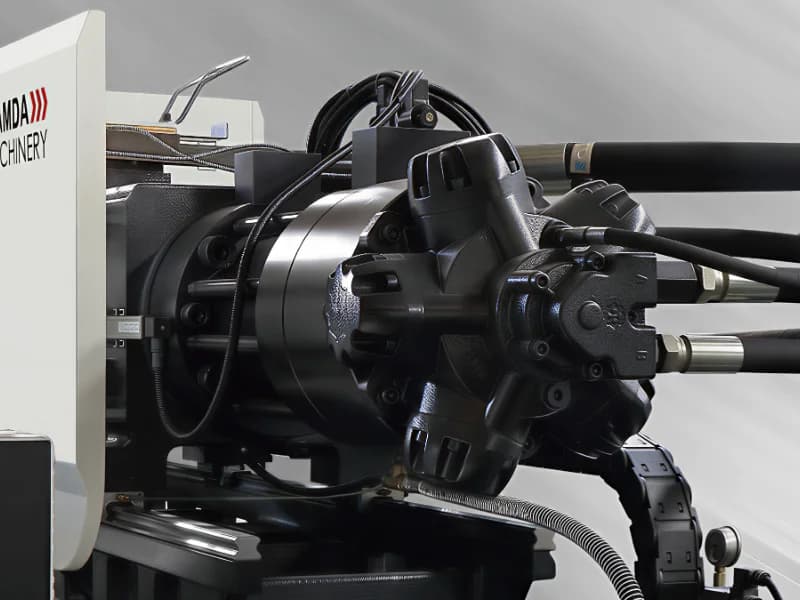
High-speed injection unit with linear guides
Conformal Cooling Technology and Cycle Time Benefits
Conformal cooling channels manufactured by direct metal laser sintering (DMLS) or selective laser melting (SLM) follow the cavity contour geometry, maintaining a uniform distance of 3-5mm from the mold surface compared to 8-15mm for conventional drilled channels. This geometric advantage delivers 20-40 percent cooling time reduction and significantly improved temperature uniformity across the cavity surface. On thin-wall yogurt cup cores where heat concentration at the base-to-wall transition causes the longest cooling delay, conformal channels reduce the hot spot temperature from 55-60 degrees C to 35-40 degrees C, eliminating the thermal bottleneck. The cost premium for conformal cooling inserts is substantial: USD 5,000-15,000 per cavity insert versus USD 1,000-3,000 for conventional machined inserts. ROI calculation for an 8-cavity yogurt cup mold on a HWAMDA HMD 380M8-SPV: cycle time reduction of 0.5s (from 4.2s to 3.7s) increases hourly output from 6,857 to 7,784 cups -- an additional 927 cups per hour worth approximately USD 0.005 each, generating USD 4.64 per hour or USD 37,100 per year in additional revenue on a 24/7 operation.
Beryllium Copper Inserts for Thermal Management
Beryllium copper (BeCu) alloy inserts provide thermal conductivity of 105-130 W/m-K -- approximately 4-5 times higher than H13 tool steel (24-28 W/m-K). BeCu inserts are strategically placed in thermal bottleneck areas: core tips of deep-draw containers, thin ribs, and areas where conventional cooling channels cannot be routed close enough to the cavity surface. For yogurt cup core tips on HWAMDA SPV5 molds, a BeCu insert of 15-20mm diameter at the core base reduces the core tip temperature from 50-55 degrees C to 32-38 degrees C, enabling a 0.3-0.4s cycle time reduction. BeCu hardness is limited to 38-42 HRC (Alloy C17200), which is lower than H13 at 48-52 HRC, so insert placement must avoid high-wear areas where the gate impingement flow directly contacts the surface. The material cost is approximately USD 80-120 per kg versus USD 8-12 per kg for H13, but insert volumes are typically small (50-200g per insert). For the best thermal performance, BeCu inserts should be shrink-fitted into the surrounding H13 steel with an interference fit of 0.02-0.03mm on diameter, ensuring intimate thermal contact without an air gap that would negate the conductivity advantage.
Key Specs
- •For yogurt cup core tips on HWAMDA SPV5 molds, a BeCu insert of 15-20mm diameter at the core base reduces the core tip temperature from 50-55 degrees C to 32-38 degrees C, enabling a 0.3-0.4s cycle time reduction.
- •BeCu hardness is limited to 38-42 HRC (Alloy C17200), which is lower than H13 at 48-52 HRC, so insert placement must avoid high-wear areas where the gate impingement flow directly contacts the surface.
- •For the best thermal performance, BeCu inserts should be shrink-fitted into the surrounding H13 steel with an interference fit of 0.02-0.03mm on diameter, ensuring intimate thermal contact without an air gap that would negate the conductivity advantage.
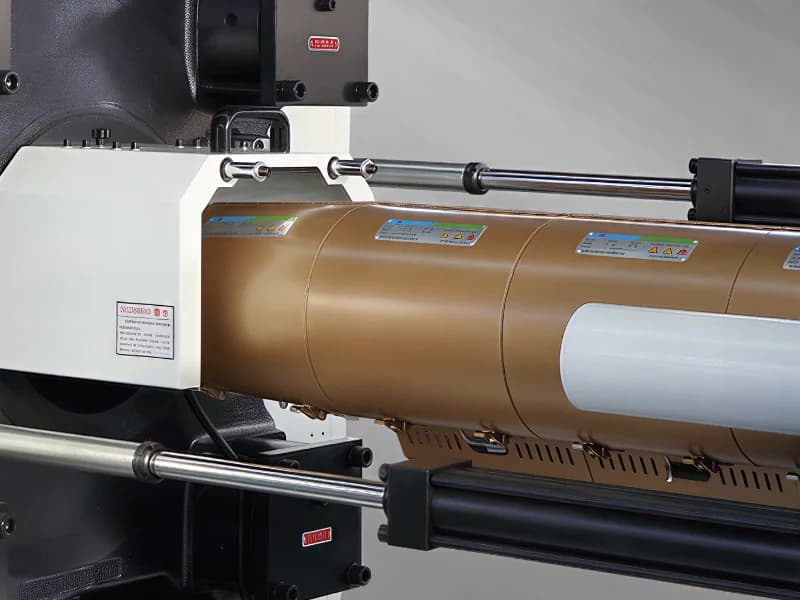
Servo-hydraulic drive system with energy recovery
Need Expert Advice?
Talk to our engineers about your specific production requirements. Free consultation.
Coolant Temperature Control and Chiller Sizing
Precise coolant temperature control is essential for consistent part quality on multi-cavity thin-wall molds. HWAMDA SPV5 production lines typically require a dedicated mold temperature controller (MTC) for each mold half, with total cooling capacity of 30-80 kW depending on mold size and cycle time. For an 8-cavity yogurt cup mold producing 6g PP cups at 4.0s cycle, the heat load calculation is: 8 cavities x 6g x specific heat of PP (1.8 kJ/kg-K) x temperature differential (230 degrees C melt minus 40 degrees C eject) divided by 4.0s cycle = approximately 4.1 kW from the melt, plus frictional heating and hot runner losses, totaling 5-7 kW. Coolant inlet temperature should be 15-25 degrees C for PP thin-wall applications, controlled to plus or minus 0.5 degrees C. Running coolant below 12 degrees C risks condensation on the mold surface in humid environments, causing surface defects and corrosion. Flow rate through the mold should be 40-80 L/min total, distributed across 4-8 independent cooling circuits. Monitor inlet-outlet temperature differential -- variation exceeding 5 degrees C between circuits indicates blockage or flow restriction requiring immediate attention.
Cooling System Troubleshooting: Common Problems and Solutions
Cooling system degradation is the most frequent hidden cause of cycle time creep in thin-wall production. Scale buildup of 0.5mm inside cooling channels reduces heat transfer by approximately 25 percent, adding 0.3-0.5s to cycle time. Prevent scale with water treatment maintaining hardness below 100 ppm CaCO3 and pH between 7.0-8.5. Descale molds every 3-6 months using citric acid solution (5-10 percent concentration) circulated for 2-4 hours. Blocked baffles and bubblers are common on deep-draw cores -- check flow rate on each circuit individually and compare to the baseline recorded during mold qualification. A flow reduction exceeding 20 percent indicates blockage. Air pockets trapped in cooling circuits reduce heat transfer dramatically -- purge circuits at startup by running coolant at maximum flow for 2-3 minutes with the return-side valve slightly restricted to create back-pressure. On HWAMDA SPV5 machines, the INOVA controller can log mold temperature trends to detect gradual cooling degradation. Set monitoring thresholds at 3 degrees C above the qualified mold temperature baseline to trigger maintenance alerts before part quality is affected.
Key Specs
- •Scale buildup of 0.5mm inside cooling channels reduces heat transfer by approximately 25 percent, adding 0.3-0.5s to cycle time.
- •Descale molds every 3-6 months using citric acid solution (5-10 percent concentration) circulated for 2-4 hours.
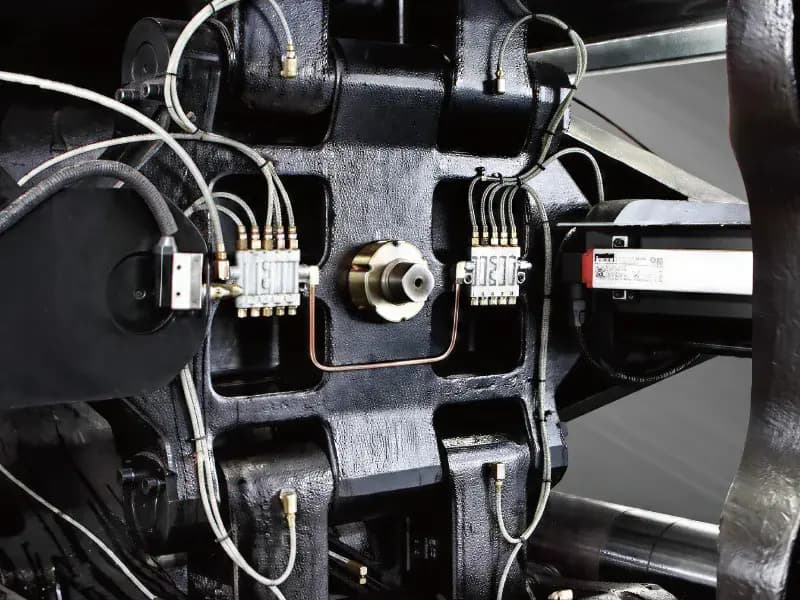
Toggle clamping unit — high rigidity for thin-wall molding
Advanced Cooling Strategies for Sub-4-Second Cycle Times
Achieving cycle times below 4.0 seconds on thin-wall PP containers requires combining multiple cooling technologies. The baseline approach for HWAMDA SPV5 yogurt cup lines running at 3.5-3.8s cycle time integrates: conformal-cooled cavity inserts with 4mm channel diameter at 3mm depth from the cavity surface, BeCu core tips with internal bubbler tubes, and chilled water at 12-15 degrees C with glycol anti-freeze mix (15-20 percent concentration to prevent condensation). Cooling water flow is maintained at 60-80 L/min with turbulent flow (Re above 12,000) in all circuits. The mold opens with the part still slightly warm (surface temperature 35-45 degrees C), relying on air cooling during the 0.3-0.5s ejection phase for final solidification. Part ejection temperature must be carefully tuned -- too hot causes deformation during SWITEK robot handling (grip force 2-5N per cup), while too cold extends cycle time unnecessarily. The INOVA controller's adaptive cooling function adjusts holding pressure switch-over based on cavity pressure sensor feedback, compensating for ambient temperature variations of plus or minus 5 degrees C throughout the day to maintain consistent part dimensions within plus or minus 0.05mm.
Frequently Asked Questions
For PP thin-wall containers (0.4-0.7mm wall) on HWAMDA SPV5 machines, set coolant inlet temperature at 15-25 degrees C. For cycle times below 4.0s, use 12-15 degrees C with glycol anti-freeze (15-20 percent) to prevent condensation. Never run below 10 degrees C without dehumidification of the production environment. Control temperature to plus or minus 0.5 degrees C for consistent wall thickness across all cavities.
Related Guides
Ready to Start Your Project?
Get a free consultation and quotation for your thin-wall packaging production line.
Join 500+ manufacturers in 60+ countries who trust HWAMDA.
Get Free Quote