Signs You Need More Capacity
Several indicators signal that expansion is overdue. Running existing lines at OEE above 90% continuously means you have no buffer for maintenance windows, mold changes, or demand spikes. Order backlogs exceeding 2 weeks indicate lost sales opportunities. Running overtime shifts beyond planned 24/7 operation accelerates equipment wear without proportional output gains. Customer requests for new products or larger volumes that you cannot fulfill represent direct revenue loss. Track your capacity utilization monthly. For a 12-cavity yogurt cup line on HWAMDA SPV5 380T running 4-second cycles, maximum monthly capacity is approximately 5.5 million cups at 90% OEE. When sustained demand exceeds 4.5 million cups (80% of capacity), begin expansion planning. Lead time for new equipment is 5-7 months, so planning 6-9 months ahead of capacity constraints prevents lost sales.
Key Specs
- •Running existing lines at OEE above 90% continuously means you have no buffer for maintenance windows, mold changes, or demand spikes.
- •For a 12-cavity yogurt cup line on HWAMDA SPV5 380T running 4-second cycles, maximum monthly capacity is approximately 5.5 million cups at 90% OEE.
- •When sustained demand exceeds 4.5 million cups (80% of capacity), begin expansion planning.
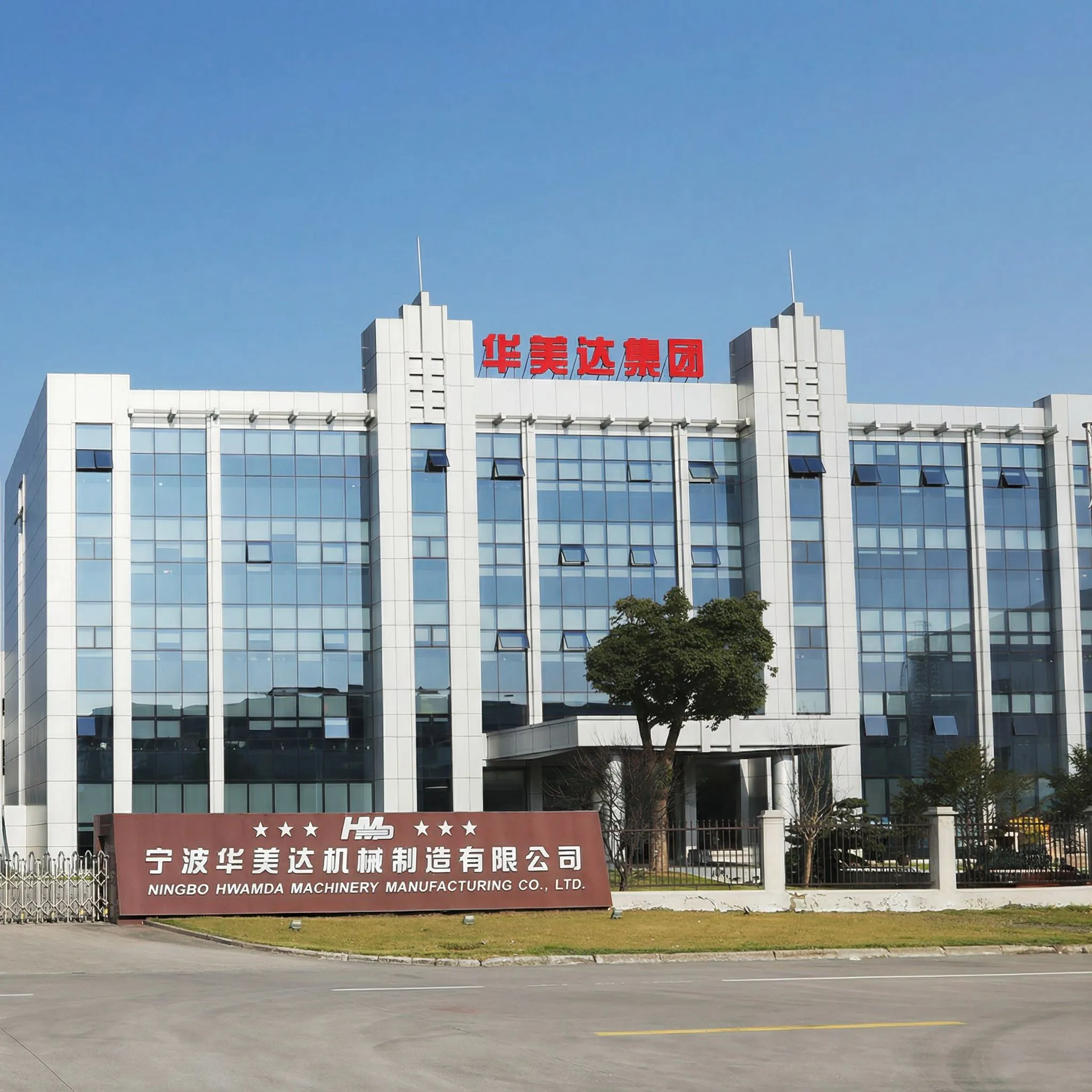
HWAMDA factory — quality manufacturing since 2003
Adding Machines vs Higher Cavitation
Two primary paths increase output: adding an identical machine or upgrading to a higher-cavity mold on your existing machine. Upgrading from 8-cavity to 12-cavity yogurt cup mold increases output by 50% with a mold investment of $45,000-$65,000, no additional floor space, and no additional operators. This is the most capital-efficient expansion path when your current machine tonnage supports the higher cavity count. The HWAMDA SPV5 380T supports up to 16-cavity yogurt cup molds. Adding a second identical machine doubles capacity but requires $100,000-$150,000 investment plus additional floor space, utilities, and 3-4 operators per shift. Choose this path when you have already maximized cavitation on your current machine, when you need redundancy for production continuity, or when diversifying into different products. HWAMDA recommends maximizing cavitation first, then adding machines for the next capacity increment.
Same Product vs Product Diversification
Expansion can mean producing more of the same product or branching into new product categories. Adding capacity for your existing product carries lower risk since the market is proven and your operations are optimized. Diversifying into new products such as adding food containers alongside yogurt cups reduces market concentration risk but requires new molds, potentially different machine tonnages, and operator training for different process parameters. If diversifying within the HWAMDA SPV5 range, machines are compatible across applications with mold changes. A 380T machine running yogurt cups can potentially run margarine IML containers with a mold change and IML robot addition. However, significant product changes such as moving from sauce cups (270T) to food containers (480T) require a new machine. Consider shared auxiliary infrastructure including chillers, material handling, and compressed air systems that can serve multiple lines to reduce per-line expansion costs.
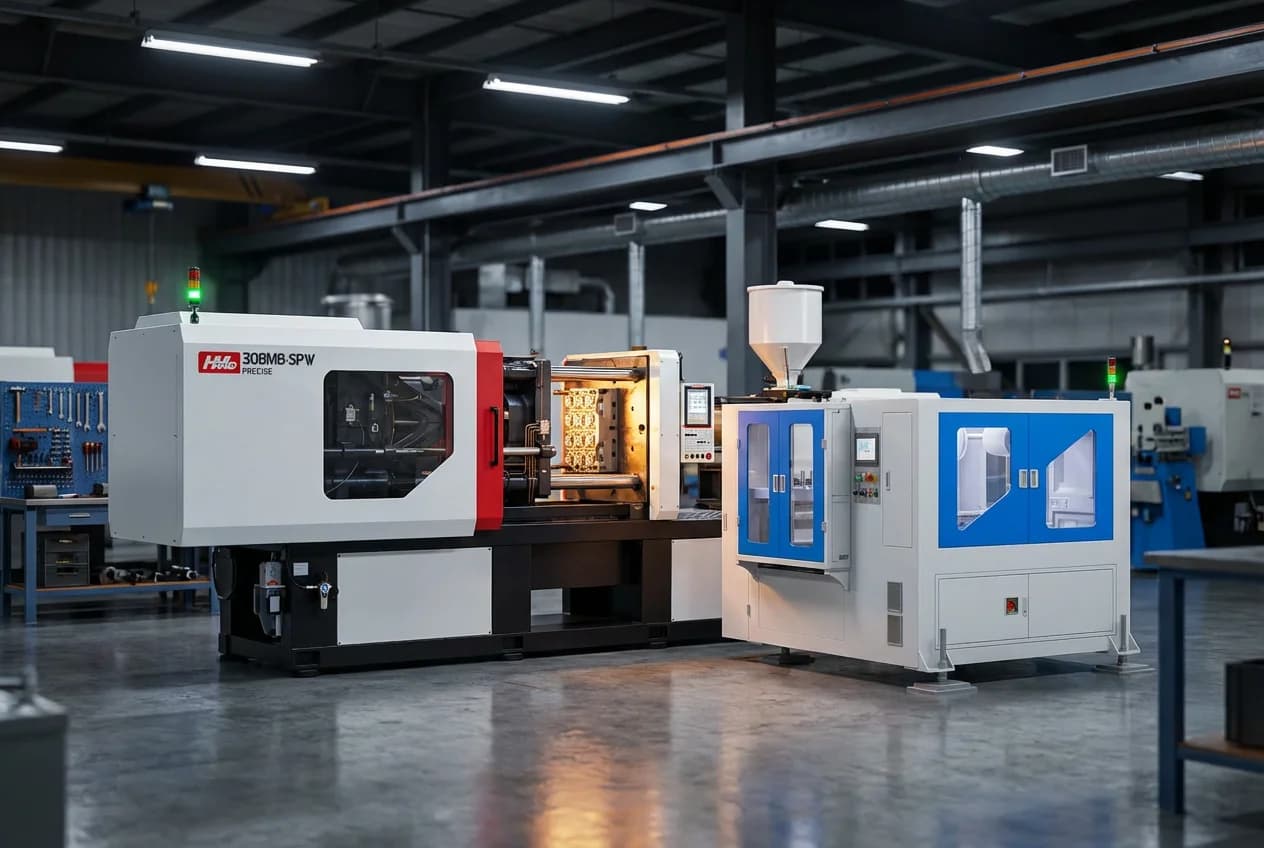
SPV5 machines on the production floor
Need Expert Advice?
Talk to our engineers about your specific production requirements. Free consultation.
Capital Planning for Expansion
Develop a phased capital plan aligned with revenue growth. Phase 1 expansion (mold upgrade) typically costs $40,000-$80,000 and can be funded from operating cash flow. Phase 2 expansion (additional machine line) requires $150,000-$300,000 depending on application and may need external financing. Calculate payback period for each expansion option. A 12-cavity to 16-cavity yogurt cup mold upgrade costing $55,000 that increases monthly output by 1.8 million cups at $0.015 net margin per cup generates $27,000 monthly incremental profit, achieving payback in just 2 months. A complete new production line generating 5.5 million cups monthly at $0.015 margin produces $82,500 monthly profit, achieving payback in 2-4 months depending on total investment. These rapid payback periods make thin-wall packaging expansion one of the highest-return manufacturing investments available.
Layout Optimization for Multi-Line Operations
Multi-line factory layouts require careful planning for material flow, operator movement, and maintenance access. Arrange production lines in parallel rows with minimum 3-meter aisles between machines for mold change access using overhead cranes. Centralize raw material storage and distribution with automated conveyor feeding to all lines. Position chillers and compressed air systems centrally to minimize piping runs. For two HWAMDA SPV5 380T lines producing yogurt cups, allocate approximately 300 square meters per line including machine footprint, conveyor, and stacking area, plus shared infrastructure space. Total facility for a two-line operation needs approximately 800-1,000 square meters. Utility planning for multiple lines should include 15-20% headroom above calculated requirements for future expansion. HWAMDA provides multi-line factory layout engineering as part of expansion projects, optimizing material flow and minimizing wasted space.
Key Specs
- •Utility planning for multiple lines should include 15-20% headroom above calculated requirements for future expansion.
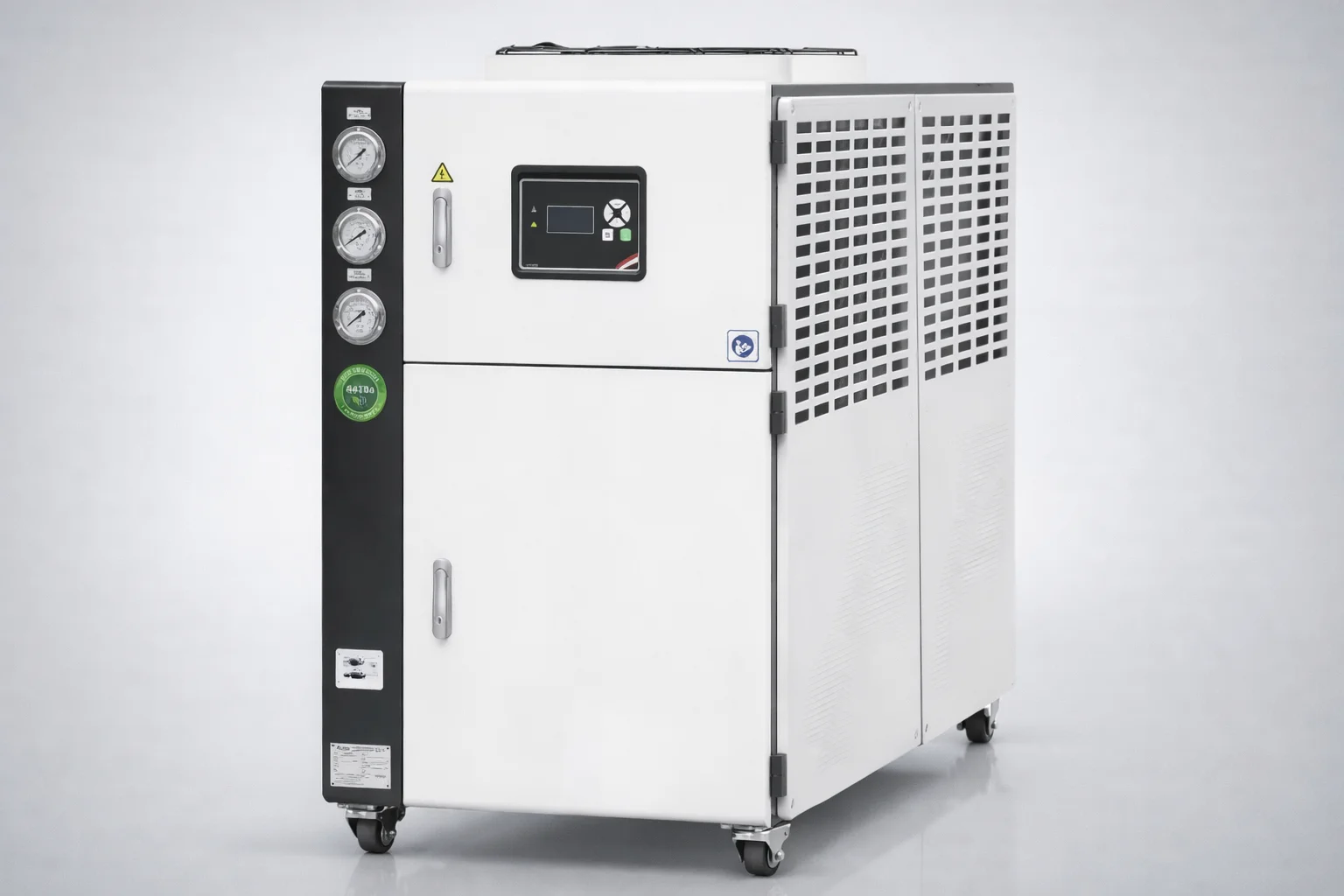
Industrial cooling system for injection molding
Step-by-Step Expansion Plan
Follow this structured expansion process. Step 1: Analyze current capacity utilization and demand trends over the past 6 months. Step 2: Evaluate expansion options (higher cavitation, additional line, or product diversification) with ROI calculation for each. Step 3: Confirm facility capacity for expansion including floor space, power, cooling water, and compressed air. Step 4: Place equipment order with HWAMDA, specifying delivery timeline aligned with facility preparation. Step 5: Prepare facility modifications during equipment manufacturing period. Step 6: Receive and install equipment with HWAMDA commissioning team. Step 7: Train additional operators (or cross-train existing staff). Step 8: Ramp to full production over 2-4 weeks. The entire process from decision to full production on an additional line takes 6-8 months. HWAMDA assigns the same project manager who handled your initial installation for expansion projects, ensuring continuity and leveraging established knowledge of your facility.
Frequently Asked Questions
Upgrade cavitation first if your machine tonnage supports it. Moving from 8 to 12 cavities on a yogurt cup mold costs $45,000-$65,000 and increases output by 50% with no additional floor space or operators. Only add a second machine when you have maximized cavitation, need production redundancy, or are diversifying into products requiring different tonnages. HWAMDA SPV5 380T supports up to 16 cavities for yogurt cups, and 270-280T machines support up to 32 cavities for sauce cups.
Related Guides
Ready to Start Your Project?
Get a free consultation and quotation for your thin-wall packaging production line.
Join 500+ manufacturers in 60+ countries who trust HWAMDA.
Get Free Quote