Machine Operation Fundamentals
Begin operator training with comprehensive understanding of the HWAMDA SPV5 machine architecture. Cover the hydraulic system including servo pump operation, accumulator function, and oil temperature monitoring. Explain the injection unit components: hopper, barrel, screw, nozzle, and their roles in plasticizing and injecting PP resin. Demonstrate the clamping unit with toggle mechanism operation, platen movement, and mold protection settings. Train operators on the HMI (human-machine interface) navigation, including how to access production screens, alarm history, shot counter, and machine diagnostic pages. Cover startup procedures: hydraulic oil pre-heating (minimum 35 degrees C), barrel heating sequence (30-minute soak time after reaching setpoint), and mold protection verification before first shot. Shutdown procedures must include proper barrel purging to prevent material degradation, hydraulic pressure release, and cooling system drainage in cold climates. Each operator should demonstrate all procedures under supervision before working independently.
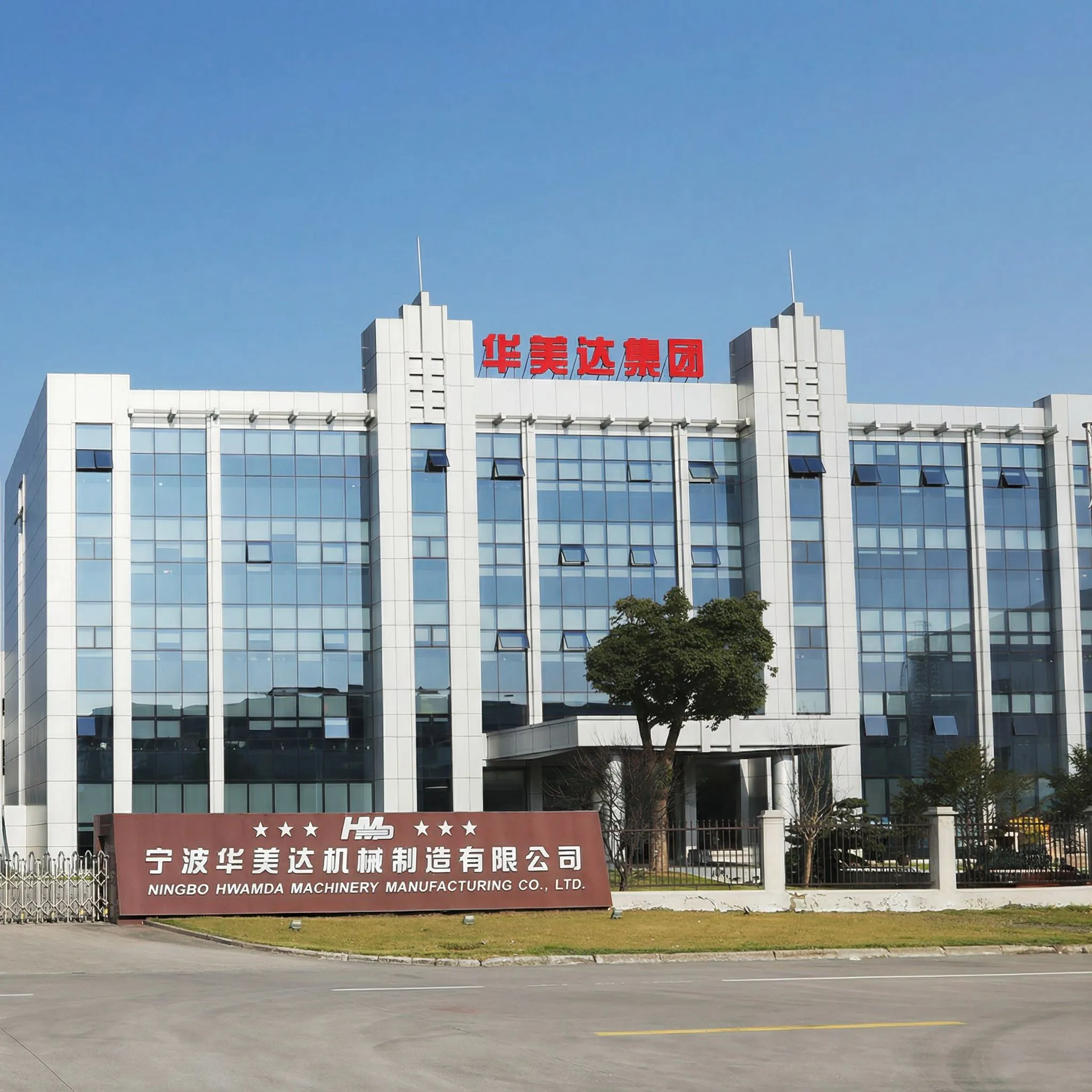
HWAMDA factory — quality manufacturing since 2003
Process Parameter Understanding
Thin-wall molding requires precise parameter control. Train operators to understand injection speed profiles: the SPV5 uses multi-stage injection with high speed (400-500mm/s) for cavity filling and reduced speed for packing. Explain injection pressure versus holding pressure: injection pressure drives the melt into the cavity while holding pressure compensates for material shrinkage during cooling. Typical PP thin-wall settings use 150-180 MPa injection pressure and 60-80 MPa holding pressure. Cover cooling time optimization: yogurt cups require 1.5-2.5 seconds cooling for proper demolding without deformation, while food containers need 3-4 seconds. Teach operators how barrel temperature profiles affect melt quality (PP thin-wall typically runs at 210-240 degrees C with progressive increase from feed to nozzle zone). Emphasize that small parameter changes (5mm/s speed, 2 degrees C temperature) can significantly impact thin-wall part quality, and changes should only be made in measured increments with documented results.
Quality Inspection Procedures
Train operators in both visual and dimensional quality checks. Visual inspection covers short shots (incomplete fill), flash (excess material at parting line), sink marks, flow lines, burn marks, and deformation during ejection. Each defect type has specific causes and corrective actions that operators should understand. Dimensional inspection requires measuring wall thickness at 4-6 points per part using a thickness gauge (target uniformity within +/-0.05mm), part weight using a precision scale (target within +/-2% of nominal across all cavities), and overall dimensions with calipers. Establish sampling frequency: minimum one full inspection per cavity every 30 minutes during production. Record all measurements on quality tracking sheets for trend analysis. Train operators to recognize quality trends that indicate process drift, such as gradually increasing part weight suggesting screw wear or progressively thinner walls indicating mold temperature rise. Immediate response protocols ensure operators know when to adjust, when to alert the supervisor, and when to stop production.
Key Specs
- •Dimensional inspection requires measuring wall thickness at 4-6 points per part using a thickness gauge (target uniformity within +/-0.05mm), part weight using a precision scale (target within +/-2% of nominal across all cavities), and overall dimensions with calipers.
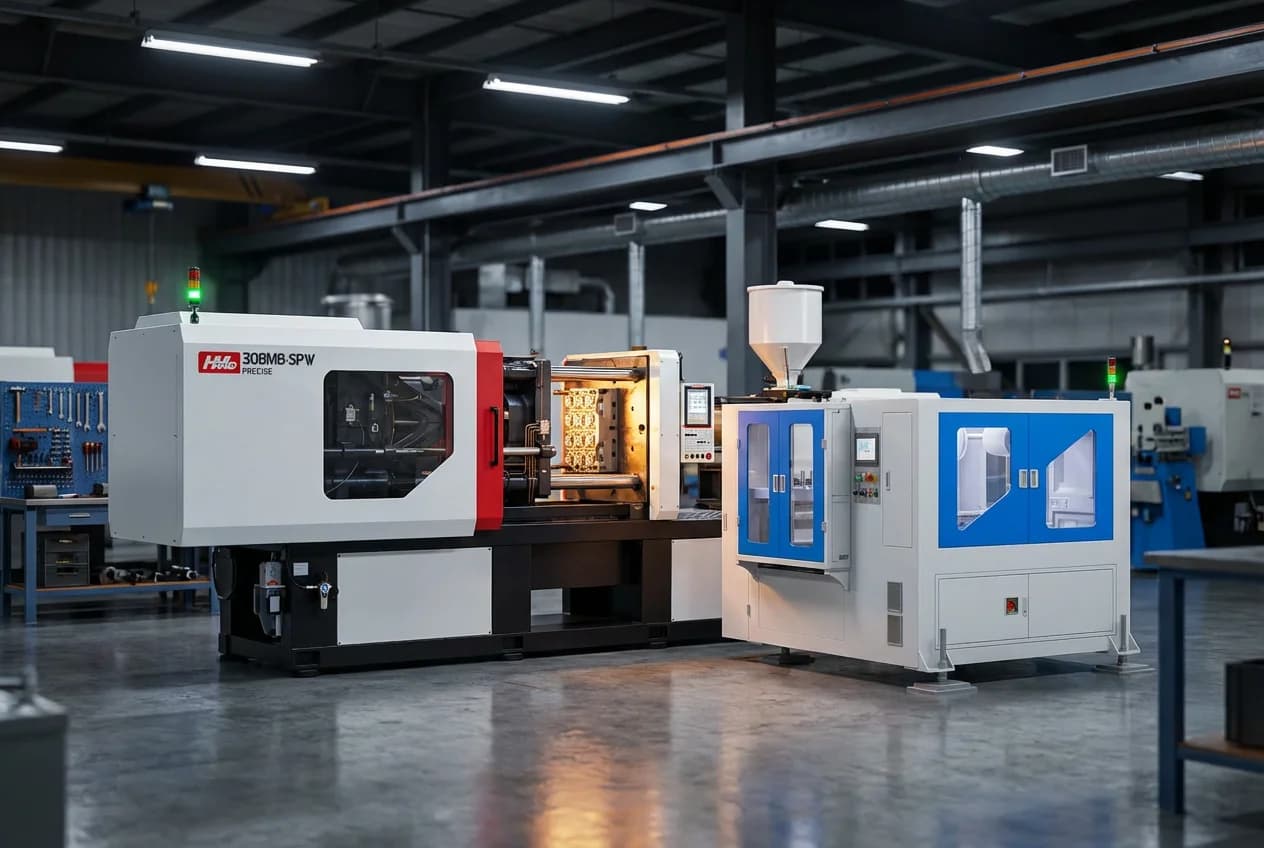
SPV5 machines on the production floor
Need Expert Advice?
Talk to our engineers about your specific production requirements. Free consultation.
Basic Troubleshooting Skills
Equip operators with systematic troubleshooting methodology. For short shots: check material supply, verify barrel temperatures, confirm injection speed and pressure settings, and inspect nozzle for blockage. For flash: check clamping force setting, inspect mold parting surfaces for damage, verify mold parallelism, and reduce injection pressure if excessive. For dimensional variation: monitor cooling water temperature and flow rate, check barrel temperature stability, verify hydraulic oil temperature, and inspect mold for cooling channel blockage. For cycle time drift: check hydraulic system pressure stability, verify accumulator pre-charge pressure, monitor servo drive performance indicators, and inspect valve response times. Create a troubleshooting decision tree for each common problem, posted at each machine station. HWAMDA provides troubleshooting manuals specific to SPV5 machines with diagnostic codes, probable causes, and step-by-step resolution procedures that operators can follow without waiting for specialist support.
Safety Protocols and Procedures
Safety training is mandatory before any operator touches production equipment. Cover machine safety systems: guard interlocking that prevents mold closure when guards are open, emergency stop buttons (locations and function), hydraulic pressure relief systems, and barrel high-temperature alarms. Explain personal protective equipment (PPE) requirements: safety glasses (mandatory near the machine), heat-resistant gloves (for nozzle area work), steel-toed shoes, and hearing protection in high-noise environments. Train on lockout/tagout (LOTO) procedures for maintenance activities: how to isolate electrical, hydraulic, and pneumatic energy sources before any work on the machine. Cover material safety data sheets (MSDS) for PP resin and hydraulic oil, including first aid procedures for burns from hot plastic and skin contact with hydraulic fluid. HWAMDA SPV5 machines comply with CE safety standards with redundant safety interlocks on all guard doors and protective covers. Regular safety audits should verify that all safety devices remain functional.
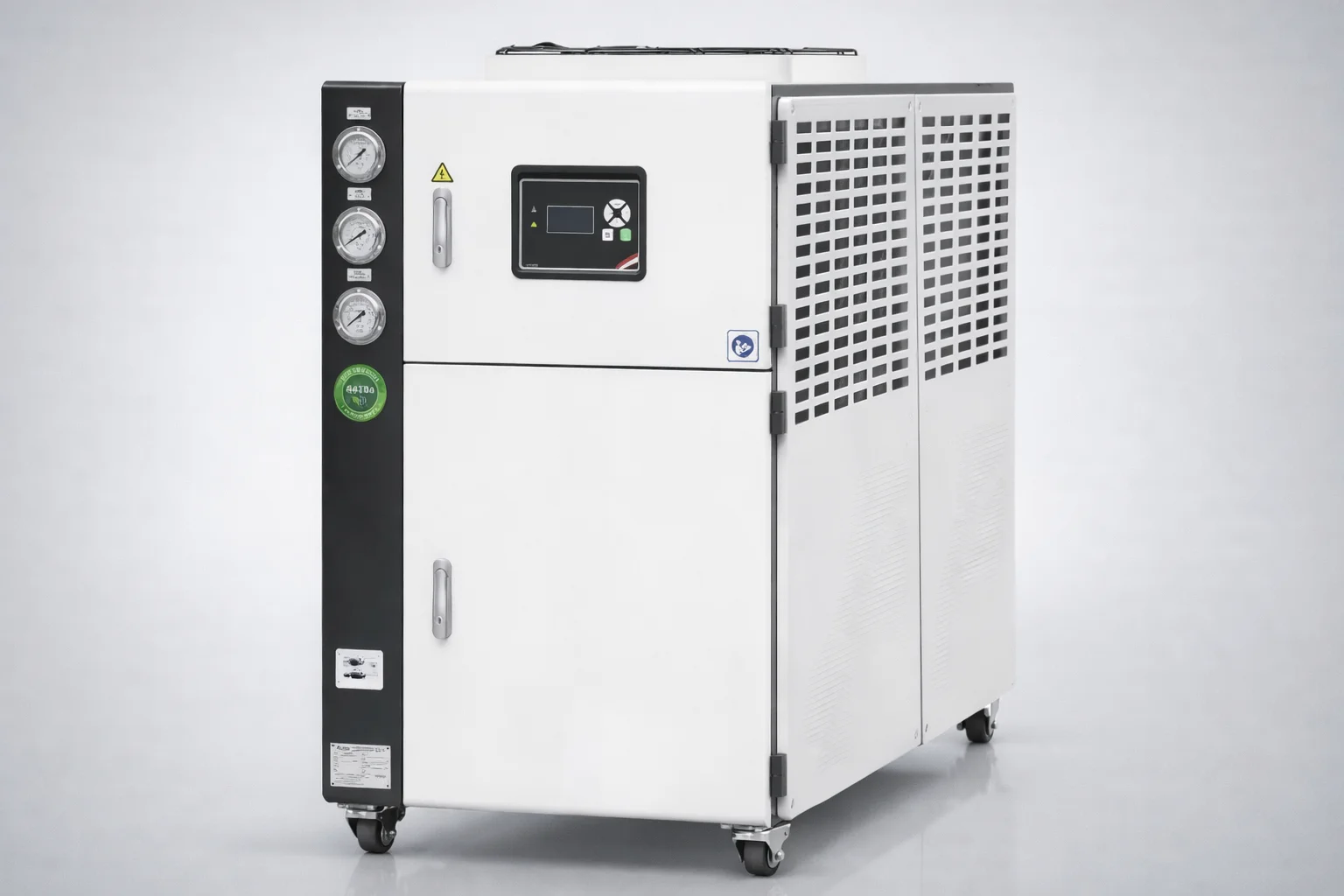
Industrial cooling system for injection molding
Ongoing Skill Development
Initial training establishes a baseline, but continuous development builds expertise that improves productivity over time. Establish a skill progression pathway: Level 1 (basic operation and quality inspection) achieved after 2-week initial training, Level 2 (parameter adjustment and basic troubleshooting) after 3 months of supervised production, Level 3 (mold changeover and advanced troubleshooting) after 6-12 months, and Level 4 (process optimization and new product setup) after 18-24 months. Cross-training operators across multiple product types and machine sizes increases flexibility and deepens understanding of thin-wall molding principles. Schedule refresher training quarterly, covering new procedures, lessons learned from quality incidents, and updates to machine software. HWAMDA offers advanced training programs at its facility for experienced operators, covering advanced process optimization, energy efficiency techniques, and preventive maintenance skills that reduce dependency on external service engineers.
Frequently Asked Questions
Basic operator competency for HWAMDA SPV5 machines requires 2-3 weeks of hands-on training covering machine startup/shutdown, basic parameter monitoring, and quality inspection. Full competency including parameter adjustment and basic troubleshooting develops over 3-6 months of supervised production. Operators with prior injection molding experience can accelerate this timeline significantly. HWAMDA provides on-site training during installation that establishes the initial competency baseline.
Related Guides
Ready to Start Your Project?
Get a free consultation and quotation for your thin-wall packaging production line.
Join 500+ manufacturers in 60+ countries who trust HWAMDA.
Get Free Quote