

Understanding Clamping Force Requirements for Thin-Wall Products
Clamping force must exceed the separating force generated during injection, which equals the total projected area of all cavities multiplied by the cavity pressure. For thin-wall packaging with wall thicknesses of 0.3-0.7 mm and L/t ratios exceeding 100:1, cavity pressures typically range from 50-80 MPa (7,250-11,600 psi) due to the high injection speeds (368-490 mm/s) and pressures (158-177 MPa) required to fill before the melt front freezes. The standard formula is: required tonnage = projected area (cm2) x cavity pressure factor (tons/cm2). For thin-wall PP parts, use a factor of 0.5-0.8 tons/cm2, then add a 15-20% safety margin. Undersized tonnage causes flash on parting lines, especially on container rims where wall sections transition. Oversized tonnage wastes capital and energy but does not damage parts. HWAMDA recommends targeting 70-85% of the machine's rated clamping force for optimal toggle geometry and uniform platen deflection.
Key Specs
- •For thin-wall packaging with wall thicknesses of 0.3-0.7 mm and L/t ratios exceeding 100:1, cavity pressures typically range from 50-80 MPa (7,250-11,600 psi) due to the high injection speeds (368-490 mm/s) and pressures (158-177 MPa) required to fill before the melt front freezes.
- •For thin-wall PP parts, use a factor of 0.5-0.8 tons/cm2, then add a 15-20% safety margin.
- •HWAMDA recommends targeting 70-85% of the machine's rated clamping force for optimal toggle geometry and uniform platen deflection.
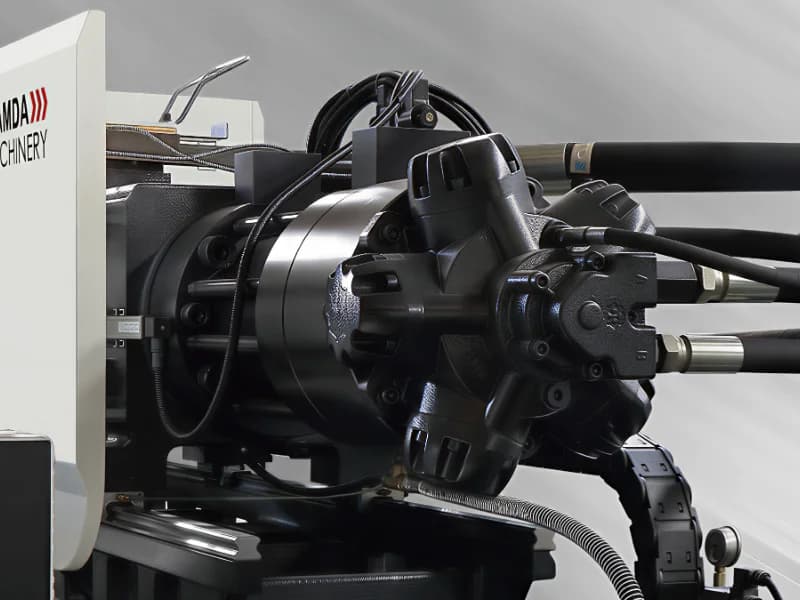
High-speed injection unit with linear guides
Tonnage Guide: Sauce Cups and Portion Cups (2-4 g)
Sauce cups and portion cups (1 oz / 30 ml to 4 oz / 120 ml) are the smallest thin-wall products, with part weights of 2-4 g and wall thicknesses of 0.35-0.45 mm. A single 30 ml sauce cup has a projected area of approximately 12-15 cm2. For high-volume production, 8 and 16-cavity molds are standard. An 8-cavity mold has a total projected area of 96-120 cm2, requiring 48-96 tons of clamping force plus safety margin, translating to 55-115 tons. The HWAMDA HMD 270M8-SPV (270 ton) is the recommended choice, providing ample margin for 8-cavity sauce cup molds at 3.0-4.0 second cycles. For 16-cavity production, the HMD 308M8-SPV (308 ton) or HMD 380M8-SPV (380 ton) provides the necessary platen area (860 x 850 mm to 1,000 x 980 mm) and clamping reserve. At 16 cavities and 3.5-second cycles, output reaches 16,457 cups per hour.
Tonnage Guide: Yogurt Cups (4-8 g)
Yogurt cups (125 ml to 300 ml) weigh 4-8 g with wall thicknesses of 0.35-0.55 mm and diameters of 75-95 mm. A 200 ml yogurt cup has a projected area of approximately 28-35 cm2. For 4-cavity molds (total projected area 112-140 cm2), required clamping is 56-112 tons plus margin, making the HMD 270M8-SPV sufficient. For 8-cavity molds (224-280 cm2), required clamping is 112-224 tons plus margin, pointing to the HMD 380M8-SPV (380 ton) or HMD 400M8-SPV (400 ton). For 16-cavity molds (448-560 cm2), required clamping reaches 224-448 tons, and the HMD 400M8-SPV or HMD 480M8-SPV (480 ton) is needed. The HMD 400M8-SPV is the most popular yogurt cup machine in the SPV5 range, with its 1,080 x 1,060 mm platen accommodating all standard yogurt cup mold frames and its 4,000 kN clamping providing safe margins for 8-16 cavity configurations. Cycle times range from 3.5 seconds (4-cavity) to 4.5 seconds (16-cavity with IML).
Key Specs
- •Yogurt cups (125 ml to 300 ml) weigh 4-8 g with wall thicknesses of 0.35-0.55 mm and diameters of 75-95 mm.
- •For 4-cavity molds (total projected area 112-140 cm2), required clamping is 56-112 tons plus margin, making the HMD 270M8-SPV sufficient.
- •For 8-cavity molds (224-280 cm2), required clamping is 112-224 tons plus margin, pointing to the HMD 380M8-SPV (380 ton) or HMD 400M8-SPV (400 ton).
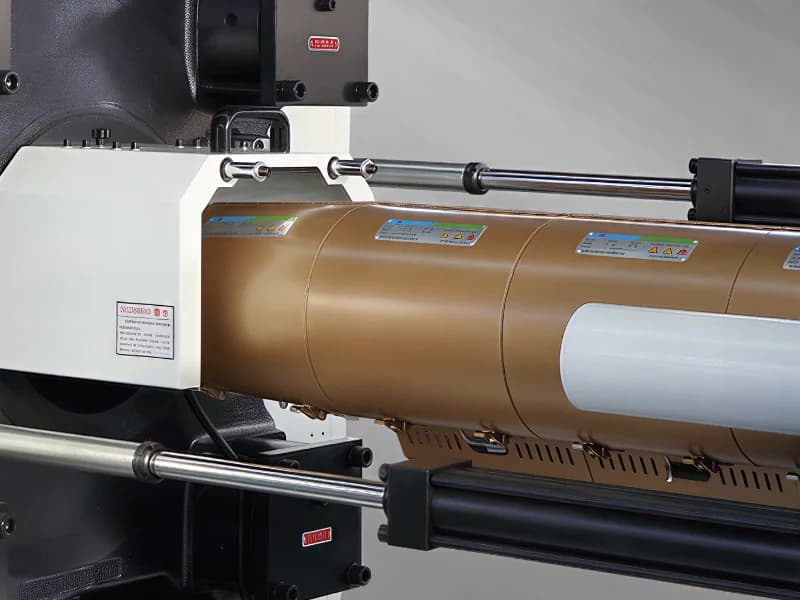
Servo-hydraulic drive system with energy recovery
Need Expert Advice?
Talk to our engineers about your specific production requirements. Free consultation.
Tonnage Guide: Food Containers (12-25 g)
Rectangular and round food containers (500 ml to 1500 ml) weigh 12-25 g with wall thicknesses of 0.5-0.7 mm. A 750 ml rectangular container has a projected area of approximately 180-220 cm2. For 4-cavity molds (720-880 cm2 total), required clamping is 360-704 tons, requiring the HMD 480M8-SPV (480 ton) or HMD 530M8-SPV (530 ton). For 2-cavity 1000 ml containers (projected area 400-500 cm2), required clamping is 200-400 tons, and the HMD 400M8-SPV to HMD 480M8-SPV range is appropriate. For high-volume 500 ml containers in 8 cavities, the HMD 550M8-SPV or HMD 600M8-SPV provides the 5,500-6,000 kN clamping force and platen area needed. The HMD 530M8-SPV with its 1,250 x 1,200 mm platen and 929-987 cm3 injection volume is the workhorse for food container production, handling 4-6 cavity molds at 5-7 second cycles with injection speeds up to 490 mm/s.
Common Mistakes in Tonnage Selection
The most frequent error is calculating tonnage based on part weight instead of projected area. A 6 g yogurt cup and a 6 g flat lid have the same weight but vastly different projected areas: the cup at 28 cm2 versus the lid at 55-65 cm2. The lid requires nearly twice the clamping force per cavity. Second, ignoring runner system projected area: cold runners add 10-15% to the total projected area, while valve gate hot runner systems (standard on HWAMDA molds) eliminate this issue. Third, using general-purpose clamping factors (0.3-0.5 tons/cm2) instead of thin-wall specific factors (0.5-0.8 tons/cm2). Thin-wall parts require higher injection pressures and speeds, generating proportionally more cavity pressure. Fourth, neglecting mold balance: unbalanced filling in multi-cavity molds creates localized pressure peaks exceeding the average, requiring additional tonnage reserve. HWAMDA mold engineers use Moldflow simulation to verify filling balance and recommend the optimal machine model for each specific mold configuration.
Key Specs
- •Second, ignoring runner system projected area: cold runners add 10-15% to the total projected area, while valve gate hot runner systems (standard on HWAMDA molds) eliminate this issue.
- •Third, using general-purpose clamping factors (0.3-0.5 tons/cm2) instead of thin-wall specific factors (0.5-0.8 tons/cm2).
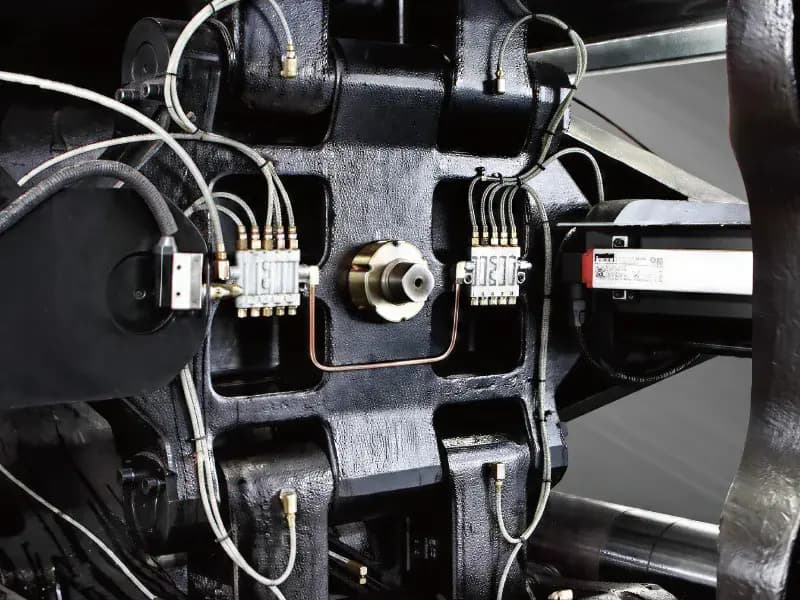
Toggle clamping unit — high rigidity for thin-wall molding
HWAMDA SPV5 Quick Selection Matrix
Summary recommendations: Sauce cups (2-4 g, 8-16 cavities) pair with HMD 270M8-SPV to HMD 380M8-SPV. Yogurt cups (4-8 g, 4-8 cavities) match HMD 270M8-SPV to HMD 400M8-SPV. Yogurt cups (4-8 g, 12-16 cavities) need HMD 400M8-SPV to HMD 480M8-SPV. Food containers (12-18 g, 4-6 cavities) require HMD 480M8-SPV to HMD 530M8-SPV. Large food containers (18-28 g, 2-4 cavities) need HMD 480M8-SPV to HMD 600M8-SPV. IML applications add approximately 10-15% to the base tonnage requirement due to label compression. For mixed-product operations, choose one model size up from the minimum to preserve flexibility. Contact HWAMDA's application engineering team at sales@hwamdaglobal.com with your specific product dimensions, wall thickness, cavity count, and target cycle time for a detailed tonnage calculation with clamping force safety analysis.
Frequently Asked Questions
Multiply the projected area of one cavity (cm2) by the number of cavities, then multiply by 0.5-0.8 tons/cm2 for thin-wall PP parts. Add 15-20% safety margin. For example, an 8-cavity yogurt cup with 30 cm2 projected area per cavity: 8 x 30 x 0.7 = 168 tons, plus 20% margin = 202 tons. The HMD 270M8-SPV (270 ton) handles this application. For valve gate hot runner molds, no additional runner area calculation is needed.
Related Guides
Ready to Start Your Project?
Get a free consultation and quotation for your thin-wall packaging production line.
Join 500+ manufacturers in 60+ countries who trust HWAMDA.
Get Free Quote