

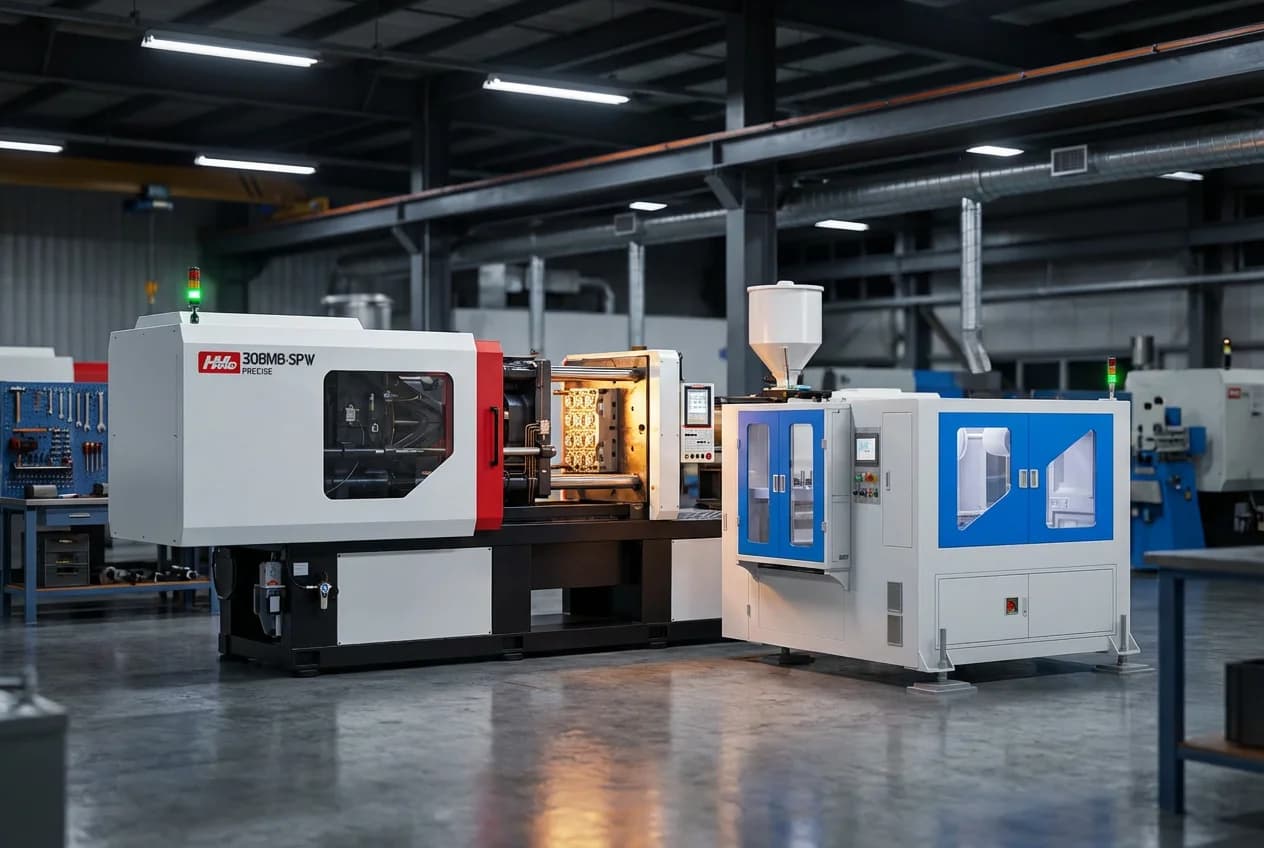
Russia Food Packaging Market Overview
Russia is the largest dairy market in Eastern Europe, with total dairy industry revenues estimated at USD 18-22 billion annually. The yogurt segment has grown at 4-6% CAGR over the past five years, driven by health-conscious consumption trends among urban populations in Moscow, Saint Petersburg, and regional capitals. Major dairy processors include Danone Russia (with brands like Activia and Prostokvashino), PepsiCo's Wimm-Bill-Dann division, Ehrmann Russia, and domestic producers like EkoNiva and Agros-Nova. These companies consume an estimated 3-4 billion yogurt cups annually, with injection-molded IML cups increasingly replacing thermoformed options due to superior branding quality and shelf appeal. The rigid plastic food packaging market in Russia is valued at approximately USD 2.8-3.5 billion, with polypropylene accounting for over 60% of food packaging polymer consumption. Russia's import substitution policies since 2014 have accelerated local packaging production investment, creating strong demand for turnkey production equipment.
Key Specs
- •The yogurt segment has grown at 4-6% CAGR over the past five years, driven by health-conscious consumption trends among urban populations in Moscow, Saint Petersburg, and regional capitals.
- •The rigid plastic food packaging market in Russia is valued at approximately USD 2.8-3.5 billion, with polypropylene accounting for over 60% of food packaging polymer consumption.
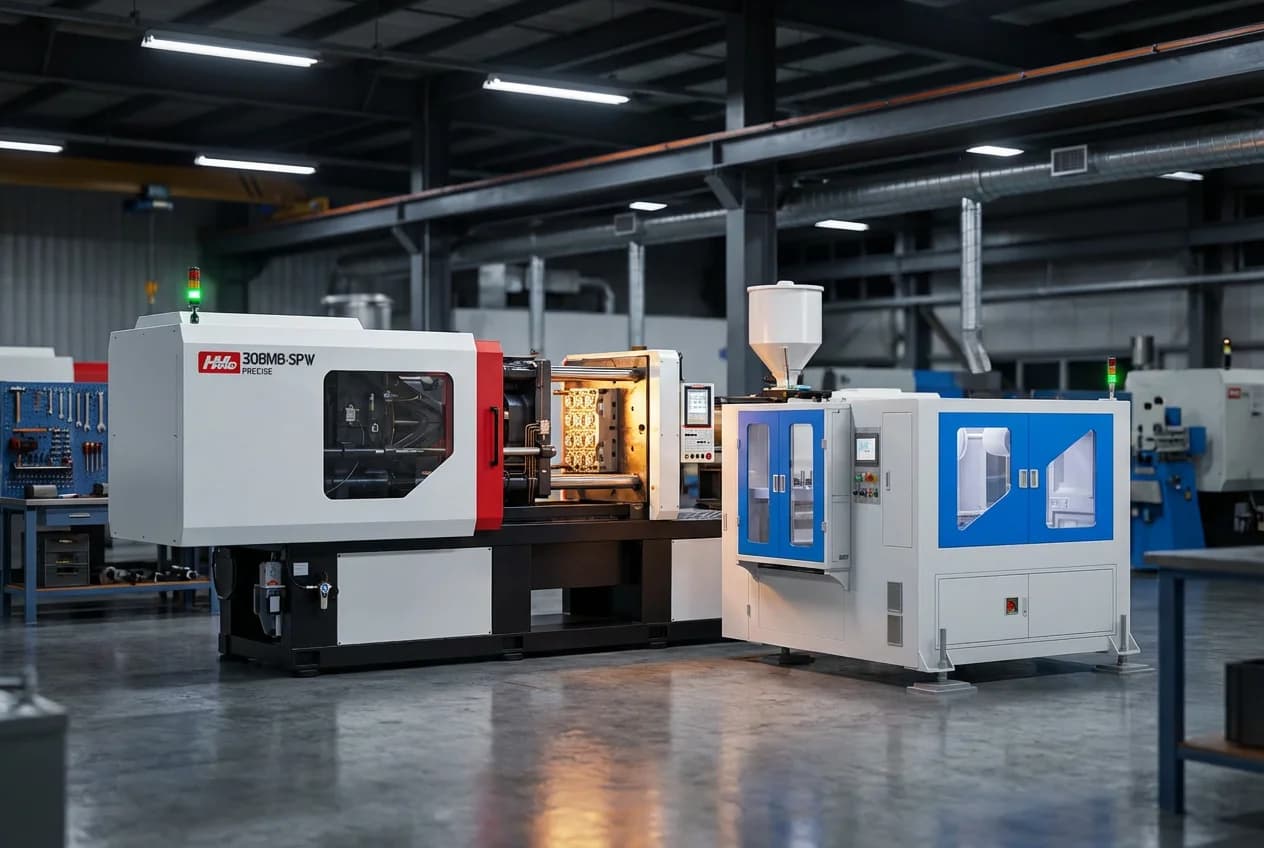
Finished yogurt cups — high-speed thin-wall production
Key Opportunities: Yogurt Cup Production Sector
The dominant yogurt cup format in Russia is the 125-200 ml single-serve cup weighing 5.5-7.5 g with 0.35-0.50 mm wall thickness in food-grade PP. IML decoration is standard for premium brands, with full-wrap labels providing 360-degree branding. Russian dairies increasingly demand multi-pack formats (4x, 6x, 8x), driving need for higher-cavity molds to achieve competitive unit economics. The typical Russian yogurt cup uses homopolymer PP (MFI 35-50 g/10 min) processed at 230-260 degrees Celsius. For an 8-cavity IML mold on HWAMDA's HMD 400M8-SPV, production reaches 6,400-8,228 cups per hour at 3.5-4.5 second cycles. With 85% OEE over 330 annual operating days, a single production line outputs approximately 40-50 million cups per year. Key specifications include Rosstandart-compliant food contact migration testing, typically requiring migration limits below 10 mg/dm2 for PP materials.
Import Compliance & Local Certification
Injection molding machines enter Russia under HS code 8477.10 with an import duty of 0% under the Eurasian Economic Union (EAEU) tariff schedule for most configurations. VAT on imported machinery is 20%. Equipment must carry the EAC (Eurasian Conformity) mark, requiring TR CU 004/2011 (low voltage equipment) and TR CU 010/2011 (machinery safety) technical regulation compliance. HWAMDA provides complete EAC documentation packages with each machine shipment. Food contact packaging materials require GOST R certification and compliance with TR CU 005/2011 (packaging safety) and the Uniform Sanitary Requirements of the EAEU. PP resin used for yogurt cups must pass migration testing per GOST 32686-2014 standards. Customs clearance typically takes 5-10 business days at major Russian ports including Vladivostok, Saint Petersburg, and Novorossiysk. HWAMDA recommends shipping to Vladivostok for Far East clients (18-22 days from Ningbo) or Saint Petersburg for European Russia customers (35-40 days via Suez).
Key Specs
- •Injection molding machines enter Russia under HS code 8477.10 with an import duty of 0% under the Eurasian Economic Union (EAEU) tariff schedule for most configurations.
- •VAT on imported machinery is 20%.
- •PP resin used for yogurt cups must pass migration testing per GOST 32686-2014 standards.
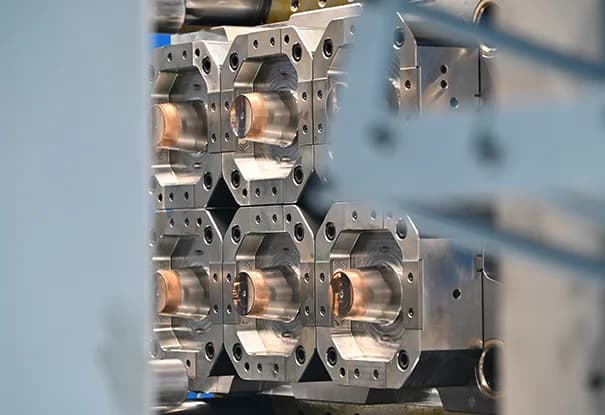
Multi-cavity yogurt cup mold with precision cooling channels
Need Expert Advice?
Talk to our engineers about your specific production requirements. Free consultation.
HWAMDA Equipment Configuration for Russia
For the Russian yogurt cup market, HWAMDA recommends the HMD 400M8-SPV (4,000 kN) as the primary production machine. This model provides injection speed of 374-442 mm/s, injection volume of 918-1,078 cm3, and a platen size of 1,080 x 1,060 mm that accommodates 8-cavity IML yogurt cup molds up to 670 mm thick. The servo-hydraulic drive system delivers energy consumption of approximately 1.0-1.2 kWh/kg, important given Russian industrial electricity rates of $0.04-0.07/kWh. For IML production, the line integrates a SWITEK SW8 side-entry robot (SW833 model) for label placement and cup extraction, achieving combined cycles of 4.0-5.0 seconds. The mold uses valve gate hot runners from YUDO or Synventive with 8 drops, 2344 (H13) steel construction, and BeCu cooling inserts. The INOVA controller operates in Russian-selectable language interface. HWAMDA provides 380V/50Hz electrical configuration standard for Russian grid compatibility, with all documentation in both English and Russian.
Logistics and After-Sales Support for Russia
HWAMDA ships from Ningbo port with two primary routing options for Russia. The Pacific route to Vladivostok takes 18-22 days with ocean freight costs of approximately $3,500-5,500 per 40ft container, serving clients in Siberia and the Russian Far East. The European route through Saint Petersburg takes 35-40 days at $4,500-7,000 per 40ft container, optimal for Moscow, Saint Petersburg, and western Russia operations. An HMD 400M8-SPV machine (7.7 x 2.0 x 2.4 m, approximately 13 tons) fits in a single 40ft open-top container. Installation and commissioning requires 5-7 days on-site by HWAMDA engineers, including machine leveling, hydraulic system filling, electrical connection, mold mounting, and parameter optimization. Training covers 3-5 days for machine operation, INOVA controller programming, mold changeover, and preventive maintenance. HWAMDA maintains a spare parts warehouse with common wear items (seals, heater bands, thermocouples, hydraulic valves) available for shipment within 48 hours from Ningbo, with typical delivery to Russia in 10-15 days.
Key Specs
- •An HMD 400M8-SPV machine (7.7 x 2.0 x 2.4 m, approximately 13 tons) fits in a single 40ft open-top container.
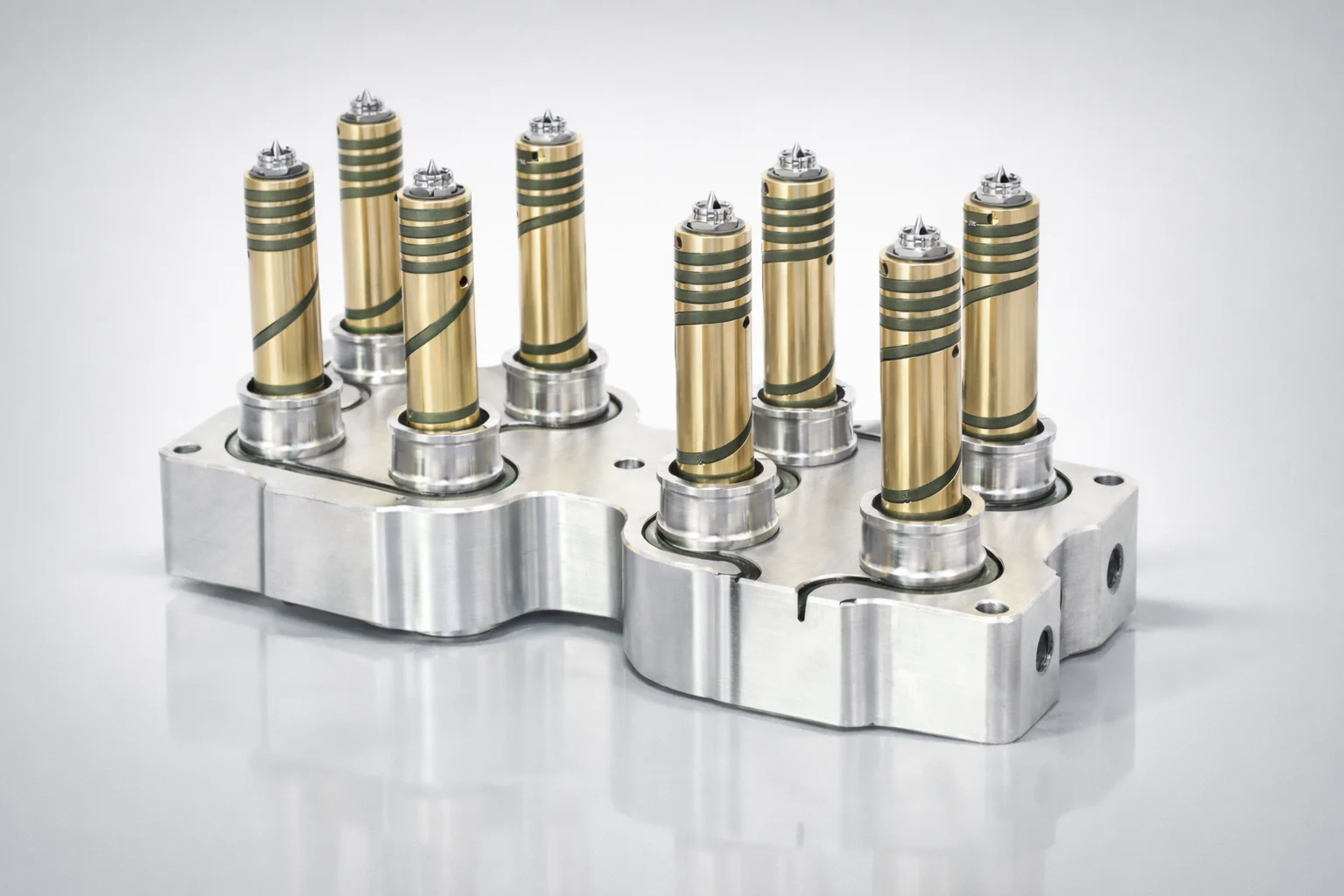
Hot runner system for balanced melt flow distribution
Getting Started: Investment and ROI for Russia
A complete HWAMDA yogurt cup production line for Russia includes: HMD 400M8-SPV machine ($85,000-110,000), 8-cavity IML mold in 2344 steel ($18,000-28,000), SWITEK SW8 IML robot system ($18,000-25,000), industrial chiller ($3,500-5,500), vacuum loader and auxiliaries ($4,000-6,000), and shipping plus EAC certification ($8,000-12,000). Total investment ranges from $136,500-186,500. Operating at 8 cavities, 4.0-second cycles, and 85% OEE, the line produces approximately 40 million cups annually. At PP resin cost of approximately $1,000-1,200/MT (Russian domestic pricing) and 6 g per cup, raw material cost is $0.006-0.0072 per cup. Adding energy ($0.001), labor ($0.002), and overhead ($0.002), total production cost is approximately $0.011-0.013 per cup. With wholesale cup prices of $0.030-0.045 in Russia, gross margin reaches 60-75%. Payback period is typically 14-20 months at full utilization, making this a strong investment for Russian packaging converters.
Frequently Asked Questions
Yes. HWAMDA provides complete EAC certification documentation for all SPV5 series machines, covering TR CU 004/2011 (electrical safety) and TR CU 010/2011 (machinery safety). The certification package includes test reports, declarations of conformity, and Russian-language technical documentation. EAC marking is applied before shipment. The process typically takes 4-6 weeks and is included in HWAMDA's turnkey service for Russian market orders.
Related Guides
Ready to Start Your Project?
Get a free consultation and quotation for your thin-wall packaging production line.
Join 500+ manufacturers in 60+ countries who trust HWAMDA.
Get Free Quote