

Pre-Shift Hydraulic System Inspection
Begin every shift by checking the hydraulic oil level through the sight glass on the 380-650 liter oil tank. The oil level must sit between the minimum and maximum marks with the machine at ambient temperature. On HWAMDA SPV5 machines, the system operating pressure is 17.5 MPa, so any oil below the minimum mark risks cavitation in the dual servo pumps. Inspect the oil temperature reading on the INOVA controller—it should read 20-55°C before starting production. If the oil temperature exceeds 55°C at startup, check the cooling water supply to the oil cooler. Examine all hydraulic hose connections at the injection cylinder, clamping cylinder, and accumulator manifold for leaks. Even minor seepage at fittings indicates O-ring degradation that will worsen under the 368-422 mm/s injection speeds typical of thin-wall production. Check accumulator pre-charge pressure using the nitrogen gauge—it should read 60-70% of maximum system pressure (10.5-12.25 MPa). Record all readings in the shift log. Low accumulator pressure directly impacts injection speed consistency, causing short shots in thin-wall parts with 0.4-0.8mm wall thickness.
Key Specs
- •On HWAMDA SPV5 machines, the system operating pressure is 17.5 MPa, so any oil below the minimum mark risks cavitation in the dual servo pumps.
- •Inspect the oil temperature reading on the INOVA controller—it should read 20-55°C before starting production.
- •If the oil temperature exceeds 55°C at startup, check the cooling water supply to the oil cooler.
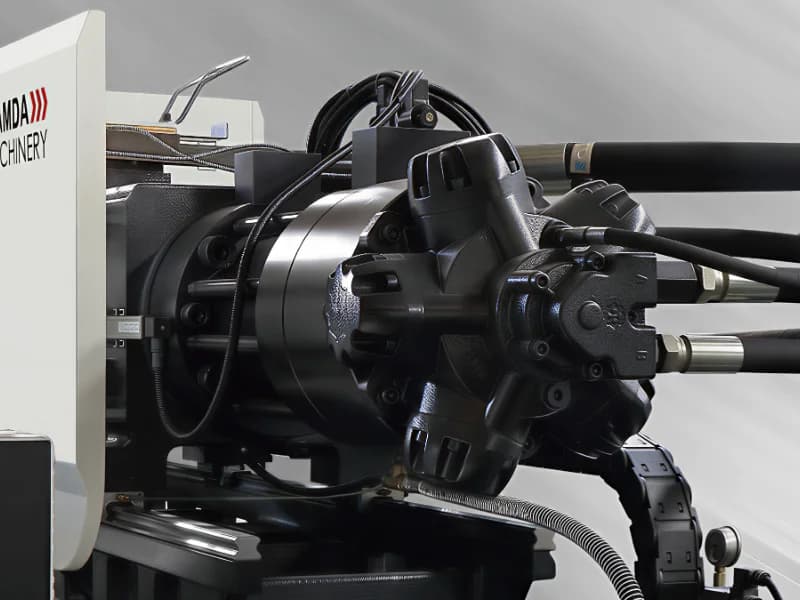
High-speed injection unit with linear guides
Electrical and Controller System Checks
Power up the INOVA 10-inch LED controller and verify that all six temperature control zones display their setpoint values within plus or minus 2°C. For PP thin-wall molding, typical barrel zone temperatures range from 200°C at the feed throat to 240°C at the nozzle. Check that no alarm codes appear on the controller home screen. Inspect the main electrical cabinet for any signs of overheating, discolored wiring, or tripped breakers. The SPV5 heater power ranges from 22.5kW on the HMD 270M8-SPV to 45kW on the HMD 600M8-SPV, drawing significant current that can stress terminal connections over time. Verify that the emergency stop buttons at all four operator stations function correctly by pressing each and confirming the machine locks out. Test the safety gate interlocks on both the operator side and non-operator side—the machine must not cycle when either gate is open. Check the servo motor encoder connections at the pump drive, as vibration can loosen the signal cable. Record the total shot counter reading and compare it against the preventive maintenance schedule intervals of 500,000, 1,000,000, and 2,000,000 shots.
Clamping Unit and Platen Inspection
Visually inspect the four tie bars on the SPV5 clamping unit for scoring, corrosion, or grease contamination. Tie bar diameters range from 100mm on the HMD 270M8-SPV to 140mm on the HMD 600M8-SPV, and any surface damage accelerates bushing wear. Check the tie bar nut locking mechanisms for tightness. Inspect the toggle linkage pins and bushings for play by manually rocking the moving platen—any detectable play exceeding 0.05mm indicates bushing replacement is needed. Apply grease to all toggle link lubrication points using the centralized lubrication system; verify that grease appears at each discharge point. On SPV5 machines, the auto-lubrication system cycles every 15-30 minutes during operation, but pre-shift manual verification confirms all lines are clear. Check platen parallelism by measuring the gap between platens at all four corners using a depth gauge—variation should not exceed 0.08mm across the 860x850mm to 1150x1100mm platen faces. Inspect the mold mounting bolts and clamps for proper torque. Examine the ejector mechanism by running three empty ejector strokes across the full 160-200mm stroke range.
Key Specs
- •Tie bar diameters range from 100mm on the HMD 270M8-SPV to 140mm on the HMD 600M8-SPV, and any surface damage accelerates bushing wear.
- •Inspect the toggle linkage pins and bushings for play by manually rocking the moving platen—any detectable play exceeding 0.05mm indicates bushing replacement is needed.
- •Check platen parallelism by measuring the gap between platens at all four corners using a depth gauge—variation should not exceed 0.08mm across the 860x850mm to 1150x1100mm platen faces.
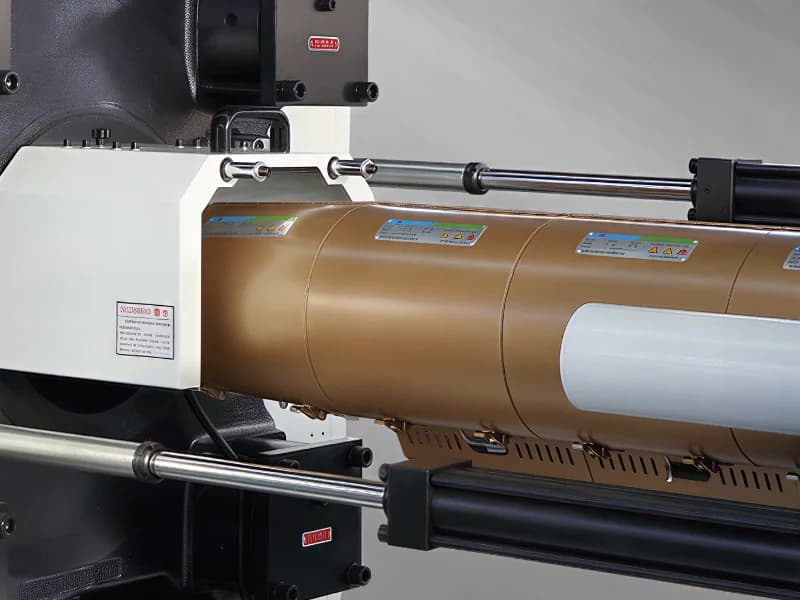
Servo-hydraulic drive system with energy recovery
Need Expert Advice?
Talk to our engineers about your specific production requirements. Free consultation.
Injection Unit and Screw Maintenance Checks
Check the hopper for material contamination and verify that the correct PP grade is loaded—cross-contamination between MFI 30 and MFI 70 PP grades causes immediate quality issues. Inspect the feed throat cooling water lines for proper flow; the feed throat temperature should remain below 50°C to prevent premature pellet melting and bridging. On SPV5 machines with 50-80mm diameter screws and 20-25:1 L/D ratios, verify that the screw rotates freely by running a short plasticizing cycle at 50 r/min before ramping to production speeds of up to 300 r/min. Listen for unusual grinding or clicking sounds that indicate screw or barrel wear. Check the nozzle seat contact with the sprue bushing—poor contact causes material leakage and pressure loss during the 150-200 MPa injection pressures required for thin-wall molding. Inspect the Herzog nozzle tip for material buildup or damage. Verify the barrel heater band clamps are tight and that no heater bands show signs of oxidation or hot spots. Run three purge shots to clear any degraded material from the previous shift. For machines using YUDO or Synventive hot runner systems, verify all hot runner zone temperatures have reached setpoint before starting production.
Auxiliary Equipment and Safety Systems
Inspect the mold temperature controller connections and verify water flow rates through both cavity and core circuits. For thin-wall molds running 3.5-6 second cycles, cooling water temperature should be 12-25°C with flow rates of 15-30 liters per minute per circuit. Check the chiller unit for adequate refrigerant pressure and clean condenser coils. Inspect the SWITEK robot or take-out system for proper alignment—the end-of-arm tooling must align within 0.5mm of the mold cavity centers. Verify that vacuum cups or suction pads on the robot are clean and undamaged. Test the conveyor belt tracking and speed, which should match the cycle output rate to prevent part stacking and damage. Inspect the central material feeding system filters and vacuum lines for blockages. Check the material dryer if running hygroscopic materials—desiccant bed temperature should maintain dewpoint below minus 30°C. Verify that all safety guards, light curtains, and interlocks are operational before starting production. Test the parts counter and reject sorting mechanisms. Review the previous shift's production log for any recurring issues that require attention before starting the new shift.
Key Specs
- •For thin-wall molds running 3.5-6 second cycles, cooling water temperature should be 12-25°C with flow rates of 15-30 liters per minute per circuit.
- •Inspect the SWITEK robot or take-out system for proper alignment—the end-of-arm tooling must align within 0.5mm of the mold cavity centers.
- •Check the material dryer if running hygroscopic materials—desiccant bed temperature should maintain dewpoint below minus 30°C.
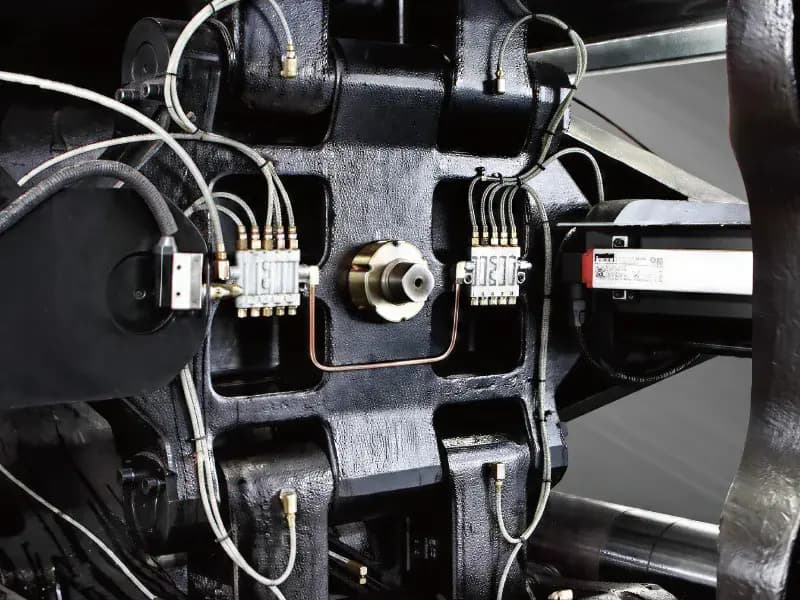
Toggle clamping unit — high rigidity for thin-wall molding
End-of-Shift Shutdown Procedures and Documentation
Proper shutdown extends machine life and simplifies the next startup. Reduce barrel temperatures by 20-30°C in the final 15 minutes of production to prevent material degradation during standby. Purge the barrel with a cleaning compound or natural PP at reduced screw speed of 50-100 r/min until the purge exits clean and free of black specks. Retract the screw to its full back position to release pressure on the check ring and screw tip. Close the hopper slide gate to prevent moisture absorption in the remaining material. Run the hydraulic pump at idle for 3-5 minutes to allow oil temperature to stabilize before shutdown—sudden stops from full operating temperature of 45-50°C can cause thermal shock to seals. Activate the mold protection position to close the mold at low pressure, preventing rust formation on the cavity surfaces overnight. Turn off all barrel heater zones in sequence from nozzle to feed throat. Record final production counts, reject rates, and any observed abnormalities in the INOVA controller's shift log. Document any parameter changes made during the shift, noting the specific adjustment values for injection speed, holding pressure, and cooling time. Tag any items requiring attention by the maintenance team before the next shift.
Frequently Asked Questions
A thorough pre-shift inspection of an HWAMDA SPV5 machine takes 25-35 minutes for an experienced operator covering all 42 checkpoint items. The hydraulic and electrical checks require 10-12 minutes, clamping and injection unit inspection takes 8-10 minutes, and auxiliary equipment verification needs 7-10 minutes. This time investment prevents unplanned stops averaging 2-4 hours each, which at thin-wall production rates of 14,000-50,000 parts per hour represents significant lost output.
Related Guides
Ready to Start Your Project?
Get a free consultation and quotation for your thin-wall packaging production line.
Join 500+ manufacturers in 60+ countries who trust HWAMDA.
Get Free Quote